Cosmetic contact lenses can transform brown eyes into blue, enlarge the visible iris, or add a dramatic pattern. They work by placing a tinted or printed design over the natural iris. The clear central area allows light to reach the pupil. Some lenses also contain vision correction. Others only change appearance. The result depends on fit, lighting, eye color, and lens design.
The phrase sounds harmless. It is not always. Ophthalmologist Dr. Thomas Steinemann has warned, “Decorative contact lenses are medical devices, not cosmetics.” This distinction matters because a lens rests directly on the tear film and cornea. A poor fit can reduce oxygen flow, cause dryness, or create painful friction. A printed pupil area can also interfere with vision, especially in dim rooms when the natural pupil expands.
Safe use begins with a professional eye examination and a properly fitted prescription. An eye-care professional checks corneal shape, tear quality, and whether the lens moves correctly during blinking. Clean hands, fresh solution, and a strict replacement schedule reduce avoidable contamination. Never share lenses. Never sleep in them unless specifically directed by an eye-care professional. Small mistakes can become serious eye problems.
Still, fit alone does not guarantee comfort. Individual eyes react differently. Redness, blurred vision, discharge, or persistent pain require immediate removal and professional advice. Cosmetic contact lenses can be expressive and temporary, but they are not risk-free accessories. Understanding how they work encourages better choices, even when the desired effect is purely visual.
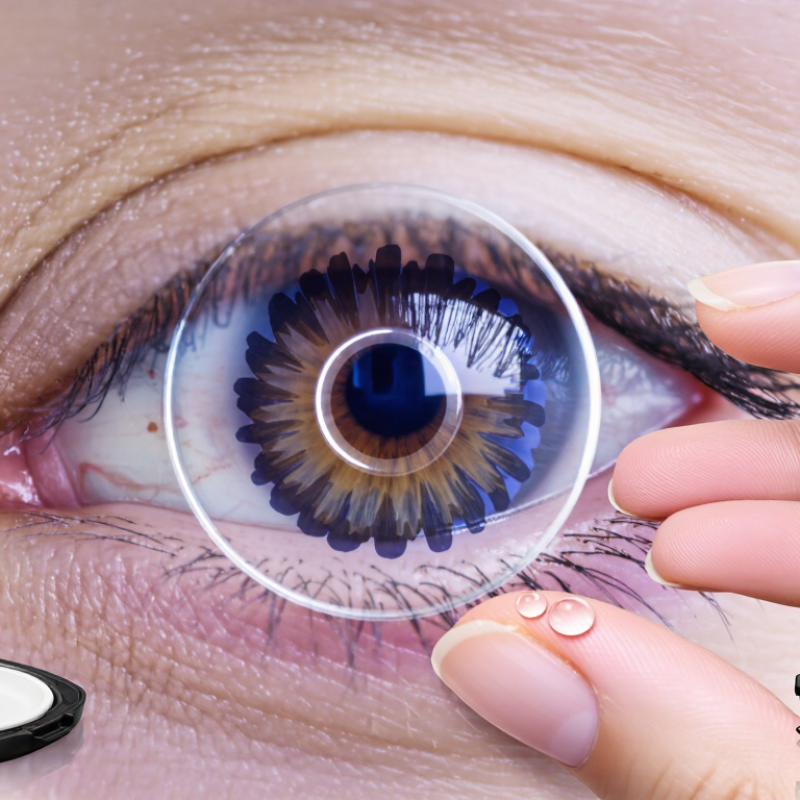
Cosmetic contact lenses are thin, curved devices placed directly on the eye’s surface. Their primary purpose is to change the visible color or pattern of the iris. Some lenses are purely decorative, while others also correct short-sightedness or astigmatism. They do not reshape the eye or permanently change its natural color. Instead, a tinted or printed layer creates a different visual effect over the iris. A subtle change can look surprisingly natural.
The lens works by positioning its colored area over the iris while leaving a clear opening for the pupil. This opening allows light to enter and supports normal vision. However, a poor fit can cause movement, blurred sight, dryness, or an uneven appearance. An eye care professional can measure the eye and assess whether the lens is suitable.
Cosmetic lenses are considered medical devices in many jurisdictions, even when they have no vision-correction power. That detail is easy to miss.
People may wear them for personal style, photography, theater, or special events. The intended purpose does not remove the need for careful use. Clean hands, proper storage, and the recommended wearing time matter. Lenses should never be shared. Redness, pain, unusual sensitivity, or persistent blur requires prompt professional attention. Comfort is not optional. The color shown online may also look different on each person’s eyes, and the result may be less dramatic than expected. Perfect appearance is not guaranteed.
Cosmetic contact lenses alter the visible appearance of the iris without changing its natural structure. Their design usually includes a clear central pupil zone, a colored iris pattern, and a transparent outer edge. Tiny printed dots create depth, similar to pixels in a photograph. Darker rings can make the iris appear larger, though the effect may look artificial in bright light.
Most lenses use hydrogel or silicone hydrogel materials. Hydrogel holds water and feels soft on the eye. Silicone hydrogel allows more oxygen to reach the cornea. That difference matters during longer wear. The colored area is normally sealed within the lens material, rather than floating on the eye. A professional fitting still matters because an off-center lens can blur vision or cause irritation.
Color-changing effects can happen in several ways. Fixed-color lenses appear different under sunlight, indoor lighting, or camera flash. Pupil size also changes the visible balance between the colored pattern and the natural eye. Some specialized lenses use light-responsive materials, but they are not typical cosmetic contacts. The result may be less natural than expected. Small pattern errors can show clearly. Careful cleaning helps, yet it cannot correct a poor fit or damaged surface. Eye-care guidance remains important, especially when redness, pain, or blurred vision appears. Never share lenses. Availability and safety requirements also differ by region.
| Lens Element | Primary Function | Common Materials or Design Features | How It Works | Important Considerations |
|---|---|---|---|---|
| Base Lens Material | Provides the shape, fit, and optical surface of the lens. | Usually a soft hydrogel or silicone hydrogel polymer. | The material holds its curved form on the eye while allowing the lens to move slightly with blinking. | Water content, oxygen transmissibility, flexibility, and surface wetting affect comfort and wearability. |
| Optical Zone | Allows light to pass through the pupil area for vision. | Clear or prescription-corrected central area; its diameter varies by lens design. | Light entering the pupil passes through this zone and is focused by the eye. | If the colored pattern moves over the pupil, vision may become blurred, especially in dim light when the pupil enlarges. |
| Colored Pattern Layer | Creates the cosmetic appearance of a different iris color or pattern. | Printed or embedded color pigments arranged in rings, radial details, or blended patterns. | The pattern selectively absorbs and reflects parts of visible light, changing the apparent color of the iris. | The visible result depends on the original eye color, lighting, pupil size, and pigment density. |
| Pigment Encapsulation | Helps keep cosmetic pigments separated from direct contact with the eye. | Pigments may be placed between lens material layers or sealed beneath a smooth surface. | The lens structure acts as a barrier between the pigment design and the tear film. | A damaged, scratched, or poorly manufactured lens may increase irritation and should not be worn. |
| Limbus and Edge Design | Influences how naturally the lens blends with the visible iris and how it interacts with the eyelids. | Dark limbal rings, tapered edges, and rounded edge profiles are common design features. | A darker outer ring can make the iris appear more defined, while edge geometry affects movement and comfort. | An edge that is too thick or poorly fitted may cause awareness, dryness, or mechanical irritation. |
| Water Content | Contributes to lens softness and flexibility. | Measured as the percentage of water contained in a hydrogel lens material. | Water helps the polymer remain pliable and allows some oxygen to reach the cornea. | Higher water content does not automatically mean greater comfort; tear evaporation and material properties also matter. |
| Oxygen Transmissibility | Supports the cornea, which receives oxygen directly from the surrounding air and tear film. | Described using oxygen permeability and lens thickness; silicone hydrogel generally permits higher oxygen transmission than conventional hydrogel. | Oxygen diffuses through the lens material to reach the corneal surface. | Insufficient oxygen delivery, particularly during extended wear, can contribute to corneal stress and complications. |
| Tint Type | Determines whether the lens subtly enhances the natural eye color or produces a more noticeable change. | Enhancement tints are translucent; opaque tints contain denser patterns that cover more of the natural iris. | Translucent patterns blend with the iris, while opaque patterns reflect more of the selected color. | The same lens can appear different on light, medium, and dark irises. |
| Light-Responsive Color Design | Changes the apparent lens color or darkness under different lighting conditions. | May use photochromic materials or light-responsive dyes incorporated into the lens design. | Certain molecules alter their light absorption when exposed to ultraviolet or visible light, producing a reversible optical change. | The response depends on light intensity, wavelength, temperature, activation time, and the specific material formulation. |
| Pupil Aperture | Keeps the central viewing area open for light to enter the eye. | A clear central opening or transparent optical zone within the cosmetic pattern. | The aperture aligns with the pupil so the colored area remains mainly over the iris. | Because the pupil changes size, a fixed aperture may cause halos, reduced contrast, or dim-light blur. |
| Prescription Correction | Corrects refractive errors while providing a cosmetic color effect. | Spherical, toric, or other prescription geometries may be incorporated into some cosmetic lens designs. | The lens changes how incoming light is focused on the retina, similar to a clear prescription contact lens. | Cosmetic appearance does not determine prescription accuracy; fitting and prescription evaluation are still required. |
| Wear and Replacement Schedule | Defines how long a lens can be used before replacement. | Daily disposable, frequent replacement, and planned replacement designs are common categories. | The schedule is based on the material, manufacturing specifications, and expected buildup of deposits. | Never extend the approved wearing period, share lenses, sleep in lenses unless specifically approved, or use water for cleaning or storage. |
Cosmetic contact lenses change the visible appearance of the iris through printed or embedded color patterns; they do not permanently change the natural eye color. All contact lenses require appropriate fitting, hygienic handling, and professional eye-care guidance.
Cosmetic contact lenses change the visible color, pattern, or shape of the iris. They do not alter the eye itself. Instead, a tinted or printed section rests over the colored part of the eye. A transparent center keeps the pupil area open for vision. Some lenses also include a darker outer ring. This can make the iris appear larger, sharper, or more defined. Some effects are subtle.
The final appearance depends on the lens design and the wearer’s natural eye color. A pale tint may look noticeable on light eyes but barely visible on dark eyes. Stronger patterns can create a dramatic appearance, although they may look less natural in bright daylight. Indoor lighting can change the result again. Photos may also show different colors than a mirror. The outcome is not always predictable.
Comfort and safety matter as much as appearance. An eye-care professional should check the fit, even when vision correction is not needed. A poorly fitted lens may move, dry the eye, or cause redness. Clean hands, approved cleaning solutions, and a proper replacement schedule reduce avoidable risks. Sharing lenses is unsafe. Sleeping in them can also harm the cornea. It is easy to focus on the color and overlook these details, but eye discomfort deserves immediate attention rather than patience.
Cosmetic contact lenses are designed to change or enhance the appearance of the eyes. They work through a printed or tinted layer placed within the lens material. The pupil area remains clear, allowing light to enter while the iris color appears different. Some lenses provide vision correction, while others are plano lenses with no prescription. A proper eye examination helps determine which option is suitable.
Enhancement-tint lenses deepen a person’s natural eye color and usually create a subtle effect. Opaque lenses can produce a stronger color change, even over dark eyes. Circle lenses add a wider-looking appearance around the iris. Special-effect lenses are often used for costumes, stage performances, photography, or themed events. The effect may look striking in a picture but less natural in daylight. That difference is easy to overlook.
Tips: Buy lenses only from a reliable, regulated source and follow professional fitting advice. Wash and dry your hands before handling them. Never share lenses, sleep in them, or use water as a cleaning solution. Replace them according to the care instructions. If your eyes become painful, red, unusually sensitive to light, or blurry, remove the lenses and seek qualified eye care. Comfort alone is not proof of safety.
Cosmetic contact lenses alter the apparent color or pattern of the iris. They can also correct vision when prescribed properly. The lens rests on the tear film over the cornea, while a clear central zone allows light through the pupil. If that zone shifts, vision may become hazy, especially during blinking. A perfect-looking lens may still fit badly. An eye-care professional checks corneal shape, tear quality, movement, and prescription. The U.S. Food and Drug Administration classifies decorative lenses as medical devices, not ordinary fashion accessories.
Fitting affects more than comfort. A tight lens can reduce oxygen reaching the cornea and leave red marks after removal. A loose lens may move, fold, or collect debris. Contact-lens wearers should receive a current prescription and follow the recommended replacement schedule. The Centers for Disease Control and Prevention reported in a 2016 MMWR survey that 99% of nearly 1,000 adult wearers reported at least one risky hygiene behavior. That number is difficult to ignore.
Wash and dry hands before handling lenses. Use fresh approved solution, never tap water or saliva. Do not sleep or swim in lenses unless an eye-care professional specifically allows it. Keep the storage case clean and replace it regularly. Never share lenses, even briefly. Pain, light sensitivity, discharge, or sudden blurred vision requires prompt professional care. Comfort can mislead. Some problems begin quietly, and waiting for obvious pain is not a reliable safety plan.
They change the visible color or pattern of the iris. People wear them for style, photography, theater, or special events.
No. A tinted or printed layer creates a temporary visual effect over the iris. Your natural color remains unchanged.
The colored area covers the iris, while a clear central opening lets light reach the pupil. Poor alignment can blur sight.
Many use hydrogel or silicone hydrogel. Hydrogel holds water, while silicone hydrogel allows more oxygen to reach the cornea.
Natural eye color, pupil size, lighting, and camera flash affect the result. Online images may look more dramatic than reality.
Yes. A poor fit may cause dryness, movement, irritation, uneven color, or blurred vision. Comfort is not optional.
Wash and dry your hands before touching them. Use recommended storage methods, follow wearing limits, and never share lenses.
Stop wearing them if redness, pain, unusual sensitivity, or persistent blur appears. Seek prompt professional attention. Waiting may be a mistake.
Professional measurement helps assess fit and eye suitability. Decorative purpose does not remove the need for careful eye care.
No. Tiny printed dots can add depth, but dark rings or pattern errors may appear artificial, especially in bright light.
Cosmetic contact lenses are designed to change or enhance the visible appearance of the eyes, whether or not vision correction is needed. They contain a clear or tinted lens body with a printed or molded color pattern that can make the iris look brighter, larger, or a different shade. Some designs use opaque areas to create dramatic effects, while others provide subtle enhancement. Their appearance depends on the lens material, the pattern’s placement, and how the design interacts with the wearer’s natural eye color.
Cosmetic contact lenses may be used for everyday style, photography, performances, or special events. However, they must fit the eye properly to remain comfortable and support clear vision. Users should obtain professional fitting guidance, follow the recommended wearing schedule, wash and dry their hands before handling the lenses, and clean and store them as directed. Sharing lenses, sleeping in unsuitable lenses, or using damaged or unapproved products can increase the risk of irritation and eye problems.