0%

Choosing the right color contacts is not simply a matter of matching blue, brown, or green shades. Global buyers must compare lens designs, wearing purposes, opacity levels, materials, and regional compliance requirements. A lens that looks natural in a studio photograph may appear much stronger under bright sunlight. Packaging, prescription information, manufacturing quality, and aftercare guidance also deserve close attention.

Dr. Thomas Steinemann, an ophthalmologist and contact lens safety expert, has warned: “Decorative contact lenses can be safe, but they can also cause serious eye problems if they are not prescribed and used properly.” His statement remains highly relevant for buyers evaluating color contacts across different markets. Safety should guide the purchase, not only visual appeal.

This guide examines ten common types, including enhancement tints, opaque lenses, circle lenses, daily disposables, monthly designs, custom-tinted options, and lenses created for special effects. The categories sometimes overlap. That can be confusing. A daily lens may also be an opaque lens, for example.

The discussion will consider appearance, comfort, intended use, replacement schedules, and buyer expectations. It will also highlight the importance of purchasing through legitimate suppliers and following professional fitting advice. No color contacts should be treated as ordinary accessories. The wrong base curve or poor-quality material can turn a beautiful design into an uncomfortable experience. Some buyer preferences are difficult to predict. That is why careful evaluation matters more than fashionable claims.
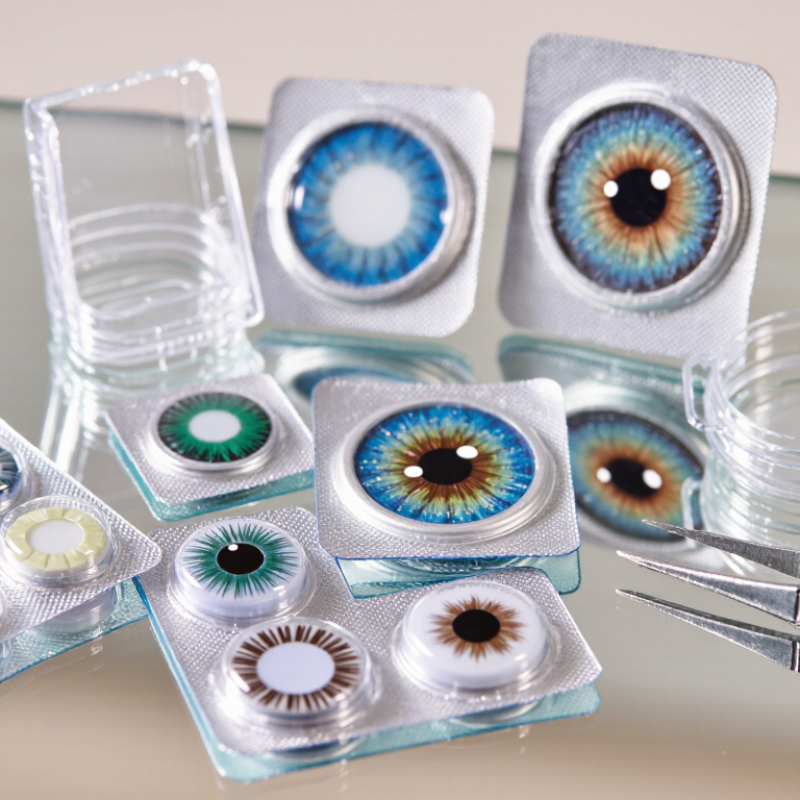
What Are the Top 10 Types of Color Contacts for Global Buyers?

How Color Contacts Are Classified for Global Buyers

Global buyers usually classify color contacts by appearance, correction, material, and replacement schedule. The ten common types are enhancement tint, opaque tint, circle lenses, gradient lenses, color-blending lenses, prescription lenses, plano lenses, daily disposables, monthly lenses, and specialty-effect lenses. These categories overlap. A monthly lens can also be opaque and prescription-based.

Opacity is often the clearest commercial distinction. Enhancement tints subtly deepen natural iris color, while opaque lenses create stronger changes on dark eyes. Circle designs enlarge the visible iris through a darker outer ring. Gradient and blended designs create softer transitions, like layered watercolor. Buyers should also check base curve, diameter, oxygen permeability, and water content. These specifications affect comfort more than the product photograph suggests.

Replacement type matters operationally. Daily lenses reduce storage requirements, while monthly lenses demand stricter cleaning routines. The U.S. FDA classifies decorative lenses as medical devices requiring valid prescriptions. A CDC report found that 99% of surveyed contact-lens wearers reported at least one hygiene risk. That finding should influence buyer education and packaging. Market forecasts from Grand View Research indicate continued growth in colored contact lenses, but forecast figures vary by definition and region. This is a weakness in comparing reports. Global buyers should therefore separate retail value, shipment volume, and prescription demand before planning inventory. Safety claims should remain evidence-based, especially for specialty-effect designs.

Daily Disposable and Monthly Replacement Color Contacts

What Are the Top 10 Types of Color Contacts for Global Buyers?

Daily disposable and monthly replacement lenses are two major categories for international buyers. Daily lenses offer a fresh pair each day, reducing storage and cleaning demands. They suit occasional wear, travel, events, and customers with busy routines. Monthly lenses usually require cleaning, storage, and careful replacement after the approved wearing period. They may appeal to regular users seeking lower use frequency costs.

Daily options can include natural brown, gray, blue, green, hazel, and enlarging designs.

Monthly products may offer similar shades, plus limbal-ring or blended-color effects.

Color intensity depends on iris tone, lens design, lighting, and photography.

A sample image can mislead. It is only a reference.

Buyer requirements should include prescription availability, base curve, diameter, oxygen performance, packaging integrity, and verified manufacturing information. Comfort is not guaranteed by appearance alone. I have seen attractive samples receive weak feedback because the edge felt noticeable after several hours. That detail is easy to underestimate.

Both daily and monthly lenses should be fitted and used according to professional eye-care advice. Packaging must show clear instructions, material information, expiry dates, and market-specific compliance details. Import rules vary across countries, so documentation should be checked before shipment.

Never share lenses, sleep in them, or extend replacement periods. Small mistakes can create serious eye problems.

Enhancement, Opaque, and Circle Color Contact Lenses

What Are the Top 10 Types of Color Contacts for Global Buyers?

For global buyers, color contacts usually fall into ten practical types: enhancement, limbal enhancement, opaque, semi-opaque, full-iris, circle, enlarging, graphic-patterned, prescription, and plano lenses. Enhancement lenses softly deepen natural eye color, while opaque lenses create stronger changes for dark irises. Circle lenses extend the printed edge, producing a larger-looking iris. The effect can be subtle, dramatic, or slightly artificial.

Experienced buyers should compare base curve, diameter, water content, material, and wearing schedule. A larger diameter may feel less comfortable, especially on dry eyes. Printing quality also matters. Uneven pigment can create blurry edges or an unnatural ring. Prescription and plano products still require professional fitting in many markets. Local medical-device rules differ, so suppliers should verify labeling, documentation, and permitted claims before selling.

Tips: Ask for real-eye photos under daylight, not only studio images. Request sample specifications and batch quality records. Confirm whether the lens suits lighter or darker irises. Buyers should also check packaging instructions and replacement periods. Never share lenses or sleep in them. A careful buyer may still miss comfort differences between samples; testing with an eye-care professional is wiser than trusting color charts alone.

Prescription, Toric, and Multifocal Color Contacts

For global buyers, color contacts are not one-size-fits-all products. Prescription color contacts correct short-sightedness or long-sightedness while changing eye appearance. Buyers should verify the prescription, base curve, diameter, and replacement schedule with a qualified eye-care professional. A vivid color is attractive, but comfort and safe fit matter more.

Toric color contacts are designed for astigmatism. Their stabilizing design must remain correctly positioned during blinking. If the lens rotates, vision may become blurred or fluctuate. This problem can be subtle. A professional fitting session helps assess movement, moisture, and clarity. Buyers should also check whether local regulations require a prescription or specific product registration before placing an order.

Multifocal color contacts support people who need different powers for near and distance vision. The design may require an adjustment period, especially when reading small text or using screens. Expectations should remain realistic. Color patterns can slightly reduce contrast in certain lighting, and comfort may change during long wear. Care instructions, sealed packaging, lot information, and documented manufacturing standards deserve careful review. I have found that buyers often focus on the shade first, then discover that the lens parameters are unavailable in their prescription. That mistake is avoidable, though not every fitting succeeds on the first attempt. Never share lenses, sleep in them, or use non-sterile liquids. Stop wearing them if pain, redness, discharge, or sudden blurred vision appears.

What Are the Top 10 Types of Color Contacts for Global Buyers?

Prescription, toric, and multifocal color contacts can be classified by both vision-correction function and replacement schedule. The chart compares ten common configurations using their nominal replacement intervals in days.

Daily lenses are replaced after one day, two-week lenses after approximately 14 days, and monthly lenses after approximately 30 days, following the prescribed schedule. Actual availability, fitting requirements, and replacement instructions vary by market and product approval. Toric lenses are designed for astigmatism, while multifocal lenses support users who need correction at more than one viewing distance.

Safety, Compliance, and Selection Factors Across Global Markets

What Are the Top 10 Types of Color Contacts for Global Buyers?

The “top ten” depends on local demand, eye health, and permitted product claims. Common categories include natural enhancement, opaque, circle, limbal-ring, two-tone, three-tone, gradient, pastel, sectoral, and patterned designs. Enhancement lenses lightly deepen the iris, while opaque designs create stronger color changes. Circle and limbal-ring styles can make the iris appear larger. The effect varies with natural eye color, lighting, and pupil size.

Safety must guide every purchasing decision. Color contacts may be regulated as medical devices, even when marketed for cosmetic use. Buyers should verify local authorization, prescription requirements, importer details, and language-specific labeling. Packaging should show a lot number, expiry date, sterile sealing, material information, and wearing instructions. Compliance is not identical across markets. A document accepted in one country may not satisfy another authority.

Fit matters more than appearance. A qualified eye-care professional should assess base curve, diameter, corneal health, tear stability, and oxygen transmission. Daily-use options may reduce cleaning mistakes, but they still require correct handling. Reusable lenses need compatible care products and strict replacement schedules. Dry climates, long screen exposure, and dusty workplaces can increase discomfort. A beautiful color can still be a poor fit. In practice, buyers sometimes focus too heavily on shade and packaging. That is an easy mistake to reconsider. Supplier traceability, complaint records, and clear after-sales support also deserve close review.

FAQS

What are the main types of color contact lenses?

Common types include enhancement, opaque, circle, gradient, blended, prescription, and plano lenses. Replacement schedules also include daily and monthly options. Categories can overlap.

Which lenses create a stronger change on dark eyes?

Opaque lenses usually cover more of the natural iris. They can produce a clearer color change on dark eyes. Ask for daylight photos.

What do circle lenses do?

Circle lenses use a darker printed outer ring. This can make the visible iris look larger. The effect may seem natural or slightly artificial.

How do gradient and blended lenses appear?

They create softer color transitions across the iris. The pattern can resemble layered watercolor. Uneven printing may cause blurry edges.

What specifications should global buyers compare?

Check base curve, diameter, material, water content, and oxygen permeability. Diameter matters. Larger lenses may feel less comfortable on dry eyes.

Are prescription and plano lenses treated differently?

Prescription lenses correct vision, while plano lenses do not. Both may require professional fitting under local rules. Confirm labeling and permitted claims before selling.

How do daily and monthly lenses differ operationally?

Daily lenses reduce storage and cleaning needs. Monthly lenses require careful cleaning after wear. Never sleep in lenses or share them.

Can product photos predict comfort and color accurately?

Not completely. Studio lighting can hide edge problems and color differences. Testing with an eye-care professional is wiser, though I may still miss subtle comfort changes.

Conclusion

This guide explains the top 10 types of color contacts by grouping them according to replacement schedule, appearance, vision correction, and intended use. It covers daily disposable and monthly replacement lenses, as well as enhancement, opaque, and circle designs, helping global buyers understand how each option differs in color intensity, coverage, wearing convenience, and visual effect. The overview also introduces prescription, toric, and multifocal color contacts for users who need vision correction alongside cosmetic color.

For international sourcing and product selection, safety and compliance are essential. Buyers should evaluate material quality, oxygen performance, comfort, fit, labeling, packaging, user instructions, and applicable market requirements. Prescription details, astigmatism correction, and multifocal design should be matched by qualified eye-care professionals, while cosmetic lenses should never be selected solely by appearance. By comparing these categories carefully, distributors and consumers can choose color contacts that balance style, performance, responsible use, and market suitability.

Callum

Callum

Callum is a professional marketing specialist with a strong understanding of product strategy, customer needs, and digital communication. As a key contributor to the company’s content team, he regularly updates the corporate website with insightful blog articles that explain product features,......