Beauty contact lenses can change the apparent color, pattern, or definition of the eyes. Some create a subtle shift; others make a striking change. Yet the right choice is not only about the mirror. Lens material, fit, and vision needs matter, too.
Ophthalmologist Dr. Thomas Steinemann has warned, “Decorative contact lenses are medical devices, not cosmetics.” That distinction is easy to overlook. A lens that looks like a harmless accessory still rests directly on the eye. A qualified eye-care professional can assess fit and explain safe wear and care. If a lens causes pain, redness, or blurred vision, remove it and seek professional advice.
Looks are only part. This guide explores common types of beauty contact lenses, including enhancement tints, opaque color lenses, and designs with limbal rings or patterned effects. Each offers a different visual result. Enhancement tints may deepen a natural shade, while opaque lenses can create a more noticeable change. Patterned styles add detail, but their appearance can vary with natural eye color and lighting.
There is no single best look for everyone. Product photos can be misleading; colors may appear different in daylight than indoors. The categories also overlap, and labels do not always explain how a lens will look on your eyes. We will compare the options and outline practical points to discuss with an eye-care professional before choosing.
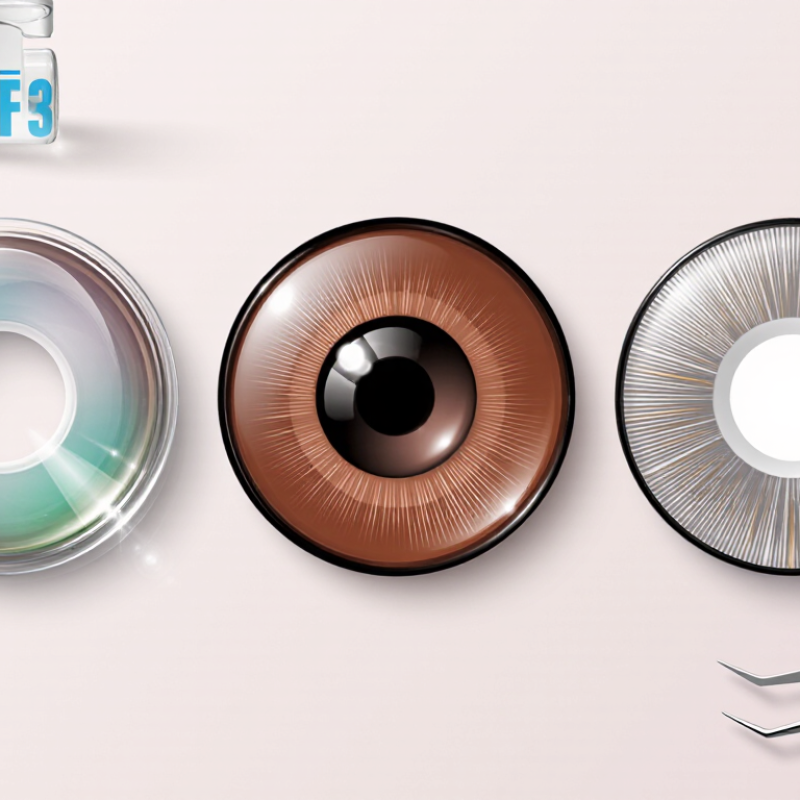
Beauty Contact Lenses Classified by Color Coverage
Beauty contact lenses can be grouped by how much of the natural iris color they cover. The main categories are enhancement, semi-opaque, and opaque designs. Their appearance depends on both the lens pattern and the wearer’s eye color.
Enhancement-tint lenses add definition while allowing the natural iris to show through. They tend to make light eyes look brighter, but may have little visible effect on dark brown eyes. Subtle, not dramatic. Semi-opaque lenses use more pigment, so they can shift the iris color while retaining some natural variation. On a dark iris, the result may look softer than expected; product photos cannot predict every wearer’s result.
Opaque lenses are designed to cover more of the natural iris. They can create a more noticeable color change, especially over dark eyes, though the printed pattern and lighting affect how realistic they appear. These labels are useful, but not perfectly standardized across sellers. Check how the lens is intended to fit and follow an eye-care professional’s advice before wearing it. A lens that looks beautiful in a picture may still feel uncomfortable or blur vision if it does not fit correctly.
Types of Beauty Contact Lenses by Color Coverage
Coverage is shown on a qualitative scale from 1 (minimal) to 3 (high), not as a standardized measurement. Visibility tints are lightly colored to make lenses easier to handle; enhancement tints are translucent and intensify natural eye color; opaque tints are designed to cover the natural eye color. Actual appearance varies with the lens design and the wearer’s natural eye color.
Enhancement Lenses for Subtle Eye Color Changes
Enhancement lenses add a translucent tint to the natural iris, rather than fully covering its color.
Some designs brighten the existing shade; others add a soft limbal ring around the iris. On light eyes, a subtle blue or green tint may show clearly. On dark brown eyes, the same tint can look muted.
A small shift.
That can feel underwhelming, but it often looks more natural in daylight than a dramatic color change.
Fit matters as much as shade.
The CDC estimates that about 45 million people in the United States wear contact lenses. Its 2010 analysis estimated 930,000 outpatient visits and 58,000 emergency visits for keratitis annually; these figures are not specific to cosmetic lenses. The FDA states that decorative lenses require proper fitting and a prescription in the United States. An eye-care professional can check lens movement and corneal fit, which a mirror cannot reveal. Choose a tint after trying it in natural light, and follow the prescribed replacement schedule.
Enhancement lenses still touch the eye.
I would not treat “subtle” as a synonym for risk-free.
Opaque Lenses for More Noticeable Color Changes
Opaque beauty contact lenses use a colored layer to mask much of the natural iris, creating a more noticeable shift than enhancement tints. They can make dark brown eyes appear lighter, or give light eyes a distinctly different hue. The effect depends on the lens pattern, fit, and lighting. In daylight, a color may look softer; under indoor lighting, its printed edge can seem sharper. A stronger visual change.
Opaque designs do not suit every eye or face equally. A vivid shade may feel less natural than expected, and the pupil opening must remain clear for comfortable vision. This is one detail shoppers can overlook.
The US Centers for Disease Control and Prevention’s 2017 MMWR report found that 87.5% of adult contact lens wearers surveyed reported at least one risky lens-care behavior.
That figure concerns contact lens use generally, not opaque lenses specifically, but it underscores the need for careful handling. The US Food and Drug Administration also treats decorative lenses as medical devices, even when they have no vision correction. Have an eye-care professional assess fit and provide a prescription before wearing them; never share lenses or sleep in them unless specifically advised.
Circle Lenses for a Defined Iris Appearance
Circle lenses are designed to make the iris look more defined, often using a darker outer ring. That border can create a noticeable contrast between the colored iris and the white of the eye. Some designs use soft gradients, while others have a crisp edge. The effect depends on your natural eye color, lens pattern, and lighting. Subtle designs may look more natural in daylight; bold edges can appear stronger in close-up photos. Bigger is not always better.
Tips: Have an eye-care professional check the lens fit, even if the lenses are cosmetic. Follow the wear schedule and cleaning instructions. Never share lenses, and remove them if your eyes become red, sore, or blurry. Do not sleep or swim in them unless a qualified professional specifically advises you.
Choose a pattern that leaves your pupil clear and your vision unobstructed. A lens that shifts can feel distracting, even when it looks attractive in a mirror. It is easy to focus only on color; comfort matters just as much. If irritation continues after removal, contact an eye-care professional rather than trying another pair.
Decorative Lenses with Patterns and Special Effects
Decorative contact lenses change the iris’s appearance with printed rings, petals, geometric motifs, or vivid color fields. Some designs create a subtle enlargement effect; others look intentionally theatrical. In daylight, a fine limbal ring may appear soft, while dense spokes can look striking under indoor lighting. The result depends on your natural eye color, lens opacity, pupil size, and fit. Not every pattern suits every eye.
Special-effect lenses may imitate fantasy eyes, animal-like pupils, or metallic shades for performances and photos. Their printed areas may reduce the clear viewing zone, so vision can feel different, especially in dim rooms. A dramatic image is not worth compromised sight. Even decorative lenses need proper fitting and guidance from an eye-care professional. A lens that feels loose, tight, or scratchy may be poorly fitted, even if it looks perfect in a mirror.
Tips: Ask an eye-care professional to assess fit and vision before wearing patterned lenses. Follow the care instructions, wash and dry your hands, and never share lenses. Try a short wear period in a familiar, well-lit setting; check whether edges blur when you look sideways. If you notice pain, redness, light sensitivity, or blurred vision, remove the lenses and seek professional advice. Patterns can surprise you. Comfort matters more than appearance.
What Types of Beauty Contact Lenses Are Available? - Decorative Lenses with Patterns and Special Effects
| Lens type |
Pattern or design |
Typical visual effect |
What to consider |
| Enhancement tint |
A translucent tint that lets much of the natural iris show through |
Can make an existing eye color appear more vivid or defined |
The result depends strongly on the wearer’s natural eye color. |
| Opaque color lens |
A more solid colored iris pattern, often with printed radial details |
Creates a more noticeable change in apparent eye color, including on darker eyes |
The printed pattern and color may look different across natural iris colors and lighting. |
| Limbal-ring design |
A darker outer ring around the printed iris |
Adds definition around the iris and can make it appear more prominent |
The ring’s visibility varies with its contrast, size, and the wearer’s eye. |
| Patterned or graphic lens |
Decorative motifs such as spokes, starbursts, gradients, or geometric details |
Produces a stylized iris appearance for fashion, photography, or costumes |
The visible design is affected by the lens’s printed area and alignment on the eye. |
| Special-effect lens |
High-contrast or unusual designs, such as animal-inspired, fantasy, or theatrical patterns |
Creates a dramatic, character-focused look rather than a natural-looking color change |
Some designs can limit or alter the wearer’s field of view; follow professional fitting advice. |
| Scleral-style effect lens |
A larger-diameter lens that extends over more of the visible eye; some versions have theatrical designs |
Can create an especially striking costume or special-effects appearance |
Larger lenses require careful professional fitting and handling; they are not suitable for everyone. |
Safety note: Decorative contact lenses are still contact lenses. Obtain them through a legitimate eye-care provider, use lenses fitted for your eyes, and follow the prescribed wear and care instructions. Availability and prescription requirements vary by location.
Conclusion
Beauty contact lenses come in several styles, each designed to create a different effect. Enhancement lenses add a subtle touch by deepening or brightening the wearer’s natural eye color while allowing the original shade to show through. Opaque lenses provide fuller color coverage, making them suitable for a more noticeable change, including when the natural eye color is darker.
Other options focus on the appearance of the iris rather than color alone. Circle lenses feature a more defined outer edge to make the iris look more pronounced, while decorative lenses use patterns or special effects for a distinctive look. When choosing beauty contact lenses, consider how dramatic an effect you want and whether the style suits the occasion. Contact lenses should also be selected for a proper fit and used according to professional guidance and care instructions.