CE Certified Color Contact Lens Wholesale Portfolio
Explore our premium factory-direct range engineered with micro-encapsulation sandwich technology and medical-grade biocompatible hydrogel materials.
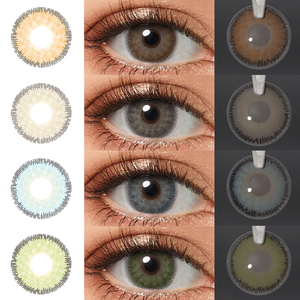 Yearly Wear
Freshgo Korea 1-Year Natural Soft Colored Contact Lenses
38% water content Poly-HEMA formulation engineered for high durability, zero color bleed, and optimal ocular moisture retention.
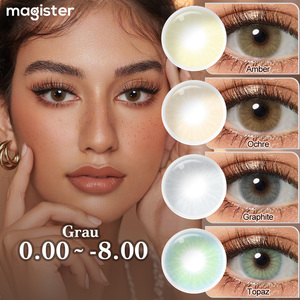 Prescription
Magister Hidrocor Prescription & Cosmetic Color Contacts
Seamless rimless iris patterns with prescription powers up to -8.00D. Produced under CE MDR certified cast-molding lines.
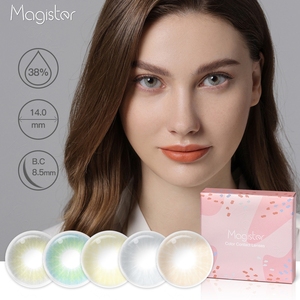 3-Tone Mesh
Magister Queen Ultra-Natural Cosmetic Eye Pupilentes
Features ultra-fine 3-tone dot matrix printing that mimics real iris pigmentation while maintaining 110 Dk/t oxygen transmissibility.
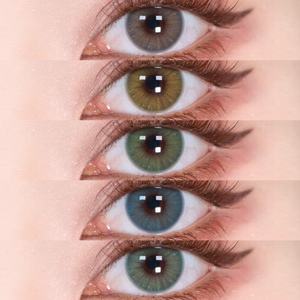 OEM Custom
Custom Private Label OEM Colored Contact Lens Package
Complete private-label manufacturing turnkey solution including artwork customization, blister foil sealing, and localized regulatory compliance.
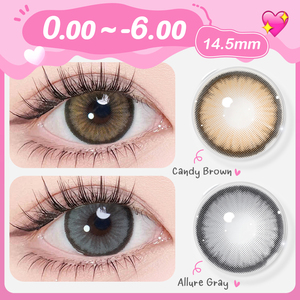 Hydrogel 38%
Factory Direct Water 38% Soft Disposable Color Contacts
Low water content hydrogel matrix designed to prevent tear-film dehydration in air-conditioned retail and consumer environments.
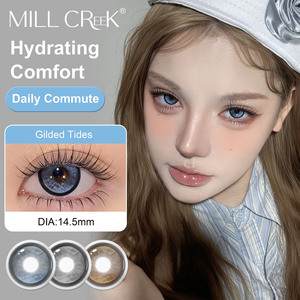 Low MOQ
Haipurecon Sky Blue Natural Multi-Tone Bulk Lenses
Vibrant opacity balance designed for dark eyes. High color-rendering index (CRI) pigments sealed beneath clear protective hydrogel layers.
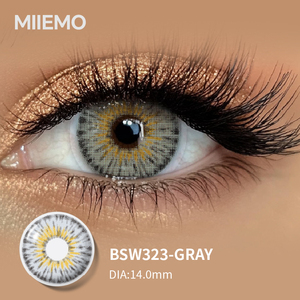 Wholesale Bulk
3-Tone Hazel Brown Natural Soft Colored Lenses
Optimized 14.2mm diameter with 8.6mm base curve fitting over 98% of global corneal topographies without peripheral friction.
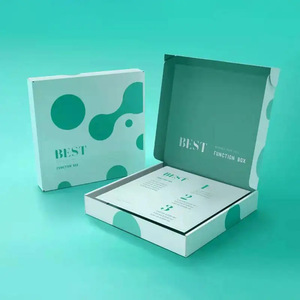 Korean Quality
Korean-Style Yearly Color Lenses with Custom Retail Box
Full retail packaging turnkey set supplied with UV spot-coated packaging boxes, blister trays, and multilingual instructions for use (IFU).
In-Depth Analysis: What Drives Colored Contact Lens Manufacturing Costs?
In the global ophthalmic industry, evaluating the manufacturing cost structure of CE-certified colored contact lenses requires analyzing direct material costs, automated manufacturing precision, and regulatory testing compliance. For retail buyers, optical chains, and brand owners, understanding these cost drivers is essential for optimizing unit economics while maintaining zero-defect safety under European Medical Device Regulation (CE MDR 2017/745).
Unlike standard clear vision lenses, colored contact lenses undergo multi-stage micro-printing, precise dye encapsulation, and specialized visual inspection protocols. Below is a granular operational breakdown of cost variables across major factory production steps:
| Production Stage | Key Cost Drivers | Cost % of Total Unit | Quality Control Impact |
|---|---|---|---|
| Polymer Matrix & Raw Monomers | HEMA, NVP, EGDMA, or Silicone Hydrogel (SiHy) resins | 18% - 24% | Determines oxygen permeability (Dk/t) & hydration stability. |
| Mold Tooling & Cuvettes | Single-use polypropylene cuvettes & optical polish mold inserts | 22% - 28% | Ensures surface roughness <10nm to eliminate corneal abrasion. |
| Sandwich Pad Printing | Medical-grade inorganic pigments (Iron Oxides, Titanium Dioxide) | 15% - 20% | Guarantees 100% micro-encapsulation with zero dye leakage. |
| Hydration & Saline Packaging | De-ionized saline solution, medical foil thermoforming, autoclaving | 14% - 18% | Maintains 5-year sterile shelf life per ISO 11607 standards. |
| Quality Inspection & AOI Rejection | High-speed CCD cameras, microbiological & endotoxin testing | 15% - 20% | Scrap rate rejection cost incorporated into final yield math. |
1. Raw Monomers: Hydrogel (Poly-HEMA) vs. Silicone Hydrogel (SiHy)
The core material selection directly governs both comfort parameters and baseline factory unit pricing. Standard Hydrogel (such as Poly-HEMA with 38% to 55% water content) represents the most cost-efficient option, with monomer costs averaging between $14 to $32 per kilogram. It offers excellent softness and economic feasibility for daily or annual cosmetic lines.
Conversely, advanced Silicone Hydrogel (SiHy) incorporates fluoro-silicone macromers that boost oxygen transmissibility from ~20 Dk/t to over 100 Dk/t. Raw material costs for medical-grade silicone prepolymers range from $90 to $180 per kilogram. This higher material cost is offset by premium retail pricing, making SiHy ideal for high-end optical prescription channels.
2. Tooling Economics: Injection Cuvette Precision
High-volume manufacturing relies on cast-molding technology. Optical-grade polypropylene cuvettes are injection-molded using master optical steel inserts polished to nanometer surface tolerances. Because each cuvette pair is used only once during monomer polymerization before being recycled, factory unit costs depend heavily on high-speed molding efficiency and resin price fluctuations.
3. Micro-Sandwich Printing and Pigment Encapsulated Layers
Safety in cosmetic contact lenses depends on pigment placement. Inferior manufacturing uses surface printing where pigment directly touches ocular tissue, causing irritation or keratitis. Reliable factories use Sandwich Pad Printing Technology. In this process, the outer clear hydrogel layer is cast first, followed by the 3-tone iris dye pattern, and finally sealed with an inner hydrogel layer. This locks the color matrix completely inside the lens core.
Industry & Technological Trends Shaping Color Contact Lens Manufacturing
The cosmetic eyewear market is undergoing a major technological transformation. Driven by shifting consumer preferences in Europe, North America, and East Asia, OEM suppliers are upgrading cleanroom automation, digital ink-jet printing, and bio-compatible polymer design.
Micro-Sandwich Color Isolation
Advanced dual-cast molding seals organic pigments within biocompatible hydrogel walls, preventing pigment contact with the cornea while improving lens surface smoothness.
High Dk/t Silicone Hydrogel Matrices
Modern formulations balance high oxygen transmissibility with low modulus elasticity, helping prevent ocular hypoxia during long wear cycles.
AI Automated Optical Inspection (AOI)
High-resolution camera arrays inspect 100% of finished lenses for edge tears, color registration flaws, and micro-bubbles, lowering defect rates to under 0.2%.
Future Sourcing Trends for Retailers & Distributors (2025–2030)
Shift Toward Daily Disposables: Daily disposable colored lenses are growing rapidly due to consumer preference for hygiene and convenience. Factories are expanding automated blister-sealing lines to support larger unit volume requirements at lower production costs per pair.
Natural Iris Pattern Customization: Modern consumers favor realistic iris textures over bold, unnatural colors. Dynamic 3D color printing enables subtle limbal rings, natural radial striations, and translucent honey, gray, and hazel tones that blend smoothly with dark Asian or light European eyes.
Sustainable Eco-Packaging: Leading European retailers now require reduced plastic usage in blister cups and recyclable paper packaging. Forward-thinking manufacturers are adopting thinner foil laminates and biodegradable packaging materials to satisfy EU ESG procurement mandates.
Why Partner with Kyralens? Enterprise OEM/ODM Manufacturing Advantages
Kyralens Technology Co., Ltd. is a global leader in private-label eye care products, specialized in supply chain management for drugstores, optical chains, and online retailers. We combine advanced optical engineering with complete regulatory compliance to help brand owners scale profitably with minimal supply chain risk.
CE MDR & ISO 13485 Certified
Our production lines operate under ISO 13485 Quality Management Systems. Products carry CE MDR (EU 2017/745) Class IIa medical device compliance for smooth clearance across European customs.
Flexible MOQ & Private Label Branding
We support both market testing pilots and large national rollouts. We provide end-to-end packaging design, custom box printing, spot UV finishing, and localized IFUs.
End-to-End Supply Chain Traceability
Every production batch includes full lot traceability records, bio-burden testing, cytotoxicity analysis reports, and real-time stability verification data.
Frequently Asked Questions (FAQ) for B2B Buyers & Procurement Teams
Launch & Expand Your Private Label Eye Care Line
Contact our supply chain specialists to request sample kits, factory pricing breakdowns, and technical compliance dossiers for your target market.