OEM/ODM Product Catalog & Custom Lineups
Explore our CE-certified cosmetic and therapeutic contact lens series. Manufactured using proprietary bio-compatible pigment encapsulation and high-transmissibility polymer matrices.
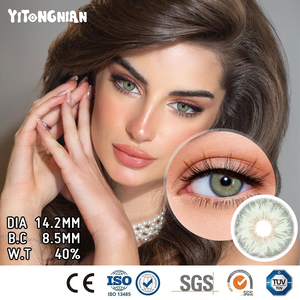
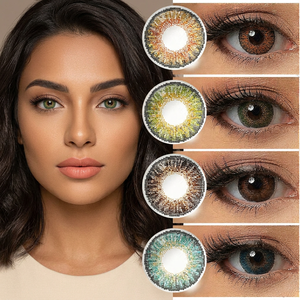
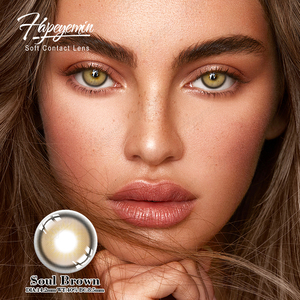

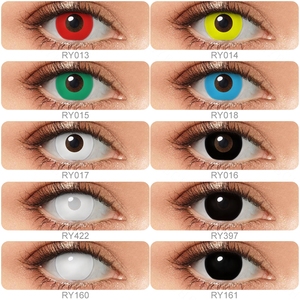
Industrial Whitepaper: Engineering Medical-Grade Colored Contact Lenses
The global contact lens manufacturing market is undergoing a paradigm shift driven by optical physics, material chemistry, and stringent international medical standards. As a premier CE Certified colored contacts factory and global supplier, our facility integrates high-precision automated cast molding with bio-compatible polymer synthesis to deliver contact lenses that balance cosmetic vibrant aesthetics with optimal ocular physiology.
Bio-Compatible Sandwich Micro-Pigment Technology
Traditional cheap cosmetic lenses print pigments directly onto the lens surface, exposing corneal epithelial cells to chemical dye leaching. Our advanced Sandwich Color Encapsulation process embeds non-toxic, organic pigment layers securely between two bio-compatible hydrogel polymer structures. This guarantees zero direct contact between colorants and ocular tissue while maintaining crystal-clear optical clarity.
Polymer Chemistry: HEMA+NVP & Silicone Hydrogel
Oxygen permeability ($Dk/t$) and water balance dictate long-wear comfort. By co-polymerizing Hydroxyethyl Methacrylate (HEMA) with N-Vinylpyrrolidone (NVP), our formulations lock in moisture retention (38% to 58% water content) to suppress tear-film evaporation. For extended daily wear, our next-generation fluorosilicone hydrogel materials achieve $Dk/t$ values exceeding 100, preventing corneal hypoxia and peripheral hyperemia.
Aspheric Edge Geometry & Optical Precision
Peripheral lens thickness variations often cause lid-sensation discomfort and tear disruption. Our CNC-machined nano-molds incorporate an optimized aspheric edge design that promotes natural sub-lens tear exchange with every blink. Advanced ray-tracing optical design minimizes spherical aberration, providing sharp visual acuity even under dim lighting conditions.
Technical Material & Manufacturing Matrix
A detailed breakdown of technical specifications for B2B procurement officers and quality assurance auditors.
| Parameter / Specification | Standard HEMA Hydrogel | HEMA + NVP High-Moisture | Silicone Hydrogel (SiHy) | Specialty / Crazy Series |
|---|---|---|---|---|
| Oxygen Transmissibility (Dk/t) | 15 – 20 @ 35°C | 22 – 28 @ 35°C | 100 – 130 @ 35°C | 15 – 18 @ 35°C |
| Water Content (%) | 38% – 42% | 55% – 58% | 45% – 48% | 38% |
| Modulus (Elasticity) | 0.30 – 0.35 MPa | 0.25 – 0.28 MPa | 0.50 – 0.65 MPa | 0.38 – 0.45 MPa |
| Pigment Encapsulation | Sandwich Printing | Sandwich Printing | Dual Matrix Lock | Triple Layer Opaque |
| Available Base Curves (B.C.) | 8.5mm / 8.6mm | 8.6mm | 8.6mm / 8.7mm | 8.6mm |
| Diameter Range (DIA) | 14.0mm – 14.5mm | 14.0mm – 14.2mm | 14.2mm – 14.5mm | 14.5mm |
| Center Thickness (@ -3.00D) | 0.07mm – 0.08mm | 0.06mm | 0.08mm | 0.09mm |
| Sterilization Assurance Level | SAL 10⁻⁶ (Moist Heat) | SAL 10⁻⁶ (Moist Heat) | SAL 10⁻⁶ (Moist Heat) | SAL 10⁻⁶ (Moist Heat) |
| Regulatory Certifications | CE 0123 / ISO 13485 | CE 0123 / ISO 13485 | CE / EU MDR Class IIa | CE 0123 / ISO 13485 |
Kyralens Corporate Ecosystem & Regulatory Footprint
Operating under strict medical device regulatory frameworks, kyralens Technology Co.,Ltd (Headquartered at Faradaystraat 14, 6718 XT Ede, The Netherlands) delivers comprehensive private label eye care solutions across Europe, the Middle East, and Asia. Our integrated supply chain caters to leading international drugstore, supermarket, and pharmacy networks, including retail giants such as Watsons, Rossmann, Kruidvat, Trekpleister, Ahold Delhaize, Albert Heijn, Etos, Nahdi, GMG, Eureka, Migros, and REWE.
EU MDR 2017/745 & CE 0123 Authorization
All contact lens lines are certified under the European Medical Device Regulation (MDR 2017/745) Class IIa. We maintain full Technical Documentation Files (TDF), periodic safety update reports (PSUR), and clinical evaluation reports (CER) to ensure seamless registration with national competent authorities.
ISO 13485:2016 Certified Infrastructure
Our automated cleanroom facilities comply with ISO Class 7 operating conditions. Every single lens batch undergoes 100% Automated Optical Inspection (AOI) to verify edge integrity, dimensional tolerances (±0.02mm), base curve accuracy, and microscopic pigment encapsulation uniformity.
Future Procurement Trends: 2026–2030 B2B Sourcing Foresight
Key market transitions driving buyer demand in the cosmetic optical sector.
1. Massive Shift Toward Daily Disposables
Driven by post-pandemic hygiene awareness and convenience, consumer preference is shifting rapidly from annual lenses to single-use daily disposable colored contacts. Procurement managers are restructuring inventory matrices toward high-volume blister-pack daily lines to boost customer retention and higher lifetime purchase values.
2. Hyper-Natural 3-Tone Aesthetic Demands
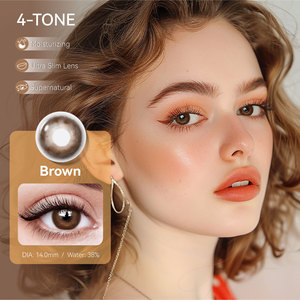
Flat, high-contrast cosmetic lenses are being replaced by realistic multi-layered iris prints that mimic natural eye depth. Modern buyers demand 3-tone blends featuring subtle limbal rings, radial striations, and soft honey/hazel transitions that harmonize with diverse skin tones and natural eye colors.
3. Private Label Domination in Pharmacy Retail
Pharmacy and cosmetic chains are increasing their margin share by replacing third-party brand names with private-label OEM collections. Kyralens provides complete OEM turn-key programs—from custom artwork, multilingual compliance packaging, and sterile blister sealing to direct-to-warehouse delivery.
4. Sustainable Packaging & Bio-Based Materials
Regulatory bodies and eco-conscious shoppers are demanding plastic reduction in primary packaging. Innovations in ultra-thin micro-blisters, recyclable foil membranes, and bio-hydrogel polymers derived from renewable monomer stocks are defining next-generation contact lens manufacturing lines.
Frequently Asked Questions (FAQ) for B2B Procurement
Comprehensive answers covering compliance, private label manufacturing, minimum orders, and supply chain logistics.