CE-Certified Custom Optical & Cosmetic Product Range
Factory-direct private label manufacturing solutions engineered for high oxygen transmissibility, long-wear comfort, and rigorous international regulatory compliance.
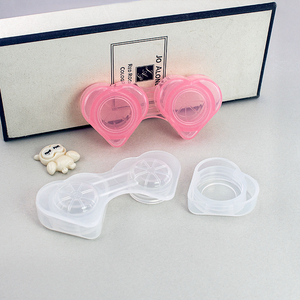
Wholesale Clear Prescription Contact Lenses Factory Eye Contact Lens Case Travel Colored Contact Lenses for Eyes
Precision-molded daily and monthly clear corrective lenses featuring 58% water content polymer matrix, UV400 blocking filter, and integrated ergonomic travel storage systems.
Get Catalog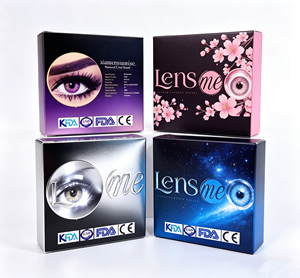
Factory Price Custom Design Logo Size Contact Lenses Photo Hot Pink Eco-Friendly Recyclable Spot UV Matte Contact Lens Packaging
FSC-certified recyclable cardboard cartons engineered with high-precision spot UV coating, foil stamping, and anti-counterfeiting serialization for premium brand identity.
Get Catalog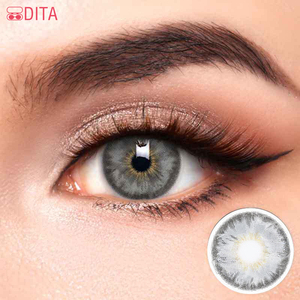
OEM Brand Silicone Hydrogel 1 Year Cheap Eye Contact Lenses Cosplay Disposable Contact Lenses
Third-generation Silicone Hydrogel material providing high Dk/t oxygen permeability (125 Dk/t), reduced tear evaporation, and specialized extended-wear stability for annual replacement cycles.
Get Catalog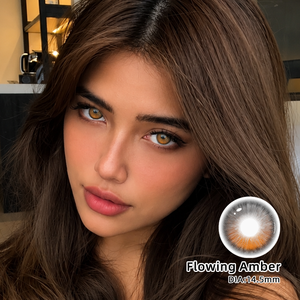
Wholesale Colored Contact Lenses 14.5mm OEM ODM Cosplay Halloween Party Eyes Factory Direct Private Label CE ISO 13485 Certified
14.5mm enlarged diameter decorative color lenses utilizing triple-layer bio-sandwich pigment technology to isolate color layers away from ocular corneal tissue.
Get Catalog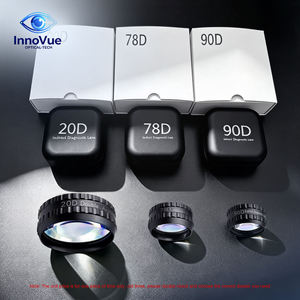
InnoVue Opto Ophthalmic Fundus Contact Lens Aspheric Lens 78D
High-magnification 78D double aspheric diagnostic optical lens crafted with multi-layer anti-reflective coating for high-resolution binocular fundus examination and diagnostic accuracy.
Get Catalog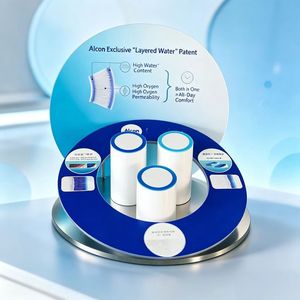
Premium Stable Structure PMMA Stainless Steel Contact Lens Display Tray Custom Size Brand Slogan Printing Easy Assembly Retail
Heavy-duty optical acrylic (PMMA) display module reinforced with brushed stainless steel hardware, designed for high-density point-of-sale retail merchandising.
Get Catalog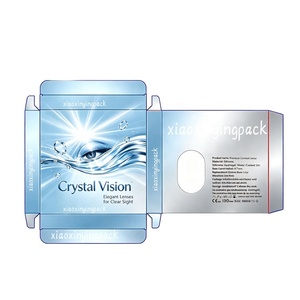
Four-Color Logo Printing Self Erecting Recyclable Custom Glossy Lamination False Eyelashes Colored Contact Lens Packaging Box
Automated self-erecting multi-purpose retail boxes with glossy lamination, high moisture resistance, and precise structural tolerances for automated high-speed filling lines.
Get Catalog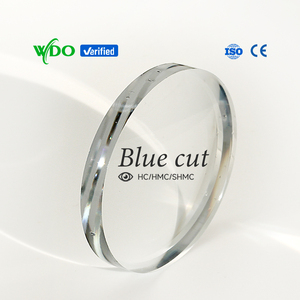
WDO 1.56 Semi Finished Blue Cut Contact Lenses 1.56 Uv420 Blue Cut Shmc Optical Lenses Semi Finished Optical Lenses for Sale
1.56 refractive index semi-finished ophthalmic blanks featuring integrated UV420 blue light cut material synthesis and Super Hydrophobic Multi-Coating (SHMC).
Get CatalogWhy Leading Global Brands Partner with kyralens
Operating Class 100,000 cleanroom environments and maintaining full ISO 13485:2016 medical device standards to provide risk-free, compliant OEM/ODM private label solutions.
Medical-Grade Regulatory Compliance
Navigating modern medical device compliance demands rigorous documentation. kyralens provides comprehensive technical dossiers, batch sterility testing records, and international regulatory clearance.
- Full conformity under European Union MDR 2017/745
- GMP-compliant Class 100,000 (ISO Class 8) cleanrooms
- Lot traceability with Unique Device Identification (UDI)
- Biocompatibility tested per ISO 10993 standards
Advanced Micro-Encapsulation & Lathe Optics
Our manufacturing matrix utilizes automated high-precision cast molding combined with CNC lathe cutting for special toric and multifocal geometry, eliminating mechanical eye friction.
- Bio-Sandwich color encapsulation prevents pigment contact
- Aspheric wavefront design minimizes spherical aberration
- Precision edge-thinning for high oxygen transmission
- Hydration-locking polymers for extended daily wear
Turnkey Private Label Category Management
We empower supermarket chains, pharmacy networks, and beauty retailers across Europe, the Middle East, and Asia to capture higher margins via private label eye care products.
- End-to-end custom blister, vial, and carton packaging
- Flexible MOQs for pilot tests & national market rollouts
- Multilingual packaging artwork and regulatory review
- Central European logistics hub in Ede, Netherlands
Technological & Material Development Trends in Contact Lens Manufacturing (2025–2030)
Analysis of polymer matrix advancements, ocular health compliance, and optical engineering innovations shaping the B2B vision care sector.
The global contact lens manufacturing market is undergoing a structural paradigm shift driven by technological advances in polymer chemistry, increased digital eye strain awareness, and stringent international regulatory oversight. For B2B buyers, optical store chains, and pharmaceutical distributors, staying competitive requires aligned sourcing with manufacturers capable of delivering high-transmissibility materials while navigating complex medical device frameworks.
1. The Transition from Traditional Hydrogel to 3rd-Generation Silicone Hydrogel
Historically, poly-hydroxyethyl methacrylate (pHEMA) hydrogels dominated the mass market due to low production costs. However, classic hydrogel lenses rely entirely on water content to transport oxygen to the cornea, capping oxygen transmissibility (Dk/t) around 20 to 30. Extended wear or low-humidity environments frequently lead to corneal hypoxia, vascularization, and ocular discomfort.
Modern B2B procurement is rapidly transitioning toward Silicone Hydrogel (SiHy) polymers. By incorporating fluorosilicone macromers into the polymer matrix, oxygen passes directly through the silicone channels rather than relying exclusively on water molecules. Third-generation SiHy materials eliminate the historic trade-off between high oxygen permeability and low modulus, delivering Dk/t values exceeding 100–130 Dk/t while keeping the lens flexible and comfortable. Factory investment in precision curing, plasma surface treatment, and internal wetting agents (such as Polyvinylpyrrolidone / PVP) ensures high wettability without surface breakdown over extended replacement periods.
2. Micro-Encapsulation and "Color Sandwich" Manufacturing Security
Cosmetic and colored contact lenses represent one of the fastest-growing optical segments, particularly across retail drugstores and fashion-forward demographics. However, traditional surface-printed color lenses pose significant health risks: unencapsulated dyes can leach onto the corneal epithelium, causing mechanical abrasion or toxic reactions.
To meet European Medical Device Regulation (EU MDR) and US FDA requirements, leading manufacturers utilize Triple-Layer Bio-Sandwich Technology. In this manufacturing process, the color pigments are fully micro-encapsulated between two micro-thin layers of clear hydrogel or silicone hydrogel material. The pigment layer never directly touches the cornea or the palpebral conjunctiva, guaranteeing 100% biocompatibility while retaining color vibrancy, high optical clarity, and smooth surface wettability.
| Polymer Metric / Parameter | Standard Hydrogel (pHEMA) | 2nd Gen Silicone Hydrogel | 3rd Gen Bio-SiHy (kyralens Standard) |
|---|---|---|---|
| Oxygen Transmissibility (Dk/t) | 15 - 30 Dk/t | 60 - 90 Dk/t | 110 - 140 Dk/t |
| Water Content (%) | 38% - 58% | 33% - 40% | 45% - 55% |
| Modulus (Stiffness / MPa) | 0.3 - 0.5 MPa | 1.0 - 1.4 MPa | 0.4 - 0.6 MPa |
| Surface Wetting Technology | Basic Water Retention | Plasma Coating Required | Internal PVP Bio-Matrix |
| Dehydration Rate (8 Hours) | High (> 3.5%) | Moderate (~ 2.0%) | Ultra-Low (< 1.0%) |
3. Specialized Optics: Myopia Management & Blue Light Filtering
Beyond standard spherical vision correction, modern optical manufacturers are expanding into therapeutic optic designs. With juvenile myopia escalating globally, dual-focus peripheral defocus lenses have become an essential addition to professional optical lines. These lenses correct central vision while creating a myopic defocus on the peripheral retina, slowing axial elongation of the eyeball.
Simultaneously, the proliferation of digital displays has accelerated demand for UV420 & High-Energy Visible (HEV) Blue Light blocking contact lenses. By synthesizing specialized monomeric blue-cut absorbers directly into the lens monomer mixture during cast-molding, the final lens filters out harmful 400nm-440nm wavelengths while maintaining crystal-clear luminous transmittance.
Future Global Sourcing & Procurement Trends for Contact Lens Buyers
Strategic analysis of environmental compliance, supply chain agility, packaging innovations, and regulatory risk mitigation in international procurement.
Procurement executives and optical category managers face evolving commercial and operational challenges. Strategic sourcing strategy is no longer limited to unit price negotiation; it requires evaluating full life-cycle supply chain risk, regulatory continuity, custom packaging adaptability, and environmental sustainability.
1. Sustainable & Recyclable Packaging Formats
Single-use daily contact lenses produce ongoing packaging waste. Enterprise buyers in Europe and North America are prioritizing manufacturers who implement zero-waste blister strategies.
Future-ready procurement mandates polypropylene (PP) blister cups that are 100% recyclable, paired with solvent-free foil lid seals and FSC-certified secondary paper packaging printed with non-toxic soy inks.
2. Dynamic Regulatory Readiness & UDI Integration
With regulatory regimes tightening globally—such as the transition from EU MDD to MDR and enhanced US FDA GUDID database logging—unregistered sourcing introduces severe supply chain disruption.
Procurement teams require manufacturers capable of providing complete Technical Documentation Files (TDF), automated 2D DataMatrix UDI labeling, and full lot traceability down to the raw monomer batch.
3. Agile Low-MOQ Private Label Rollouts
Traditional OEM manufacturing required order commitments of over 100,000 units per Stock Keeping Unit (SKU), tying up capital and creating inventory risks for niche color collections or regional brands.
Next-generation sourcing relies on modular OEM production lines. Distributors can now initiate pilot private label ranges with flexible initial volumes, scaling up as market demand solidifies.
Step-by-Step OEM/ODM Customization & Production Matrix
From initial optical parameters formulation to certified global delivery—our structured manufacturing process guarantees consistency and safety.
Category Planning
Defining target lens parameters (BC 8.5-8.7mm, DIA 14.0-14.5mm), water content, polymer formulation, and target market regulatory requirements.
Tooling & Molding
Ultra-precision CNC metal mold fabrication for cast-molding automated production, ensuring sub-micron surface curvature consistency.
Polymerization & Printing
Monomer injection, UV/thermal polymer curing, and bio-sandwich color pigment encapsulation under Class 100,000 cleanroom standards.
Hydration & Autoclave
Hydration in buffered saline solutions containing bio-compatible lubricants, blister sealing, and high-pressure steam sterilization (SAL 10⁻⁶).
AOI & Global Release
100% Automated Optical Inspection for edge tear and bubble detection, UDI barcoding assembly, and final compliance certificate issue.
Frequently Asked Questions (FAQ) for Optical Buyers
Direct technical and regulatory answers to common questions asked by B2B importers, pharmacy networks, and brand managers.
What specific compliance documentation is provided for CE-certified custom contact lenses?
Every OEM/ODM order produced by kyralens includes a complete Medical Device Compliance Package. This contains the EU Declaration of Conformity (DoC) under Regulation (EU) 2017/745 (or Directive 93/42/EEC where applicable), ISO 13485:2016 Quality Management System certificates, Batch Sterilization Certificates (SAL 10⁻⁶ validation), ISO 10993 Biocompatibility Test Reports (Cytotoxicity, Sensitization, Ocular Irritation), and lot-specific Certificate of Analysis (CoA) details.
What is the difference between Hydrogel and Silicone Hydrogel in custom OEM orders?
Standard Hydrogel (pHEMA) lenses rely on water content (typically 55%-58%) to transport oxygen, yielding a Dk/t around 20-30. They offer low initial production costs and high softness, making them suitable for short daily-wear cycles. Silicone Hydrogel incorporates fluorosilicone polymers, creating direct oxygen channels that achieve Dk/t values of 110 to 140+. SiHy is recommended for extended wear, premium retail placement, and reduced end-user dry eye complaints.
How does the factory guarantee color safety for decorative and cosplay colored contact lenses?
We utilize micro-encapsulation sandwich printing technology. Pigments are embedded within an inner polymer matrix bounded by bio-compatible clear lens layers. The color pigments never touch corneal tissue directly. Furthermore, all raw pigments are FDA/EU approved cosmetic-grade colorants subjected to heavy metal leaching tests (ICP-MS testing).
What packaging customization options are supported for private label brands?
We offer complete primary and secondary packaging customization. Primary packaging options include standard aluminum foil blister packs, poly-foil seal packs, or glass medical vials. Secondary packaging includes custom cardboard cartons with foil stamping, spot UV, embossed logos, custom die-cut windows, inner instruction leaflets (IFUs), anti-counterfeiting security labels, and master shipping cartons configured for automated warehouse scanning.
What is the standard production lead time and minimum order quantity (MOQ)?
Standard production lead times for customized private label runs range between 30 and 45 days following artwork sign-off and parameter confirmation. For existing standard SKUs with custom outer carton branding, expedited turnaround times of 15 to 20 days are available. MOQs vary by product category (e.g., clear spherical vs. custom cosmetic color lenses); please request a catalog to evaluate specific tier structures.
Can you manufacture specialized ophthalmic lenses like 78D fundus lenses or 1.56 blue cut optical blanks?
Yes. In addition to soft contact lenses, our manufacturing group produces high-precision diagnostic ophthalmic devices (such as double aspheric 78D/90D fundus observation lenses) and semi-finished 1.56/1.61/1.67 index optical lens blanks featuring SHMC anti-reflective and UV420 blue cut coatings for wholesale lens surfacing laboratories.
Partner with a Certified Custom Contact Lens Manufacturer
Accelerate your optical brand launch with ISO 13485 certified quality, bio-compatible material innovations, and seamless private label category execution across global markets.