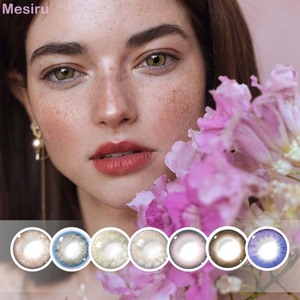
New La Girl Soft Contact Lenses HEMA-NVP Material 105 Colors CE Certified
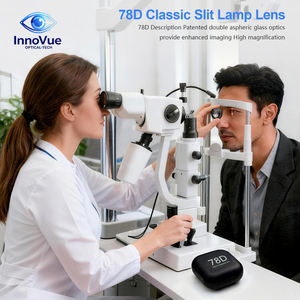
InnoVue 78D Aspheric Ophthalmic Lens CE ISO Certified with Custom Branding
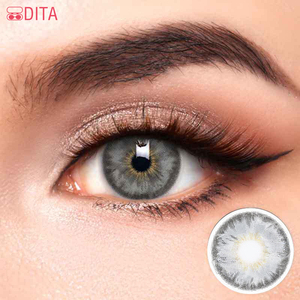
OEM Brand Silicone Hydrogel Yearly Disposable Contact Lenses CE Compliant
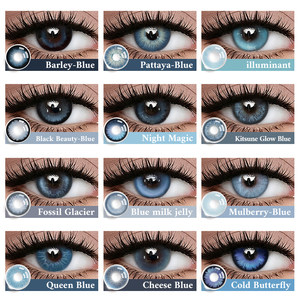
YITONGNIAN Wholesale Blue Colored Contact Lenses 14.5mm CE Approved
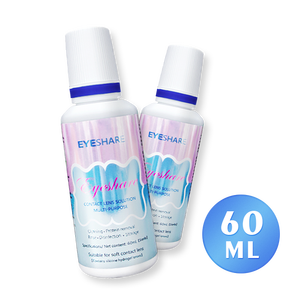
Eyeshare OEM/ODM Yearly Beauty Circle Color Soft Contact Lenses & Care Kit
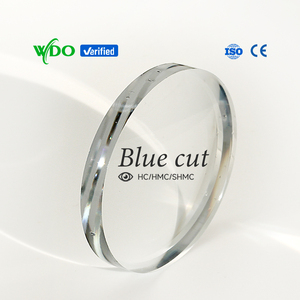
WDO 1.56 Semi Finished Blue Cut Optical Contact Lenses SHMC Coating
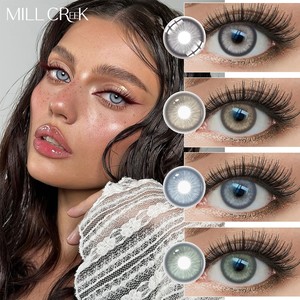
MILL CREEK Hazel 14.2mm Cosmetic HEMA Colored Lenses Private Packaging

Private Label OEM Package Yearly Cosmetic Colored Soft Contact Lenses
Executive Summary: Navigating B2B Contact Lens Sourcing & Compliance
The global contact lens market is undergoing a structural paradigm shift driven by stringent regulatory frameworks, advancing polymer chemistry, and dynamic consumer demand for both corrective and cosmetic eye care. For procurement executives, optical store chains, pharmaceutical distributors, and e-commerce brand owners, selecting the appropriate manufacturing model—specifically understanding the technical and legal difference between OEM and ODM contact lenses exporters—is a critical strategic decision.
Navigating international supply chains requires more than evaluating unit economics. Under the European Union Medical Device Regulation (EU MDR 2017/745), contact lenses are classified as Class IIa or Class IIb medical devices. Consequently, importers and brand owners must ensure that their chosen manufacturer or exporter possesses comprehensive CE certification, robust ISO 13485:2016 quality management systems, and transparent Technical Documentation files. This whitepaper provides an exhaustive technical evaluation of OEM (Original Equipment Manufacturing) versus ODM (Original Design Manufacturing) pathways, evaluating material parameters, regulatory liabilities, intellectual property dynamics, and procurement trends through 2030.
Deconstructive Analysis: OEM vs. ODM Manufacturing Models in Eyecare
Understanding the operational and legal boundaries between OEM and ODM pathways dictates your time-to-market, capital expenditure (CapEx), supply chain risk, and brand valuation.
1. Original Equipment Manufacturing (OEM) in Contact Lenses
In a pure OEM contact lens arrangement, the buying organization provides custom specifications, proprietary lens geometry, exact optical designs (e.g., specific toric back-surface curves, multifocal zone distributions), or proprietary polymer formulations (such as specialized Silicone Hydrogel or customized HEMA-NVP ratios). The OEM exporter acts strictly as the precision manufacturing arm, leveraging its cleanroom facilities, cast-molding automated lines, and ISO-certified processes to execute the client’s design.
- Intellectual Property (IP): The buyer retains ownership of unique lens mold geometries, optical design IP, and bespoke packaging artwork.
- Tooling & CapEx: Requires capital commitment for custom optical inserts, lathe-cutting tooling, and validation testing for new molding parameters.
- Regulatory Pathway: The buyer often acts as the legal manufacturer or holds a dedicated CE certificate under their brand name, utilizing the exporter's OEM technical master file (MAF).
2. Original Design Manufacturing (ODM) in Contact Lenses
An ODM contact lens model represents a turnkey solution. The exporter designs, formulates, tests, and certifies the contact lenses independently. The buyer selects from the exporter's pre-approved catalog—comprising verified base curves (BC), diameters (DIA), water contents, and extensive color pattern matrixes (such as 1-tone, 2-tone, 3-tone, and cosplay designs)—and applies their private label brand identity to the final secondary packaging.
- Time-to-Market: Accelerated product launch schedule (typically 30 to 60 days) as primary product validation, biocompatibility testing, and CE compliance are already completed by the exporter.
- Capital Efficiency: Zero mold development costs or custom polymer R&D investments required.
- Regulatory Pathway: The product relies directly on the exporter's existing CE Certificate and Declaration of Conformity (DoC), with the buyer registered as an OEM/ODM distributor or private label brand owner.
| Evaluation Parameter | OEM (Original Equipment Manufacturer) | ODM (Original Design Manufacturer) |
|---|---|---|
| Primary Target Audience | Established optical chains, pharma brands, patent holders | Emerging e-commerce brands, cosmetic lines, retail chains |
| Product Customization | 100% custom (Material, Dk/t, Base Curve, Optics) | Private label packaging over pre-validated catalog items |
| CE Certification Ownership | Buyer or Shared Technical File via OEM Exporter | Exporter holds core CE Certificate; Buyer uses DoC |
| Initial R&D / Tooling Cost | High (Investment in tooling, clinical trials, testing) | Zero (Pre-tested, mass-production ready) |
| Minimum Order Quantity (MOQ) | High (e.g., 50,000+ units per power/design) | Moderate to Low (e.g., 500 to 3,000 units per color/SKU) |
| Time to Market | 6 to 18 Months (Includes testing & validation) | 30 to 90 Days (Turnkey packaging design & printing) |
| Material Versatility | Custom Hydrogel / Silicone Hydrogel polymers | Standard HEMA, HEMA-NVP, 38%-58% Water Hydrogels |
The Critical Role of CE Certification for Exporters & Importers
Contact lenses come into direct contact with the human cornea, placing them under strict vigilance by international health authorities. When evaluating an exporter of CE certified contact lenses, procurement officers must conduct thorough due diligence on regulatory documentation.
EU MDR Compliance
Verification that the exporter has transitioned from the old MDD 93/42/EEC directive to the rigorous EU MDR 2017/745 standard, covering post-market surveillance (PMS) and clinical data evaluations.
ISO 13485:2016
Ensuring the manufacturing plant maintains an audited Quality Management System specific to medical devices, guaranteeing batch-to-batch sterility and optical purity.
Biocompatibility & Safety
Complete testing protocols according to ISO 10993 standards, including cytotoxicity, ocular irritation, systemic toxicity, and extractable chemical analysis.
Failure to source from a legitimate CE-certified exporter can result in customs seizures, severe financial penalties, product recalls, and brand reputation damage within regulated markets across Europe, the Middle East, and Asia-Pacific.
Future Procurement & Technology Trends in Contact Lens Exporting
To maintain a competitive edge, optical brand managers must align their procurement strategies with emerging material innovations and consumer preferences. The global industry is witnessing several key transformations:
1. The Transition to High Oxygen Transmissibility (Silicone Hydrogel)
While traditional poly-HEMA (Hydroxyethyl methacrylate) hydrogel lenses remain popular due to cost-effectiveness and flexibility in ODM cosmetic colors, the market is rapidly migrating toward Silicone Hydrogel (SiHy). SiHy materials offer significantly higher Dk/t (oxygen permeability) values—often exceeding 100 Dk/t compared to 15-25 Dk/t in standard hydrogels—reducing hypoxia-related ocular complications during extended wear.
2. Advanced Sandwich Printing Technology for Cosmetic Lenses
For ODM colored contact lenses, consumer safety relies on color entrapment technology. Modern CE-compliant exporters utilize multi-layer "sandwich" casting processes where bio-compatible pigments are encapsulated entirely inside the lens material, preventing direct contact between color colorants and the corneal epithelium.
3. Sustainable Manufacturing & Automated Quality Inspection
Leading exporters are integrating automated 100% optical inspection systems using high-resolution vision cameras to detect edge tears, micro-bubbles, and power variations in real-time. Additionally, sustainable manufacturing practices—such as eco-friendly blister packaging and recyclable solution containers—are becoming primary criteria in B2B supplier selection tenders.
Why Sourcing via Partnering Exporters Drives Strategic Growth
kyralens Technology Co.,Ltd stands at the forefront of global eye care distribution, offering specialized OEM and ODM private label solutions tailored to drugstores, optical retail chains, and international importers across Europe, the Middle East, and Asia.
By pairing European regulatory insights with flexible, state-of-the-art manufacturing infrastructure, we remove supply chain friction for buyers. Whether you require standard ODM cosmetic color series with minimal lead times or custom-engineered OEM silicone hydrogel lenses built to exact optical parameters, our end-to-end framework guarantees complete compliance, lot traceability, and market-ready packaging.
The operational difference lies in IP ownership, customization depth, and regulatory speed. Under OEM, you design custom lens parameters or material formulas, requiring original tooling, higher MOQs, and custom testing. Under ODM, you select pre-tested, CE-approved stock lens models, colors, and geometries from our existing portfolio and apply your custom private label artwork to the packaging, enabling rapid market entry.
A valid CE Certificate must be issued by an accredited European Notified Body (such as TÜV SÜD, BSI, or SGS) under Regulation (EU) 2017/745. You should request the exporter’s Certificate of Conformity, check the Notified Body number, verify the scope of medical devices covered (Class IIa soft contact lenses), and confirm that the plant holds valid ISO 13485:2016 certification.
ODM orders typically feature accessible MOQs starting from 500 to 3,000 pairs per color or power SKU, making them ideal for brand testing and quick rollouts. OEM projects involving custom polymer mixes, unique base curves, or proprietary toric geometry usually require minimum runs of 50,000+ units per power SKU to justify automated molding setup and sterile batch runs.
Yes. Our ODM cosmetic color lens series can be ordered as plano (0.00 diopter) for fashion applications, or with prescription optical powers ranging from -0.50 to -10.00 D (and up to +6.00 D in selected series) to cater to both optical stores and retail beauty channels.
Every shipment is accompanied by a Commercial Invoice, Detailed Packing List, Certificate of Analysis (CoA) per batch, Certificate of Free Sale (CFS), sterilisation validation reports, and the manufacturer's Declaration of Conformity (DoC) referencing CE registration for smooth customs clearance.
Ready to Expand Your Contact Lens Brand Portfolio?
Download our full B2B catalog, complete technical specifications, color matrix charts, and OEM/ODM pricing tiers today.