Featured Korean CE-Certified Contact Lenses & Accessories
Precision-engineered cosmetic, corrective, and cosplay contact lenses compliant with international medical device standards.

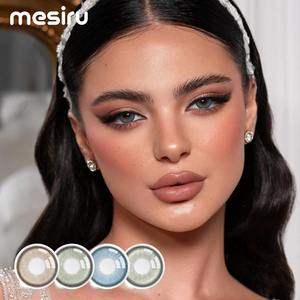
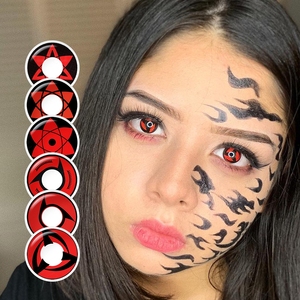
Executive Summary: Navigating Global Sourcing for Korean Colored Lenses
The global demand for cosmetic soft contact lenses has experienced an unprecedented surge, driven by expanding beauty trends, omnichannel pharmacy retailing, and advanced ophthalmic manufacturing techniques. Republic of Korea (South Korea) has established itself as the world standard in cosmetic lens design, pioneering high-definition iris printing technology, ultra-comfortable bio-compatible hydrogel materials, and refined multi-tone gradient optics.
However, for international B2B buyers, pharmacy chains, optical retailers, and brand owners, navigating the cross-border procurement of Korean colored contact lenses requires a rigorous understanding of compliance regulatory protocols, manufacturing methodologies, and material science. Under the updated European Union Medical Device Regulation (EU MDR 2017/745), cosmetic contact lenses—regardless of whether they contain refractive correction (power)—are classified as Class IIa medical devices, necessitating strict CE certification, audited Quality Management Systems (ISO 13485:2016), and full lot traceability.
This whitepaper serves as a definitive B2B procurement and engineering manual, detailing material breakdowns, manufacturing processes, regulatory benchmarks, and enterprise supply chain strategies curated by kyralens Technology Co.,Ltd, a global wholesaler and private-label developer headquartered at Faradaystraat 14, 6718 XT Ede, The Netherlands.
Corporate Advantage: End-to-End Private Label & Distribution Ecosystem
kyralens Technology Co.,Ltd operates as an integrated developer, master distributor, and private label solution partner serving drugstores, retail pharmacy chains, optical conglomerates, and fast-moving consumer goods (FMCG) retailers across Europe, the Middle East, and Asia. Our European operational presence in Ede, The Netherlands, ensures localized regulatory governance, streamlined customs compliance, and responsive distribution logistics.
Full Category Synergy
We supply complete shelf-ready portfolios: daily, bi-weekly, and monthly soft contact lenses, cosmetic color collections, multipurpose cleaning solutions, lubricating eye drops, storage cases, and reading glasses.
Pre-Verified Compliance
Every SKU is backed by Declarations of Conformity, CE 0197 audit documentation, technical files, ISO 13485 certifications, and localized multilingual regulatory labeling.
Proven Retail Partnerships
Trusted by global retail leaders and major international chains including Watsons, Rossmann, Kruidvat, Etos, Albert Heijn, REWE, Migros, and Nahdi.
Material Engineering & Micro-Encapsulation Technology
The safety and bio-compatibility of colored contact lenses depend heavily on polymer chemical composition and color pigment isolation. Inferior colored lenses utilize surface-printed dyes that come into direct contact with the delicate corneal endothelium, posing risks of pigment leaching, mechanical corneal abrasion, and severe toxic keratitis.
Leading Korean manufacturers employ advanced Triple-Layer Sandwich Micro-Encapsulation Technology (also referred to as Pigment-in-Tissue process). In this manufacturing method, organic, non-toxic pigment layers are sealed entirely between two micro-thin layers of purified hydrogel or silicone hydrogel polymer material. This guarantees zero contact between color dyes and the ocular tissue while preserving maximum smooth surface wettability.
| Polymer Parameter | 2-HEMA Hydrogel | Silicone Hydrogel (SiHy) | PC-Hydrogel (Phosphorylcholine) |
|---|---|---|---|
| Oxygen Permeability (Dk/t) | 18 – 28 Dk/t | 80 – 140 Dk/t | 35 – 55 Dk/t |
| Water Content (%) | 38% – 45% | 38% – 48% | 55% – 60% |
| Dehydration Resistance | Moderate | High | Exceptional (Mucin Mimicking) |
| B2B Recommended Usage | 1-Day & Monthly Cosmetic | Extended Wear & High-Dk Lenses | Sensitive Eyes & Dry Eye Formulations |
| Flexural Modulus (Stiffness) | Low (Soft, High Initial Comfort) | Moderate to High | Ultra-Low (Natural Feel) |
Furthermore, optical edge profiling plays a critical role in tear-film exchange. Korean cast-molding precision toolings achieve an ultra-thin edge contour (down to 0.06mm) featuring smooth, rounded bevels. This rounded edge design minimizes palpebral conjunctival friction during blinking and facilitates natural tear circulation under the lens structure, dramatically boosting all-day wearability.
Future Procurement & Product Development Trends (2025–2030)
The global retail market for colored contact lenses is undergoing a rapid evolution characterized by changing consumer hygiene habits, technological breakthroughs, and stricter medical regulations. Institutional buyers and category managers must align their 3-to-5-year sourcing roadmaps with these key industry shifts:
1. Rapid Acceleration of Daily Disposables
Consumer preferences are shifting away from annual and monthly replacement lenses toward 1-Day daily disposable colored lenses. Driven by hygiene awareness, zero maintenance requirements, and impulse beauty purchasing, daily disposables now represent over 62% of new private label program launches globally.
2. Hyper-Realistic Iris Pattern CAD Design
Legacy single-tone block prints are obsolete. Modern trends demand 3-tone and 4-tone dot-matrix iris designs with subtle limbal rings, asymmetrical pupil gradients, and optical depth simulation that seamlessly blend with natural eye tones (brown, hazel, dark charcoal, blue, and emerald green).
3. Bio-Hybrid Materials & Blue Light Filtering
Next-generation Korean formulations integrate Phosphorylcholine (PC) monomers and hyaluronic acid (HA) wetting agents directly into the polymer matrix. Additionally, HEV (High-Energy Visible) blue-light blocking and UV-A/UV-B protection filters are becoming standard specifications in premium color lens ranges.
Supplier Benchmarking & Audit Criteria for Importers
When selecting a Korean colored contact lens supplier or global OEM exporter, procurement executives should conduct a thorough audit across six mandatory technical criteria to protect their brand reputation and ensure seamless commercial import:
| Evaluation Domain | Certified Korean / Strategic Supplier Standard | Risk Profile of Non-Compliant Suppliers |
|---|---|---|
| Medical Regulatory Registration | Full CE 0197 (TÜV / DNV), EU MDR 2017/745 Class IIa Technical Files, ISO 13485:2016 certification. | Invalid or expired certificates, seizure by customs authorities, severe legal product recall penalties. |
| Pigment Isolation Integrity | Automated Sandwich Micro-encapsulated printing with 100% polymer lock inspection. | Surface printing leading to dye detachment, ocular irritation, and corneal toxicity claims. |
| Manufacturing Cleanroom Class | Class 100,000 cleanroom environments with automated optical defect screening (AOI). | Foreign particle inclusion, microbial contamination, inconsistent edge profiles. |
| Private Label Packaging Flexibility | Custom blister foil prints, retail folding cartons, UDI barcode integration, compliant local language leaflets. | Generic unbranded blisters requiring costly third-party re-packaging. |
| Supply Chain Traceability | Unique Device Identifier (UDI), lot-level ERP tracking from monomer synthesis to warehouse delivery. | Inability to trace defect batches, inventory recall bottlenecks. |
Frequently Asked Procurement Questions (FAQ)
- Base Curve (BC): 8.5mm to 8.6mm (fits ~85% of global adult corneal curvatures).
- Diameter (DIA): 14.0mm to 14.2mm for natural cosmetic enhancement, or 14.5mm for circle lens/enlargement effects.
- Water Content: 38% to 42% for daily/monthly hydrogel lenses (optimizes structural stability and reduces end-of-day dehydration).
- Center Thickness: 0.06mm to 0.08mm @ -3.00D for optimal oxygen transmissibility.
Partner with a Certified Global Contact Lens Supplier
Consult with our optical product managers and regulatory compliance specialists. Request product samples, custom OEM quotation sheets, or review technical compliance documentation for your target destination markets.