Featured CE Certified Cosmetic Lens Portfolio
Explore our direct-from-factory catalog of zero-power non-prescription colored contact lenses, optical packaging solutions, and care accessories manufactured under strict ISO 13485 quality standards.
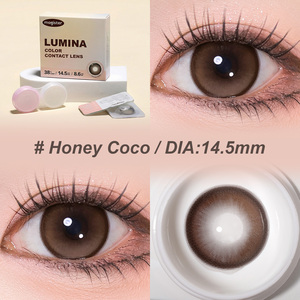
Full Color Printed Magister Lumina 6-Month Non-Prescription Eye Lenses 14.5mm
Get Catalog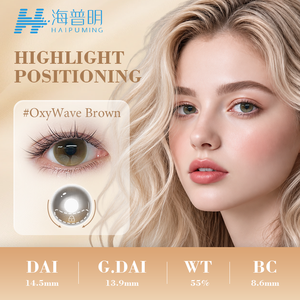
Wholesale OEM Rotationally Stable Highlight Colored Contacts Daily Disposable HEMA
Get Catalog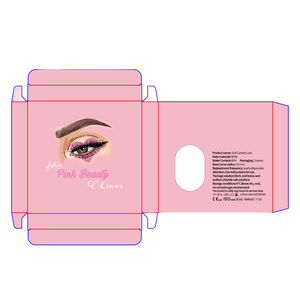
Custom Glossy Lamination Self Erecting Recyclable Contact Lens Packaging Box
Get Catalog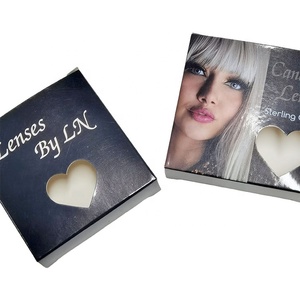
Love Window Design Cosmetic Colored Eye Contact Lenses Wholesale Retail Paper Box
Get Catalog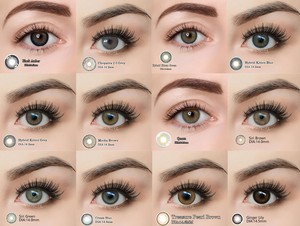
CE & ISO 13485 Certified Natural Soft 40% Water Content Non-Prescription Lenses
Get Catalog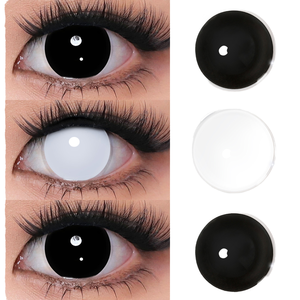
MIIEMO Halloween Crazy Soft Non-Prescription Cosplay Lenses (49 Visual Models)
Get Catalog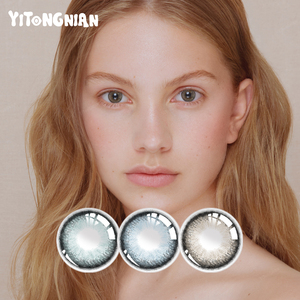
YITONGNIAN Eyewear Hazel Natural Soft Cosmetic Contact Lens for Dark Eyes
Get Catalog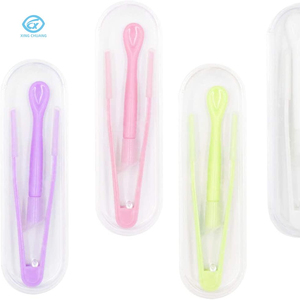
Eco-Friendly Candy Colour Contact Lens Inserter Removal Stick Tool Suit
Get CatalogExecutive Sourcing Guide: CE Certified Non-Prescription Colored Contacts Factories
In the rapidly expanding global cosmetic optometry market, sourcing non-prescription colored contact lenses (also referred to as Plano cosmetic lenses or zero-power ocular devices) requires navigating complex regulatory standards, advanced material science, and stringent manufacturing protocols. Contrary to popular consumer perception, non-prescription colored contact lenses are classified strictly as medical devices under international regulatory regimes—including the European Union's Medical Device Regulation (EU MDR 2017/745) and the United States FDA framework.
For global optical chains, pharmacy networks, beauty conglomerates, and private-label distributors, identifying a legitimate, high-capacity, CE certified non-prescription colored contacts factory is paramount to securing market access, mitigating liability risks, and protecting consumer ocular health. This whitepaper analyzes the manufacturing methodologies, regulatory imperatives, technical specifications, and future market dynamics governing OEM/ODM contact lens production.
Rigorous CE Certification
Compliant with EU MDR 2017/745 Class IIa/IIb medical device standards. Guaranteed biocompatibility (ISO 10993) and zero pigment leaching via micro-encapsulation.
Advanced Sandwich Printing
Triple-layer color isolation locks organic colorants inside hydrophilic Poly-HEMA matrices, keeping direct dye away from the cornea.
Full-Shelf Ecosystem
Turnkey OEM solutions integrating non-prescription lenses, hydrating eye drops, multipurpose peroxide solutions, and specialized storage cases under a unified private label.
Manufacturing Precision: Poly-HEMA, Silicone Hydrogel & Sandwich Tech
Modern contact lens manufacturing requires absolute precision at the micron level. When selecting a certified non-prescription colored contact lens factory, B2B procurement professionals must evaluate three core technological pillars: material chemistry, color encapsulation, and molding automation.
1. The Bio-Compatible "Sandwich" Micro-Encapsulation Technology
The primary risk in substandard cosmetic lens production is pigment migration onto the corneal epithelium. Premier factories utilize the double-sided coat or "sandwich" printing method. In this process, non-toxic, FDA-approved bio-pigments are encapsulated between an inner clear hydrogel layer and an outer hydrophobic barrier layer. The color layer never comes into direct contact with the eye tissues, eliminating keratitis risks, chemical leaching, and mechanical abrasion.
2. Cast Molding vs. Lathe Cutting Technologies
While lathe cutting is utilized for custom medical prosthetics, high-volume production of non-prescription colored lenses relies on Full Cast Molding. High-precision optical molds inject liquid hydrogel monomers (e.g., Poly-HEMA or Silicone Hydrogel formulations), which undergo UV-initiated thermal polymerization. This automated process ensures uniform edge thickness, predictable base curves, and flawless dimensional stability across millions of units.
| Technical Parameter | Hydrogel (Poly-HEMA) Standard | Silicone Hydrogel (SiHy) Premium | Regulatory Testing Method |
|---|---|---|---|
| Water Content | 38% – 45% | 45% – 55% | ISO 18369-4 Gravimetric |
| Oxygen Transmissibility ($Dk/t$) | 15 – 25 $Dk/t$ | 80 – 120 $Dk/t$ | ISO 18369-4 Polarographic |
| Base Curve (BC) Range | 8.5mm – 8.7mm ($\pm 0.1\text{mm}$) | 8.6mm – 8.8mm ($\pm 0.05\text{mm}$) | Automated Interferometry |
| Center Thickness (CT) | 0.07mm – 0.09mm at -0.00D | 0.06mm – 0.08mm at -0.00D | Ultrasonic Thickness Gauge |
| Sterilization Standard | Moist Heat Autoclave ($121^\circ\text{C}, 30\text{ min}$) | Moist Heat Autoclave ($121^\circ\text{C}, 30\text{ min}$) | ISO 17665 Validation |
| Pigment Isolation | Dual-Layer Embedded Matrix | Micro-encapsulated Polymer Matrix | ISO 10993 Cytotoxicity / Rubbing Test |
Corporate Advantage: Integrated Private Label Eye Care Solutions
As an industry leader in global optical product manufacturing, kyralens Technology Co., Ltd. serves as a strategic OEM/ODM partner for optical retailers, pharmacy groups, and international beauty brands. We operate beyond standalone lens production, managing the end-to-end supply chain infrastructure required for turnkey product launches.
Our enterprise solutions integrate complete shelf categories, allowing retail clients to launch private-label colored contacts alongside complementary eye care products, including:
- Daily, Two-Weekly & Monthly Lenses: Poly-HEMA and next-generation Silicone Hydrogel cosmetic lenses.
- Lubricating & Rewetting Eye Drops: Preservative-free hyaluronic acid formulas engineered specifically for contact lens wearers.
- Disinfecting Solution Ecosystems: Multipurpose contact lens cleaning solutions and peroxide systems.
- Custom Accessories & Packaging: Ergonomic lens cases, travel insertion tools, and recyclable blister cartons adapted for local market labeling compliance.
Future Procurement Trends: Colored Contacts Manufacturing (2025–2030)
Strategic sourcing directors must anticipate technological shifts and consumer behavior trends when partnering with non-prescription colored contact factories. Over the next decade, the market is undergoing four major structural evolutions:
1. The Shift to High-Dk/t Daily Disposables
Consumer preferences are moving rapidly away from annual and 6-month reusable lenses toward daily disposable cosmetic contacts. Driven by hygiene concerns and convenience, daily disposables eliminate lens-care non-compliance. Factories are investing heavily in high-speed automated packaging lines capable of producing millions of daily blister packs per month at ultra-low unit costs, utilizing high-oxygen Silicone Hydrogel materials to protect corneal metabolism.
2. Hyper-Realistic Iris Pattern Design via 3D Digital Printing
Monolithic, flat-color lenses are obsolete. Modern procurement demands complex multi-tone iris printing (3-tone, 4-tone, and highlight halo effects) that blend naturally with dark eyes. Advanced factories are deploying high-definition 3D digital printing technology that replicates natural human iris fibers, radial striations, and limbal rings with sub-micron dot resolution.
3. Sustainable & Recyclable Packaging Imperatives
With environmental regulations tightening across Europe and North America, factories are redesigning primary blister trays and secondary folding cartons. The future standard combines polypropylene (PP) blister trays with reduced aluminum foil seals, packaged inside FSC-certified, recyclable cardboard boxes with soy-based inks.
4. Strict Traceability under EU MDR & Unique Device Identification (UDI)
Under EU MDR, every blister pack and master carton must feature standardized Unique Device Identification (UDI) barcodes linked to European Databank on Medical Devices (EUDAMED). Factories offering automated UDI laser printing and complete batch traceability give brands a decisive advantage when entering regulated retail channels.
Frequently Asked Questions (FAQ) for B2B Importers
Even without corrective optical power (-0.00D Plano), a contact lens rests directly on the living tissue of the cornea. Improper materials, poor oxygen permeability, or uncontrolled pigments can cause ocular hypoxia, bacterial keratitis, or corneal abrasions. Consequently, regulatory bodies like the EU (under MDR 2017/745) and US FDA regulate non-prescription colored lenses under strict medical device frameworks requiring CE certification and Class II compliance.
Buyers should request the complete audit file, including the Notified Body ID number (a 4-digit code accompanying the CE mark), the scope of certification, and the valid expiration date. Authenticity can be verified directly on the issuing Notified Body’s official online database. Additionally, ensure the factory’s ISO 13485 certificate explicitly covers the design and manufacture of cosmetic soft contact lenses.
For standard stock designs packaged in universal blisters, MOQs can start as low as 500 to 1,000 pairs per color model. However, for fully customized OEM projects featuring proprietary color patterns, custom base curves, and bespoke branded foil boxes, minimums typically range from 5,000 to 10,000 units per SKU to optimize cast-molding automated runs.
When processed through validated moist-heat steam sterilization ($121^\circ\text{C}$ for 30 minutes) and sealed in medical-grade aluminum-foil polypropylene blister packs, colored contact lenses maintain sterile stability for 5 years from the date of manufacture, provided packaging remains intact and stored within standard temperature ranges.
Yes. We provide complete regulatory documentation support, including artwork review for compliance with European, Middle Eastern, and Asian market regulations. Packaging designs can incorporate multi-language user leaflets (IFUs), localized warning icons, lot tracking numbers, production dates, and global barcode integrations.
Partner with a Certified Non-Prescription Contacts Factory
Scale your retail eye care portfolio with CE Certified, ISO 13485 compliant OEM/ODM manufacturing. Download our complete 2025 product catalog, request factory audit documentation, and order sample sets for testing.