Featured Product Lines
Explore our OEM/ODM portfolio of medical-grade silicone hydrogel and cosmetic color lenses, engineered for high breathability, lasting hydration, and compliance across European, Middle Eastern, and Asian markets.
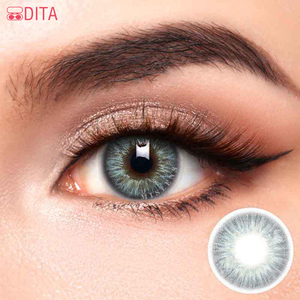

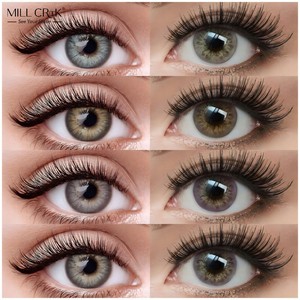
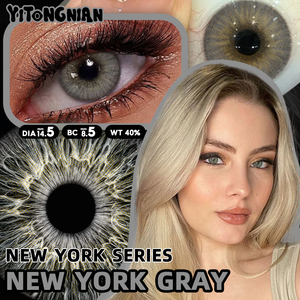
Executive Summary: The Strategic Evolution of Silicone Hydrogel Contact Optics
The global contact lens market is undergoing a structural transition. For decades, conventional 2-hydroxyethyl methacrylate (HEMA) hydrogel materials dominated retail shelves due to low manufacturing costs and simple cast-molding processes. However, clinical research highlighting corneal hypoxia, limbal hyperemia, and end-of-day dryness has driven a decisive global pivot towards Silicone Hydrogel (SiHy) polymers.
As a leading CE certified silicone hydrogel contact lenses manufacturer and OEM/ODM supplier, our enterprise bridges the gap between high-precision optical engineering and commercial scalable production. Silicone hydrogel lenses integrate siloxane macromers into the hydrogel matrix, creating high-permeability oxygen channels that deliver up to 5 times more oxygen to the cornea than traditional soft contact lenses. This physiological breakthrough allows optical retailers, pharmacy chains, and private label brands to fulfill modern consumer demands for health-first, all-day comfortable contact lenses.
Material Science & Engineering: Dk/t Permeability vs. Modulus Balancing
In contact lens manufacturing, achieving optimal clinical performance requires balancing three critical material variables: Oxygen Transmissibility ($Dk/t$), Water Content (%), and Elastic Modulus ($MPa$). Silicone is inherently hydrophobic, meaning higher silicone content increases oxygen permeability ($Dk$) but reduces lens wettability and increases stiffness (elastic modulus).
Our R&D team utilizes 3rd-Generation Non-Surface-Treated Silicone Hydrogel chemistry. By incorporating long-chain siloxane monomers with hydrophilic wetting agents throughout the matrix polymer synthesis, we achieve ultra-high oxygen transmissibility ($Dk/t > 125$) while preserving a soft elastic modulus ($0.4 - 0.6\text{ MPa}$) and high equilibrium water content ($45\% - 55\%$).
| Performance Metric | 1st Gen Silicone Hydrogel | 2nd Gen Silicone Hydrogel | 3rd Gen (Our OEM Benchmark) | Traditional HEMA Hydrogel |
|---|---|---|---|---|
| Oxygen Transmissibility ($Dk/t$) | 110 - 140 | 100 - 120 | 130 - 160 (Superior) | 15 - 25 (Low) |
| Modulus of Elasticity | 1.1 - 1.4 MPa (Stiff) | 0.9 - 1.1 MPa (Moderate) | 0.4 - 0.6 MPa (Ultra-Soft) | 0.3 - 0.5 MPa (Soft) |
| Surface Wetting Technology | Plasma Coating / Treatment | Internal PVA Wetting Agent | Inherent Siloxane Hydrophilic Matrix | Natural Hydrophilic HEMA |
| Corneal Health Risk (Hypoxia) | Very Low | Low | Negligible / Physiology Safe | Moderate to High |
| Retail Replacement Target | Monthly / Extended Wear | Monthly / Bi-Weekly | Daily & Monthly Disposable | Daily / Cosmetic Wear |
Future Procurement Trends in the B2B Optical Supply Chain (2025–2030)
Procurement directors and category managers across pharmacy groups, supermarkets, and optical chains face changing buyer demographics and tightening medical device regulations. When sourcing silicone hydrogel contact lenses at scale, four macro-trends are shaping procurement contracts:
Rapid Daily Disposable Shift
Consumers are rapidly abandoning annual and monthly re-usable lenses in favor of daily disposables to eliminate maintenance solutions and minimize infection risks. OEM suppliers must offer automated high-yield daily blister packing.
Breathable Cosmetic Color Lenses
Color contact lenses were historically limited to low-breathability HEMA materials. Modern consumers now demand cosmetic vibrancy combined with silicone hydrogel breathability for safe multi-hour wear on dark eyes.
Stringent CE MDR & Global Regulatory Audit
With the European Union transitioning from MDD to MDR (Regulation EU 2017/745), retailers require complete technical documentation, clinical evaluations, and batch traceability from certified contract manufacturers.
Enterprise OEM/ODM Manufacturing Infrastructure & Core Competencies
Refined over years of specialized optical production, our manufacturing eco-system serves international retailers including pharmacy chains, drugstores, and optical brands across Europe, the Middle East, and Asia. Our private label turn-key services encompass every phase of product lifecycle management:
1. Automated Cast-Molding & Precision Nanometer Lathes
We operate state-of-the-art Class 100,000 (ISO Class 7) cleanrooms equipped with fully automated cast-molding lines. Utilizing high-precision mold inserts engineered to nanometer tolerances, we guarantee consistency in base curve ($8.5\text{mm} - 8.7\text{mm}$), diameter ($14.0\text{mm} - 14.5\text{mm}$), and edge profile rounding to minimize ocular friction.
2. Advanced Surface Wetting & Hydrophilic Sandwich Technology
For cosmetic color silicone hydrogel lenses, pigment migration is a significant clinical safety concern. Our proprietary Color-Lock Sandwich Technology embeds micro-pigments securely between two transparent bio-compatible polymer layers, preventing direct color contact with the corneal endothelium while maintaining full oxygen diffusion.
3. End-to-End Regulatory Support & Private Label Packaging
Launching a private label eye care range requires meticulous artwork compliance, multi-lingual blister packaging, and complete regulatory dossier submission. Our regulatory affairs department handles full documentation, including CE Certificates of Conformity, ISO 13485:2016 quality management system compliance, free sales certificates (FSC), and sterilisation validation records (Ethylene Oxide / Steam Autoclave).
Comprehensive Procurement Guide & Technical FAQ
Below are critical technical and business inquiries addressed by our quality control and regulatory teams for prospective B2B buyers and category purchasing managers:
Partner with a Trusted Global Eye Care OEM Manufacturer
Whether you are expanding an established pharmacy brand or launching a high-margin private label contact lens line, our R&D engineers and B2B procurement team stand ready to deliver tailor-made optical solutions.
Contact Us