CE Certified Yearly Contact Lenses & OEM Accessories
Explore our top-tier selection of annual soft contact lenses, cosmetic color series, vision-correction optics, and private label packaging solutions. Manufactured in ISO 13485 certified cleanrooms with full CE compliance for international pharmacy chains, optical retailers, and global distributors.
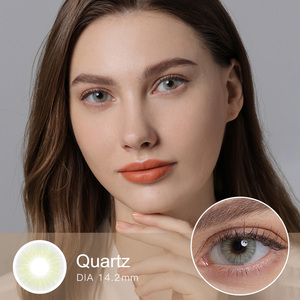
Freshgo Hidrocor Natural Color Contact Lenses
Soft HEMA annual lenses engineered with 3-in-1 sandwich color isolation technology. Hydrophilic properties ensure 365 days of moist comfort.
Contact Us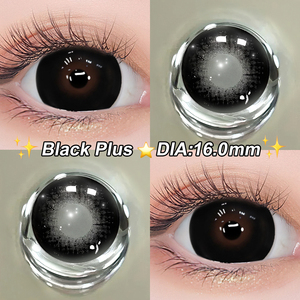
Magister 16mm Supersize Black Contact Lenses
Enlarging circle lenses designed for high opacity and dramatic aesthetic transformation. High Dk/t oxygen transmissibility for annual wear.
Contact Us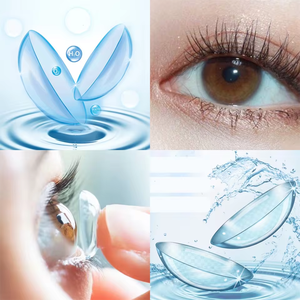
YITONGNIAN Transparent Lenses (0.00 to -10.00)
Clear corrective soft lenses with ultra-smooth lathe-cut edge geometry. Offers high visual clarity and protein-resistant polymer matrix.
Contact Us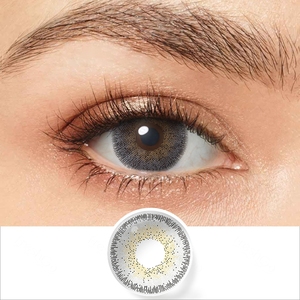
Freshgo Blended Eye Color Cosmetic Contact Lenses
Multi-tone natural iris pattern blending for dark and light eyes. Sterile blister packaging with extended 5-year unopened shelf life.
Contact Us
Custom Optical Merchandising & POS Displays
Turnkey promotional materials and point-of-sale display banners tailored to boost brand visibility across retail pharmacy counters.
Contact Us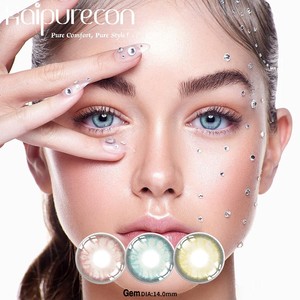
14.0mm Soft HEMA Custom Cosmetic Contact Lenses
Factory-direct bulk production for private labels. Available in custom water content (38%-45%) and specialized base curve specifications.
Contact Us
Custom Logo Plastic Contact Lens Storage Cases
Medical-grade PP material storage boxes with leak-proof screw caps. Ideal as retail add-ons or gift-with-purchase promotional items.
Contact Us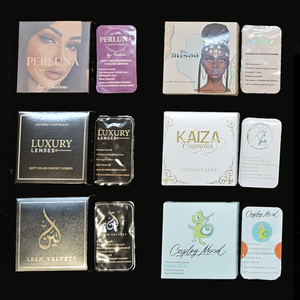
Custom Private Label Packaging & Box Kits
End-to-end branding services including foil-stamped carton boxes, multi-lingual instruction leaflets, and custom blister foil sealing.
Contact UsExecutive Sourcing Insight: The B2B Advantage of Yearly Soft Contact Lenses
In the global optical procurement landscape, CE certified yearly contact lenses represent one of the most commercially profitable and high-demand segments for wholesale buyers, optical chains, pharmacy networks, and e-commerce brand owners. Unlike daily or monthly disposables that require continuous re-orders, annual replacement lenses offer end-users an extraordinary cost-per-wear value proposition while delivering substantial retail profit margins to importers and distributors.
However, sourcing contact lenses on a 12-month wear cycle introduces strict manufacturing standards. Because the lens matrix must withstand environmental exposure, lipid buildup, and daily handling for up to 365 days, sourcing directors must partner exclusively with certified OEM/ODM exporters. Factories must demonstrate flawless adherence to ISO 13485 Medical Device Quality Management Systems, European Medical Device Regulation (EU MDR 2017/745), and rigorous bio-compatibility safety testing (ISO 10993).
Regulatory Compliance Architecture: EU MDR, CE Certification & ISO 13485
Navigating international optical regulatory frameworks is vital for legal distribution across Europe, the Middle East, Asia, and the Americas.
EU MDR 2017/745 Certification
Contact lenses are classified as Class IIa or Class IIb medical devices under European regulations. Fully compliant CE markings require an in-depth Technical Documentation File (TDF), clinical evaluation reports, and continuous post-market surveillance (PMS) backed by accredited Notified Bodies (e.g., TÜV SÜD, BSI, SGS).
ISO 13485:2016 Quality Systems
Leading contact lens exporters operate strictly under ISO 13485 standards. This covers raw material monomer qualification, automated cast-molding parameter control, ultra-pure water purification (WFI grade), and complete batch lot traceability down to individual blister foil serials.
Ocular Safety & Bio-Compatibility
Every yearly lens monomer formulation undergoes exhaustive ISO 10993 cytotoxicity, ocular irritation, and systemic toxicity testing. Color contact lenses must incorporate pigment-locking technology to prevent direct contact between colorants and the corneal epithelium.
Material Science & Precision Manufacturing Innovations
How advanced hydrogel polymers and CNC lathe-cutting technology ensure 365 days of physiological safety and optical precision.
1. Polymacon vs. Silicone Hydrogel Matrix
Traditional yearly lenses utilize high-purity Hydroxyethyl Methacrylate (Poly-HEMA or Polymacon) with a balanced 38% to 42% water content. This low-water formulation is deliberately designed to minimize dehydration-induced lens shrinkage, ensuring structural integrity over a 12-month period. For premium lines, factories integrate Fluorosilicone Hydrogel polymers, elevating Oxygen Transmissibility ($Dk/t$) beyond 80 units to protect corneal metabolism during extended wear.
2. 3-in-1 Micro-Encapsulation "Sandwich" Technology
When sourcing cosmetic color lenses (such as Hidrocor, Natural, or Circle Lens lines), safety hinges on pigment placement. Top-tier CE factories employ a multi-layer sandwich structure: color pigments are double-sealed between micro-thin biocompatible hydrogel layers. The pigment never touches the cornea or conjunctiva, eliminating chemical leaching, pigment flaking, and rough surface friction.
3. Precision Computerized Lathe-Cutting & Edge Profiles
Unlike short-term daily lenses produced solely via high-speed cast molding, yearly lenses frequently utilize ultra-precision CNC lathe-cutting or hybrid mold-lathe processing. This creates sub-micron smooth edge profiles that promote natural tear exchange during blinks, reducing mechanical irritation, lipid deposition, and foreign body sensation.
4. Non-Ionic Surface & Moisture Retention Coatings
Annual wear requires superior resistance to tear-film proteins (lysozyme, albumin) and lipid deposits. Non-ionic HEMA hydrogel matrices naturally repel negatively charged tear proteins. Combined with internal wetting agents like Hyaluronic Acid (HA) or Polyvinylpyrrolidone (PVP), the lens maintains a low contact angle (<40°), sustaining moisture and wettability all day long.
Standard B2B Sourcing Specifications Table
OEM/ODM customizable technical parameters available for wholesale buyer contracts.
| Specification Parameter | Standard OEM Range / Option | B2B Sourcing Advantage |
|---|---|---|
| Replacement Cycle | Yearly / Annual (365 Days) | Maximum cost efficiency and higher profit margins for retailers. |
| Material Composition | Poly-HEMA (Polymacon) / Silicone Hydrogel | Non-ionic material resisting protein deposit accumulation. |
| Water Content | 38% – 42% (Hydrogel) / 45% (Silicone) | Low dehydration rate; prevents dry-eye fatigue over long wear hours. |
| Base Curve (BC) | 8.5mm, 8.6mm, 8.7mm (Customizable) | Universal corneal fit covering over 95% of global consumer populations. |
| Diameter (DIA) | 14.0mm, 14.2mm, 14.5mm, up to 16.0mm | Spans natural iris enhancement to dramatic cosmetic big-eye effects. |
| Diopter Power Range | 0.00D (Plano) to -10.00D (0.25D/0.50D steps) | Broad corrective optics inventory suited for prescription and cosmetic buyers. |
| Center Thickness | 0.07mm – 0.09mm (@ -3.00D) | Optimized structural rigidity for handling without sacrificing comfort. |
| Sterilization & Packaging | Autoclave Moist Heat (121°C) / Sterile Vials or Blisters | Guaranteed 5-year unopened shelf life with tamper-evident seals. |
Enterprise Manufacturing Excellence & Private Label Capability
Rooted in European quality values and global export operations, kyralens Technology Co., Ltd (Faradaystraat 14, 6718 XT Ede, The Netherlands) serves as a specialized single-source partner for retail groups, pharmacy chains, optical brand owners, and importers across Europe, the Middle East, and Asia.
Full Eye Care Shelf Coverage
Consolidate your supply chain with a unified partner. Beyond yearly contact lenses, kyralens supplies cosmetic color series, lubricating eye drops, multipurpose lens care solutions, custom PP storage cases, and reading glasses under your own brand label.
Turnkey OEM/ODM Branding
From localized multi-lingual packaging compliance to structural box design, blister foil printing, and barcoding, we streamline your private label launch. Pilot programs accommodate realistic MOQs for market testing before full roll-out.
Proven Global Retail Trust
Our manufacturing frameworks power major drugstore and pharmacy networks worldwide, including brands like Watsons, Rossmann, Kruidvat, Etos, Albert Heijn, and Nahdi, ensuring dependable compliance and logistics.
Future Procurement & Market Development Trends (2025–2030)
Stay ahead of optical industry shifts by aligning your procurement strategies with evolving consumer preferences and technological advances.
Trend 1: Rise of High-Oxygen Silicone Hydrogel Yearly Lenses
While classic HEMA polymers remain cost-effective, global purchasing managers are increasingly shifting toward Silicone Hydrogel monomers for long-term wear categories. Higher oxygen permeability ($Dk/t > 80$) prevents corneal hypoxia, reducing redness and permitting longer daily wear times, which aligns with modern digital screen lifestyle demands.
Trend 2: Eco-Friendly & Sustainable Packaging Innovations
Retail chains across Europe and North America are prioritizing sustainable supply chains. OEM contact lens factories are adopting bio-degradable blister plastics, lightweight recyclable aluminum foil caps, and FSC-certified paper secondary packaging to minimize plastic footprint while maintaining absolute sterile barrier integrity.
Trend 3: Hyper-Natural Cosmetic Color Aesthetics
The cosmetic contact lens segment is evolving from harsh, blocky color patterns toward hyper-realistic, multi-tone iris simulation. Advanced 4-color HD printing tech recreates natural limbal rings and radial iris textures, appealing to beauty-conscious consumers seeking subtle, elegant eye color enhancement.
Trend 4: Cross-Category Eye Care Bundling
Leading optical distributors are moving away from selling contact lenses in isolation. Forward-thinking B2B procurement strategies bundle yearly contact lenses with hyaluronic-acid lubricating eye drops and sterile disinfectant lens cases, creating comprehensive eye health kits that boost average customer basket value.
Frequently Asked Questions (FAQ) for B2B Purchasing Teams
Detailed technical, regulatory, and commercial answers to simplify your contact lens OEM sourcing workflow.
What regulatory documentation is required to import CE certified yearly contact lenses?
Why are 38% water content Poly-HEMA lenses preferred for yearly replacement cycles?
How does sandwich printing technology protect eyes in cosmetic color lenses?
What are the standard Minimum Order Quantities (MOQs) for OEM private label projects?
What is the shelf life of unopened sterile contact lenses?
Can we request custom optical power distributions (diopters) and base curves?
How is quality control verified prior to batch dispatch?
What is the difference between vial packaging and blister pack packaging for yearly lenses?
What HS Code is used for shipping contact lenses internationally?
How do we request physical samples for trial fitting and compliance audit?
Launch Your CE Certified Eye Care Private Label Today
Connect with our optical sourcing engineers and OEM project specialists. We will guide you through parameter selection, packaging customization, regulatory filing, and batch quotation.