Featured Contact Lens & Ophthalmic Product Portfolio
Explore our FDA 510(k) compliant, CE certified cosmetic, corrective, and diagnostic contact lenses engineered for global optical chains, pharmaceutical distributors, and private labels.
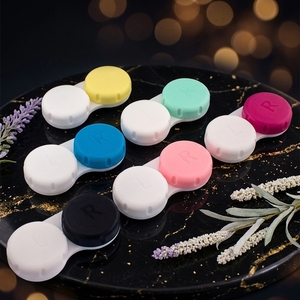
White Blue Green Black Pink Purple Candy Color Colored Contacts & Tool Set
Get Catalog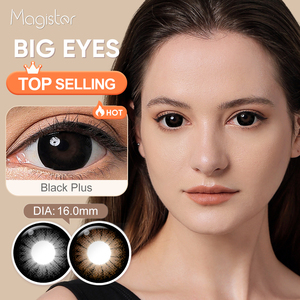
Magister 16mm Natural Soft Colored Contact Lenses (Wholesale Brown)
Get Catalog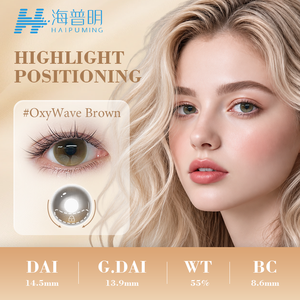
14.5mm Rotationally Stable Highlight Daily Disposable HEMA Color Lenses
Get Catalog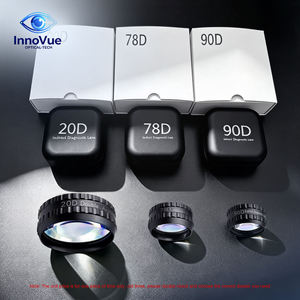
InnoVue Opto Ophthalmic Fundus Contact Lens Aspheric 78D Lens
Get Catalog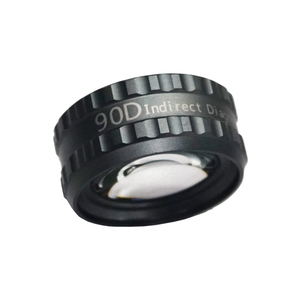
Ophthalmic Fundus Diagnostic Contact Lens Aspheric 90D Glass Optics
Get Catalog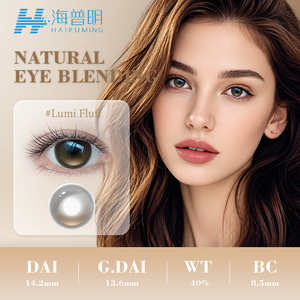
Brown Fixed-Axis Highlight Daily Disposable 14.5mm OEM HEMA Lenses
Get Catalog
Custom Decorative Plastic Contact Lens Storage Case (Medical PP Material)
Get Catalog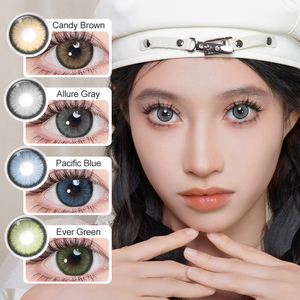
Magister Soft Natural Brown Eye Colored Contact Lenses 14.5mm
Get Catalog1. Executive Summary & Industry Benchmark
The global contact lens market is undergoing a paradigm shift driven by technological convergence between therapeutic vision correction, pediatric myopia management, and cosmetic beauty enhancements. As international demand for daily disposable soft contact lenses accelerates toward an estimated global value exceeding USD 15.8 Billion by 2028, global procurement teams, pharmaceutical chains, and retail optical groups are increasingly reliant on high-precision, compliance-verified manufacturing partners in China.
As a premiere FDA 510(k) cleared contact lens manufacturer and exporter in China, our enterprise operates fully automated manufacturing ecosystems utilizing advanced polymer chemistry, high-speed robotic cast molding, automated optical inspection (AOI), and Class 100,000 (ISO 7) cleanroom environments. This whitepaper serves as a definitive guide for procurement executives, category managers, and regulatory directors seeking to evaluate China’s advanced manufacturing capabilities, compliance documentation standards, and private-label OEM/ODM solutions.
Enterprise Capabilities & Regulatory Excellence (E-E-A-T Framework)
Adhering to strict international medical device directives, our manufacturing facilities bridge the gap between high-volume productivity and surgical-grade precision.
US FDA 510(k) Premarket Clearance
Our core contact lens formulations and production lines hold validated US FDA 510(k) clearance numbers (Class II Medical Devices), allowing seamless import clearance into the United States and North American markets without regulatory friction.
EU MDR (2017/745) & CE 0123
Full compliance with European Union Medical Device Regulation (EU MDR 2017/745). Certified under CE 0123 Notified Body standards, supported by comprehensive Technical Documentation Files (TDF) and EUDAMED registration readiness.
ISO 13485:2016 Certified Quality System
Rigorous quality management systems monitoring every production phase—from monomer storage and hydration kinetics to high-pressure steam autoclave sterilization at 121°C ($SAL 10^{-6}$ level) and lot-by-lot biological evaluation.
2. Polymer Science & Manufacturing Precision Engineering
Modern soft contact lens manufacturing requires absolute precision in hydrogel material synthesis and mold geometry. Our China-based facilities utilize two primary advanced material platforms:
| Polymer Platform | Chemical Matrix | Water Content (%) | Oxygen Transmissibility ($Dk/t$) | Elastic Modulus (MPa) | Target Sourcing Application |
|---|---|---|---|---|---|
| Hydrogel (HEMA-GMA) | 2-Hydroxyethyl Methacrylate + Glycerol Methacrylate | 38% - 58% | 18 - 30 $Dk/t$ | 0.30 - 0.45 MPa | Daily / Monthly Cosmetic Lenses, Cost-Effective Mass Retail |
| Silicone Hydrogel (SiHy) | Fluorosilicone Macromers + Hydrophilic Monomers | 33% - 45% | 80 - 135 $Dk/t$ | 0.50 - 0.75 MPa | Extended Wear, Premium Health & Rx Vision Correction |
| Non-Ionic HEMA | Poly-HEMA Crosslinked with EGDMA | 38% - 42% | 20 - 25 $Dk/t$ | 0.35 - 0.50 MPa | High-Resistance to Protein Deposition & Dry Eye Comfort |
For cosmetic color contact lenses, safety is paramount. Our proprietary 3-Layer Micro-Encapsulation "Sandwich" Printing Technology encapsulates pigment layers entirely between clear polymer sheets. This ensures zero contact between color pigments and the human corneal epithelium, preventing allergic conjunctivitis, dye leaching, micro-abrasions, or corneal hypoxia.
China's Supply Chain Telemetry & Manufacturing Competitiveness
Why leading global brands choose China for contact lens contract manufacturing (OEM/ODM) and institutional supply.
Fully Automated Cast Molding
High-speed robotic injection molding tools produce single-use optical molds with sub-micron surface roughness ($Ra < 0.05 \mu m$). This guarantees consistency across millions of units with zero spherical aberration distortion.
100% Automated Optical Inspection (AOI)
Every hydrated lens passes through multi-camera AI optical inspection systems. Lenses with microscopic edge tears, foreign particles, bubbles, or thickness variations are automatically rejected in real-time.
Agile Supply Chain & Fast Turnaround
Integrated packaging production allows custom blister foil printing, box design, and secondary packaging localization within 14-21 business days, drastically reducing time-to-market for international distributors.
3. Strategic Industry Trends & Future Sourcing Predictions (2025–2030)
For B2B procurement leaders, staying ahead of market shifts requires alignment with long-term technological and consumer consumption patterns. Our R&D division highlights five pivotal trends shaping the future of global contact lens trade:
Trend 1: Accelerated Dominance of Daily Disposable Silicone Hydrogel Lenses
Consumers are rapidly moving away from monthly and annual replacement wear cycles in favor of single-use daily disposables. High oxygen transmissibility ($Dk/t > 100$) combined with zero maintenance risk makes daily silicone hydrogel the single fastest-growing product category across Western Europe, North America, and East Asia.
Trend 2: Fixed-Axis Highlight & Astigmatic Cosmetic Optics
Historically, cosmetic contact lenses suffered from rotation when worn, causing asymmetric pattern misalignment. Modern manufacturing incorporates Prism Ballast and Dynamic Stabilization Systems (DBSS) to ensure fixed-axis orientation, allowing intricate highlight designs and toric prescription correction to remain perfectly aligned on the user's eye.
Trend 3: Pediatric Myopia Control & Defocus Optics
With global pediatric myopia rates rising, peripheral defocus soft contact lenses are becoming standard therapeutic interventions. China's state-of-the-art optical R&D labs are producing multi-ring defocus designs that slow axial elongation in adolescent eyes, opening immense institutional market opportunities.
Trend 4: Smart Diagnostic & Ophthalmic Specialty Lenses
As reflected in our product range (e.g., 78D and 90D Aspheric Fundus Lenses), ophthalmic diagnostic tools are integrating advanced anti-reflective optical glass and high-index polymers. Future developments include non-invasive tear fluid glucose tracking and intraocular pressure (IOP) biosensing contact lenses for glaucoma monitoring.
Trend 5: Eco-Conscious Packaging & Sustainable Manufacturing
Leading European and North American buyers require reduced plastic footprints. China’s advanced manufacturers are introducing biodegradable polypropylene blister shells, ultra-thin recycled aluminum sealing foils, and closed-loop water monomer recovery systems in production plants.
4. OEM/ODM Private Label Sourcing & Quality Control Blueprint
Launching a custom contact lens brand or establishing institutional supply requires structured milestone execution. Below is our standard 6-phase engineering workflow:
| Phase | Engineering Milestone | Key Deliverables & Documentation | Timeline |
|---|---|---|---|
| Phase 1 | Specification & Parameter Definition | Base Curve (BC 8.4–8.8mm), Diameter (DIA 14.0–14.5mm), Power Range (-0.50 to -12.00D), Color Pattern Approval | 1–3 Days |
| Phase 2 | Packaging & Artwork Engineering | Blister Foil Artwork, Carton Dielines, Multi-Lingual Leaflet, Barcode/UDI Structure Approval | 3–5 Days |
| Phase 3 | Sample Prototyping & Trial Casting | Physical Sample Batches, Optical Power Verification, EWC Testing, Spectrophotometry Color Check | 5–7 Days |
| Phase 4 | Mass Production & Autoclaving | Cast Molding, Hydration, Automated Blister Filling (0.9% Buffered Saline), 121°C Autoclave Sterilization | 10–14 Days |
| Phase 5 | QA/QC & Biological Release | Bioburden Testing, Sterility Validation, Endotoxin Testing, AQL 0.65 Optical Inspection Audit | 3–5 Days |
| Phase 6 | Global Shipping & Regulatory Export | Certificate of Analysis (CoA), Certificate of Origin (Form E/F/COO), FDA 510(k) Import Declaration | Varies by Logistics |
Frequently Asked Questions (Procurement & Technical FAQ)
Answers to essential questions asked by international buyers, compliance auditors, and optical distributors.
What regulatory documentation is provided for custom contact lens imports? +
We provide a complete regulatory dossier adapted to your destination market. This includes US FDA 510(k) clearance letters, ISO 13485:2016 quality management certificates, EU MDR Declarations of Conformity (DoC), CE certificates, Free Sale Certificates (FSC), Certificate of Analysis (CoA) per lot, ISO 10993 biocompatibility test reports (cytotoxicity, ocular irritation, sensitization), and complete Unique Device Identification (UDI) compliance data.
What is the Minimum Order Quantity (MOQ) for Private Label OEM production? +
For standard clear corrective lenses or catalog color designs, our minimum order quantity starts as low as 500 to 1,000 pairs per SKU. For fully custom color pattern creation, bespoke base curve modifications, or specialized private label packaging, the standard MOQ typically ranges from 5,000 to 10,000 blisters per design. Flexible pilot trial runs are available for established retail pharmacy chains.
How do you guarantee color safety and comfort in cosmetic colored contacts? +
Safety is achieved via our Sandwich Micro-Encapsulation Technology. Non-toxic, biocompatible bio-pigments are locked between inner and outer transparent hydrogel polymer layers. The pigment never touches ocular tissues directly. Furthermore, smooth surface polished edges ($Ra < 0.05 \mu m$) and high equilibrium water content prevent dry eye sensation and mechanical friction.
What is the shelf life and sterilization standard of manufactured lenses? +
All soft contact lenses are sealed in medical-grade aluminum-polypropylene blister packs containing buffered isotonic saline solution. They undergo high-pressure moist heat steam autoclaving at 121°C (250°F) for 20 minutes, guaranteeing a Sterility Assurance Level ($SAL$) of $10^{-6}$. Accelerated and real-time stability testing validates a shelf life of up to 5 years from the date of manufacture.
Can you manufacture toric, multifocal, or special optical prescriptions? +
Yes. Our precision cast molding and dynamic lathe cutting equipment can manufacture spherical powers ranging from 0.00D to -12.00D (and hyperopic powers up to +6.00D), toric cylinder correction (-0.75D to -2.75D with full axis 10° to 180° orientation), multi-ring pediatric defocus myopia control lenses, and high-index glass diagnostic optical lenses (78D / 90D Fundus Lenses).
How are custom products branded and packaged for retail sales? +
We provide full turnkey packaging solutions. This includes primary blister foil printing, secondary unit folding boxes (1-pack, 2-pack, 10-pack, 30-pack, 90-pack), custom tamper-evident security seals, patient instruction leaflets in multiple languages, display counter boxes, and outer shipping cartons labeled with GS1 compliant barcodes and LOT tracking data.
Accelerate Your Eye Care Brand with China's Premier Manufacturer
Request our comprehensive product catalog, technical parameter specifications, regulatory compliance certificates, and factory-direct wholesale quote today.