Certified OEM/ODM Contact Lens Portfolio & Accessories
High-precision contact lenses, custom packaging boxes, aseptic cartoning solutions, and ISO 13485 certified cases manufactured in compliance with global medical device standards.
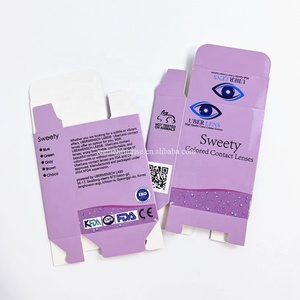
Custom Printed Cosmetic Boxes Eye Contact Lenses Complete Package
Get Catalog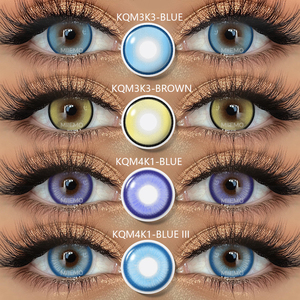
MIIEMO Daily Wear Soft Brown Natural Contact Lenses for Cosplay & Party
Get Catalog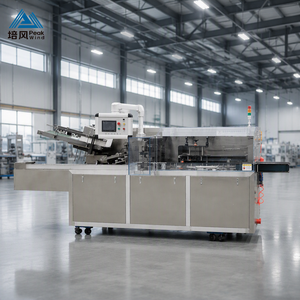
Professional Fully Automatic Aseptic Cartoner Machine with PLC Control
Get Catalog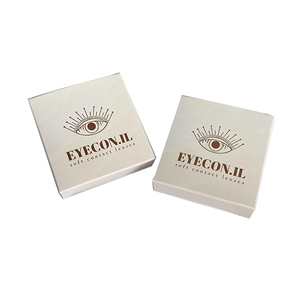
Brand Contact Lens Cosmetic Box Packaging High Quality Offset Printing
Get Catalog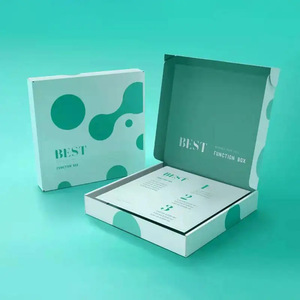
Korean Style Color Contact Lenses Yearly Colored Contacts with Gift Box
Get Catalog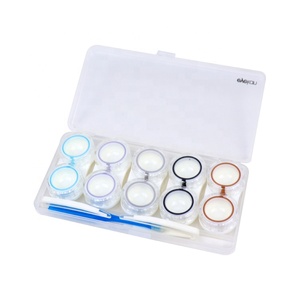
Transparent Green Plant Design ABS+PP ISO13485 Contact Lens Cases
Get Catalog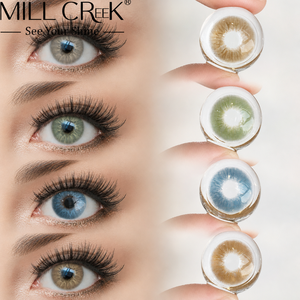
MILLCREEK Prescription Green Yearly 14.2mm HEMA Cosmetic Soft Contact Lenses
Get Catalog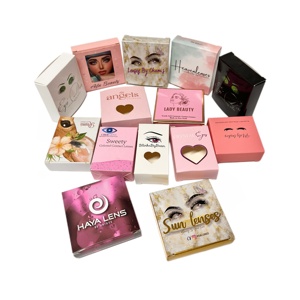
Packaging Box for Color Contacts Card Stock Window UV Coating Design
Get Catalog1. Executive Summary: Why Auditing a Chinese Contact Lens Supplier Is Critical for Global Brands
The global contact lens market—spanning prescription corrective lenses, silicone hydrogel high-oxygen disposables, and cosmetic color-enhancing lenses—demands an unprecedented level of quality control. Because contact lenses are classified as Class IIb (CE MDR) and Class III (US FDA / China NMPA) medical devices, improper manufacturing processes, non-sterile packaging, or sub-standard polymer cross-linking can lead to severe corneal hypoxia, ocular infection, or costly global product recalls.
China has solidified its position as the world's most advanced hub for optical polymer synthesis, fully automated cast-molding, and high-speed blister sealing. However, evaluating a China contact lens factory supplier & exporter requires moving beyond basic business licenses and generic promotional certificates. Global procurement managers, optical chain buyers, and pharmacy brand directors must execute rigorous on-site and remote technical audits to verify real-time Good Manufacturing Practice (GMP) compliance, raw monomer purity, automated optical inspection (AOI) capabilities, and batch-level lot traceability.
2. The 7-Step Technical Audit Framework for Contact Lens Factories in China
When conducting a comprehensive factory audit on a prospective Chinese contact lens supplier or private-label partner (such as Kyralens Technology Co., Ltd.), lead auditors should follow a standardized seven-layer inspection protocol. This framework guarantees that every operational milestone—from raw material receiving to secondary automated packaging—adheres to international quality benchmarks.
1. QMS & Regulatory Accreditation
Verify valid ISO 13485:2016 certificates, US FDA 510(k) clearances, CE MDR registration, and China NMPA Class III Medical Device Manufacturing Licenses. Review annual unannounced audit reports by notified bodies (SGS, TÜV SÜD).
2. Raw Material Hydrogel Purity
Audit monomer sourcing (HEMA, NVP, EGDMA, or Silicone Hydrogel monomers). Inspect monomer storage temperature logs, HPLC purity testing reports, and batch extractables/leachables toxicology evaluations.
3. Automated Cast Molding Precision
Evaluate quartz glass or high-precision optical resin mold manufacturing. Check UV curing time, temperature uniformity across polymerization tunnels, and automated dry lens demolding yield rates.
4. Color Sandwich Printing Tech
For cosmetic color lenses, inspect color pigment encapsulation depth. Ensure color pigments are fully sealed between bio-compatible clear hydrogel layers to prevent direct corneal abrasion or color migration.
5. Cleanroom & Water Purification
Audit ISO Class 7 (Class 10,000) and ISO Class 8 cleanrooms. Verify continuous Total Organic Carbon (TOC) monitoring, conductivity meters for Water for Injection (WFI), and airborne microbe settling plates.
6. Autoclave Sterilization & Packing
Review high-temperature moist heat steam autoclave sterilization curves ($121^\circ\text{C}$ for $\ge 30\text{ minutes}$, $F_0 \ge 15$). Audit blister foil heat sealing integrity via dye penetration and burst pressure testing (ASTM F88/F2096).
Deep Technical Dive: Evaluating Automated Optical Inspection (AOI) & Laboratory Verification
During the on-site factory walk-through, standard visual manual inspection under magnifying lamps is no longer considered sufficient for premium OEM/ODM supply chains. Leading exporters employ multi-camera Automated Optical Inspection (AOI) systems integrated directly into the wet-expansion conveyor lines. These high-speed optical sensors capture sub-micron images of every hydration blister to automatically detect:
- Edge Tears & Flaws: Microscopic notches or structural micro-cracks along the perimeter radius.
- Surface Particulates: Trapped dust, silica, or un-hydrated monomer spots larger than $10\,\mu\text{m}$.
- Center Thickness & Power Deviations: Refractive index errors verified through automated focal lensmeters.
- Bubble Encapsulation: Micro-air voids trapped within the saline solution or blister cavity.
3. Contact Lens Factory Audit Checklist & Quality Benchmark Matrix
To assist global sourcing managers, buyers, and QA directors in benchmarking Chinese suppliers during on-site inspections, use the following technical evaluation matrix:
| Audit Audit Point | Critical Target Benchmark | Acceptable Industry Range | Red Flag / Reject Criteria | Audit Standard |
|---|---|---|---|---|
| Cleanroom Particle Count | ISO Class 7 (Class 10,000) for packaging zone | ISO Class 8 (Class 100,000) for molding | > 3,520,000 particles/m³ ($0.5\,\mu\text{m}$) | ISO 14644-1 |
| Bio-Sandwich Encapsulation | Complete dye embedding within polymer matrix | Micro-pigment layer depth $\ge 2.5\,\mu\text{m}$ | Surface dye exposure detected via cotton swab test | ISO 10993-5 |
| Autoclave Sterilization | $F_0 \ge 15$, $121^\circ\text{C}$ for $30\text{ min}$ continuous | Validation with biological indicators (G. stearothermophilus) | Temperature drop below $120.5^\circ\text{C}$ during cycle | ISO 17665-1 |
| Water Content Tolerance | Nominal target $\pm 1.0\%$ (e.g., $55\% \pm 1.0\%$) | $\pm 1.5\%$ variance across batch | $> \pm 2.5\%$ deviation from packaging label | ISO 18369-4 |
| Oxygen Transmissibility (Dk/t) | Silicone Hydrogel $\ge 100 \times 10^{-9}$; Hydrogel $\ge 25 \times 10^{-9}$ | Meets advertised technical sheet spec | $> 15\%$ drop below declared Dk/t rating | ISO 18369-4 |
| Blister Seal Integrity | Peel Strength: $1.2\text{ N/mm} - 3.5\text{ N/mm}$ | Zero dye leak in vacuum chamber at $-0.05\text{ MPa}$ | Bubble emission or seal channeling observed | ASTM F88 / F2096 |
4. Future Sourcing & Market Trends in Contact Lens Manufacturing (2025–2030)
The contact lens supply chain is undergoing rapid technological transformation. Procurement directors planning long-term supply agreements with Chinese exporters should align with suppliers investing in the following high-growth innovations:
1. Rapid Migration to High-Dk/t Silicone Hydrogel Daily Disposables
While traditional HEMA (Hydro-ethyl methacrylate) hydrogel lenses remain popular for budget cosmetic lines, global consumer demand is shifting massively toward daily disposable Silicone Hydrogel (SiHy) contacts. SiHy materials allow up to 5 times more oxygen to reach the cornea, drastically reducing corneal swelling and redness during prolonged digital screen use. Leading Chinese factories have perfected third-generation non-solvent silicone monomer formulations that eliminate surface treatment steps while maintaining low modulus ($0.3 - 0.5\text{ MPa}$) and high surface wettability.
2. Photochromic, Blue-Light Blocking, & Functional Smart Lenses
Next-generation optical OEM contracts increasingly require functional polymer additives. Chinese R&D centers are embedding bio-compatible UV-blocking compounds (Class 1 UV protection blocking > 90% UVA and > 99% UVB) alongside light-filtering monomers designed to selectively filter high-energy visible (HEV) blue light ($415 - 455\text{ nm}$). Advanced research into photochromic contact lenses that automatically darken under outdoor sunlight is also entering commercial production stage.
3. Sustainable Eco-Packaging & Green Manufacturing Initiatives
Environmental, Social, and Governance (ESG) compliance has become a core audit component for Western supermarket chains (e.g., Albert Heijn, Rossmann, REWE, Watsons). Exporters are replacing traditional thick polypropylene (PP) blister trays with slim, low-plastic micro-blisters, recyclable aluminum foil lids, and FSC-certified biodegradable outer carton packaging, cutting plastic waste per 1,000 lenses by up to 40%.
5. Enterprise Profile & Supply Chain Capabilities: Kyralens Technology Co., Ltd.
Kyralens Technology Co., Ltd. stands as a premier global developer, OEM/ODM manufacturer, and exporter of high-end private label eye care products. Catering to pharmacy chains, optical retail networks, online D2C eyewear brands, and regional medical distributors across Europe, the Middle East, and Asia, Kyralens offers a seamlessly integrated, one-stop eye care manufacturing platform.
Core Manufacturing Strengths & OEM Capabilities:
- Complete Category Shelf Coverage: One certified manufacturer supplying daily/monthly clear hydrogel lenses, high-Dk silicone hydrogel contacts, cosmetic color collections (1-tone to 4-tone custom iris patterns), lubricating eye drops, multi-purpose contact lens disinfectant solutions, and ISO-compliant lens storage cases.
- Full "Sandwich" Micro-Encapsulation Technology: 100% safety guarantee for all cosmetic series. Pigment color layers are embedded inside the polymer matrix to prevent direct contact with delicate eye tissues.
- State-of-the-Art Automated Production Facilities: Equipped with Class 7 cleanrooms, automated continuous cast-molding systems, AOI visual inspection stations, and PLC-controlled automatic cartoner and blister sealing machinery.
- Robust International Regulatory Dossiers: Full technical documentation provided for fast local market authorization, including CE MDR certificates, ISO 13485:2016 declarations, lot traceability logs, and customized multilingual packaging design.
- Flexible MOQ & Scalable OEM Turnkey Service: Support for both specialized pilot market launches and large-scale global roll-outs with guaranteed batch-to-batch color match and diopter accuracy.
6. Frequently Asked Questions (FAQ) for B2B Contact Lens Sourcing & Audits
What are the key regulatory certificates a Chinese contact lens factory must provide prior to ordering?
How does "Sandwich" color printing technology protect lens wearers, and how do auditors verify it?
What is the typical Minimum Order Quantity (MOQ) for custom private label contact lens production?
What are the critical parameters tested in an in-house contact lens QC laboratory?
Can Kyralens supply complete private label eye care lines including packaging and care solutions?
Partner with China's Premier Certified Contact Lens Manufacturer
Streamline your procurement process, access full audit documentation, and request custom product samples for your retail brand today.