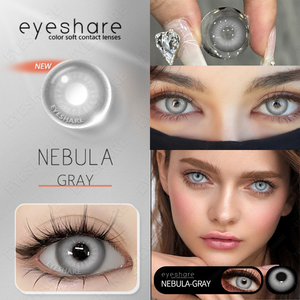
Featured Contact Lenses & Ophthalmic Products
Direct OEM/ODM Factory Supply with CE MDR & ISO 13485 Certifications
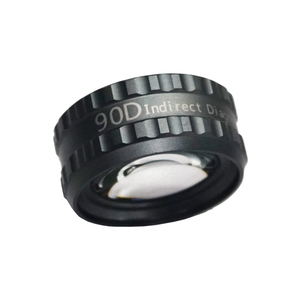
Ophthalmic Fundus Contact Lens Aspheric 90D Lens
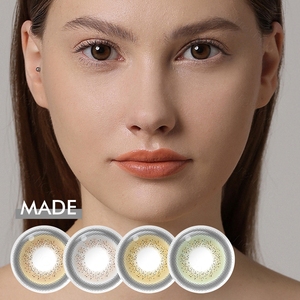
Bestsales FRESHGO Pupilentes De Color Lentilles De Contact De Couleur for Dark Eyes SYMPHONY Contacts
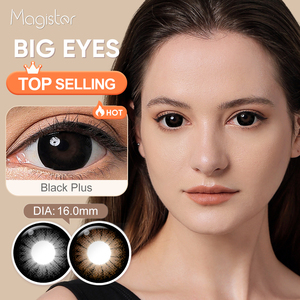
Free HOT Magister 16mm Colored Contacts Eye Contact Lenses Natural Soft Lens Wholesale Brown
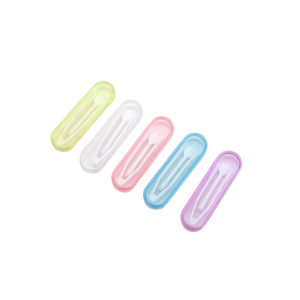
Best Price High Quality Silicone Contact Lens Tweezers Plastic Picking Tool for Cases Bags
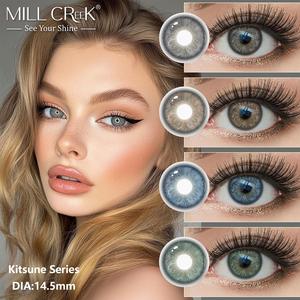
MILLCREEK Eye Contact Lenses Color Colored Contacts Wholesale OEM Private-Label HEMA 14.5mm Circle Bulk
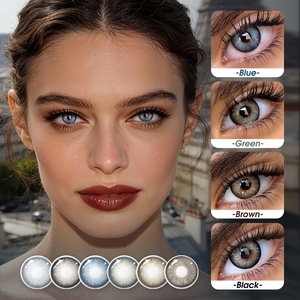
Lalens Natural Color Contact Lens Prescription Wholesale Eye Makeup Cosmetic Lens 14.5MM Dark Eyes
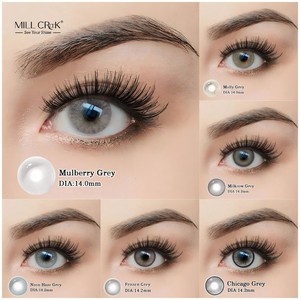
Gray Series Colored Contact Lenses OEM Private Label Factory Direct Supply Quality Assurance
1. Executive Industry Overview: China's Role in Global Contact Lens Supply Chain Expansion
The global contact lens market is undergoing a structural paradigm shift. Valued at over USD 9.5 Billion in 2023, the global contact lens and ophthalmic care market is projected to expand at a compound annual growth rate (CAGR) exceeding 6.8% through 2030. Driving this transformation is the transition from conventional corrective eyewear to high-frequency disposable lenses, daily disposable color cosmetics, and specialized therapeutic optical devices (such as myopia management and presbyopia correction solutions).
For international distributors, pharmacy chains, optical retailers, and direct-to-consumer (DTC) brands, establishing a direct manufacturing partnership with top-tier Chinese OEMs and factories has evolved from a simple cost-reduction tactic into a core strategic competitive advantage. China's vision-care manufacturing ecosystem has rapidly upgraded from high-volume standardized production to world-class precision optical engineering, utilizing advanced automated cast-molding processes, robotic nano-pigment encapsulation, and stringent international regulatory frameworks including CE MDR (EU 2017/745) and US FDA 510(k) clearances.
Strategic Market Insight: Procurement managers who transition to factory-direct Chinese OEM contracts experience a 35% to 50% improvement in margin structures while maintaining compliance with rigorous ISO 13485 standards and achieving lot-level micro-traceability.
As global demand for color cosmetic contact lenses (such as 14.0mm natural series, 14.5mm circle lenses, and 16.0mm big-eye series) surges across North America, Europe, the Middle East, and Southeast Asia, Chinese manufacturers offer unprecedented OEM/ODM flexibility. Custom parameters including base curves (8.5mm to 8.7mm), water content ratios (38% low-water HEMA to 58% high-water hydrogel), oxygen permeability values (Dk/t), and specialized packaging formats are now accessible at scalable Minimum Order Quantities (MOQs).
2. Technical & Material Science Engineering: Hydrogel vs. Silicone Hydrogel (SiHy)
Understanding the underlying polymer chemistry is critical when evaluating a contact lens factory. Leading Chinese contact lens manufacturers produce optical-grade polymers engineered for ocular physiological health, tear film retention, and high optical clarity.
2.1 Poly-HEMA (Hydroxyethyl Methacrylate) Hydrogel Lenses
Poly-HEMA remains the gold standard for daily, monthly, and yearly cosmetic color lenses. Featuring water content balances between 38% and 42%, HEMA formulations maintain structural stability, low protein absorption rates, and superior color print clarity. Lower water content (38%) is specifically engineered to reduce dehydration rates in dry ambient environments or air-conditioned spaces, making it highly preferred for daily-wear and cosmetic users in dry regions.
2.2 Next-Generation Silicone Hydrogel (SiHy) Matrices
For extended wear, daily disposable medical lenses, and high-Dk/t applications, Chinese factories utilize advanced fluorosilicone hydrogel polymers. By incorporating siloxane monomers into the hydrogel matrix, oxygen transmissibility ($Dk/t$) increases dramatically from conventional hydrogel levels (~18–25 $Dk/t$) to extended-wear clinical levels (80–120+ $Dk/t$). This allows structural corneal oxygenation, preventing hypoxia, neovascularization, and corneal edema during extended wear.
2.3 Double-Sanded "Sandwich" Color Printing Technology
Safety in cosmetic contact lens distribution is non-negotiable. Modern Chinese OEM factories implement micro-encapsulation sandwich technology. Ophthalmic-grade organic pigments are embedded safely between two thin layer matrices of clear HEMA polymer. This guarantees that micro-pigment particles never touch corneal tissue directly, preventing pigment leaching, mechanical friction, or ocular allergic responses.
| Material Classification | Water Content (%) | Oxygen Permeability (Dk/t) | Primary Ocular Application | Recommended Replacement Cycle |
|---|---|---|---|---|
| Standard Poly-HEMA | 38% – 42% | 15 – 25 Dk/t | Cosmetic Color Lenses (14.0mm-16.0mm) | Daily, Monthly, Yearly Disposables |
| High-Water Hydrogel | 55% – 58% | 25 – 35 Dk/t | Spheric Corrective Clear Lenses | Single-Day Disposables |
| Silicone Hydrogel (SiHy) | 45% – 48% | 90 – 130 Dk/t | High-End Therapeutic & Daily Clear | Daily / Monthly Extended Wear |
| Aspheric Diagnostic Lenses | Non-hydrated / Glass | N/A (Optical Diagnostic) | Ophthalmic Fundus 90D Bio-microscopy | Permanent Diagnostic Tool |
Why Partnering with a Premier Chinese Manufacturer Drives Growth
End-to-End Capabilities Built for Enterprise Procurement & Retail Supply Chains
Medical Compliance & Regulatory Dossiers
Full regulatory support including CE MDR (EU 2017/745), ISO 13485:2016 quality management systems, free-sale certificates (FSC), and complete Technical Files for fast country-level registration.
Automated Cast-Molding Technology
State-of-the-art Class 100,000 cleanroom facilities equipped with robotic cast-molding systems ensuring sub-micron curvature precision and identical edge-geometry across millions of units.
100% Automated Optical Inspection (AOI)
Every single contact lens blister undergoes high-speed automated laser inspection to identify surface defects, edge tears, micro-bubbles, and color print alignment prior to sterilization.
Turnkey Private Label Packaging Solutions
Custom blister foil design, multilingual outer carton printing, anti-counterfeiting security QR codes, and point-of-sale display integration tailored for pharmacy and retail shelves.
Complete Eye Care Category Portfolio
Supply consolidation: Contact lenses, lubricating eye drops, multipurpose cleaning solutions, custom cases, silicone tweezers, and ophthalmic diagnostic tools from a single centralized chain.
Scalable MOQs & Rapid Inventory Cycle
Agile supply planning offering pilot-batch runs for new product launches, alongside automated high-volume replenishment protocols to eliminate out-of-stock events for national retailers.
3. Future Sourcing Trends: The Next Decade in Ophthalmic Product Procurement
As consumer preferences evolve and ocular healthcare awareness increases, procurement officers must align their inventory strategies with emerging global market trends. The next five years will be defined by three key product categories:
3.1 Myopia Control & Pediatric Orthokeratology Support
With childhood myopia rates escalating globally—particularly in East Asia and urban Europe—demand for peripheral defocus soft contact lenses is growing exponentially. Leading Chinese R&D facilities are developing daily disposable dual-focus soft lenses designed to slow axial elongation in pediatric patients, creating a high-margin opportunity for clinical optical networks.
3.2 Blue-Light Blocking & Photochromic Cosmetic Lenses
Screen fatigue is a universal consumer complaint. The integration of blue-light filtering monomers directly into 14.2mm and 14.5mm cosmetic lenses protects the macula from high-energy visible (HEV) blue radiation emitted by digital devices. Simultaneously, photochromic contact lenses that automatically darken under ambient UV light represent the cutting edge of wearable optical comfort.
3.3 Sustainable & Bio-Based Polymeric Packaging
Environmental, Social, and Governance (ESG) compliance is now a mandatory vendor metric for major European and North American retail groups (such as Rossmann, REWE, and Ahold Delhaize). Chinese contact lens factories are pioneering recyclable polyolefin blister cups, bio-degradable solution bottles, and reduced-plastic secondary cartons to assist enterprise clients in achieving carbon-neutral supply chain objectives.
4. Step-by-Step OEM/ODM Sourcing & Procurement Methodology
Executing a successful private-label contact lens line requires structured quality controls at every operational milestone. Below is the standard protocol implemented by top-tier Chinese manufacturers:
01
Parameter & Shade Briefing
Definition of target demographic specifications: Base Curve (BC 8.5–8.7mm), Diameter (DIA 14.0–16.0mm), power ranges (-0.00D to -10.00D), water content, and custom shade design selection (e.g., Gray, Brown, Symphony, Nebula series).
02
Clinical Sample Verification
Factory production of trial blister batches for dimensional verification, color density evaluation, tear-film stability testing, and packaging compatibility checks.
03
Regulatory Dossier Preparation
Compilation of Technical Files, declarations of conformity, sterile barrier validation reports, bio-compatibility testing (ISO 10993), and lot traceability protocol setup.
04
Mass Production & Autoclaving
Cast molding under Class 100,000 cleanroom standards, automated saline buffer filling, ultrasonic foil sealing, and high-pressure steam autoclave sterilization (121°C for 30 min).
05
Quality Control & Global Logistics
Final AOI inspection, lot release bio-burden testing, packaging cell-wrapping, and temperature-controlled air/sea shipping to global distribution centers.
5. Enterprise Capabilities & Global Retail Ecosystem
As a premier global distributor and manufacturer, our production network powers private-label eye care ranges for the world’s most demanding drugstores, supermarket chains, and pharmacy conglomerates across Europe, the Middle East, and Asia.
Trusted Global Retail Partner Ecosystem:
Watsons Group
Rossmann Drugstores
Kruidvat Netherlands
Trekpleister
Ahold Delhaize
Albert Heijn
Etos Health & Beauty
Nahdi Medical Company
GMG Group
Eureka Retail
Migros Switzerland
REWE Group
Our comprehensive infrastructure encompasses Faradaystraat 14, Ede, Netherlands for European regulatory logistics and primary manufacturing centers in China featuring state-of-the-art optical engineering laboratories.
6. Frequently Asked Questions (FAQ) for B2B Procurement Managers
What qualifications make China manufacturers top choice for contact lens distribution?
Top Chinese manufacturers combine high-speed automated cast-molding technology with international medical certifications (CE MDR, ISO 13485). This delivers unmatched cost efficiency, consistent optical parameters, and full customization for private labels without compromising ocular health safety.
What are the typical Minimum Order Quantities (MOQs) for OEM private label contact lenses?
Standard OEM packaging runs usually start at 5,000 to 10,000 blisters per shade/power SKU. For pilot launches or market testing, flexible factory batches can be arranged under shared packaging formats.
Are all cosmetic color contact lenses manufactured with pigment safety barriers?
Yes. All certified products utilize double-sanded "Sandwich" printing technology, locking pigment layers inside the hydrogel matrix so zero colorant comes into contact with the cornea or conjunctiva.
What regulatory documents are supplied for customs clearance and regional registration?
Every shipment is backed by a full dossier: CE Certificate of Conformity, ISO 13485 Audit Reports, Certificate of Free Sale (FSC), Material Safety Data Sheets (MSDS), Batch Sterilization Certificates, and Lot Traceability Logs.
Can we order complete eye care lines including contact lens solution and cases?
Absolutely. We provide single-source procurement consolidation covering soft contact lenses (daily/monthly/yearly), cosmetic lenses, ophthalmic diagnostic devices (90D lenses), lubricating eye drops, cleaning solutions, and care accessories (tweezers, cases).
What is the typical production lead time for customized private label orders?
Initial custom orders take approximately 30 to 45 days, including artwork approval, packaging printing, and production sterilization. Re-orders are typically completed within 15 to 25 days.
Ready to Partner with China's Premier Contact Lens Factory?
Request a custom OEM quote, request trial samples, or consult with our Senior Optical Procurement Specialists today.
Get a Quote