Featured China Contact Lens Factory OEM Product Portfolio
Explore high-volume wholesale color contact lenses, diagnostic lenses, and contact lens care accessories engineered under ISO 13485 and CE certified standards.
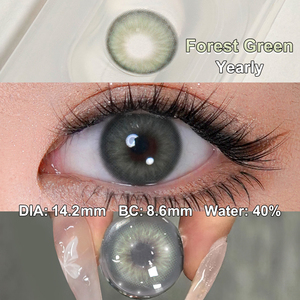
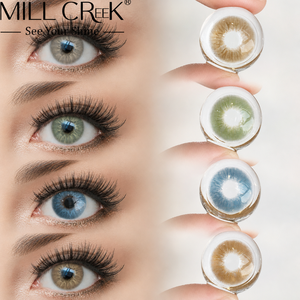
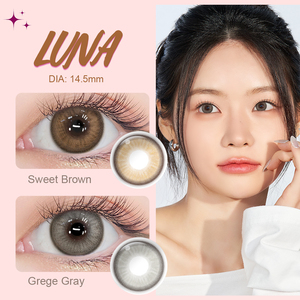
The Anatomy of China’s Colored Contact Lens Manufacturing Ecosystem
Over the past decade, China has solidified its status as an international epicenter for advanced optical manufacturing and medical-grade contact lens production. Driven by massive investments in precision cast-molding technologies, automated vision-inspection systems, and polymer chemistry, top-tier Chinese colored contact lens factories now produce hundreds of millions of units annually for global cosmetics brands, pharmaceutical chains, and optical retail networks. When global category buyers query for a China top colored contacts factory, they are seeking more than just high-capacity output—they demand absolute bio-compatibility, strict international regulatory compliance, edge-geometry consistency, and color encapsulation safety.
Modern color contact lens manufacturing requires a sophisticated synthesis of polymer hydrogel chemistry and sub-micron pigment deposition. Leading factories in manufacturing hubs such as Jiangsu, Zhejiang, and Guangdong operate under rigid ISO 13485 Quality Management Systems. These automated facilities utilize high-speed cast molding systems where raw liquid monomers—such as Poly-HEMA (Hydroxyethyl Methacrylate) or modern Fluorosilicone Hydrogel formulations—are injected into single-use precision optical molds, polymerised via UV light thermal cycles, and subsequently hydrated in purified physiological saline solution.
For B2B importers, optical brands, and drugstore chain purchasing managers, evaluating a manufacturing partner involves scrutinizing their raw material purity, monomer extractables, stability of color micro-pigments, and zero-defect quality control protocols. High-performance factories employ AI-driven optical scanning arrays that inspect 100% of manufactured lenses for surface tears, peripheral optical aberrations, micro-bubbles, and pigment misalignment prior to blister packaging and terminal steam sterilization.
Color Encapsulation Engineering: Sandwich Technology (Sandwich Printing)
The primary safety benchmark for any cosmetic contact lens manufacturer lies in its pigment isolation methodology. In early-generation color lenses, organic or inorganic pigments were surface-printed directly onto the front or back lens matrix. This rudimentary technique exposed the sensitive corneal epithelium and palpebral conjunctiva to raw colorants, leading to pigment leaching, ocular irritation, and allergic keratitis.
Top-tier China colored contacts factories utilize proprietary Three-Layer Sandwich Encapsulation Technology (also known as Inter-Layer Micro-Pigment Lock). Under this process, the color pattern is printed between two transparent layers of hydrogel polymer, creating a sealed, micro-thin polymer sandwich. The pigment never touches the cornea nor the eyelid tissue directly.
1. Sub-Surface Color Deposition
FDA-approved bio-pigments (Iron Oxides, Titanium Dioxide, Phthalocyanine Cyan) are jet-printed into an inner mold matrix using high-definition micro-dot array technology.
2. Dual Polymer Encapsulation
A secondary biocompatible hydrogel monomer matrix covers the pigmented layer, completely locking color particles inside an impermeable polymer lattice.
3. Smooth Surface & Oxygen Permeability
The resulting lens maintains an uninterrupted, ultra-smooth surface coefficient of friction (< 0.015) while ensuring unhindered oxygen diffusion across the polymer.
Material Chemistry Comparison: HEMA Soft Hydrogel vs. Silicone Hydrogel (SiHy)
When customizing private label colored contact lens lines, brand owners must choose between standard Hydrogel (HEMA-based) and advanced Silicone Hydrogel (SiHy) polymers. Each material class possesses distinct physical parameters, cost structures, and target consumer demographics.
| Performance Characteristic | Standard HEMA Hydrogel | Advanced Silicone Hydrogel (SiHy) | OEM Buyer Recommendation |
|---|---|---|---|
| Oxygen Transmissibility (Dk/t) | 15 - 28 Dk/t | 85 - 147 Dk/t | SiHy is ideal for premium daily & extended wear lines. |
| Water Content (%) | 38% - 58% | 33% - 45% | Lower water content in SiHy reduces ocular dehydration. |
| Modulus / Stiffness (MPa) | 0.3 - 0.5 MPa (Ultra-Soft) | 0.6 - 0.9 MPa (Structured shape) | HEMA offers initial insertion comfort for novice users. |
| Dehydration Rate | Moderate to High | Extremely Low | SiHy recommended for dry-eye & air-conditioned environments. |
| Production Unit Cost | Cost-Effective (Mass Market) | Premium (High-End Clinical Positioning) | HEMA for FMCG / fast-fashion cosmetic channels. |
| Common Modalities | Daily, Monthly, Yearly Disposables | 1-Day Disposables & Monthly Lenses | 1-Day SiHy represents the fastest-growing market segment. |
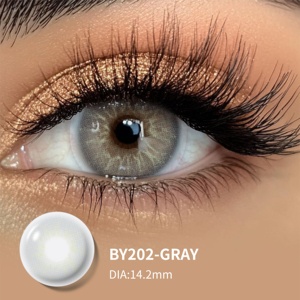
Leading Chinese optical manufacturing plants feature dual-line synthesis capabilities, enabling brands to source high-volume HEMA lines (e.g., 14.2mm natural iris series, 14.5mm cosplay enlarge series) alongside high-Dk/t Silicone Hydrogel ranges intended for clinical optical chains and luxury cosmetic houses.
International Quality Assurance Framework & Regulatory Compliance
Importing contact lenses from China into regulated healthcare and retail sectors requires complete alignment with destination-country medical device regulations. Contact lenses are classified as Class IIa or IIb Medical Devices in Europe (MDR 2017/745), Class II Medical Devices by the US FDA, and Class III Medical Devices under China's NMPA regulatory umbrella.
To guarantee frictionless customs clearance and market legitimacy, top-tier manufacturing partners maintain an extensive compliance binder containing:
ISO 13485:2016 Certification
Comprehensive Quality Management System audit trail covering design, raw material monomer procurement, cleanroom manufacturing, and sterilization.
CE 2195 / CE 0123 Conformity
Notified Body audited European Medical Device Directive / Regulation compliance for legal distribution across EU member states and the UK.
US FDA 510(k) Clearance
Premarket notification standard compliance for selected silicone hydrogel and soft hydrogel lens polymers imported into North American markets.
Furthermore, terminal sterilization is executed using industrial steam autoclaves operating at 121°C for a minimum of 30 minutes, destroying all bacterial spores, fungi, and viral contaminants. Each batch undergoes rigorous sterility testing, bioburden assessment, and accelerated shelf-life aging tests to validate a 5-year unopened blister integrity.
2025–2030 Global Sourcing & Technology Trends in Color Contacts
The global cosmetic and corrective contact lens market is experiencing rapid evolution driven by shifting consumer preferences, social media aesthetics, and optical technology breakthroughs. Category managers and procurement directors must align their sourcing strategies with four core macro trends:
1. Accelerating Transition to 1-Day Disposables
While monthly and yearly disposable lenses retain market share in price-sensitive regions, mature markets (Europe, North America, East Asia) demonstrate a rapid transition toward single-use daily disposable color lenses. Daily disposables eliminate the need for cleaning solutions, eliminate protein build-up risks, and deliver optimal hygiene—making them the preferred choice for cosmetic wearers and gen-Z consumers.
2. Photochromic & UV420 Blue-Light Filtering Tint Integration
Modern consumers spend over 7 hours daily in front of digital displays. Next-generation Chinese manufacturers are integrating UV420 blue-light absorbents into the liquid monomer mix prior to cast molding. Additionally, photochromic color contacts—which dynamically adjust their tint density upon exposure to ambient sunlight—are transitioning from specialized R&D labs into scalable OEM production lines.
3. Micro-Dot 3-Tone Iris Simulation Graphics
Artificial-looking, solid-ring color contacts are being superseded by hyper-realistic 3-tone and 4-tone iris simulation designs. By layering limbal ring shading, hazel transition bands, and radial micro-spokes, factories replicate the depth and translucency of natural human irises, appealing to luxury cosmetic shoppers seeking subtle enhancement rather than opaque coverage.
4. Sustainable Eco-Blister Packaging & Solution Synergies
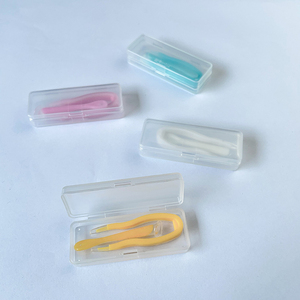
Environmental responsibility is reshaping contact lens packaging. Top factories are reducing blister foil thickness, adopting recyclable polypropylene (PP) blister cups, and offering bundled retail solutions that pair private label contact lenses with multi-purpose disinfectant solutions, hydrating eye drops, and antimicrobial silicone contact lens storage cases (e.g., Koncci A-702 style accessories).
The Kyralens Private Label Advantage & Supply Chain Ecosystem
As a specialized global distributor and OEM private label powerhouse, kyralens Technology Co.,Ltd bridges the gap between state-of-the-art Chinese manufacturing facilities and international retail brands, drugstores, optical chains, and online distributors. Headquartered with distribution operational links across Europe, the Middle East, and Asia, Kyralens turns complex manufacturing into a seamless, turnkey business solution.
By partnering with Kyralens, retail procurement teams gain direct access to audited manufacturing lines without navigating language barriers, regulatory hurdles, or complex supply chain bottlenecks. Our private label management model covers:
- Category Assessment & Market Profiling: Analyzing local retail demand, price elasticities, and color trend benchmarks.
- Custom Shade & Graphic Development: Designing exclusive color patterns, limbal ring variations, and power ranges (+6.00D to -10.00D).
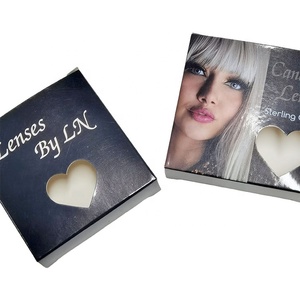
- Multilingual Regulatory Packaging: Translating IFUs (Instructions for Use), box copy, and lot-traceability barcodes in compliance with destination country pharmacy laws.
- Turnkey Retailer Partnerships: Proven track record supplying world-class retail networks including Watsons, Rossmann, Kruidvat, Trekpleister, Ahold Delhaize, Albert Heijn, Etos, Nahdi, GMG, Eureka, Migros, and REWE.
Frequently Asked Questions: Global Procurement & Custom Manufacturing
Clear answers to essential technical, legal, and operational questions asked by procurement teams prior to initiating private label color contact lens projects.
What is the typical Minimum Order Quantity (MOQ) for custom private label colored contacts?
MOQs depend on whether you select standard factory-in-stock color graphics or require fully custom shade printing and bespoke packaging. Standard private label packaging on existing high-demand shades starts as low as 1,000 to 3,000 pairs per SKU. Completely customized color patterns or specialized base curve/diameter combinations typically carry an MOQ of 10,000 pairs per design, spread across standard optical power ranges.
How do top factories ensure micro-pigments do not leach or fade over time?
Through rigid micro-encapsulation and sandwich printing processes. Pigments undergo leachability testing in organic solvents and physiological saline solutions at elevated temperatures. Chemical analysis via UV-Vis Spectroscopy and HPLC confirms zero detectable dye migration throughout the lens’s 5-year shelf life.
What regulatory certificates are mandatory for selling colored contact lenses in Europe and the US?
For Europe, products must comply with EU Medical Device Regulation (MDR 2017/745) and bear a CE mark with a 4-digit Notified Body ID (e.g., CE 2195). For the United States, lenses require 510(k) premarket clearance from the US FDA. Kyralens prepares complete technical files, Declarations of Conformity, clinical evaluation reports (CER), and lot traceability dossiers for seamless registration.
Can we customize the base curve (BC), diameter (DIA), and water content for our private label line?
Yes. While standard universal parameters—such as Base Curve 8.6mm and Diameter 14.0mm to 14.5mm—fit over 95% of human eyes, factories can adjust optical zone parameters, base curves (8.4mm - 8.8mm), and water content percentages (38% to 58%) for high-volume custom production orders.
What is the production lead time from contract signing to final shipment?
Initial pilot orders involving custom artwork approval and blister carton printing typically take 4 to 6 weeks. Subsequent re-orders on established private label SKUs are produced, sterilized, quality inspected, and ready for shipment within 15 to 25 calendar days.
How does Kyralens handle logistics and batch lot traceability?
Every single blister pack and outer retail carton features standardized GS1-compliant DataMatrix or 2D barcodes detailing the LOT number, manufacturing date, expiration date, power, and BC/DIA parameters. In the event of a quality query, full raw material batch records and autoclave cycle logs can be audited within hours.
Launch Your Private Label Eye Care Line Today
Partner with China’s premier colored contacts manufacturing network and Kyralens’ global retail team to develop retail-ready, fully compliant eye care collections tailored to your brand.