Flagship Contact Lens & Optical Catalog
Direct factory supply of certified medical-grade, cosmetic, and ophthalmic contact lenses engineered for global distributors and private label retailers.
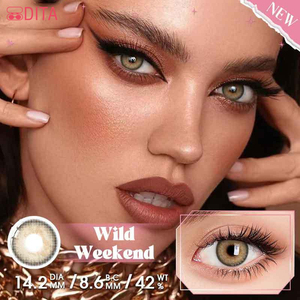
Factory Direct Hydrating Color Contact Lenses
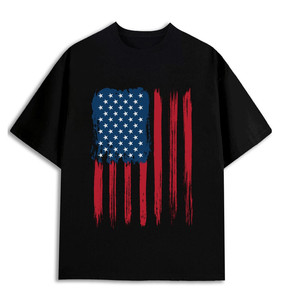
Custom Merchandise & Branding Support Accessories
Custom Patterned Contact Lens Storage Cases & Kits
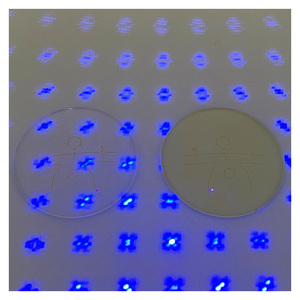
1.56 Anti-Blue Ray Hard & Ophthalmic Bifocal Lenses
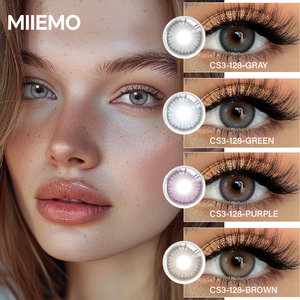
OEM/ODM Private Label Cosmetic Beauty Eye Lenses
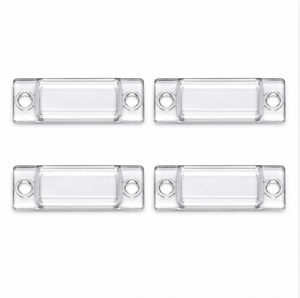
High-Precision Optical Injection Mold Tooling Service
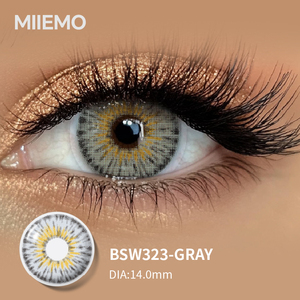
Natural 3-Tone Soft Colored Contact Lenses (Pack of 2)
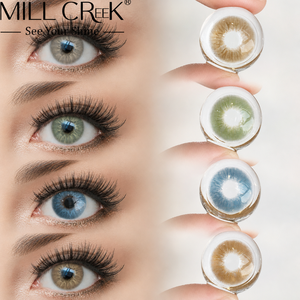
Prescription Yearly Color Contact Lenses 14.2mm HEMA
China's Premier Contact Lens Manufacturing Ecosystem: Industry Insights
The global contact lens market is experiencing a structural evolution, driven by increasing refractive error prevalence, expanding cosmetic lens adoption among younger demographics, and rapid technological advancements in polymer chemistry. China has established itself as the world's most sophisticated manufacturing hub for Class III medical optical devices, blending advanced automated precision engineering with cost-effective supply chain integration.
As a leading Chinese contact lens manufacturer and exporter, our facility operates state-of-the-art cleanrooms compliant with ISO 14644-1 Class 5 and Class 7 standards. We specialize in contract manufacturing (OEM/ODM), private label portfolio establishment, and custom lens parameter development. By integrating full-process automation—from monomer formulation to high-speed cast molding, automated optical inspection (AOI), and sterile blister packaging—we provide global brand owners, pharmacy chains, and D2C startups with unmatched product consistency and regulatory reliability.
Strategic Advantage: Chinese contact lens exporters now lead the industry in 3D multi-layer sandwich pigment encapsulation technology, offering ultra-comfortable cosmetic lenses where colors never contact the corneal tissue directly.
Comprehensive Production Capability Architecture
Our manufacturing complex spans over 45,000 square meters of dedicated optical production infrastructure. We leverage advanced spin-casting, full-cast molding, and high-precision CNC lathe-cutting technologies to manufacture clear spherical lenses, toric astigmatism lenses, multifocal presbyopia lenses, and vibrant multi-tone cosmetic color contact lenses.
Silicone Hydrogel Innovation
High oxygen transmissibility ($Dk/t$ up to 125) combined with high water retention polymer matrices for extended day-long wear comfort.
Full Cast Molding Precision
Fully automated single-use mold injection processes ensure identical edge profiling, consistent base curve values, and flawless surface optics.
3D Sandwich Color Coating
Pigment layer encapsulated safely between two clear biocompatible polymer layers, eliminating risk of color shedding or irritation.
Material Science & Optical Specification Comparison
Selecting the appropriate monomer and geometry is critical for B2B optical buyers targeting distinct market segments. The matrix below outlines our core material offerings, engineered to serve both high-volume value retail and premium medical-grade dispensing.
| Material Category | Water Content | Oxygen Transmissibility ($Dk/t$) | Modulus (MPa) | Primary Application Segment |
|---|---|---|---|---|
| HEMA + NVP Hydrogel | 38% - 42% | 18 - 25 | 0.35 - 0.45 | Yearly & Monthly Cosmetic Color Lenses |
| Polymacon Standard | 38% | 15 - 20 | 0.40 - 0.50 | Cost-Effective Mass Retail & Promotional Ranges |
| GMA-HEMA Hydrogel | 55% - 58% | 28 - 35 | 0.30 - 0.38 | High-Moisture Daily Disposable Lenses |
| Silicone Hydrogel (SiHy) | 45% - 48% | 100 - 130 | 0.50 - 0.65 | Premium Clear Spherical & Toric Prescriptions |
Strategic Procurement & Future Sourcing Trends (2025–2030)
The contact lens wholesale and export landscape is shifting dynamically. Category managers and B2B buyers must align their procurement strategies with rising consumer requirements for eye health, eco-sustainability, and rapid supply chain agility.
1. Direct Transition to Daily Disposable Modalities
Consumer preferences in North America, Europe, and key Asian markets are heavily gravitating toward daily disposable lenses. Driven by hygiene awareness and convenience, daily disposables eliminate the need for cleaning solutions and storage cases. Chinese contact lens factories are expanding automated daily packaging lines to lower per-blister production costs, making private-label daily disposables commercially viable for mid-tier retail brands.
2. Biocompatible & Dry-Eye Mitigating Polymer Formulations
With prolonged digital screen exposure becoming universal, contact lens wearers demand solutions for digital eye strain and dry eyes. Modern manufacturing trends prioritize biomimetic materials—such as phosphorylcholine (PC) copolymer coatings and hyaluronic acid (HA) infused matrix hydrogels—that lock in moisture and resist lipid deposition over 16+ hours of wear.
3. Green Manufacturing & Sustainable Blister Packaging
Environmental governance is reshaping OEM specifications. Forward-thinking buyers are requiring factories to adopt recyclable polypropylene (PP) blister foils, reduce plastic shell volume, and implement bio-based secondary packaging. China's top factories are investing in energy-efficient closed-loop water treatment facilities and solar-powered cleanroom operations to meet strict international ESG compliance metrics.
4. Hyper-Customization in Cosmetic Optics & Toric Color Lenses
Cosmetic lenses are no longer restricted to standard brown and grey tones. The market demands complex pupil ring patterns, natural rimless iris blends, and special effect cosplay/theatrical designs. Crucially, the demand for prescription astigmatic (Toric) color contact lenses is surging—a high-margin niche that only advanced factories with sub-micron lathe automation can accurately manufacture.
End-to-End Private Label & OEM Manufacturing Process
Building a successful private label eye care line requires rigorous oversight across regulatory, design, and manufacturing gates. Below is our proven 6-stage development pipeline that streamlines production timelines while mitigating supply chain risks.
1. Formula & Parameter Definition
Selection of material base, hydration level, base curve (8.5mm - 8.7mm), diameter (14.0mm - 14.5mm), and power ranges (-0.50D to -10.00D).
2. Color & Artwork Customization
High-resolution micro-pigmentation print plate generation, dot matrix tone separation, and artwork proofing for primary blisters and outer boxes.
3. Automated Cast Molding
Monomer dosing into optical-grade molds, UV polymer thermal curing, demolding, and hydration extraction in ultra-pure water systems.
4. Automated Optical Inspection
100% vision-system inspection checking edge tear, surface debris, air bubbles, color centering, and refractive power precision.
5. Blister Sealing & Autoclave
High-barrier aluminum foil heat sealing followed by terminal moist heat steam sterilization at 121°C (250°F) to ensure absolute sterility.
6. Regulatory Clearance & Dispatch
Issue of Lot Certificate of Analysis (CoA), full lot traceability records, export customs documentation, and global freight distribution.
Global Regulatory Compliance & Quality Assurance Framework
Because contact lenses are regulated as Class III medical devices across major international jurisdictions, choosing a supplier with foolproof quality management systems is mandatory. Our partner facilities hold rigorous international certifications, facilitating smooth customs clearance and market entry in the Americas, European Union, Middle East, and Asia-Pacific regions.
Regulatory Compliance Coverage: ISO 13485:2016 Quality Management Systems, EU CE 2797 Certification under Medical Device Regulation (MDR 2017/745), US FDA 510(k) clearances, and Saudi FDA registration compliance.
Every single batch undergoes exhaustive microbiological and physical laboratory testing before batch release, including:
- Cytotoxicity & Biocompatibility Testing: Ensuring zero cell toxicity according to ISO 10993 standards.
- Sterility Assurance Testing: 14-day incubation bio-burden checks confirming sterility assurance level (SAL) of $10^{-6}$.
- Extractables & Leachables Profiling: Verifying complete monomer polymerization with zero residual monomer leaching into saline solution.
- Dimensional Stability & Osmolality Audits: Checking base curve stability, power spherical accuracy, and saline pH balance (7.2 - 7.4).
Frequently Asked Questions for B2B Sourcing & OEM Manufacturing
Clear, direct insights addressing the primary commercial and operational questions asked by global optics procurement directors.
What is the minimum order quantity (MOQ) for custom private label contact lenses?
MOQs depend on the product category and customization depth. Standard inventory or white-label stock lenses can be ordered starting at 1,000 pieces per SKU. For custom micro-pigmentation color development or specialized private label box printing, MOQs typically range from 10,000 to 50,000 pieces per color pattern across standard power distributions. We offer flexible pilot run options for brand launches.
How long does the OEM manufacturing and custom sampling lead time take?
Sample creation for existing color patterns or standard clear lenses takes 7 to 10 working days. Custom color matching and artwork plate production take approximately 20 days. Once pre-production samples are approved, full-scale mass production lead times are typically 30 to 45 calendar days, inclusive of the mandatory 14-day sterility incubation window.
Are your contact lenses compliant with European CE and US FDA standards?
Yes. Our manufacturing facilities are audited and certified under ISO 13485:2016. Select product ranges hold CE certification under the EU Medical Device Regulation (MDR) as well as US FDA 510(k) clearances. We provide full technical files, Declarations of Conformity (DoC), Certificates of Analysis (CoA), and localized packaging labeling support to ensure seamless regulatory clearance in your destination country.
Can you manufacture custom toric (astigmatism) or multifocal contact lenses under private label?
Absolutely. We possess computerized high-precision lathe-cutting equipment and custom mold tooling capable of producing toric soft contact lenses with exact cylinder ($CYL$) and axis parameters. We also manufacture multifocal designs featuring concentric progressive zones for presbyopia correction.
What packaging options are available for private label contact lens brands?
We provide comprehensive packaging solutions. Primary packaging includes medical-grade polypropylene (PP) blister packs sealed with high-barrier foil. Secondary packaging ranges from compact 2-pack, 6-pack, and 30-pack folding cartons to luxury rigid gift boxes for cosmetic color lens collections. All outer boxes can feature foil stamping, spot UV, embossing, and localized multi-language text.
What is the shelf life of your sterile blister-packed contact lenses?
Our soft contact lenses have a validated shelf life of 5 years from the date of manufacture. Lenses are steam-sterilized in buffered saline solution within hermetically sealed foil blisters, ensuring complete sterility and moisture retention over extended storage periods under ambient conditions.
How do you guarantee color consistency across different production batches?
We employ digital colorimetry and spectro-photometric matching system automated tools during pigment mixing. Coupled with automated optical vision inspection (AOI) on the production line, we enforce strict delta-E color tolerance thresholds to ensure that re-orders match initial approved color master samples with 100% visual fidelity.
What shipping and logistical arrangements do you support for international exports?
We support all standard Incoterms, including EXW, FOB, CFR, CIF, and DDP (Delivered Duty Paid). Our logistics department handles temperature-controlled freight forwarding via air or sea shipping, complete with MSDS (Material Safety Data Sheets), transport safety certificates, and export customs clearance documentation.
Partner with China’s Leading Optical Manufacturing Factory
Elevate your optical retail product line with high-margin, certified contact lenses and custom packaging solutions. Contact our engineering team today for technical catalogs, instant factory pricing, and free sample kits.