Precision Manufacturing & Optical Equipment Portfolio
Explore high-performance contact lens production machinery, automated blister packing systems, UV curing conveyors, and private-label optical products.
Executive Sourcing Guide: Contact Lens Manufacturing in China
Understanding the Engineering Innovations, Quality Management Systems, and Supply Chain Competencies Driving Global OEM/ODM Sourcing
The global contact lens market is experiencing unprecedented demand, propelled by expanding vision correction needs, cosmetic trends in colored hydrogel lenses, and rapid adoption of daily disposable formats. China has consolidated its standing as a primary global hub for contact lens manufacturing, blending advanced biomedical polymer chemistry with high-speed automated robotics and stringent regulatory governance under NMPA, US FDA, and European CE MDR standards.
For international buyers—including pharmacy chains, supermarket optical retailers, cosmetic brands, and ophthalmic distributors—evaluating potential manufacturing partners in China requires deep technical insight into the underlying production technologies. This comprehensive white paper breaks down the end-to-end contact lens manufacturing process, material choices, quality verification, and strategic vendor selection criteria essential for building a robust private-label optical program.
Information Gain Key Takeaway: Modern contact lens production has shifted from manual diamond lathing to high-precision fully automated Direct Mold Casting (DMC). This transition reduces unit costs by over 60% while elevating surface smoothness to sub-micron optical tolerances.
The 6-Stage Contact Lens Manufacturing Process
From Raw Monomer Formulation to Final Steam Sterilization
Precision Injection Molding of Optical Casts (Male/Female Molds)
The process begins with high-speed injection molding of single-use, high-transparency thermoplastic resin molds (typically specialized polypropylene). Optical inserts machined with single-point diamond turning (SPDT) form the male (back curve) and female (front curve) toolings. These molds define the precise base curve, center thickness, power profile, and edge geometry of each lens.
Monomer Dosing & Double-Sided Cast Molding (DMC)
Liquid liquid monomer mix—comprising hydrophilic monomers (like HEMA), silicone crosslinkers, photo-initiators, and UV-blocking agents—is micro-dosed into the female mold cavity using high-precision peristaltic or gear pumps under cleanroom nitrogen atmosphere. The male mold is inserted and sealed under controlled pressure to form a hermetic polymerization chamber, ensuring zero air bubble entrapment.
Photopolymerization & Thermal UV LED Curing
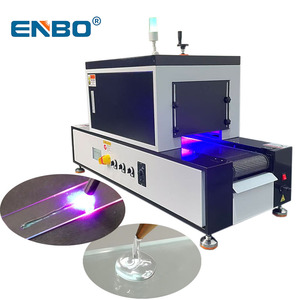
The assembled molds enter automated UV LED curing conveyor tunnels. Controlled ultraviolet radiation triggers cross-linking chemistry, transforming liquid monomer into a solid, un-hydrated polymer matrix (known as a dry button or dry lens lens cake). Thermal profiles and UV intensity gradients are dynamically regulated via PLC systems to ensure uniform refractive index across the entire optical zone.
De-molding, Hydration, Extraction & Surface Processing
Mechanical grippers automatically separate the male and female mold halves. The dry lens undergoes solvent or aqueous extraction to flush out residual unreacted monomers and oligomers. Next, the lens enters multi-stage hydration baths containing purified saline solution, causing the hydrogel or silicone hydrogel material to swell, soften, and achieve its target equilibrium water content (EWC) and final diopter power. For silicone hydrogels, inline plasma surface oxidation or hydrophilic polymer grafting (such as PVP insertion) is applied to ensure excellent tear-film wettability.
100% Automated Optical Inspection (AOI) & Edge Verification
Every single hydrated contact lens is transferred via robotic vacuum pick-and-place tools into vision test cells. High-resolution CCD cameras utilizing wavefront sensing and dark-field illumination inspect 100% of the production volume for surface tears, edge chips, inclusions, optical aberrations, and dimensional variances. Non-compliant lenses are automatically rejected prior to packaging.
Aseptic Blister Packaging, Sealing & Terminal Autoclave Sterilization
Approved lenses are placed into ergonomic polypropylene (PP) blister cups containing buffered isotonic saline solution enriched with hyaluronic acid or moisturizing agents. Blister packs are heat-sealed with medical-grade aluminum foil laminate lids printed with lot tracking numbers, diopter ratings, expiry dates, and 2D matrix codes. Finally, packed blisters undergo terminal moist heat steam sterilization in validated industrial autoclaves at 121°C for 20+ minutes, achieving a Sterility Assurance Level (SAL) of 10⁻⁶.
Material Chemistry & Process Technology Matrix
A Technical Comparison for OEM Sourcing Managers
| Technology / Parameter | Hydrogel (HEMA-Based) | Silicone Hydrogel (SiHy) | Cosmetic Color Lenses |
|---|---|---|---|
| Primary Monomers | HEMA, NVP, MAA | TRIS, mPDMS, HEMA, NVP | HEMA / SiHy + Bio-compatible Pigments |
| Oxygen Permeability (Dk/t) | 15 – 30 Dk/t (Standard) | 80 – 175 Dk/t (Ultra-High) | 20 – 100 Dk/t (Varies by matrix) |
| Water Content Range | 38% – 60% | 33% – 55% | 38% – 55% |
| Printing Technology | N/A | N/A | 3-Layer Sandwich Pad Printing / Inkjet |
| Manufacturing Method | Automated Direct Cast Molding | Plasma Treated Cast Molding | Encapsulated Color Mold Casting |
| Primary Target Applications | Daily Disposables / Cost Efficiency | Extended Wear / Premium Vision Care | Beauty Retail / Cosmetic Prescription |
Specialized Sub-Systems: Color Printing & Packaging Lines
Advanced Technologies Enhancing Value in Private-Label Optical Manufacturing
3-Layer Color Sandwich Printing Technology
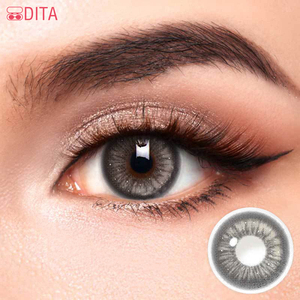
Cosmetic color lenses manufactured by leading Chinese factories utilize micro-pad printing technology that embeds non-toxic, FDA-approved bio-pigments strictly between two clear hydrogel isolation layers. This "sandwich" construction completely prevents pigment contact with the user's cornea, guaranteeing zero color leaching while maintaining high oxygen transmissibility and brilliant 1-tone, 2-tone, or 3-tone visual depth.
Integrated High-Speed Blister & Cartoning Automation
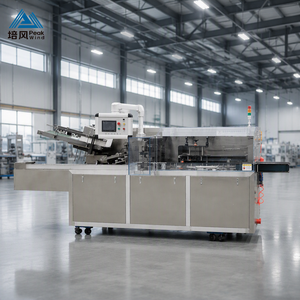
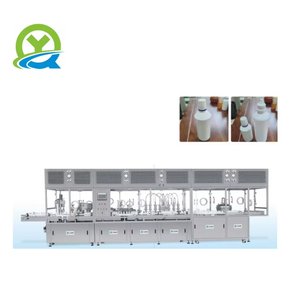
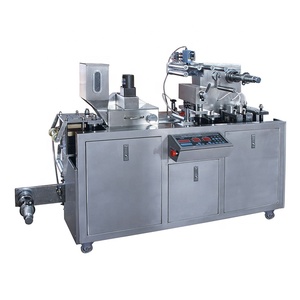
Modern Chinese contact lens factories employ fully automatic high-capacity cartoning and blister sealing machinery equipped with PLC controls and robotic feed units. Systems such as the DPP80 mini aluminum-plastic blister packer achieve rapid web-forming, precision saline dosing, heat sealing, and automatic cartooning at speeds exceeding 150 blister packs per minute, dramatically lowering labor costs and cross-contamination risks.
Why Partner with kyralens Technology Co., Ltd
Your Strategic Supply Chain Partner for Global Private Label Eye Care Solutions
kyralens Technology Co.,Ltd is a premier developer, supplier, and distributor of comprehensive private label eye care products. Serving top retail chains, pharmacy groups, optical store networks, and cosmetic brands across Europe, the Middle East, and Asia, kyralens combines deep optical manufacturing engineering with turnkey private label execution.
Full Category Integration
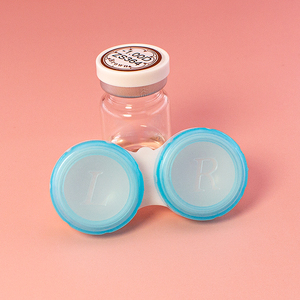
Consolidate your entire optical catalog under a single vendor—from daily/monthly soft contact lenses and trend-led color lenses to lubricating eye drops, multipurpose cleaning solutions, custom cases, and reading glasses.
Rigorous International Compliance
Complete regulatory dossier support for international market entry. Products carry full technical documentation, ISO 13485 certification, CE marking, and complete lot traceability from monomer batch to retail shelf.
Retail-Ready Packaging & Branding
In-house structural and graphic design services provide localized, multi-lingual packaging compliant with regional labeling directives, enabling rapid retail rollout with minimal lead time.
Global Procurement & Market Trends (2025–2030)
Key Structural Shifts Reshaping Contact Lens Manufacturing and Sourcing Strategies
Rapid Shift Toward Daily Disposable Silicone Hydrogel
Consumer preference is overwhelmingly migrating from reusable monthly lenses to hygienic daily disposables. High Dk/t silicone hydrogel materials are becoming the standard baseline for daily disposables, driving factories to expand high-speed automated DMC lines to meet cost-per-lens targets required by mass-market retail chains.
Sustainable Manufacturing & Eco-Packaging
Leading Chinese manufacturers are actively implementing green chemistry initiatives, including recyclable polypropylene blister trays, biodegradable outer packaging, closed-loop water recovery systems during hydration stages, and energy-efficient UV LED curing systems that reduce carbon footprints by up to 40%.
Frequently Asked Sourcing & Technical Questions (FAQ)
Essential Answers for Category Buyers, Product Developers, and Quality Assurance Managers
Build Your Private Label Eye Care Line Today
Partner with kyralens Technology Co., Ltd for certified quality, advanced manufacturing tech, and seamless global supply chain distribution.