Precision-Engineered Private Label Contact Lenses
Manufactured in automated ISO 13485 & CE-certified cleanrooms. Directly available for global B2B procurement, private branding, and custom optical tooling.

Private Label Customized Brand Color Contact Lenses Factory Wholesale Fashion Natural Blue Soft Eye Colored Lens Contact
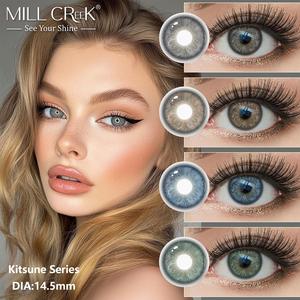
MILLCREEK Eye Contact Lenses Color Colored Contacts Wholesale OEM Private-Label HEMA 14.5mm Circle Bulk Luminous Beauty
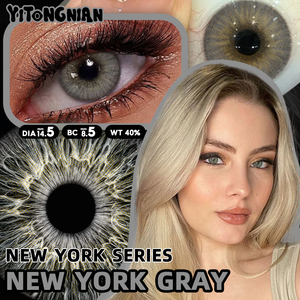
YITONGNIAN Low Price Eye Lens ODM/OEM Customize Package Soft HEMA Colored Contact Lenses Wholesale Cosplay Lenses
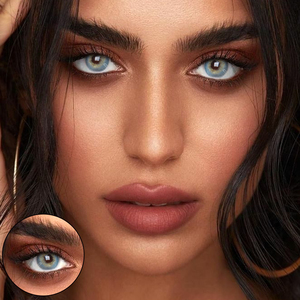
Soft Color Contact Lenses Comfortable Soft Beauty Item Wholesale Price OEM ODM Logo Contact Lenses
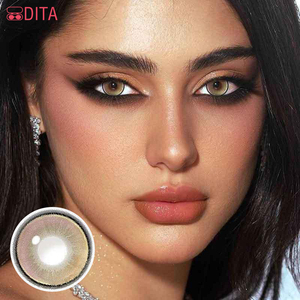
Factory Wholesale Free Sample Brown Eye Lens Contact 14.2 Cosmetic Contact Lenses Custom Logo Prescription Contact Lens
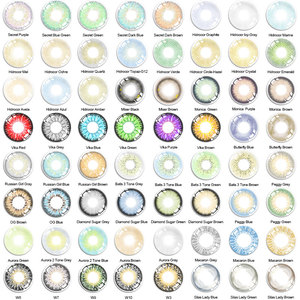
MILL CREEK Best Selling 1 Year CE Certified Soft Color Contact Lens-Three Tone Grey HEMA 40% Water Content Wholesale
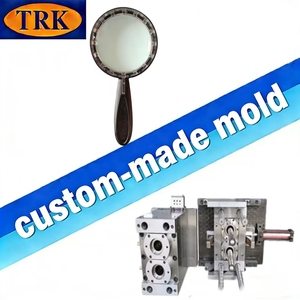
Two-color Plastic Molds High-precision On-demand Tooling for Magnifiers Small Optical Tools Contact to Customize Your Mold Today
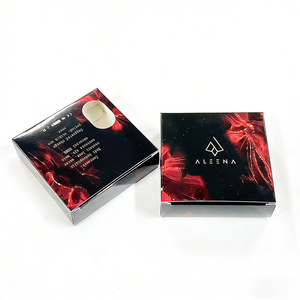
Hot Sale Low MOQ Factory-customized Digital Printing Gold Foil UV Coating Colored Contact Lens
1. Executive Overview: Strategic Shift in Global Contact Lens OEM Manufacturing
The global contact lens market is undergoing a structural transformation. Brand owners, optical chain store operators, pharmaceutical distributors, and e-commerce beauty conglomerates are shifting away from high-margin legacy brand distribution toward Private Label Contact Lens Sourcing. China has established itself as the world’s premier manufacturing nexus for high-precision optical polymer products, combining state-of-the-art automated cast-molding technology with cost-efficient, high-volume production capabilities.
Historically dominated by a few multinational conglomerates, contact lens manufacturing required multi-million-dollar capital expenditures in micro-injection molding equipment and monomer synthesis. Today, leading Chinese OEM/ODM exporters—partnering with European regulatory entities such as kyralens Technology Co., Ltd. (headquartered at Faradaystraat 14, 6718 XT Ede, Netherlands)—have democratized access to medical-grade contact lenses. By combining European compliance oversight and localized distribution strategy with China’s high-precision manufacturing infrastructure, global buyers can now launch proprietary optical brands with superior profitability, complete formula customization, and rapid time-to-market execution.
This industry report outlines the technical standards, polymer formulations, manufacturing methodologies, regulatory pathways, and procurement strategies required for enterprise buyers seeking to partner with a top-tier Chinese contact lens private label factory.
Global Compliance Matrix
Complete regulatory documentation for Europe, Middle East, and North American distribution including CE Class IIb, FDA 510(k), and ISO 13485 certifications.
Custom Optical Mold Tooling
In-house high-precision micro-tooling and two-color plastic mold injection for specialized base curves, diameters, and optical geometries.
Patented Color Encapsulation
Bio-compatible multi-layer "sandwich" digital printing technology preventing color pigment from contacting corneal epithelial tissue.
2. Advanced Material Science: HEMA vs. Silicone Hydrogel Manufacturing
When selecting a contact lens private label manufacturer in China, optical procurement directors must evaluate the polymer matrix suited for their target consumer market. The fundamental performance of a soft contact lens is dictated by its oxygen transmissibility ($D_k/t$), water content percentage, modulus of elasticity, and surface wettability angle.
2.1 Poly-HEMA (Hydroxyethyl Methacrylate) Matrices
HEMA-based hydrogels remain the global benchmark for cosmetic color contact lenses, daily disposable fashion series, and budget-conscious prescription lines. HEMA polymers rely on bound water content to transport oxygen to the cornea. Our cleanroom cast-molding process utilizes cross-linked hydrogels enhanced with N-Vinylpyrrolidone (NVP) and Methacrylic Acid (MAA), yielding water content levels between 38% and 55%.
- Water Content Range: 38% - 45% (optimal for preventing eye dry-out during extended wear).
- Refractive Index: ~1.40 - 1.43, ensuring crystal-clear visual acuity without spherical aberration.
- Pigment Integration: Ideal for micro-point digital color printing and gold foil UV coating layer entrapment.
2.2 Next-Generation Silicone Hydrogel (SiHy) Monomers
For high-end medical optical lines and extended-wear private label series, Silicone Hydrogel represents the gold standard. By combining fluoro-siloxane macromolecules with hydrophilic monomers, SiHy lenses decouple oxygen transmissibility from water content, achieving $D_k/t$ values exceeding 100 (compared to 15-25 for conventional HEMA).
| Technical Parameter | Standard HEMA Hydrogel | Advanced Silicone Hydrogel (SiHy) | Cosmetic Digital Printing HEMA |
|---|---|---|---|
| Oxygen Transmissibility ($D_k/t$) | 18 - 28 $10^{-9}$ units | 100 - 145 $10^{-9}$ units | 20 - 25 $10^{-9}$ units |
| Water Content (%) | 38% - 58% | 33% - 48% | 40% - 45% |
| Modulus of Elasticity (MPa) | 0.3 - 0.5 (Ultra-soft) | 0.6 - 1.0 (Form-retaining) | 0.4 - 0.6 (Balanced) |
| Surface Wettability (Contact Angle) | 45° - 55° | < 35° (Plasma treated / PVA hydrated) | 40° - 50° |
| Primary Retail Channel | Mass Retail / Pharmacies | Premium Optical Chains / Eyecare Clinics | E-Commerce Beauty / Specialty Boutiques |
2.3 Automated Precision Injection & Cast Molding Process
Legacy soft contact lenses were produced via lathe-cutting—a slow, labor-intensive process with higher unit variance. China’s premier factories utilize fully automated, robotic Cast Molding Technology. Optical-grade thermoplastic molds (manufactured using high-precision two-color mold tooling) are injected with precise monomer formulations. The monomer undergoes thermal or UV photopolymerization inside climate-controlled Class 10,000 cleanrooms, ensuring exact base curves (BC 8.5mm - 8.7mm) and edge profiles down to sub-micron tolerances.
3. Future Procurement Trends for B2B Contact Lens Buyers (2025–2030)
To outpace competitors and capture growing market share, optical procurement teams must structure their sourcing strategies around five key industry shifts.
1. Hyper-Personalized & High-Definition Digital Printing
Cosmetic lens buyers no longer accept flat, artificial iris patterns. The market demands multi-tone dimensional optics, natural limb ring blending, and specialty metallic finishes (e.g., gold foil and luminous UV coating). Advanced digital ink-jet printing directly onto mold cavities allows micro-dot dispersion without sacrificing lens oxygen permeability.
2. Low MOQ Agile Supply Chains for Private Brands
E-commerce D2C brands require fast turnaround and low minimum order quantities (MOQs). Leading Chinese exporters now offer flexible OEM modular packaging frameworks—allowing brands to test localized market demand with 500 to 1,000 unit pilot runs per SKU before scaling into massive high-speed production runs.
3. Sustainable Eco-Blister Packaging Solutions
Environmental regulations across the EU and North America are forcing a phase-out of excessive plastic packaging. Future-ready contact lens factories are adopting recycled polypropylene (PP) blister trays, biodegradable aluminum foils, and eco-friendly secondary carton packaging without compromising sterile saline barrier integrity.
4. Multi-Functional Eyecare Product Portfolios
Successful optical retail brands are moving away from single-product offerings. Procurement managers prefer single-source turn-key suppliers capable of manufacturing a full retail shelf: contact lenses, lubricating eye drops, multi-purpose disinfectant care solutions, lens storage cases, and reading glasses under one brand identity.
4. Key Industry Development Trends: Smart Contact Lenses & Bio-Inspired Optics
The boundary between vision correction, beauty fashion, and medical health monitoring is rapidly dissolving. As China’s contact lens manufacturing infrastructure evolves, key R&D investments are driving product innovation across three primary verticals:
4.1 Ocular Health Integration & Blue-Light Filtering Matrices
With digital screen usage reaching historical highs, private label brands are embedding yellow-tinted photochromic polymers and anti-blue-light filtering monomers directly into hydrogel lens formulations. These materials selectively block harmful 415nm–455nm high-energy visible (HEV) screen radiation while maintaining 96%+ luminous transmittance for visible light.
4.2 Moisture-Locking Hyaluronic Acid (HA) & MPC Bio-Polymers
To solve end-of-day contact lens discomfort, modern OEM polymer chemistry integrates bio-compatible wetting agents directly into the saline solution or monomer matrix. Poly(2-methacryloyloxyethyl phosphorylcholine) (MPC) and Sodium Hyaluronate are co-polymerized onto lens surfaces, creating a persistent tear-film moisture barrier that reduces lipid deposition and bacterial adhesion.
4.3 Smart Diagnostic & Drug-Eluting Contact Lenses
Looking toward the near future, Chinese micro-fabrication laboratories are collaborating with medical technology innovators to integrate micro-fluidic channels and biosensors into soft contact lenses. These advanced systems monitor intraocular pressure (IOP) for glaucoma patients and continuously measure tear glucose levels for non-invasive diabetic tracking.
5. Enterprise Advantages: Why Global Retail Leaders Choose Kyralens
Operating as a specialized international developer and global wholesaler, kyralens Technology Co., Ltd. bridges Asian high-precision optical manufacturing power with stringent European quality management standards.
Full-Chain Regulatory Guarantee
Every product line is shipped with complete destination-market documentation: Declarations of Conformity, CE 2797 certificates, FDA establishment registration, and batch-specific lot traceability records.
Turn-key Category Management
From initial design brief and packaging artwork localization to final retail shelf stocking, our team manages the entire process so supermarket, drugstore, and optical buyers eliminate project execution risks.
Integrated Sourcing Infrastructure
Access 6 major eye care product categories through a single procurement agreement: soft contact lenses, color cosmetic series, cleaning solutions, drops, storage cases, and reading glasses.
Frequently Asked Questions (FAQ) for B2B Contact Lens Buyers
Essential insights for procurement managers, retail buyers, and brand owners considering OEM/ODM contact lens manufacturing in China.
1. What is the process for developing a private label contact lens line with a Chinese manufacturer? ▼
2. What are the Minimum Order Quantities (MOQs) for OEM custom logo contact lenses? ▼
3. How does "Sandwich" printing technology ensure safety in colored contact lenses? ▼
4. What quality compliance certificates must a Chinese contact lens factory provide? ▼
5. Can your facility manufacture custom optical molds for unique lens geometries? ▼
6. What is the typical shelf life and sterilization protocol for soft contact lenses? ▼
Partner with China's Premier Contact Lens Manufacturer
Whether you are launching a new cosmetic color lens brand, scaling an existing retail optical line, or requiring custom high-precision mold tooling, our engineering and regulatory teams are ready to assist.