China-Japan Strategic Synergy: Redefining B2B Contact Lens Manufacturing
The global contact lens market is undergoing a structural transformation driven by the confluence of advanced material chemistry, precision cast-molding automated production, and evolving consumer preferences for both visual correction and aesthetic enhancement. As a premier China contact lens supplier operating in direct alignment with Japan's technical quality standards, our enterprise bridges the gap between high-capacity, cost-efficient manufacturing and stringent medical-grade quality control.
Historically, Japanese optical exporters set the benchmark for ocular safety, comfortable edge-curve geometry, and micro-pigment containment. By integrating these precise Japanese engineering protocols—such as nanometer-level diamond lathe insert tooling, automated optical inspection (AOI) algorithms, and multi-tier bio-compatibility testing—with China’s unmatched supply chain agility and raw material scale, we deliver an unexcelled value proposition for international optical buyers, pharmacy chains, and private-label distributors.
1. Advanced Cast Molding vs. Diamond Lathe Cutting Technologies
Mass manufacturing of soft hydrogel and silicone hydrogel contact lenses demands extreme geometrical consistency. Our production lines leverage full-cast molding technology utilizing high-purity polypropylene (PP) molds that are discarded after a single use to prevent cross-contamination and micro-surface imperfections. Key technical aspects include:
- Micro-Geometric Repeatability: Base curves (BC) are maintained within a tolerance of ±0.01 mm, eliminating parameter drift across mass-produced batches.
- Smooth Bevel Edge Processing: Smooth rounded edge profiles reduce palpebral conjunctival friction during blinking, preventing foreign body sensation and micro-trauma to the corneal epithelium.
- Polymer Monomer Synthesis: Proprietary monomer formulations (Poly-HEMA, NVP, EGDMA cross-linkers) are purified in-house to achieve pristine optical clarity and long-term dimensional stability.
2. Micro-Sandwich Color Pigment Isolation Technology
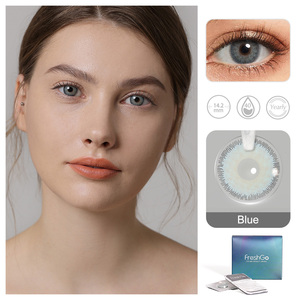
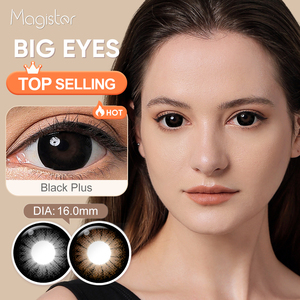
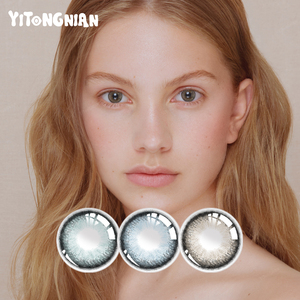
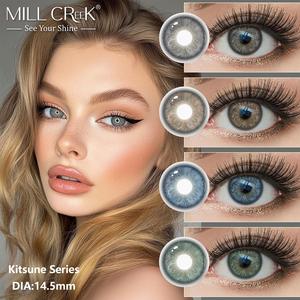
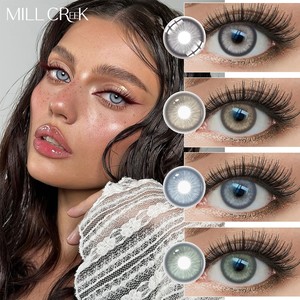
For cosmetic color contact lenses (ranging from natural 1-tone enhancements to intricate 3-tone fashion designs), ocular safety remains paramount. Lower-tier manufacturers apply color coatings directly to the surface of the lens, exposing the sensitive corneal epithelium to pigment leach rates and surface roughness. Our enterprise strictly mandates the Micro-Sandwich Pigment Encapsulation Method:
The bio-compatible organic pigments are embedded between two ultra-thin layers of hydrogel polymer material. This creates a completely smooth outer surface where pigments never come into direct contact with corneal tissues or tear film lipids. Consequently, oxygen permeability remains uninterrupted, color vibrancy is protected from oxidative breakdown, and zero pigment migration occurs throughout the lens shelf life.
| Material Class | Primary Monomer Matrix | Water Content (%) | Oxygen Transmissibility (Dk/t) | Modulus (MPa) | Recommended Replacement | Regulatory Approvals |
|---|---|---|---|---|---|---|
| Standard Hydrogel | Poly-HEMA + EGDMA | 38% - 42% | 18 - 25 Dk/t | 0.35 - 0.45 | Yearly / Monthly | CE 2797 / ISO 13485 |
| High-Moisture Hydrogel | HEMA + NVP + HA Lock | 55% - 58% | 28 - 35 Dk/t | 0.28 - 0.35 | Daily Disposable | CE / NMPA / FDA 510(k) |
| 3rd Gen Silicone Hydrogel | Fluorosilicone Macromer | 45% - 48% | 100 - 130 Dk/t | 0.45 - 0.55 | Daily / Two-Weekly | PMDA Japan / CE / FDA |
| Cosmetic Color Matrix | Sandwich HEMA Polymer | 38% - 42% | 20 - 24 Dk/t | 0.38 - 0.48 | Monthly / Yearly | CE 2797 / ISO 13485 |
Rapid Migration to Daily Disposable Silicone Hydrogel
B2B retail buyers are systematically transitioning inventory from traditional yearly HEMA lenses toward single-use daily disposable silicone hydrogels. Driven by consumer awareness of ocular hygiene and oxygenation benefits, daily disposables deliver higher profit margins and recurring subscription revenue for brands.
Bio-Mimetic Moisture Lock Polymers
Next-generation formulations integrate bio-compatible lubricating agents—such as Hyaluronic Acid (HA) and Polyvinylpyrrolidone (PVP)—directly into the internal matrix. This creates a persistent moisture barrier that reduces tear evaporation during prolonged digital screen use, targeting the pervasive dry-eye demographic.
Eco-Friendly Sustainable Packaging
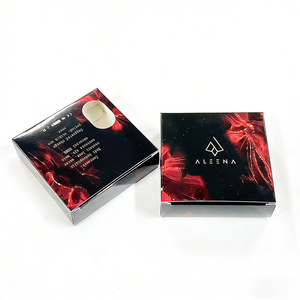
Regulatory directives in Japan and the European Union are pushing for radical reductions in single-use plastic waste. Our OEM offerings now incorporate ultra-thin 0.2mm recyclable polypropylene blisters, 30% lighter aluminum seal foils, and FSC-certified biodegradable outer paper packaging boxes.
Manufacturing Infrastructure & Quality Control Protocols
Operating a world-class optical OEM/ODM facility requires uncompromised adherence to cleanroom environment standards, automated real-time inspection system automation, and comprehensive batch traceability. Our facility operates ISO Class 5 (Class 100) micro-environments for liquid monomer filling and sealed blister sterilization, supported by an ISO Class 7 (Class 10,000) general production area.
Comprehensive 5-Step Quality Assurance Workflow
- Automated Monomer Dosing & UV Polymerization: Closed-loop robotic dispensers inject high-purity liquid monomer into precision PP molds. Thermally controlled UV curing tunnels polymerize the monomer matrix without micro-void formation or optical distortion.
- Hydration & Extraction Processing: Polymerized lenses undergo multi-stage hydration baths in ultrapure deionized water (EDI system) to extract unreacted monomers, residual cross-linkers, and impurities, achieving 100% bio-safety compliance.
- 360-Degree High-Speed AOI Defect Inspection: Every single lens passes through high-resolution CCD camera arrays that analyze lens edge integrity, diameter uniformity, base curve accuracy, optical zone clarity, and color dot printing symmetry. Any lens displaying micro-tears, bubbles, or edge notches is automatically ejected.
- Blister Sealing & High-Pressure Steam Autoclaving: Lenses are immersed in buffered saline solution enriched with bio-lubricants, heat-sealed in medical-grade foil blisters, and sterilized at 121°C (250°F) for 20 minutes under saturated steam pressure.
- Lot Traceability & Certificate of Analysis (CoA) Release: Each finished production lot is assigned a unique barcode linked to raw material batch numbers, environmental monitoring logs, sterilization pressure charts, and physical inspection metrics.
International Regulatory Mapping
To ensure frictionless importation for our global export partners, all products carry complete technical documentation dossiers (STED format). We maintain active compliance registrations across major global health authorities:
- European Union: CE Marking certified under EU Medical Device Regulation (MDR 2017/745) Class IIa.
- United States: US FDA 510(k) clearances for clear prescription hydrogel and cosmetic soft contact lenses.
- Japan: Full PMDA compliance validation, foreign manufacturer accreditation, and adherence to Japanese Industrial Standards (JIS T 7331).
- China: National Medical Products Administration (NMPA) Class III Medical Device Registration Certificates.
What distinguishes China contact lens suppliers working under Japan quality standards?
How does Micro-Sandwich Technology prevent pigment contact with the eye?
What are the typical Minimum Order Quantities (MOQs) for OEM private-label packaging?
Which regulatory documents are provided to clear customs in Japan, the EU, and the US?
Can you manufacture high-diopter corrective prescription lenses and Toric (Astigmatism) parameters?
What is the shelf life of hydrogel and silicone hydrogel contact lenses in sealed blister packs?
How does automated optical inspection (AOI) handle defect rejection in mass production?
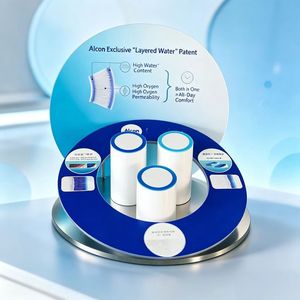
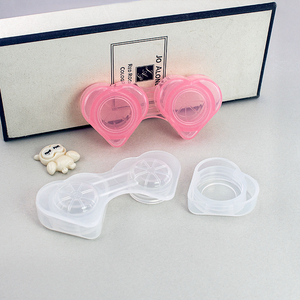
Do you offer OEM solutions for lens care solutions, storage cases, and retail display trays?
How are temperature variations handled during international container shipping?
What is the typical lead time from initial brand artwork approval to final export shipment?
Partner with China's Premier Contact Lens Exporter
Elevate your brand's optical portfolio with Japanese engineering precision, robust regulatory compliance, and scalable OEM/ODM manufacturing capability. Request custom product samples, technical dossiers, or a tailored private label quotation today.
Contact Us