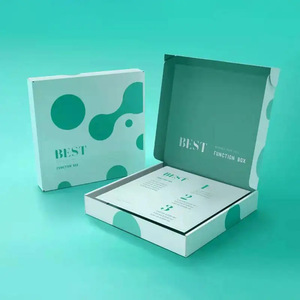
Enterprise Wholesale Catalog
Featured Daily & Cosmetic Contact Lenses & OEM Packaging
Direct factory wholesale selections for international distributors, pharmacy chains, optical retailers, and cosmetic brands seeking compliant, high-margin eye care products.
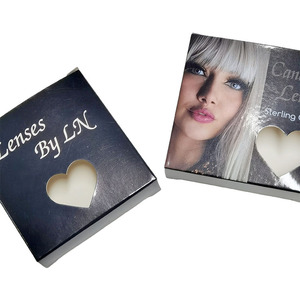
2025 New Trend Fashion Custom High Quality Love Window Design Colored Eye Contact Lenses Wholesale with High Quality Paper Boxes
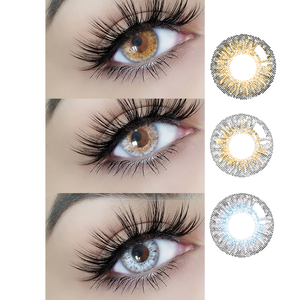
Private Label Customized Logo Brand Meetone 3 Tone Colored Contacts Paper Box Wholesale Color Eye Soft Contact Lenses Packaging
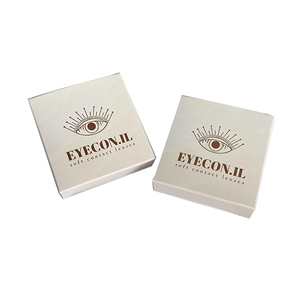
Brand Contact Lens Contact Lenses Cosmetic Box Packaging High Quality Private Customized Beauty Products Packing Offset Printing
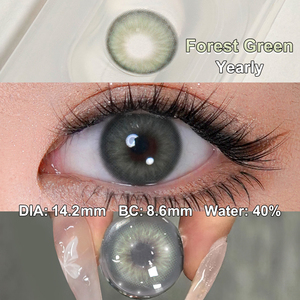
Free Shipping Freshgo Eye Contact Lenses New Wholesale 14.20mm Soft Black Contact Lenses 6 Months Beauty Eye Color Contacts
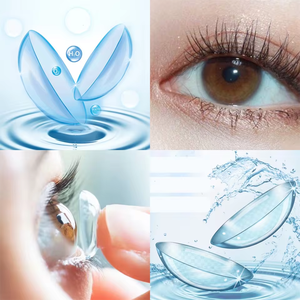
YITONGNIAN Wholesale Transparent Contact Lenses With Power 0.00~-10.00 Manufacturer
USA TOP FLAGSINC American Flag 4x6 450g/kg Heavy Duty 420D Embroidered Stars Outdoor Made in USA by Shopify
American Flag Men's T-Shirt 100% Cotton Heavyweight 180GSM Printed Design Made in USA Ships From US Warehouse
50M+
Annual Blister Capacity
ISO 13485
Certified Medical Facility
CE 2797
EU Compliant Dossiers
99.8%
AOI Quality Inspection Rate
Strategic Sourcing Whitepaper
Navigating the Global B2B Daily Colored Contact Lenses Supply Chain
An authoritative industrial guide on material science, regulatory compliance, micro-pigment encapsulation, and supply chain scalability for global procurement leaders.
The international landscape for cosmetic contact lenses is undergoing a massive structural shift. Driven by heightened consumer awareness around ocular hygiene, screen-induced dry eye syndrome, and fast-moving cosmetic beauty trends, global demand has aggressively gravitated toward Daily Disposable Colored Contact Lenses (1-Day Disposables). As a premier industrial manufacturer in China, our state-of-the-art facility integrates advanced polymer chemistry, automated cast-molding infrastructure, and compliance-driven packaging logistics to empower worldwide brands, pharmacy chains, and optical distributors.
Procuring contact lenses on a wholesale level demands an uncompromising commitment to medical-grade precision. Lenses classified under Class IIb (EU MDR) or Class II (US FDA) medical devices require rigorous batch consistency, verified oxygen transmissibility ($Dk/t$), bio-compatible colorant isolation, and pristine surface hydration dynamics. This whitepaper analyzes the essential technological vectors, regulatory hurdles, and strategic procurement frameworks necessary to scale a high-margin private label eye care collection.
1. Strategic Sourcing & Future Procurement Trends in Daily Colored Contacts
As optical buyers evaluate 2025–2030 product roadmaps, several macro-trends are shaping order specifications and OEM partnership criteria:
Material Evolution: Hydrogel to High-Dk/t Silicone Hydrogel
While traditional PolyHEMA hydrogels (38%–58% water content) remain cost-effective staples for cosmetic wear, market procurement is rapidly shifting toward Silicone Hydrogel daily matrices. Delivering oxygen transmissibility values exceeding $80 \times 10^{-9} \text{ (Dk/t)}$, silicone hydrogels mitigate corneal hypoxia, allowing cosmetic brands to market all-day comfort without sacrificing vivid color intensity.
Full Encapsulation "Sandwich" Tech Standardisation
Regulatory authorities worldwide (including EU NB 2797 and US FDA) strictly penalize surface-printed pigments. Future wholesale procurement demands mandatory 3D Pigment Micro-Encapsulation. Factories must lock organic or inorganic pigments securely between clear polymer layers, guaranteeing zero dye contact with the palpebral conjunctiva or cornea.
Turnkey Private Label Packaging Customization
Global buyers no longer accept standardized blisters. Fast-to-market brands require hyper-customized folding cartons, eco-friendly blister foils, custom window designs, and multi-lingual leafleting that align with national medical labelling mandates (e.g., EUDAMED, UDI-DI barcoding).
2. Technical & Manufacturing Innovations in Color Lens Engineering
Mass-producing daily colored contact lenses with zero optical aberration requires surgical engineering precision. Below is a comparison matrix highlighting our factory's advanced manufacturing techniques versus traditional market standards:
| Performance Metric | Legacy Manufacturing Standard | Our Advanced Factory Innovation | B2B Procurement Advantage |
|---|---|---|---|
| Color Layer Technology | Pad printing directly on lens surface | 3D Interlayer Sandwich Imprinting | 100% ocular safety; zero pigment leaching; compliant with global medical safety norms. |
| Molding Precision | Manual/Semi-automated cast molding | Fully Automated ISO Class 7 Cleanroom Wet-Molding | Minimal unit-to-unit variance; optical center alignment tolerance < 0.02mm. |
| Oxygen Permeability ($Dk/t$) | 18 – 25 $Dk/t$ (Basic Hydrogel) | 28 – 120 $Dk/t$ (Advanced Hyaluronic-infused Matrix) | Superior wearer comfort; reduced customer returns; premium market positioning. |
| Edge Geometry | Chiseled / Sharp edge profiles | Computer-Modeled Smooth Rounded Edge Contour | Enhanced tear-film turnover; zero eyelid friction; effortless daily insert/removal. |
| Inspection Protocol | Manual sampling under microscope | 100% Automated Optical Inspection (AOI) Systems | Eliminates micro-tears, color voids, and peripheral burrs before blister sealing. |
Moisture Lock & Hyaluronic Acid Buffer Solutions
Daily disposables rely heavily on initial wear comfort. Our automated filling lines introduce proprietary wetting agents, including Sodium Hyaluronate (HA) and Polyvinylpyrrolidone (PVP), directly into the isotonic saline blister fluid. This creates a hydrophilic shield around the lens, locking in moisture for 16+ hours of wear and drastically improving end-user conversion for consumer brands.
High-Yield OEM Cost Optimization
By deploying high-cavity precision molds and continuous vulcanization cycles, our factory achieves exceptional economies of scale. High automated throughput reduces unit labor overhead, allowing global wholesalers to secure competitive FOB China pricing while enjoying premium European-standard quality controls.
3. Enterprise Capabilities: Your Premier China Optical OEM/ODM Factory
Leveraging global manufacturing standards and international supply chain roots (including strategic logistical integration aligned with European and Asian retail demands), our enterprise operates as a total-solution partner for private label eye care programs.
01
100% Regulatory Support
Complete technical dossiers (STED), ISO 13485 certificates, CE declarations of conformity, and biocompatibility test reports (ISO 10993) ready for local health authority registration.
02
End-to-End Private Label
Custom shade development, 1-tone to 3-tone iris prints, logo box folding design, blister foil hot-stamping, and multi-lingual instruction leaflets tailored for your target region.
03
Flexible Scale & Low MOQs
Structured production planning supporting both agile market pilot launches (low MOQ starter batches) and high-volume national drugstore chain roll-outs.
04
Global Logistics Integrity
Temperature-controlled storage, automated lot traceability records, and reliable door-to-door or freight-forwarder fulfillment to Europe, the Middle East, and the Americas.
4. Frequently Asked Questions (FAQ) for B2B Procurement Managers
Below are technical and commercial inquiries frequently addressed by our regulatory and sales engineering teams during OEM/ODM contract negotiations:
What distinguishes daily disposable colored contact lenses from monthly or yearly lenses in wholesale manufacturing?
Daily disposable colored lenses are manufactured using ultra-thin, high-water-content polymers engineered for single-use replacement. From a manufacturing perspective, daily disposables require automated high-speed wet molding lines and sterile single-blister sealing. For brand owners, daily lenses yield higher lifetime customer value (LTV), lower risk of deposit accumulation complaints, and superior compliance with global ophthalmic safety guidelines.
What regulatory documents and certifications are provided with OEM orders?
Our manufacturing facilities operate under strict ISO 13485 Quality Management Systems for Medical Devices. Each wholesale production run is supported by CE Certification (under EU MDR 2017/745 / MDD 93/42/EEC), ISO 10993 Biocompatibility test reports (cytotoxicity, sensitization, ocular irritation), Certificate of Analysis (CoA) per batch, and full Lot Traceability documents required for customs clearance and medical device listing.
How does your factory ensure pigment safety and prevent color fading or irritation?
We utilize proprietary 3D Micro-Encapsulated Sandwich Technology. Micro-pigments approved by the US FDA for ophthalmic use are locked between two bio-compatible layers of clear Hydrogel/Silicone material. The pigment layer never touches corneal tissue or eyelid lining, completely eliminating dye degradation, physical friction, or chemical leaching during storage and daily wear.
What are the minimum order quantities (MOQs) and lead times for private label customization?
Standard white-label stock catalog lenses can be ordered with low MOQs starting at 1,000 pairs per shade. For fully customized private label programs—including custom blister packaging, bespoke artwork folding cartons, and non-standard optical diopters (-0.00 to -10.00D)—our standard MOQ is typically 5,000 to 10,000 units per SKU. Production lead times average 25 to 35 business days from final packaging proof approval.
Can we customize optical parameters such as Base Curve (BC), Diameter (DIA), and Water Content?
Yes. Our core daily color lens line features standard market-fit dimensions: Base Curve of 8.5mm – 8.7mm, Diameter of 14.0mm – 14.5mm, and Water Content of 42% – 58%. Custom steel mold tools can be produced for specialized OEM client specifications upon contract review.
What packaging formats are available for OEM order fulfillment?
We supply retail-ready polypropylene (PP) single blisters sealed with sterile medical-grade aluminum foil. Outer packaging options include 2-pack, 10-pack, or 30-pack folding cardboard boxes with gloss/matte lamination, UV spot embossing, window cut-outs, and multi-lingual instructional inserts tailored to your destination market's labelling laws.
How does the factory conduct batch Quality Assurance (QA) before dispatch?
Every single blister undergoes 100% High-Resolution Automated Optical Inspection (AOI) to verify lens edge integrity, optical clarity, central color alignment, and absence of micro-particulates. Samples from each lot undergo bioburden testing, autoclave heat sterilization verification, tear-strength evaluation, and $Dk/t$ oxygen permeability checks prior to releasing the shipment certificate.
What is the process for requesting physical samples and color proofing?
Distributors and brand managers can request sample sample packs containing our standard color collections (1-Tone, 2-Tone, 3-Tone, and Natural Iris patterns) along with OEM packaging samples. Upon confirming your target specs, sample shipments are dispatched via express courier (DHL/FedEx) within 3 to 5 working days.
Partner with China's Leading Daily Color Lens Factory
Elevate your optical product range with medical-grade quality, vibrant custom shades, and reliable global compliance. Speak directly with our sales engineering team to request sample kits and factory-direct wholesale pricing.