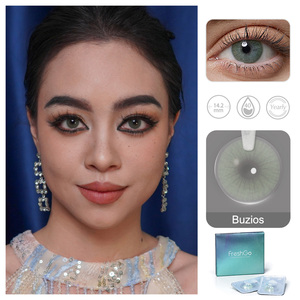
Freshgo Luminescent 40% Water Soft Yearly Color Contact Lenses
Water Content: 40%
Base Curve: 8.6mm
Lifespan: 1 Year
Technology: Bio-Sandwich
Explore our top-tier catalog of medical-grade contact lenses engineered for intense luminescent reaction under 365nm UV blacklight, high physiological comfort, and full regulatory compliance across Europe, North America, and Asia.
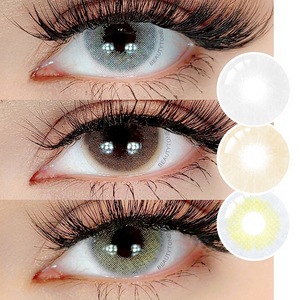
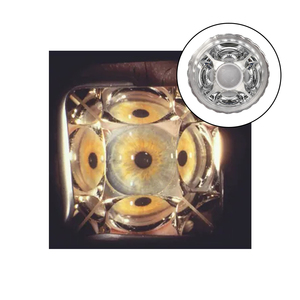
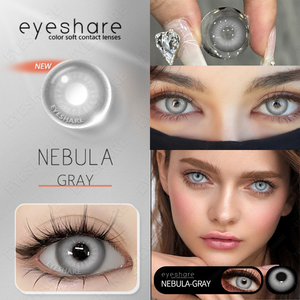
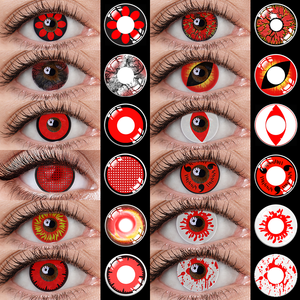
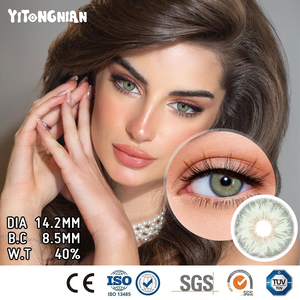
An in-depth analysis of photochemical fluorescent dye stabilization, polymer oxygen transmissivity, and global regulatory compliance for commercial procurement.
In the evolving global landscape of cosmetic ophthalmic products, UV Glow contact lenses (also recognized as blacklight reactive or fluorescent cosmetic contact lenses) represent the intersection of advanced polymer chemistry, photoluminescence physics, and rigorous biological safety protocols. Unlike standard visual enhancement color lenses that rely solely on passive light reflection, UV glow contact lenses integrate photo-excitable micro-compounds that respond dynamically to Ultra-Violet A (UV-A) radiation—specifically within the 365 nm to 395 nm wavelength spectrum. When exposed to ambient blacklight environments such as music festivals, theatrical performances, and entertainment venues, these lenses convert invisible light energy into brilliant, high-contrast visible fluorescence without altering the user's natural optic field or visual acuity.
Information Gain Insight: Sourcing high-grade UV glow contact lenses requires strict verification of the dye-embedding architecture. Inferior manufacturers apply superficial coating methods that risk direct pigment-to-cornea friction, toxicity leaching, and rapid photobleaching. Industry-leading Chinese OEMs utilize a 3-layer Sandwich Matrix system that locks non-cytotoxic fluorophores between two bio-compatible hydrogel membranes.
The primary engineering challenge in producing commercial UV fluorescent contact lenses is establishing complete dye immobilisation within the polymer matrix. Modern OEM facilities leverage high-purity Hydroxyethyl Methacrylate (HEMA) or silicone-hydrogel co-polymers polymerized around proprietary reactive fluorescent agents. The luminescent pigments—typically derivative fluorophores synthesized to medical purity grade—are micro-encapsulated within a protective polymer envelope. This structural containment prevents direct contact between the active photoluminescent compounds and the delicate corneal epithelial tissue.
Furthermore, cytotoxicity evaluations strictly adhering to ISO 10993-5 (Biological evaluation of medical devices — Tests for in vitro cytotoxicity) and ISO 10993-10 (Tests for irritation and skin sensitization) guarantee that zero chemical leaching occurs under prolonged continuous wear, even when exposed to thermal variations or osmotic shifts in lacrimal fluid composition.
A persistent misconception among novelty eyewear buyers is that adding high-density luminescent pigments compromises corneal respiration. Modern manufacturing innovations from top China suppliers have successfully resolved this issue. By optimizing the water content ratio (typically calibrated between 38% and 42%) and integrating hydrophilic monomers such as N-Vinylpyrrolidone (NVP), the lens maintains a consistent fluid replenishment rate across the ocular surface.
The resulting oxygen transmissivity coefficient ($Dk/t$) ranges from 11.5 to 25.0 $\times 10^{-9}$ $(\text{cm}\cdot\text{mL O}_2)/(\text{s}\cdot\text{mL}\cdot\text{mmHg})$, ensuring sufficient atmospheric oxygen reaches the corneal epithelium to prevent hypoxia, epithelial edema, and peripheral neovascularization during extended 8-to-12-hour cosmetic wear cycles.
Triple-layer encapsulation sandwich technology isolates fluorescent dyes between clear HEMA hydrogel layers, guaranteeing zero pigment contact with corneal or conjunctival tissue.
Manufactured under cleanroom conditions compliant with ISO Class 8 standards, satisfying stringent EU MDR (2017/745) Class IIa medical device regulations.
Calibrated quantum efficiency produces vivid visual illumination under standard 365nm–395nm UV blacklight while maintaining crystal-clear daytime optics.
Complete turnkey OEM packaging customization including sterile blister sealing, multilingual retail folding boxes, compliance inserts, and barcodes.
100% Automated Optical Inspection (AOI) screens every production batch for edge micro-cracks, surface debris, color eccentricity, and power accuracy.
High-lubricity surface treatment minimizes tear-film evaporation, protecting wearers against dry-eye fatigue during long indoor/nighttime events.
Benchmark material parameters for procurement teams evaluating tier-1 OEM contact lens suppliers.
| Technical Parameter | Standard HEMA Hydrogel Series | Advanced Silicone Hydrogel (SiHy) Series | Evaluation Method / Standard |
|---|---|---|---|
| Water Content (%) | 38% – 42% | 45% – 55% | ISO 18369-4 gravimetric analysis |
| Oxygen Transmissivity (Dk/t) | 11.5 – 18.0 $\times 10^{-9}$ | 65.0 – 110.0 $\times 10^{-9}$ | ISO 18369-4 polarographic method |
| Base Curve (BC) Range | 8.5mm – 8.6mm ($\pm 0.1\text{mm}$) | 8.5mm – 8.7mm ($\pm 0.05\text{mm}$) | ISO 18369-3 optical spherometer |
| Overall Diameter (DIA) | 14.0mm – 14.5mm | Wait,14.0mm – 14.2mm | ISO 18369-3 projection comparator |
| Pigment Encapsulation | 3-Layer Hydrogel Sandwich | 3-Layer Interlock SiHy Matrix | Microscope cross-section analysis |
| UV Fluorescent Wavelength | 365 nm – 395 nm Peak Activation | 365 nm – 395 nm Peak Activation | Spectrophotometric UV-Vis scan |
| Cytotoxicity Status | Grade 0 (Non-Cytotoxic) | Grade 0 (Non-Cytotoxic) | ISO 10993-5 MEM Elution Assay |
| Shelf Life / Sterilization | 5 Years (Moist Heat Autoclave) | 5 Years (Moist Heat Autoclave) | Accelerated real-time aging test |
Key shifts shaping B2B sourcing strategies, regulatory environments, and consumer preferences over the next decade.
While poly-HEMA hydrogel has historically dominated the novelty and cosplay contact lens sector due to its cost efficiency and ease of tinting, international buyers are rapidly shifting orders toward Silicone Hydrogel (SiHy) materials. The elevated oxygen permeability of SiHy allows cosmetic contact lens brands to market extended-wear safety credentials, catering to health-conscious consumers in North America and Western Europe where regulatory scrutiny over cosmetic contact lenses is intensifying.
The grace period for transitioning from the legacy Medical Device Directive (MDD 93/42/EEC) to the Medical Device Regulation (MDR EU 2017/745) has reshaped supplier requirements. Non-prescription cosmetic contact lenses—including crazy, Halloween, and UV glow lenses—are explicitly classified under Annex XVI of the EU MDR as products without an intended medical purpose, requiring identical technical documentation, Clinical Evaluation Reports (CER), and Post-Market Surveillance (PMS) as vision-corrective medical lenses. B2B buyers must align with Chinese manufacturers who possess complete technical dossiers and audited quality management systems.
E-commerce, fast-fashion retail chains, and beauty influencers are abandoning traditional high-volume stock commitments in favor of agile, low-MOQ supply contracts. Manufacturers capable of executing digital printing proofing, rapid box design turnarounds, and flexible blister package labeling in under 14 days are capturing market share. Chinese manufacturing hubs are leading this transformation by offering modular production lines configured for fast SKU switching.
The next generation of UV glow contact lenses incorporates dual-spectrum reactivity. Research and development teams are actively engineering hybrid lenses that exhibit subtle, natural iris enhancement under standard daylight (550nm human visual spectrum) while instantly shifting to vibrant neon luminescence under 365nm blacklight. This dual-purpose utility dramatically expands consumer usage beyond nighttime events into daily aesthetic wear.
Integrating deep optical expertise, compliance infrastructure, and seamless supply chain management for international private label eye care brands.
As a senior optical product developer and global supplier representative—referencing the established expertise of kyralens Technology Co.,Ltd—our manufacturing ecosystem serves as a trusted category partner for major international drugstores, optical chains, and retail supermarkets. We do not merely supply products; we engineer complete, compliant, and market-ready eye care ranges adapted to destination-market regulations across Europe, the Middle East, and the Asia-Pacific region.
From initial parameter selection and dye matrix testing to multilingual carton printing, blister sealing, and lot traceability, we manage the total product lifecycle.
Our production standards are validated by ongoing supply relationships supporting retail leaders such as Watsons, Rossmann, Kruidvat, Etos, Ahold Delhaize, Albert Heijn, and REWE.
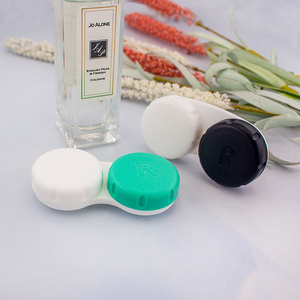
Consolidate your sourcing shelf with a single partner: UV glow lenses, daily disposable contact lenses, lubricating eye drops, multipurpose cleaning solutions, and designer storage cases.
Direct technical and commercial answers for category managers, optical buyers, and compliance specialists.
Our UV glow contact lenses utilize a bio-compatible 3-layer sandwich construction. The photoluminescent fluorescent pigments are completely micro-encapsulated within middle hydrogel layers. This ensures that the reactive color pigments never come into physical contact with the cornea or conjunctiva. Furthermore, all raw materials undergo rigorous ISO 10993 cytotoxicity, ocular irritation, and systemic toxicity testing to guarantee complete safety during wear.
No. UV glow contact lenses are photoluminescent blacklight-reactive lenses, not phosphorescent (glow-in-the-dark) materials. Phosphorescent materials are unsuitable for ophthalmic applications due to potential chemical instability and light toxicity. Our lenses react intensely when exposed to UV-A blacklight (365nm to 395nm wavelength), transforming invisible ultraviolet radiation into bright neon visible light.
We supply full regulatory documentation packages tailored to your target destination market. This includes ISO 13485:2016 Quality Management Certificates, CE Certificates under EU directives/regulations, Declarations of Conformity (DoC), ISO 10993 Biocompatibility Test Reports, Factory Sterilization Validations, and full Lot Traceability documentation for customs clearance.
For standard in-stock inventory wholesale, our MOQ starts as low as 50 pairs per SKU. For custom OEM private label projects requiring branded blister foil, custom outer boxes, and localized multilingual packaging inserts, our typical baseline starts at 500 to 1,000 pairs per color design. We also provide pilot launch packages for brand testing prior to full retail rollout.
Yes. While the majority of novelty UV glow lenses are requested in plano (0.00 diopter) for cosmetic use, our optical manufacturing lines can produce corrective prescription power options ranging from -0.50D to -10.00D (in 0.25D or 0.50D steps) upon request, adhering to strict ISO 18369 optical power tolerance thresholds.
Standard lead time for OEM private label manufacturing is 20 to 30 calendar days following artwork approval and deposit confirmation. Stock items ship within 3 to 5 business days. All sterile blister-packed contact lenses are validated for a 5-year shelf life from the date of steam autoclave sterilization when stored in original unopened packaging.
Our production facilities implement 100% Automated Optical Inspection (AOI) technology. Every lens is scanned by high-resolution camera sensors for peripheral tears, surface micro-voids, thickness irregularities, and pigment concentricity before blister sealing. Batches then undergo final moist-heat autoclave sterilization and sampling sterility testing prior to shipment release.
Elevate your private label eye care collection with certified luminescent technology, fast turnaround times, and world-class B2B manufacturing reliability.