Featured Optical & Cosmetic Lens Portfolio
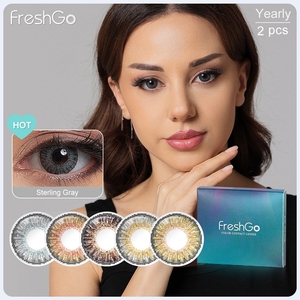
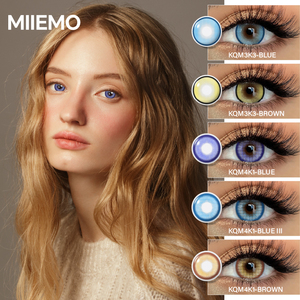
Explore our factory-direct wholesale inventory featuring medical-grade corrective optics, vibrant cosmetic contact lenses, optical resin lenses, and precision care accessories.

Strategic Blueprint for Contact Lens Sourcing from China Exporters
The global contact lens market is undergoing a seismic structural transition. Driven by expanding D2C optical e-commerce, booming demand for cosmetic color lenses in emerging economies, and rapid advancements in polymer materials science, international procurement teams are rethinking traditional supply chain models. Historically, optical buyers faced rigid OEM paradigms: high minimum order quantities (MOQs) exceeding 10,000 units per SKU, extended lead times of 90+ days, and prohibitive setup fees for private label artwork.
Today, leading China wholesale contact lens factories and exporters are disrupting this landscape by introducing agile, low-MOQ manufacturing frameworks coupled with stringent international quality standards (ISO 13485, CE MDR, FDA 510k). This industry whitepaper breaks down the technical, regulatory, and supply chain strategies necessary for optical importers, pharmacy chains, and brand owners to maximize gross margins while minimizing capital risk.
Traditional procurement forces brands to commit massive capital to slow-moving power diopters (e.g., -6.50 to -10.00) or niche color shades. Agile low MOQ contracts allow distributors to test 50–100 SKU pilot micro-batches across diverse parameters, dramatically reducing inventory carrying costs and inventory write-downs by up to 68%.
Polymer Chemistry: Hydrogel vs. Silicone Hydrogel Technical Comparison
Understanding contact lens material science is crucial when vetting a Chinese manufacturer. The table below outlines the primary technical differentiators between hydrogel and silicone hydrogel formulations produced in state-of-the-art Chinese casting lines:
| Material Parameter | Standard Hydrogel (Polymacon / Etafilcon A) | Advanced Silicone Hydrogel (Senofilcon / Formofilcon) |
|---|---|---|
| Oxygen Transmissibility (Dk/t) | 15 - 30 Dk/t (Sufficient for daily wear) | 80 - 140 Dk/t (Superior corneal oxygenation) |
| Water Content Range | 38% - 58% (High initial comfort) | 33% - 45% (Lower dehydration rate over 12h) |
| Modulus (Elasticity) | 0.25 - 0.40 MPa (Ultra-soft, flexible) | 0.50 - 0.90 MPa (Better handling & structural memory) |
| Surface Wettability | Inherent ionic/non-ionic hydration | Requires plasma coating or internal wetting agents |
| Target Retail Segment | Mass market cosmetic, budget daily disposables | Premium optical lines, therapeutic extended wear |
Micro-Sandwich Color Printing Technology for Safety
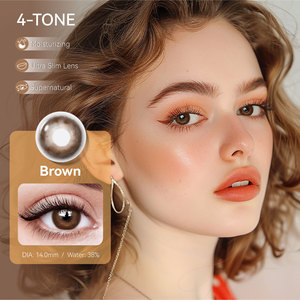
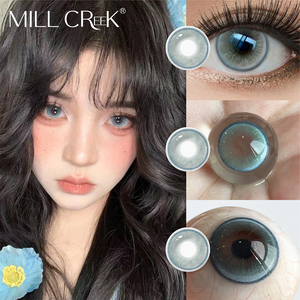
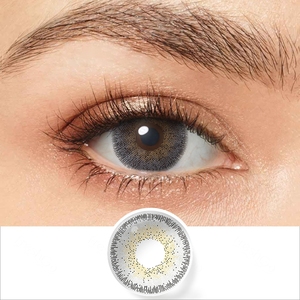
When sourcing color contact lenses (1-tone, 2-tone, 3-tone, or cosplay series), safety is the ultimate metric for brand reputation. Premium Chinese factories utilize Micro-Sandwich Encapsulated Pigment Technology. Unlike cheap pad-printing methods where dye rests directly on the lens surface, sandwich printing locks bio-compatible iron oxide and titanium dioxide pigments inside two micro-thin layers of hydrogel polymer. This guarantees zero dye-to-cornea contact, eliminating chemical leaching, epithelial staining, and allergic friction.
Future Sourcing & Industry Trends (2025–2030)
Navigating the next decade of eye care manufacturing, regulatory shifts, and consumer preferences.
1. Shift to High Dk/t Silicone Hydrogel Daily Disposables
Consumer behavior is pivoting rapidly from monthly and annual wear toward daily disposable formats due to heightened hygiene awareness. By 2026, daily silicone hydrogels are projected to account for 62% of global contact lens revenue. Chinese factories are investing heavily in automated high-speed cast-molding lines capable of outputting 300,000 daily blisters per shift at scalable unit costs.
2. Hyper-Personalized Private Labeling & Short-Run Packaging
E-commerce beauty brands no longer want stock off-the-shelf packaging. The trend favors custom blister foil prints, customized outer boxes with metallic foil stamping, and localized multi-lingual compliance labeling (English, Arabic, French, German, Spanish). Modern exporters offer digital printing integration for packaging orders starting as low as 100 boxes per design.
3. Smart Lens Integration & Therapeutic Optics
Beyond cosmetic correction, Chinese manufacturing hubs are partnering with biomedical institutes to commercialize dual-focus myopia control soft lenses for adolescents, blue-light filtering contact lenses for digital screen strain, and therapeutic band-aid contact lenses used post-LASIK recovery.
Enterprise Advantages & Factory Quality Architecture
When partnering with our manufacturing facility, procurement directors leverage over 15 years of specialized medical device engineering, rigorous quality assurance, and seamless export logistics tailored for complex regulatory markets.
ISO 13485 & Cleanroom Manufacturing
Our production facilities operate strictly under ISO 13485 Medical Device Quality Management Systems. Cast molding, lens hydration, and blister sealing occur inside automated Class 100,000 (ISO Class 8) cleanrooms equipped with laminar airflow systems, preventing dust particles or micro-contaminants from affecting lens clarity.
Fully Automated Cast Molding & Laser Inspection
Utilizing high-precision optical molds and robotic demolding systems, every single lens undergoes 100% automated high-resolution camera surface inspection. Our automated vision software detects micro-bubbles, peripheral edge defects, and power variance before blisters enter the sterilization phase.
Flexible Low MOQ & Agile Turnaround
We solve the importer's dilemma of high stock holding costs. With flexible production queues, we support starter orders from 50 to 500 pairs per SKU for catalog testing, while offering dedicated high-speed batch runs for order volumes reaching hundreds of thousands of units.
Complete Dossier & Compliance Support
Exporting medical devices requires bulletproof documentation. We provide complete Technical Files, Free Sale Certificates (FSC), Certificates of Analysis (COA), Stability Test Reports, and Lot Traceability records to ensure your custom clearance and national health authority registration proceed without delays.
Frequently Asked Questions (Procurement & Technical FAQ)
Clear, definitive answers to common inquiries from optical buyers, private label brands, and supply chain managers.
Scale Your Optical Brand with Factory-Direct Pricing
Request our comprehensive 2025 Product Catalog, wholesale price matrices, technical material spec sheets, and private label OEM starter kits today.