Featured Wholesale Soft Contact Lenses & Solutions
Explore our certified OEM/ODM manufacturing capability spanning daily disposable soft lenses, cosmetic eye color contact series, high-speed automated packaging, and medical-grade care accessories.
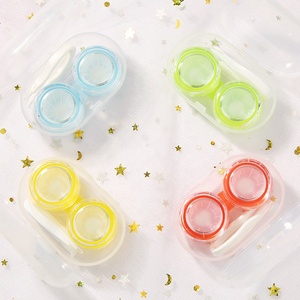
Wholesale Colored Contact Lenses Plastic case Box Customized Transparent Contact Lens case Travel Kit
- Medical-Grade ABS & Silicone
- Custom Branding & Colorways
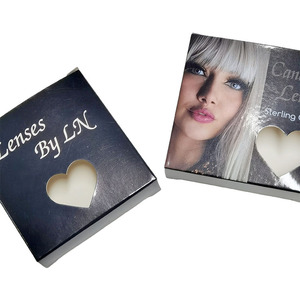
2025 New Trend Fashion Custom High Quality Love Window Design Colored Eye Contact Lenses Wholesale with High Quality Paper Boxes
- FSC Certified Packaging Paper
- Spot UV & Foil Stamping Ready
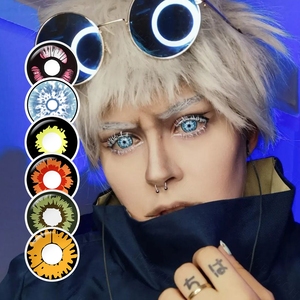
New Fantasy Cosplay Contact Lenses Wholesale Soft Yearly Colored Eye Contacts Crazy Color Halloween Contact Lens Lentillas
- Sandwich Tech Color Layering
- High Opaque Pigment Coverage
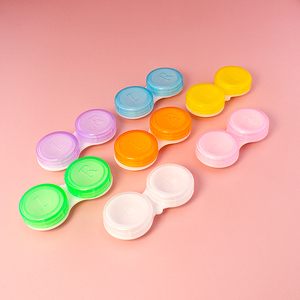
Colorful Cheap Contact Lens Blister Package Colored Eye Ware Lens Contact Lenses
- Sterile PP Blister Packaging
- Hydrogel 38% - 58% Water Content
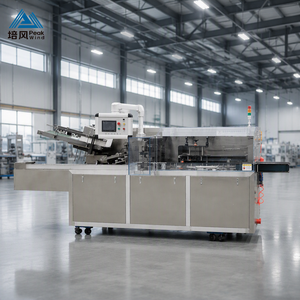
Professional Fully Automatic Large Capacity Aseptic Cartoner Machine for Contact Lenses with PLC Control
- 12,000 Units/Hour High Output
- Siemens PLC Servo Automation
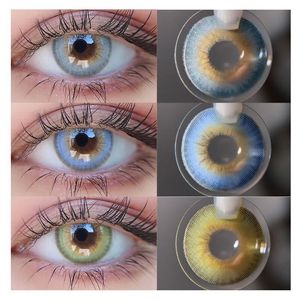
Haipurecon Cosmetic Eye Lenses Color Contact Lenses Eye Contact Lenses Color Contact Lens Eye
- Natural Iris Pattern Design
- UV-Blocking 400nm Protection
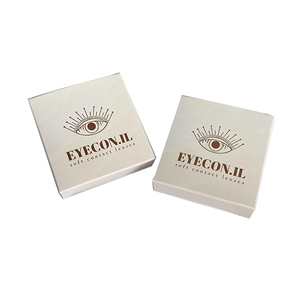
Brand Contact Lens Contact Lenses Cosmetic Box Packaging High Quality Private Customized Beauty Products Packing Offset Printing
- Heidelberg Offset 6-Color Printing
- Full Regulatory Labeling Support
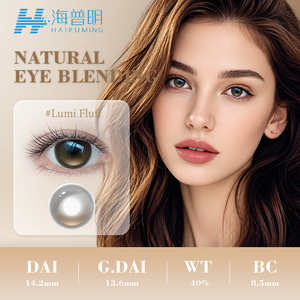
Contact Lenses Brown Fixed-Axis Highlight Daily Disposable Wholesale Supplier OEM HEMA 14.5mm Cosmetic Trendy Kawaii Luminous
- Ballast Fixed-Axis Rotation Stability
- High DK Hydrogel Material
The Strategic Shift in China's Soft Contact Lens OEM/ODM Manufacturing
How Chinese Ophthalmic Manufacturing Ecosystems Are Driving Global Supply Chain Transformation through Cast-Molding Precision, Silicone Hydrogel Polymers, and Dynamic Private-Labeling.
Polymer Chemistry & Material Evolution (HEMA vs. Silicone Hydrogel)
The global contact lens market is experiencing a profound architectural shift from traditional 2-Hydroxyethyl Methacrylate (HEMA) hydrogel materials toward third-generation Silicone Hydrogel (SiHy) matrices. Historical hydrogels relied heavily on bound water content to transport oxygen to the cornea (limiting oxygen transmissibility, or Dk/t, to a typical range of 15 to 30).
Modern Chinese export facilities have integrated advanced fluorosilicone macromer synthesis technology. This enables high-volume cast-molding lines to produce contact lenses with Dk/t ratings exceeding 100 to 125 barrier thresholds. For B2B importers, pharmacy chains, and cosmetic e-commerce brands, understanding this material trade-off is crucial for positioning products across daily disposables and extended-wear SKUs.
Automated Cast-Molding vs. Lathe-Cutting Manufacturing Cost Structure
B2B procurement economics are dictated by production methodology. While lathe-cutting remains viable for custom rigid gas permeable (RGP) or complex prosthetic lenses, mass-market soft contact lenses require full automated cast-molding system integration.
Leading Chinese factories operate multi-cavity high-precision mold insertion lines in Class 100,000 cleanrooms. Molten monomer mixtures are injected into optical-grade male/female mold cavities, followed by UV photo-polymerization, hydration, extraction, and automated blister sealing. This fully automated loop reduces per-unit marginal production costs by up to 65% compared to European standard lines while reducing dimensional variance to under ±0.02mm.
Evaluating key parameters for private label bulk procurement decisions across European, Middle Eastern, and North American consumer bases.
| Material Parameter | 1st Gen Hydrogel (HEMA) | 2nd Gen Hydrogel (High Water) | 3rd Gen Silicone Hydrogel (SiHy) | MPC Bio-Mimetic Polymer |
|---|---|---|---|---|
| Oxygen Transmissibility (Dk/t) | 15 - 25 Barrer/cm | 28 - 35 Barrer/cm | 90 - 140 Barrer/cm | 35 - 50 Barrer/cm |
| Water Content (%) | 38% - 42% | 55% - 68% | 33% - 48% | 48% - 58% |
| Modulus (Stiffness, MPa) | 0.30 - 0.45 (Very Soft) | 0.25 - 0.35 (Ultra Soft) | 0.60 - 1.10 (Resilient) | 0.35 - 0.50 (Balanced) |
| B2B Target Application | Budget Daily/Yearly Lenses | Cosmetic Color Lenses | Premium Health & Optics | Sensitive & Dry Eye Lines |
| Dehydration Rate | Low - Medium | High (May dry eyes) | Ultra-Low Moisture Loss | Negligible Moisture Loss |
Key Technological & Sourcing Trends Shaping 2025-2030
Forward-thinking distributors must align with manufacturing developments across optical stabilization, biocompatible encapsulation, and packaging automation.
1. Double-Layer Color Sandwich Tech
In cosmetic color contact lens manufacturing, safety is paramount. Legacy suppliers applied pigments directly to the surface of the lens, creating roughness and potential pigment migration. Advanced Chinese OEM exporters utilize multi-layer micro-encapsulated "Sandwich" printing. Pigment particles are isolated inside two biocompatible HEMA polymer layers, guaranteeing zero direct contact between colorants and the corneal endothelium.
2. Fixed-Axis & Ballast Astigmatism Stabilization
Cosmetic and toric lenses require precise angular orientation on the cornea. The rise of pattern-based "Highlight" and "Luminous Iris" designs demands fixed-axis stabilization so the optical highlight pattern does not rotate during blinking. Factories are adopting double-thin zone and prism ballast geometry mold designs, stabilizing lens rotation within ±5 degrees for consistent aesthetic impact and crisp optical focus.
3. High-Speed Aseptic Cartoning & Packaging
As global retail pharmacy chains demand private-label turnarounds under 30 days, factory automation has shifted toward high-speed PLC-controlled cartoning lines. Capable of handling over 12,000 blister cards per hour with online vision system verification, barcode validation, and automated leafleting, these machines cut lead times while eliminating human error during batch packaging.
4. Bio-Hyaluronic Acid Hydration Solution Matrices
Modern blister packaging extends beyond simple saline. Leading Chinese exporters lock in moisture by adding natural tear components like Sodium Hyaluronate (HA) and Trehalose into the sterile buffering solution. This creates a protective moisture cushion around the soft lens during storage, delivering immediate comfort upon initial insertion and extending end-user wear time to over 12 hours.
5. Integrated UV400 & HEV Blue Light Blocking
With digital screen usage rising globally, contact lenses are evolving into protective ocular filters. OEM manufacturers incorporate UV-absorbing monomers (Class 1 UV protection blocking >90% UVA and >99% UVB) alongside high-energy visible (HEV) blue-light filtering compounds directly into the polymer substrate without causing optical color distortion or haze.
6. Flexible OEM MOQs & Sustainable Packaging
Addressing traditional high minimum order quantity bottlenecks, modern contract facilities offer flexible production runs for emerging brands. Paired with biodegradable paper box options, reduced-plastic blister shells, and soy-ink printing, private-label brands can meet ESG standards while launching low-risk pilot collections.
Why Top Global Brands Partner with Our China Manufacturing Ecosystem
Based on proven quality governance, kyralens Technology Co., Ltd provides full-category eye care manufacturing, end-to-end regulatory compliance, and customized supply chain integration.
Complete One-Stop Category Supply Chain
Sourcing eye care SKUs from multiple fragmented suppliers creates quality control friction and administrative overhead. Our integrated manufacturing infrastructure provides a unified shelf-ready portfolio:
- Daily & Monthly Contact Lenses: Clear vision corrective lenses in HEMA & Silicone Hydrogel.
- Cosmetic Color Lenses: Trend-led 1-tone, 2-tone, 3-tone, and cosplay crazy lens collections.
- Ophthalmic Solutions & Drops: Preservative-free rewetting eye drops & multi-purpose cleaning solutions.
- Care Accessories & Packaging: Custom travel kits, anti-bacterial storage cases, and offset printed boxes.
This complete category coverage enables supermarket chains, pharmacy networks, and beauty retailers across Europe, the Middle East, and Asia to manage their entire eye care section through a single verified partner.
Global Compliance & Lot Traceability Framework
Medical devices demand absolute regulatory integrity. Operating under strict ISO 13485 Quality Management Systems, our cleanroom processes meet international regulatory benchmarks including EU CE Mark (MDR 2017/745), US FDA 510(k), Saudi SFDA, and Southeast Asian health agency standards.
Every production batch undergoes exhaustive quality verification—including gas chromatography residual monomer testing, bio-burden sterility validation, edge profile bevel inspection, and optical power measurement via laser interferometry. Complete Unique Device Identification (UDI) lot traceability is embedded on every blister and outer carton, insulating your brand against compliance risks.
6-Stage Private Label OEM/ODM Execution Model
How we take your private-label optical product concept from market brief to shelf-ready delivery.
Category Briefing & Market Audit
We assess your retail target demographics, regional compliance needs, price points, and parameter requirements (base curve, diameter, power ranges).
Formulation & Parameter Selection
Choose from our pre-approved material portfolio (HEMA, SiHy, Bio-hydrogel) and select pigment pattern designs or custom optical specs.
Structural & Graphic Packaging Design
Our design team drafts dielines, multilingual leaflets, foil stamping options, and compliant outer cartons tailored to destination market regulations.
Regulatory Dossier Preparation
We prepare and review Declarations of Conformity, IFUs, labeling proofs, and technical documentation required for local customs registration.
Precision Manufacturing & QC
Fully automated cast-molding, hydration, primary blister sealing, terminal autoclave sterilization, and online visual inspection.
Batch Release & Global Logistics
Final Certificate of Analysis (CoA) release, palletization, and sea/air freight delivery to your regional fulfillment hubs.
Frequently Asked Questions for B2B Importers & Brands
Get direct answers on compliance certifications, custom branding capabilities, minimum order quantities, and manufacturing timelines.
Scale Your Eye Care Private Label with China's Premier Exporter
Connect directly with our engineering and B2B sourcing team to request product samples, factory audit reports, custom quotations, or packaging dielines.