Global OEM/ODM Vision Care Manufacturing Excellence
Kyralens Technology Co., Ltd. stands at the forefront of international eye care manufacturing, offering end-to-end original equipment manufacturing (OEM) and custom contract packaging. Designed specifically for pharmaceutical chains, optical retailers, cosmetic brands, and regional distributors across Europe, the Middle East, and Asia, our infrastructure bridges the gap between scalable high-volume production and low-MOQ brand agility.
Featured OEM Lenses, Accessories & Machinery
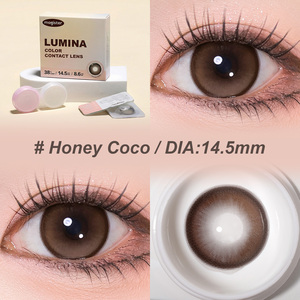
Explore our core product lines configured for private label customization, competitive MOQ tiers, and rapid international shipping.
Strategic OEM/ODM MOQ Architecture & Flexible Sourcing Models
In the medical optical device industry, balancing strict regulatory compliance with commercial agility represents a primary bottleneck for procurement managers. Traditional contact lens manufacturers often enforce high Minimum Order Quantities (MOQs) exceeding 100,000 units per Stock Keeping Unit (SKU), creating financial barriers for emerging retail brands, specialized optical chains, and cross-border e-commerce platforms testing regional consumer demand.
Our OEM MOQ strategy evaluates four core manufacturing variables:
1. Polymer Matrix Selection
Standard Hydrogel (HEMA/NVP) vs. High-Dk Silicone Hydrogel. Hydrogel polymers allow smaller initial production runs due to continuous automated lathe-cutting and cast-molding workflows, whereas Silicone Hydrogel requires specialized surface treatment or integrated wetting agents.
2. Color Imprinting Complexity
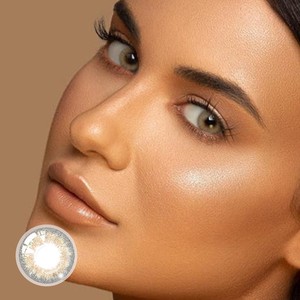
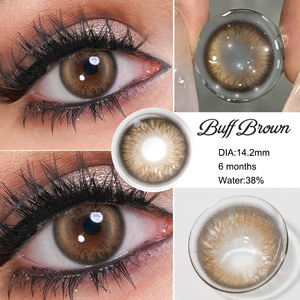
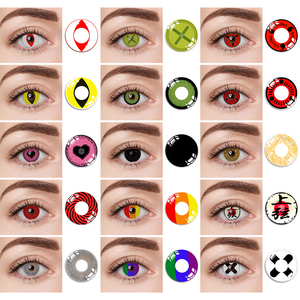
Cosmetic lenses featuring 1-tone natural enhancement, 3-tone sugar blendings, or intricate anime/crazy Halloween graphics require custom micro-cliché printing plates. We offer shared-plate options for stock designs to reduce client setup fees.
3. Secondary Packaging Standardization
By standardizing primary blister cavity dimensions (e.g., standard polypropylene blister cups with saline buffer solution), packaging customization is concentrated on automated top-foil printing and paper box folding, dramatically lowering MOQ constraints.
4. Diopter Power Distribution
Plan visual power (0.00D) cosmetic lenses benefit from high-volume batch aggregation, whereas corrective prescription series (-1.00D to -10.00D in 0.25D/0.50D increments) are managed via dynamic inventory forecasting algorithms to ensure balanced SKU fulfillment.
Advanced Contact Lens Manufacturing & Quality Engineering
Precision manufacturing in contact lens technology requires rigid adherence to polymer chemistry, optical geometry design, and biological compatibility. Modern ocular health demands lenses that offer superior oxygen permeability (Dk/t), low contact angle wettability, and mechanical tear-resistance.
1. Sandwich Technology for Cosmetic Color Lenses
A critical safety standard in color contact lens manufacturing is preventing color pigments from coming into direct contact with the cornea or palpebral conjunctiva. Kyralens utilizes advanced bio-compatible Sandwich Printing Technology (Embedded Pigment Process). Pigment layers are encapsulated between the inner hydrogel layer and the outer clear protective layer, ensuring zero dye leaching, maintaining smooth surface topography, and preserving ocular surface integrity throughout yearly or daily wear cycles.
2. Aspheric Optical Geometry & Ophthalmic Specialization
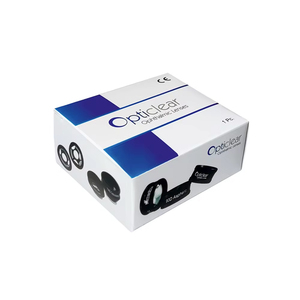
Beyond cosmetic and standard spherical prescription lenses, specialized optical designs—such as Aspheric 20D Ophthalmic Fundus Contact Lenses—require high-refractive index optical glass or grade-A optical acrylics. Aspheric lens surfaces eliminate spherical aberrations, providing eye care professionals with crystal-clear fundus detail during diagnostic biomicroscopy procedures.
3. In-House Automated Packaging: The DPP80 Blister System Integration
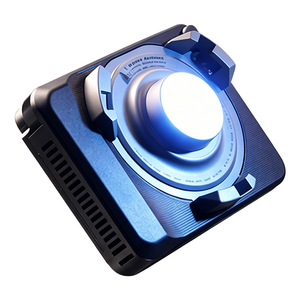
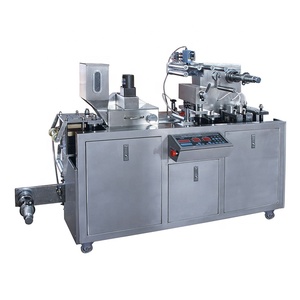
To support high-speed global export demand, factory automation must integrate forming, filling, heat-sealing, and inspection. The DPP80 Automatic ALU-Plastic Blister Packing Machine represents an industry benchmark for compact, cleanroom-ready contact lens packaging. Capable of thermoforming medical PVC/PET/PP sheets, filling precisely dosed sterile saline, and leak-proof sealing with printed aluminum foils, this technology ensures batch-to-batch hermetic seal integrity and compliance with ISO 11607 packaging standards.
Global Contact Lens Procurement & Market Trends (2025–2030)
As retail distribution channels evolve, procurement officers must align their sourcing strategies with shifting end-user behaviors and regulatory landscapes. Key procurement trends shaping the market include:
Daily Disposable Dominance
Consumer preferences are rapidly shifting from annual or monthly replacement lenses toward 1-Day Daily Disposables due to enhanced hygiene, convenience, and reduced risk of microbial keratitis. B2B buyers must prioritize suppliers offering low-cost daily blister manufacturing.
Preservative-Free & Multi-Benefit Solutions
Companion product sourcing (such as lubricating eye drops and multipurpose lens cleaning solutions) is favoring hyaluronic acid (HA) infused formulas and preservative-free single-dose packaging, driving higher basket values in retail drugstores.
Rigorous EU MDR & Regional Compliance
With the transition from EU MDD to MDR (Medical Device Regulation 2017/745), market surveillance, post-consumer clinical evaluation, and Unique Device Identification (UDI) tracking are mandatory. Sourcing from experienced suppliers with pre-validated technical dossiers avoids import holds.
Sustainable Medical Packaging
Enterprise retailers like Rossmann, Watsons, and Albert Heijn are setting strict carbon footprint goals. OEM suppliers are adopting recycled PP blister cups, FSC-certified cardboard cartons, and water-conserving manufacturing processes.
Why Global Retail Chains Partner with Kyralens
Kyralens Technology Co., Ltd. serves as a trusted turnkey partner for major global drugstore chains, optical superstores, and international ecommerce brands. Our Netherlands-aligned operational standards and Asian manufacturing efficiencies guarantee product excellence.
Our operational framework offers clear benefits to enterprise procurement teams:
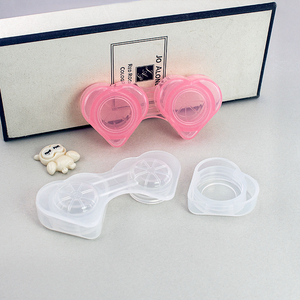
- Full Category Spectrum: Single-source supply for Soft Contact Lenses (Clear & Color), Care Solutions, Rewetting Drops, Lens Storage Cases, and Reading Glasses.
- Multilingual Labeling & Artwork Support: Custom layout compliance for multi-region sales, including EU translations, Arabic regulatory scripts, and Asian country-specific barcoding.
- Complete Lot Traceability: End-to-end tracking from monomer raw materials and sterilization batch records down to individual blister package QR codes.
- Rapid Sample & Prototyping Turnaround: Accelerate time-to-market with quick-turn private mold samples, visual mockups, and pre-production technical validation.
Frequently Asked Questions for B2B Procurement
Essential insights for brand managers, procurement directors, and regulatory compliance teams.
What is the baseline Minimum Order Quantity (MOQ) for custom OEM contact lenses?
Our OEM Minimum Order Quantity depends on the customization depth and replacement cycle. For stock color contact lens designs with custom overprinted brand packaging, MOQs start as low as 500 to 1,000 pairs per SKU. For custom color pattern development or unique polymer formulations, production-run MOQs typically range from 5,000 to 10,000 pairs. We offer flexible pilot-launch programs for qualified retail chains.
How do you ensure regulatory compliance for international markets (EU, Middle East, Asia)?
All contact lenses and care products manufactured by Kyralens adhere to ISO 13485 quality management standards and carry valid CE certificates under European medical device directives/regulations. We provide full technical documentation dossiers (STED), ISO test reports, biocompatibility evaluations, and lot analysis certificates required by regional health authorities such as SFDA, US FDA 510(k) reference files, and EU MDR guidelines.
Can we request free samples for quality evaluation and lab testing?
Yes, we provide free stock samples of prescription clear lenses, color contact lenses, and accessory kits to certified retail buyers, optical professionals, and brand managers. Custom prototype samples featuring private brand packaging or specific prescription powers can be produced upon request with standard tooling offset costs.
What printing techniques are used for custom color contact lenses?
We strictly utilize Sandwiched Micro-Encapsulation Technology. Pigments are embedded safely within the hydrogel material layers rather than printed on the exterior lens surface. This guarantees 100% corneal protection, zero pigment fading, and maximum wearing comfort with optimal tear-film fluid dynamics.
What is the typical production lead time from artwork approval to shipment delivery?
Standard lead times for re-orders or stock-package customizations are approximately 15 to 25 days. Initial custom OEM projects—including box packaging design validation, aluminum foil plate creation, and regulatory review—typically require 30 to 45 days. Expedited production schedules can be arranged for contractual long-term retail partners.
Do you offer automated blister packing machinery like the DPP80 for client factories?
Yes, in addition to finished contact lens supply, we export complete optical manufacturing and packaging equipment, including the DPP80 Small Mini Automatic ALU-Plastic Blister Packing Machine. We provide factory installation guidance, technical training, spare parts, and mold customized to your specific blister cavity design.
Accelerate Your Private Label Vision Line
Partner with a globally recognized OEM supplier. Request complete product specifications, competitive price brackets, and technical regulatory dossiers today.