Cosplay & Party
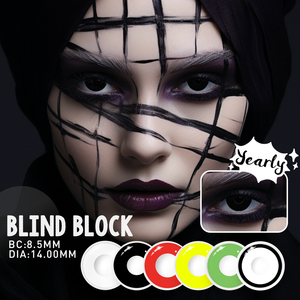
Retail-ready, medical-grade contact lenses, custom packaging boxes, and specialized optical tooling engineered for private label leaders across France and Europe.
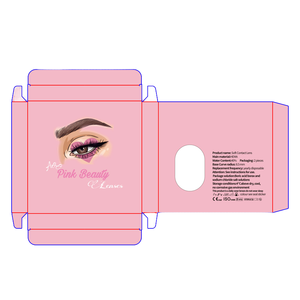
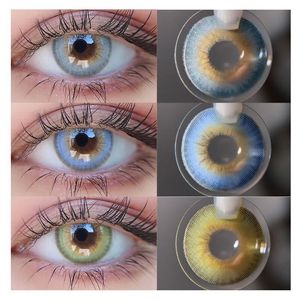
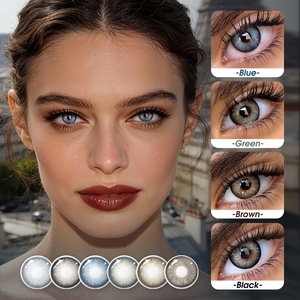
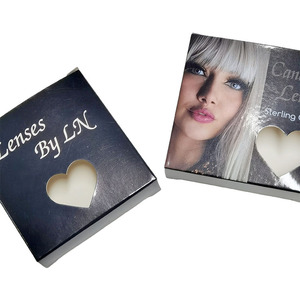
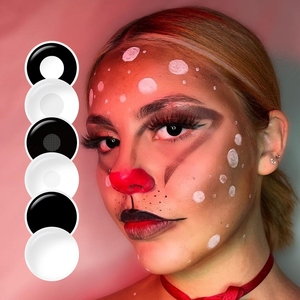
The French contact lens market represents one of the most sophisticated and strictly regulated vision care sectors in Europe. As consumer preferences shift dynamically toward daily disposable hydrogels, high oxygen-transmissible silicone hydrogels, and aesthetic cosmetic tinting, French optical groups, pharmacy cooperatives, and beauty distributors require robust manufacturing partners. Procurement directors searching for a custom OEM contact lens supplier in France must balance stringent medical device regulations with commercial viability, rapid prototyping, and private label flexibility.
Under the regulatory oversight of the Agence Nationale de Sécurité du Médicament et des Produits de Santé (ANSM) and the European Union’s Medical Device Regulation (EU MDR 2017/745), contact lenses—both corrective spherical/toric lenses and zero-power plano cosmetic lenses—are categorized as Class IIa or Class IIb medical devices. Consequently, establishing a resilient contract manufacturing supply chain requires an OEM partner capable of delivering verifiable E-E-A-T (Experience, Expertise, Authoritativeness, and Trustworthiness) through comprehensive technical documentation, full lot traceability, and ISO 13485:2016 certified cleanroom production.
At the core of high-performance OEM contact lens manufacturing lies polymer chemistry. When specifying custom contact lens lines for the French market, optical buyers must align material selection with target wearing modalities (daily disposable vs. monthly replacement) and corneal physiology safety metrics.
Formulated with fluorosilicone macromers, these materials achieve ultra-high oxygen transmissibility (Dk/t values ranging from 110 to 175). They minimize corneal hypoxia, allowing long wear cycles without requiring heavy surface wetting agents. Ideal for premium pharmacy private labels in France seeking superior eye comfort metrics.
Featuring 55% to 58% water content integrated with Hyaluronic Acid (HA) or Trehalose matrix bonding. These hydrogels offer exceptional initial insertion soft comfort, lower modulus stiffness, and cost-effective daily disposable unit economics for fashion and cosmetic colored lens collections.
For cosmetic colored contact lenses—such as natural iris enhancers or special effects cosplay lenses—safety is paramount. Leading OEM contact lens manufacturers utilize 3-Layer Micro-Pigment Sandwich Encapsulation Technology. In this precision process, non-toxic bio-compatible pigments are locked seamlessly between two clear polymer layers. This guarantees that color pigments never come into direct physical contact with the human cornea or conjunctiva, fully complying with French health and safety mandates.
Below is the technical matrix detailing physical specifications, optical parameters, and manufacturing tolerances standard across our custom OEM contact lens production lines:
| Parameter Metric | Daily Disposable Range | Monthly Replacement Range | Cosmetic / Crazy Color Range |
|---|---|---|---|
| Base Curve (BC) | 8.50 mm – 8.70 mm (±0.05 mm) | 8.60 mm – 8.80 mm (±0.05 mm) | 8.60 mm (±0.05 mm) |
| Diameter (DIA) | 14.0 mm – 14.2 mm | 14.2 mm – 14.5 mm | 14.2 mm – 14.5 mm |
| Sphere Power Range | -0.50D to -10.00D (0.25D steps) | -0.50D to -12.00D (+0.50 to +6.00D) | Plano (0.00) to -8.00D |
| Oxygen Transmissibility (Dk/t) | 25 – 33 (Hydrogel) / 120+ (SiHy) | 110 – 160 (Silicone Hydrogel) | 20 – 30 (Sandwich Tech Hydrogel) |
| Center Thickness (@ -3.00D) | 0.07 mm – 0.08 mm | 0.08 mm – 0.09 mm | 0.088 mm – 0.095 mm |
| UV Protection Filter | Class 2 UV Filter (UVB > 95%, UVA > 70%) | Class 1 UV Filter (UVB > 99%, UVA > 90%) | Optional UV Blocker integration |
| Sterilization Method | Steam Autoclave (121°C / 30 mins) | Steam Autoclave (121°C / 30 mins) | Steam Autoclave (121°C / 30 mins) |
Selling contact lenses in France demands flawless regulatory governance. The transition from the legacy Medical Device Directive (MDD 93/42/EEC) to the European Medical Device Regulation (EU MDR 2017/745) significantly raised the clinical evaluation and quality system benchmarks for manufacturers and brand owners alike.
Every batch produced under custom OEM agreements carries valid CE marking under Notified Bodies (e.g., TÜV SÜD, BSI, DEKRA). Technical Documentation Files (TDF) are updated continuously with clinical evaluation reports (CER) and post-market surveillance (PMS) data.
Compliance with EU MDR mandates GS1-standard UDI-DI and UDI-PI barcodes printed on both primary blister packaging and secondary outer folding box packaging, guaranteeing seamless registration within the EUDAMED central database.
Packaging artwork for France must feature compliant French language text, including mandatory warning icons, storage temperatures (1°C to 30°C), symbol explanations, and comprehensive Instructions for Use (IFU/Notice) approved by French regulatory officers.
As French procurement executives and category managers evaluate long-term supply agreements, understanding macroeconomic shifts and optical technological advances is vital. Over the next five years, four mega-trends will re-shape the OEM contact lens landscape in Western Europe:
EU environmental directives are forcing a shift away from non-recyclable PVC blisters and heavy plastic foils. Future-proof OEM suppliers are introducing polypropylene (PP) mono-material blister shells, water-based non-toxic inks, and FSC-certified recyclable ivory board outer boxes with biodegradable lamination options.
With pediatric myopia rates accelerating across European urban centers, private label demand is shifting toward dual-focus and peripheral defocus lens designs engineered for childhood myopia management. OEM manufacturers are investing heavily in high-precision lathe tooling and dynamic molding to offer customizable defocus profiles.
To mitigate international freight volatility, leading contract suppliers are combining direct Asian manufacturing scale with European distribution hubs (such as Central European fulfillment centers in the Netherlands). This hybrid model enables 48-hour replenishment for high-velocity SKUs across French retail channels.
Cosmetic lens buyers in France are moving away from generic 3-tone prints. 2025–2030 design trends favor biomimetic hazel, olive green, and ice-blue micro-pattern gradients that blend seamlessly with darker European and Mediterranean irises, packaged in high-end luxury windowed gift boxes.
Kyralens Technology Co., Ltd. serves as an end-to-end developer, manufacturer, and distributor of private label eye care programs for tier-one drugstores, supermarket chains, optical retail groups, and beauty brands across Europe, the Middle East, and Asia. Incorporating extensive category experience, our OEM infrastructure solves the key pain points faced by procurement managers in France:
Single-source supply consolidating contact lenses (daily/monthly, spherical/toric/color), multi-purpose cleaning solutions, lubricating eye drops, custom contact lens storage cases, and ready-to-wear reading glasses.
Flexible minimum order quantities per SKU tailored for pilot store testing in select French regions prior to national pharmacy or grocery roll-outs.
Headquartered in Ede, Netherlands (Faradaystraat 14, 6718 XT Ede), providing rapid customs clearance, localized regulatory advice, and seamless intra-EU distribution directly into France.
Below are technical and commercial responses to common inquiries raised by procurement teams when selecting a custom OEM contact lens supplier in France and across Europe:
Partner with a certified OEM supplier offering proven European regulatory compliance, custom polymer engineering, low MOQs, and complete shelf-ready optical solutions.
Get Catalog