Featured OEM Contact Lens & Packaging Solutions
Direct factory manufacturing, clinical-grade precision polymers, and customized private-label eye care systems built for global distributors and retail chains.
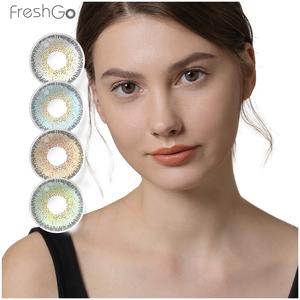
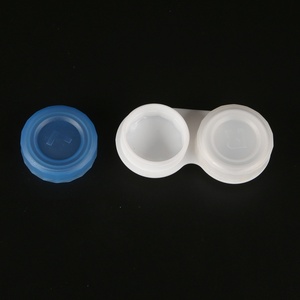
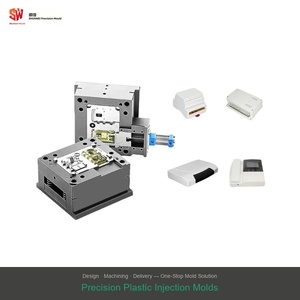
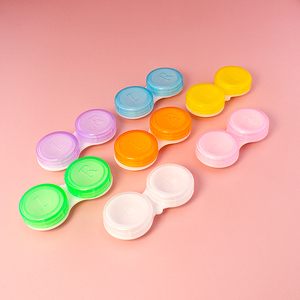
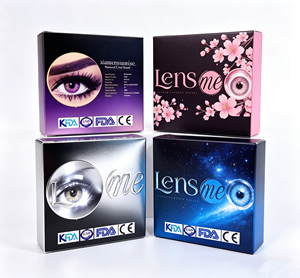
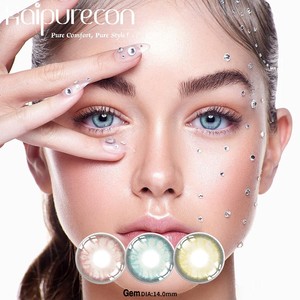
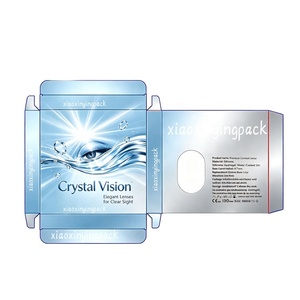
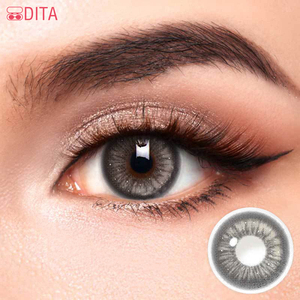
1. Modern Contact Lens OEM Architecture: Polymer Science & Manufacturing Physics
The global contract manufacturing ecosystem for contact lenses has shifted from high-volume standardized production to ultra-precise, customizable bio-compatible polymer matrix engineering. As a primary OEM/ODM manufacturer, optical performance is governed by the intricate relationship between material oxygen permeability ($Dk/t$), surface wettability, elastic modulus, and ionic surface charges.
1.1 Hydrogel vs. Silicone Hydrogel (SiHy) Polymer Matrices
Traditional soft contact lenses rely heavily on Poly-HEMA (Poly-2-hydroxyethyl methacrylate) hydrogels. While Hydrogel materials maintain high water content (38% to 58%), oxygen transport is restricted by the solubility of oxygen in water ($Dk \approx 8-30$). In contrast, next-generation Silicone Hydrogel (SiHy) formulations combine fluoro-silicone macromers with hydrophilic monomers (such as N-Vinylpyrrolidone, NVP). This creates an interconnected siloxane matrix that transports oxygen directly through the polymer chain, achieving $Dk/t$ values exceeding 100 to 150. This dramatic leap prevents corneal hypoxia, endothelial cell loss, and limbal hyperemia during extended wear schedules.
| Polymer Class | Monomer Composition | Water Content | Oxygen Permeability (Dk) | Modulus (MPa) | Primary OEM Target Market |
|---|---|---|---|---|---|
| Poly-HEMA Hydrogel | HEMA / MAA / EGDMA | 38% - 55% | 15 - 28 | 0.30 - 0.45 | Daily/Monthly Cosmetic & Standard Clear Lenses |
| Non-Ionic Hydrogel | HEMA / NVP / GMA | 55% - 68% | 25 - 35 | 0.25 - 0.35 | Sensitive Eye & Dry Eye Formulations |
| 1st Gen Silicone Hydrogel | TRIS / PDMS / HEMA | 24% - 36% | 100 - 140 | 1.00 - 1.40 | Extended Wear & High-Power Spherical Lenses |
| 3rd Gen Wetting-Agent SiHy | Siloxane Macromers + PVP Matrix | 45% - 55% | 110 - 160 | 0.50 - 0.70 | Premium Private Label 1-Day Disposable Lines |
1.2 Cast Molding Precision Tooling vs. Lathe-Cutting Manufacturing
To produce millions of units with micron-level consistency, OEM facilities deploy fully automated Double-Sided Cast Molding. High-precision PMMA or Polypropylene optical inserts are machined via single-point diamond turning (SPDT) to achieve sub-nanometer surface roughness ($Ra < 5\text{ nm}$). Hydrogel monomer mixes are injected into the mold cavity, UV/thermal polymerized, hydrated, and extracted automatically without manual intervention. Lathe-cutting is reserved for specialized custom toric, multifocal, or irregular cornea medical designs.
OEM Information Gain Insight: Advanced cast-molding systems utilize real-time closed-loop sensor networks to control polymerization shrinkage (typically 15-20%), ensuring that base curves ($8.40\text{ mm} - 8.80\text{ mm}$) and central thickness ($0.06\text{ mm} - 0.08\text{ mm}$) remain within $\pm 0.01\text{ mm}$ tolerances across batch sizes exceeding 500,000 units.
2. Bio-Compatible Cosmetic Color Lens Manufacturing & Safety Standards
Cosmetic color contact lenses represent one of the fastest-growing sectors in global optical procurement. However, printing pigments onto soft lenses poses critical biocompatibility challenges. Inferior color lenses print pigments directly onto the ocular surface, causing mechanical abrasion, pigment leaching, and severe keratitis.
3-Layer Sandwich Encapsulation
Micro-pigments are completely embedded between two clear non-toxic hydrogel polymer layers, preventing direct color-to-cornea contact and eliminating chemical cytotoxicity.
High-Resolution Pad Printing
Sub-micron pad printing technology reproduces natural human iris patterns, including limbal rings, radial stroma lines, and multi-tone gradient blending.
Smooth Edge Profiling
Laser-controlled edge finishing creates a tapered peripheral curve that minimizes palpebral conjunctival interaction during eye blinking.
Our OEM factories utilize certified FDA-approved inorganic iron oxide pigments, phthalocyanine complexes, and titanium dioxide. Every batch undergoes Leachability Testing (ISO 10993-13) using organic solvents and saline extraction to guarantee 100% color retention over a 5-year shelf life.
3. Strategic Global Procurement & Technological Trends (2025–2030)
Procurement teams, optical chain buyers, and D2C brand managers must align their sourcing strategies with shifting consumer behaviors and regulatory shifts. Key macroeconomic and technical drivers shaping the next decade include:
3.1 Rapid Market Migration Toward 1-Day Daily Disposables
Hygiene concerns, convenience, and ocular health awareness are accelerating the shift from monthly reusable lenses to single-use daily disposables. Daily contact lens manufacturing requires mega-scale automation capable of producing billions of blisters annually with ultra-low unit cost structures. OEM suppliers without fully integrated inline blistering, sterile saline dosing, and high-speed thermal sealing will struggle to maintain margin competitiveness.
3.2 Sustainable & Eco-Friendly Packaging Engineering
Traditional contact lens packaging generates significant plastic and aluminum foil waste. Leading global brands are mandating sustainable OEM packaging strategies:
- Recyclable PP Blister Trays: Transitioning from multi-resin blisters to mono-material Polypropylene (PP) trays that can be recycled directly.
- Zero-Foil Biodegradable Lidding: Development of high-barrier polymeric lidding films to replace traditional aluminum foil peels.
- FSC-Certified Secondary Packaging: Outer boxes crafted with soy-based inks, spot UV varnish, and biodegradable matte laminations.
3.3 Smart Lenses & Ophthalmic Biosensing Frontiers
The convergence of micro-electronics and contact lens polymer science has birthed Smart Contact Lenses. Research and OEM pilot programs are integrating micro-fluidic channels, micro-LED displays, micro-sensors for continuous intraocular pressure (IOP) monitoring for glaucoma patients, and tear-glucose electrochemical sensors. OEM factories are investing in hybrid polymer casting techniques capable of embedding flexible micro-circuits without compromising oxygen permeability or optical transparency.
4. Kyralens Corporate Strengths & Global Manufacturing Capabilities
Headquartered in Ede, Netherlands (Faradaystraat 14, 6718 XT Ede), Kyralens Technology Co., Ltd. serves as a premier international developer, manufacturer, and distributor of private label eye care solutions. We bridge high-precision Asian automated production with rigorous European quality assurance and regulatory oversight.
EU MDR 2017/745 Compliance
Full compliance with European Medical Device Regulation Class IIa/IIb standards, complete with CE certificates, Technical Documentation Files (TDF), and full lot traceability.
End-to-End Category OEM
Single-source supplier for daily/monthly contact lenses, cosmetic color lenses, eye drops (lubricating/preservative-free), multipurpose solutions, and accessory companion cases.
Trusted Retail Partnerships
Proven OEM track record supporting world-leading retail chains, drugstores, and optical superstores including Watsons, Rossmann, Kruidvat, Albert Heijn, REWE, and Migros.
5. Frequently Asked Questions (FAQ) for B2B Contact Lens Sourcing
Designed for category procurement directors, regulatory specialists, and brand managers seeking authoritative guidance on OEM contract manufacturing.
What are the standard Minimum Order Quantities (MOQs) for Custom OEM Contact Lenses?
For custom private label blister packaging using existing clear or color mold designs, standard MOQs start at 50,000 blisters per SKU. For custom tint shade formulation, unique base curve tooling, or specialized private label box artwork, MOQs range between 100,000 to 300,000 units depending on material parameters.
What regulatory documentation is provided for international custom imports?
We provide comprehensive medical device regulatory dossiers including ISO 13485:2016 Quality Management System certificates, CE MDR (2017/745) Declarations of Conformity, US FDA 510(k) clearances, Free Sale Certificates (FSC), Certificate of Analysis (CoA) per batch, and full sterilization validation reports (ISO 17665).
How is sterility and shelf-life integrity assured during bulk transit?
Lenses are sealed in medical-grade PP blisters using high-precision ultrasonic heat sealing and undergo moist heat steam autoclaving at terminal sterilization levels ($SAL 10^{-6}$). Real-time and accelerated shelf-life stability testing guarantees a 5-year sterile shelf life under standard global shipping conditions.
Can Kyralens assist with custom secondary packaging design and local labeling?
Yes. Our in-house packaging engineers and regulatory teams assist with structural dieline creation, multi-language barcode printing (GS1-128 / UDI matrix compliance), tamper-evident sealing, and compliance checking for regional market labeling requirements across Europe, North America, and the Middle East.
What Quality Control (QC) inspections occur prior to dispatch?
Every production run undergoes 100% Automated Optical Inspection (AOI) for edge defects, tears, power accuracy (diopter validation via optical focal meters), surface contamination, color pattern alignment, and physical dimension verification before batch release authorization.
What is the typical lead time from design approval to mass delivery?
Standard OEM repeat orders ship within 3 to 4 weeks. First-time custom OEM private label launches (including master mold verification, foil printing plate creation, and regulatory registration approval) typically require 6 to 8 weeks total turnaround time.
Accelerate Your Private Label Contact Lens Project
Partner with an industry-leading OEM/ODM manufacturer. Contact our optical engineering and regulatory team today to request product samples, factory audits, and customized pricing quotes.
Get a Quote