High-Performance Contact Lenses & Customized Packaging Solutions
Explore our sterile, GMP-compliant contact lens range and customized retail packaging models engineered for optical chains, pharmacy networks, and private cosmetic labels worldwide.
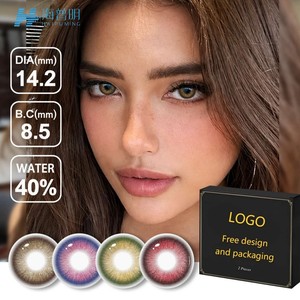

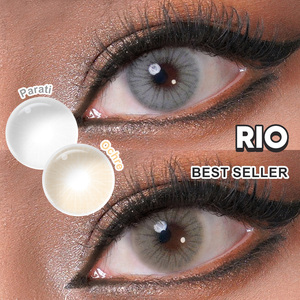
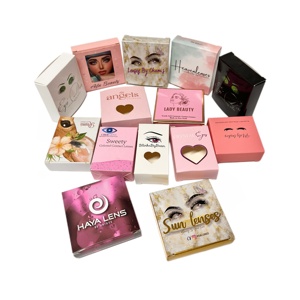
OEM Ophthalmic Manufacturing: Polymer Chemistry & Cleanroom Engineering
A comprehensive analysis of contact lens material dynamics, automated cast-molding precision, and pigment encapsulation technology for OEM buyers.
Executive Insight: Sourcing private label contact lenses requires a rigid evaluation of material chemistry, oxygen permeability ($Dk/t$), hydration dynamics, and regulatory compliance. As a dedicated OEM/ODM manufacturer, kyralens Technology Co.,Ltd operates at the intersection of ophthalmic science and high-volume automated fabrication.
Advanced Hydrogel & Silicone Hydrogel (SiHy) Synthesis
Modern contact lens manufacturing hinges on balancing water content with oxygen transmissibility ($Dk/t$). Standard Poly-HEMA (Hydroxyethyl Methacrylate) hydrogels deliver exceptional initial comfort with 38% to 58% water content, suitable for daily and monthly replacements. However, for extended wear, our next-generation Silicone Hydrogel (SiHy) matrix integrates fluoro-silicone macromers. This structure allows oxygen to permeate directly through the silicone polymer channels, achieving $Dk/t$ values exceeding $115 \times 10^{-9}$, vastly reducing hypoxic stress on the wearer’s cornea.
Micro-Pigment "Sandwich" Encapsulation Technology
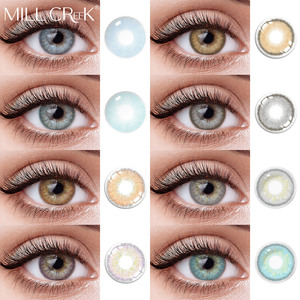
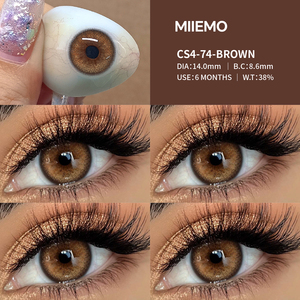
Cosmetic and colored contact lenses demand absolute ocular safety. Our factory utilizes full-lock 3-Layer Sandwich Printing Technology. Bio-compatible pigments are embedded between two transparent outer hydrogel layers, preventing any direct pigment contact with the cornea or palpebral conjunctiva. Through high-resolution micro-dot matrix printing, we produce natural 1-tone, 2-tone, and 3-tone color transitions while maintaining smooth lens surfaces and zero pigment migration.
Automated Cast-Molding & Precision Aspheric Optics
Legacy lathe-cutting methods are insufficient for modern OEM cost efficiency. Our production line uses fully automated cast-molding systems operating within ISO Class 7 cleanrooms. Optical molds are crafted with sub-micron precision to impart an aspheric front surface design. This geometry corrects spherical aberrations across all diopters (-0.50D to -10.00D), sharpening visual acuity while optimizing edge profiles for minimal friction with the eyelid during blinking.
Ophthalmic Lens Formulations & Technical Parameters
A side-by-side technical reference for procurement teams selecting lens substrates for private label launch.
| Material Category | Water Content | Oxygen Transmissibility ($Dk/t$) | Modulus (MPa) | Wear Duration | Primary Target Market | Compliance Standard |
|---|---|---|---|---|---|---|
| Standard Hydrogel (Poly-HEMA) | 38% - 42% | 12 - 15 | 0.35 - 0.42 | Monthly / 6-Month | Cosmetic & Budget Optical Retail | CE MDR / ISO 13485 / GMP |
| High-Moisture Hydrogel (HEMA+MAA) | 55% - 58% | 25 - 28 | 0.28 - 0.32 | Daily Disposable | Mass Market Pharmacy & Grocery | CE MDR / US FDA 510(k) |
| Silicone Hydrogel Gen 3 (SiHy) | 45% - 48% | 110 - 130 | 0.50 - 0.60 | Daily / Monthly | Premium Optical Chains & Eye Care Clinics | CE MDR / US FDA 510(k) / NMPA |
| Cosmetic Color Hydrogel (Sandwich Tech) | 38% - 45% | 14 - 18 | 0.38 - 0.45 | Daily / Annual | Beauty Retailers & E-Commerce Brands | CE MDR / ISO 13485 / GMP |
Future Procurement Trends in Contact Lens Manufacturing
Understanding shifting consumer demands, environmental regulations, and technological advancements reshaping the global contact lens supply chain.
1. Accelerated Shift to Daily Disposables
Hygiene awareness and digital eye fatigue are driving rapid growth in daily disposable contact lenses. OEM buyers are phasing out traditional annual lenses in favor of high-volume, single-use blister packs. Modern automated blister packing lines allow cost-effective daily lens manufacturing, lowering unit costs while boosting brand reorder velocity.
2. Sustainable Packaging & Recyclable Materials
Global regulatory bodies, particularly in the European Union (under the Packaging and Packaging Waste Regulation), are enforcing eco-design criteria. Factory innovation focuses on bio-degradable blister plastics, thinner aluminum foil seals, and 100% recyclable outer FSC-certified ivory board cartons with aqueous UV varnishing, meeting corporate ESG goals.
3. Hyper-Natural Cosmetic Aesthetics & Special Sizes
Cosmetic color lens trends are moving away from artificial graphic borders toward rimless, soft-gradient design patterns. Consumers seek natural iris enhancement. Demand is also rising for custom pupil diameters (e.g., small pupil designs for light sensitive eyes) and tailored base curves (8.5mm to 8.7mm) to fit distinct regional corneal topographies.
4. Full Supply Chain Traceability & MDR Technical Files
With the transition from MDD to EU MDR (Medical Device Regulation 2017/745), compliance scrutiny has escalated. OEM manufacturers must deliver full technical documentation (STED format), clinical evaluation reports (CER), and Unique Device Identification (UDI) compliance, ensuring zero customs bottlenecks for global retail distributors.
Structured 5-Stage Private Label OEM/ODM Process
From initial optical formulation to finished retail stock, our factory maintains rigorous quality control at every phase.
Step 01: Parameter Brief & Formulation Selection
We work with your optical buying team to establish target lens parameters: material (Hydrogel vs SiHy), water content, base curve (BC), diameter (DIA), diopter range (-0.50 to -10.00D), and replacement schedule (Daily, Monthly, 6-Month).
Step 02: Brand Packaging & Artwork Engineering
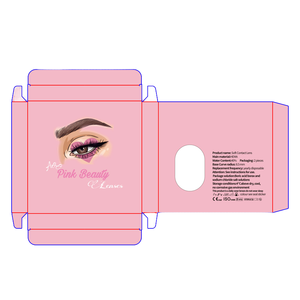
Our packaging team customizes structural die-lines for blister packs, aluminum foils, single boxes, and multipack outer cartons (ivory board, card stock window, UV spot finish). We ensure all multilingual labeling meets destination regulatory mandates.
Step 03: Automated Cast-Molding & Printing
High-precision optical injection molds form the lenses in Class 100,000 cleanrooms. For colored lenses, 3-layer sandwich printing applies micro-pigment layers before monomer polymerization and UV curing.
Step 04: Hydration, Blister Sealing & Sterilization
Polymerized lenses are hydrated in physiological saline solution with added moisturizing agents (such as HA or PVP). Lenses are sealed in medical-grade blister packs and subjected to validated terminal steam autoclaving.
Step 05: QC Inspection & Global Freight Delivery
Every batch undergoes automated optical inspection for surface defects, power accuracy, edge integrity, and seal tightness. Certified lot traceability documentation is issued prior to dispatching cargo to retail distribution centers.
Proven Enterprise Reliability for International Eyewear Chains
Combining European quality control management with scalable OEM production facilities to build resilient supply chains.
kyralens Technology Co.,Ltd (Faradaystraat 14, 6718 XT Ede, The Netherlands) develops custom private label eye care programs for retail giants, drugstore chains, and optical wholesalers across Europe, the Middle East, and Asia. Our brand partners include retail industry leaders such as Watsons, Rossmann, Kruidvat, Trekpleister, Ahold Delhaize, Albert Heijn, Etos, Nahdi, GMG, Eureka, Migros, and REWE.
Full Eye Care Category Integration
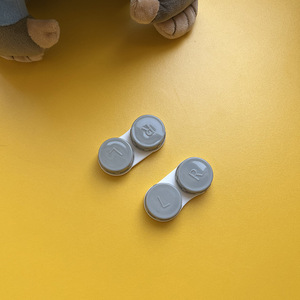
Streamline your sourcing by procuring contact lenses, lubricating eye drops, multipurpose peroxide solutions, contact lens storage cases, and reading glasses from a single certified manufacturing partner.
Strict Quality Control & Low Defect Threshold
Our quality assurance framework integrates 100% automated visual inspection systems alongside manual lot sampling, ensuring zero leakage, consistent diopter power, and smooth lens surfaces.
Optimized Margin Economics
By transitioning from national brand distribution to private label OEM sourcing, retail chains can boost gross margins from 15-20% to 60-80% while retaining total brand equity and customer loyalty.
Frequently Asked Questions for OEM Buyers
Detailed technical answers to common queries raised by sourcing directors, optical buyers, and regulatory affairs managers.
What certifications does your OEM contact lens factory hold for international distribution?
Our factory operates under ISO 13485:2016 quality management systems for medical devices and ISO 22716 Good Manufacturing Practices (GMP). Our products hold CE Mark certification under the EU Medical Device Regulation (MDR 2017/745) Class IIa/IIb, as well as registration files for US FDA 510(k) and NMPA markets.
How does your factory guarantee pigment safety in private label cosmetic color lenses?
We utilize a micro-encapsulated 3-layer sandwich printing system. Color pigments are fully sealed between bio-compatible polymer layers, ensuring that dye particles never touch the cornea or eyelid tissue. Each color batch undergoes strict leaching and cytotoxic testing according to ISO 10993 standards.
What are the typical minimum order quantities (MOQs) for OEM custom branded products?
MOQs depend on whether you choose standard parameters with custom packaging or fully customized lens colors/diopters. Standard packaging customization starts around 1,000 to 3,000 boxes per SKU. For custom color pattern development or specialized silicone hydrogel molds, trial batch MOQs can be negotiated.
What is the technical difference between your Hydrogel and Silicone Hydrogel (SiHy) OEM formulations?
Hydrogel lenses rely on water content to transport oxygen to the cornea ($Dk/t$ ~ 15-28). They offer excellent initial softness. Silicone Hydrogel lenses integrate silicone polymer chains, allowing oxygen to pass directly through the material matrix ($Dk/t$ ~ 110-130), making them ideal for long daily wear hours and extended eye health.
Can your factory assist with technical documentation for local medical device registration?
Yes. Our regulatory affairs team provides complete Technical Files (STED format), Declarations of Conformity, ISO/CE certificates, sterilization validation reports, and stability testing data to support your local registration process with national health authorities.
What sterilization methods are used for blister packaging?
After lenses are sealed inside medical-grade aluminum foil blister packs with sterile saline, they undergo validated high-pressure steam autoclaving at 121°C (250°F). This terminal sterilization process achieves a Sterility Assurance Level (SAL) of $10^{-6}$.
What packaging formats and retail box designs can be customized?
We offer wide packaging flexibility: single blister cards, 2-pack, 5-pack, 10-pack, 30-pack, or 90-pack retail boxes. Cartons can feature custom foil stamping, spot UV finishing, glossy/matte lamination, window cutouts, and FSC-certified eco-friendly paperboard stock.
How do you maintain lot-to-lot color consistency across production runs?
Our automated color mixing and pad printing systems use spectrophotometric digital color matching. Ink density, dot placement, and layer thickness are monitored in real time, guaranteeing consistent color reproduction across every batch.
What is the typical lead time from design approval to factory shipment?
Once packaging artwork and product specs are signed off, standard production lead times range from 30 to 45 days. Re-orders for existing customized SKUs can often be processed faster within 20 to 30 days depending on order volume.
Why choose private label OEM over reselling national contact lens brands?
Private label OEM manufacturing gives retailers control over product pricing, brand equity, and customer retention. Margin structures increase from typical brand reseller rates (15-25%) up to 60-80%, while eliminating direct price competition with online discount discounters.
Build Your Private Label Contact Lens Brand
Partner with an established European private label eye care developer and OEM factory. Request sample kits, custom packaging die-lines, and detailed price quotations today.