Executive Industry Overview: Sourcing OEM/ODM Contact Lenses
The global market for contact lenses—spanning cosmetic enhancement, optical vision correction, and therapeutic applications—is experiencing a structural shift toward private-label retail models. Optical retail chains, beauty conglomerates, online direct-to-consumer (DTC) brands, and pharmacy groups are increasingly leveraging OEM (Original Equipment Manufacturing) and ODM (Original Design Manufacturing) contract manufacturing partnerships. Sourcing colored contact lenses and circle lenses requires navigating a complex matrix of polymer science, optical engineering, pigment safety compliance, and regional regulatory frameworks such as EU MDR 2017/745, US FDA 510(k), and ISO 13485.
For procurement directors and optical category managers, distinguishing between standard OEM/ODM colored contact lenses and specialized circle lenses is not merely an aesthetic choice—it dictates Graphic Diameter (GD), Base Curve (BC) dynamic alignment, oxygen transmissibility ($D_k/t$), edge profile ergonomics, and consumer demographic positioning. This industrial whitepaper establishes an authoritative comparison between these two product categories while detailing factory manufacturing processes, sandwich pigment technology, and B2B sourcing strategies.
Technical Breakdown: Colored Contacts vs Circle Lenses
While end-users frequently confuse colored contact lenses with circle lenses, optical engineering and factory specifications establish clear boundaries between the two categories. OEM/ODM buyers must align product specifications with target market consumer behavior.
OEM/ODM Colored Contact Lenses
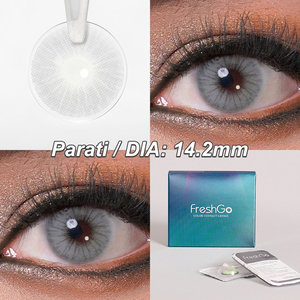
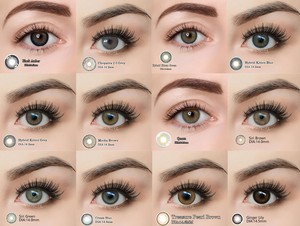
Designed primarily to alter or enhance the natural color of the iris (e.g., changing brown eyes to blue, hazel, green, or grey). The print structure emphasizes natural iris fibers, radial striations, and soft blend zones. The Graphic Diameter (GD) closely mimics natural human iris sizing (typically 12.8mm to 13.5mm), focusing on realistic color transformation without exaggerating overall eye dimension.
OEM/ODM Circle Lenses
Engineered specifically to create an optical illusion of enlarged eyes (the "doll-eye" or "anime" effect). The defining characteristic is a prominent, dark, high-contrast outer limbal ring. The Graphic Diameter (GD) is extended up to 13.8mm–14.5mm within a standard total overall diameter (DIA 14.0mm–14.5mm), pushing color tinting to the extreme mechanical margin of the lens structure.
| Optical / Engineering Parameter | OEM/ODM Colored Contacts | OEM/ODM Circle Lenses |
|---|---|---|
| Primary Design Intent | Iris color shift, natural 3-tone blend, iris depth simulation | Limbus enlargement, high contrast rim, doll-eye illusion |
| Limbal Ring Configuration | Feathered, subtle, transparent gradient, or rimless | Solid black/dark brown, defined, thick high-density outer border |
| Graphic Diameter (GD) Range | 12.5 mm – 13.5 mm (Natural scale) | 13.6 mm – 14.5 mm (Enlarged scale) |
| Total Lens Diameter (DIA) | 14.0 mm – 14.2 mm | 14.2 mm – 14.8 mm |
| Base Curve (BC) Standard | 8.5 mm / 8.6 mm (Universal fitting) | 8.6 mm / 8.8 mm (Steeper fit for larger overall diameters) |
| Clear Optical Center Pupil Zone | 4.5 mm – 5.5 mm (Minimizes tunnel vision in dim light) | 4.0 mm – 5.0 mm (Tight central aperture for maximum color coverage) |
| Target Demographics & Markets | Western Europe, North America, Middle East, Beauty retail | East Asia, Cosplay, Youth/Gen-Z fashion, Anime culture |
| Regulatory Risk Profile | Class IIa/IIb medical device (Standard approval path) | Requires strict centration check due to wider printed peripheral zones |
Polymer Engineering & Pigment Encapsulation Technology
The primary engineering challenge in color contact lens manufacturing is integrating opaque pigments without compromising oxygen flux ($D_k/t$), lens wettability, or ocular tissue safety. Direct contact between raw pigments and the corneal epithelium can cause micro-abrasions, allergic papillary conjunctivitis, or toxic dye leaching.
Sandwich Micro-Encapsulation (SMET)
Contract factories utilize Sandwich Technology (also known as Double-Cladding or Interlocking Color Technology). Pigments (iron oxides, titanium dioxide, phthalocyanine cyan/green) are printed onto an inner matrix layer and encapsulated completely between two clear hydrogel polymer layers. The pigment layer never touches the cornea or palpebral eyelid.
Automated Cast Molding vs Lathe Cutting
For mass ODM production of daily disposable color lenses, high-speed automated Cast Molding ensures supreme surface smoothness, uniform edge profiles, and identical parameter consistency ($<\pm 0.02\text{mm}$). Computer Numerical Control (CNC) lathe cutting is utilized for custom ODM specialty toric or extreme high-diopter runs.
Material Formulations: Hydrogel vs SiHy
Modern OEM production spans legacy Hydrogel (PolyHEMA, 38%–55% water content) and advanced Silicone Hydrogel (SiHy). Silicone Hydrogel incorporates fluorosiloxane macromers, raising oxygen permeability ($D_k$) from 12–25 Barrers up to 80–120 Barrers, enabling healthy extended daily wear without hypoxia.
Enterprise Manufacturing Infrastructure & Quality Control
As demonstrated by industry-leading providers such as kyralens Technology Co.,Ltd, tier-1 contact lens manufacturers operate comprehensive private-label programs engineered to eliminate launch risks for global buyers. Operating under ISO 13485 certification, automated manufacturing plants integrate stringent quality control across every production phase.
End-to-End Quality Assurance Protocol
- Class 100,000 Cleanroom Molding: Injection molding, polymer polymerization, and primary foil packaging take place in ISO Class 8 / Class 100,000 cleanrooms to eliminate air particulates and bioburden contamination.
- Automated Optical Inspection (AOI): 100% of manufactured lenses undergo high-resolution digital vision inspection to detect edge chips, pinholes, pigment misalignment, surface scratches, or monomer bubbles.
- Terminal Moist Heat Sterilization: Finished blister packs undergo validated terminal steam autoclaving at 121°C (250°F) for a minimum of 20 minutes in strict compliance with EN 556-1 and ISO 17665 standards.
- Regulatory Documentation & Lot Traceability: Every batch is supplied with complete Certificate of Analysis (CoA), declaration of conformity, bioburden testing records, cytotoxic assay verification, and full lot number tracing.
Private Label Customization Scope
Global procurement partners can customize every layer of the optical product portfolio:
✓ Tailored Diopter Ranges (Plano 0.00D to -10.00D, Myopia / Astigmatism)
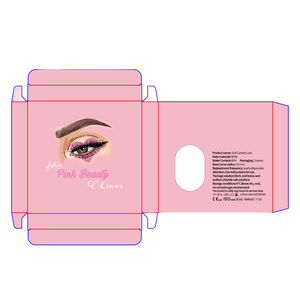
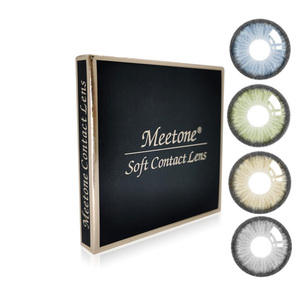
✓ Multi-lingual Blister Foil & Folding Packaging Box Printing
✓ Integrated Eye Care Range (Lens Cases, Solutions, Lubricating Drops)
Trusted Partner Ecosystem
Supplying major drugstore chains, optical retail networks, and supermarket groups across Europe, Middle East, and Asia.




Future OEM/ODM Sourcing & Technology Trends (2025–2030)
Understanding trajectory shifts in contact lens manufacturing allows brand owners to capture high-margin market segments before saturated legacy technologies drop in retail profitability.
1. Silicone Hydrogel Dominance
Consumer demand is migrating rapidly from traditional 2-HEMA materials to high-$D_k/t$ Silicone Hydrogel formulations in colored lenses. OEM factories capable of stabilizing hydrophilic surface treatments on silicone color matrices are securing market leadership.
2. Daily Disposable Shift
While yearly and monthly reusable lenses dominated historically in legacy circle lens markets, global hygiene trends and consumer preference for convenience are driving 1-Day daily disposable color lens growth at a CAGR of >11.4%.
3. Biomimetic 3D Iris Optics
Advanced digital pad printing and laser micro-engraving allow factories to reproduce depth, light reflection, and hyper-realistic iris textures, moving far beyond flat 1-tone block colors to natural multi-dimensional aesthetics.
Frequently Asked Questions (FAQ) for B2B Procurement
Key technical, regulatory, and commercial answers for optical buyers and private-label category managers.
What is the structural difference between OEM and ODM contact lens production?
ODM (Original Design Manufacturing): The factory provides pre-formulated, CE/ISO-certified off-the-shelf color lens collections, proven shade ranges, standard parameters (e.g., 8.6mm BC, 14.2mm DIA), and modular packaging templates. This allows retailers to launch private label ranges within accelerated timelines (often 30–45 days).
What regulatory documentation is required to import colored contacts into the EU or US?
How does Sandwich Technology prevent pigment migration and corneal damage?
What are standard Minimum Order Quantities (MOQs) for private-label color contact lenses?
Can circle lenses be manufactured with vision correction (Diopters)?
How do factory lead times compare between initial sample development and mass production?
Launch Your Private Label Eye Care Line Today
Partner with an ISO 13485 & CE-certified global leader in OEM/ODM colored contact lenses, circle lenses, and contact lens care accessories. Request complete product catalogs, factory specifications, and B2B wholesale pricing.