Certified OEM/ODM Contact Lens & Accessories Catalog
Explore our FDA 510(k) aligned, ISO 13485:2016 certified contact lenses and eye care solutions available for turnkey private label manufacturing.
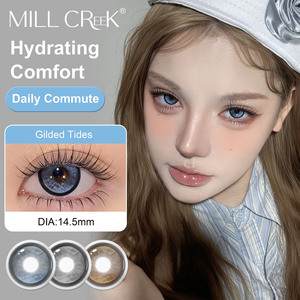
Haipurecon Direct Sky Blue Color Contact Lenses (Low MOQ Bulk)
Send an Inquiry
Bollywood Style Color Contact Lenses (ISO 13485 Certified Factory)
Send an Inquiry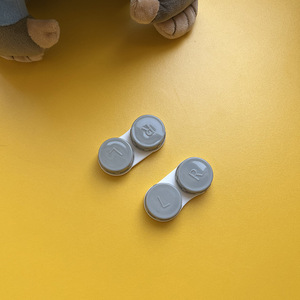
Gray ABS Exquisite Contact Lens Storage Double Box (Model WL-001)
Send an Inquiry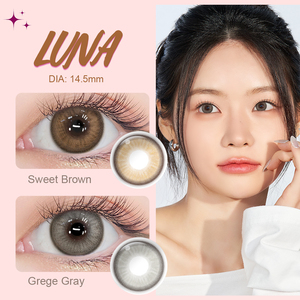
Magister LUNA Natural Eye 14.5mm Colored Contact Lenses
Send an Inquiry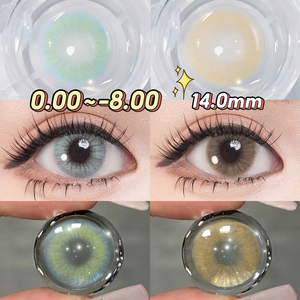
Hidrocor Natural Prescription Cosmetic Lenses 14.00mm
Send an Inquiry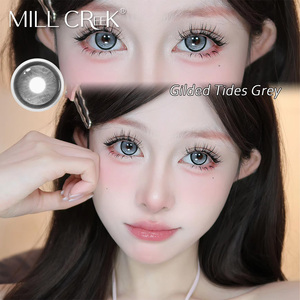
Haipurecon Grey Sky Blue Hydrogel Contact Lenses Direct OEM
Send an Inquiry
Institutional Commercial Merchandise & Flag Pack Accessories
Send an Inquiry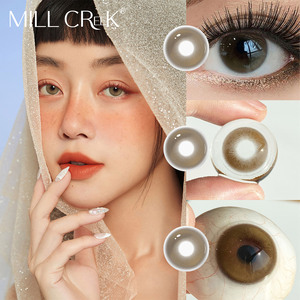
Soft Natural Brown Colored Contact Lenses (Custom Pack OEM)
Send an Inquiry1. Regulatory Framework: Navigating US FDA Requirements for OEM/ODM Contact Lens Factories
Entering the United States optical market or expanding global private label distribution requires a comprehensive understanding of the US Food and Drug Administration (FDA) regulatory landscape. Contact lenses—whether intended for refractive vision correction or purely cosmetic aesthetic color modification—are strictly regulated under federal law as Class II or Class III Medical Devices under the Federal Food, Drug, and Cosmetic Act (FD&C Act).
For B2B procurement managers, retail buyers, and brand owners sourcing from contract manufacturing facilities, ensuring that an OEM/ODM partner operates with complete regulatory integrity is the single most critical factor in preventing customs detentions, import alerts, and legal liability.
Premarket Notification 510(k)
Most daily, bi-weekly, and monthly soft contact lenses (hydrogel and silicone hydrogel) require an cleared 510(k) submission establishing substantial equivalence to a legally marketed predicate device in the US.
Quality System Regulation (21 CFR 820 / QMSR)
Factories must comply with FDA Quality Management System Regulation (QMSR), aligning closely with ISO 13485:2016. Every batch must undergo rigorous Master Record audit trails and Sterility Assurance Levels (SAL 10⁻⁶).
Unique Device Identification (UDI)
FDA mandates UDI compliance for all soft contact lens packaging. OEM primary blister packs and outer cartons must carry machine-readable GS1 Datamatrix barcodes containing DI (Device Identifier) and PI (Production Identifier).
2. Master Matrix: OEM/ODM Contract Models & Compliance Responsibilities
Selecting the right engagement model with a manufacturing partner dictates whether your brand acts as a Contract Manufacturer, Specification Developer, or Private Label Distributor. Below is the technical regulatory split defined under US FDA medical device protocols:
| Procurement Model | 510(k) Clearance Ownership | Factory Regulatory Role | Brand Owner Responsibility | FDA Site Registration |
|---|---|---|---|---|
| OEM Manufacturing (Original Equipment Manufacturer) | Factory / Manufacturer | Produces lens to existing, FDA-cleared specifications & polymer formulas. | Specification Developer / Relabeler; listed as Brand Owner on carton. | Factory: Initial Manufacturing Site Brand: Initial Importer / Relabeler |
| ODM Manufacturing (Original Design Manufacturer) | Shared / Custom Submission | Engineers proprietary mold design, optical geometry, and dye patterns. | Files Premarket Notification using Factory Master Files (MAF) via Authorization Letter. | Factory: Device Contract Manufacturer Brand: 510(k) Holder & Distributor |
| Private Label / Wholesaling | Factory / Partner Network | Supplies ready-to-market finished product in pre-approved packaging. | Markets product under own brand name using factory's global regulatory certificates. | Factory holds active Establishment Registration & Device Listing. |
3. Quality Control, Biocompatibility & Polymer Science Standards
High-performance OEM/ODM contact lens production relies on state-of-the-art polymer chemistry and automated cast-molding processes. To guarantee ocular safety and pass FDA premarket inspections, manufacturers must meet stringent biomedical engineering metrics.
Sandwich Color Technology
For cosmetic color contact lenses (such as our Haipurecon & Magister series), pigment must be encapsulated between two clear polymer layers (3-layer printing technology). Direct dye-to-cornea contact is strictly prohibited by FDA safety guidelines to prevent pigment leaching and corneal staining.
ISO 10993 Biocompatibility
Every raw material formulation (HEMA, Polymacon, NVP, Silicone Hydrogel polymers) must undergo comprehensive ISO 10993 testing, including cytotoxicity, ocular irritation, systemic toxicity, and hemocompatibility validation.
Cast-Molding Precision
Advanced factories utilize fully automated robotic cast-molding systems under Class 100,000 cleanroom conditions. Digital AOI (Automated Optical Inspection) scans 100% of lenses for edge defects, tears, and optical power aberrations.
4. Global Sourcing & Future Procurement Trends (2025–2030)
The global contact lens industry is undergoing a structural shift driven by material innovation, consumer direct-to-consumer (DTC) brands, and tightening global healthcare regulations. Procurement teams must align with factories prepared for the next decade of market demands.
1. Silicone Hydrogel Dominance
Transition from conventional hydrogel (38%–58% water content) to high oxygen permeability (Dk/t > 100) Silicone Hydrogel. This transition significantly improves corneal health during prolonged digital screen use.
2. Preservative-Free Packaging
Rising consumer awareness of ocular surface health is driving demand for OEM blister packs filled with buffered, preservative-free saline solutions infused with Hyaluronic Acid (HA) for instant comfort.
3. Sustainable & Bio-based Monomers
Factories are pioneering eco-conscious blister foils, recycled polyolefin packaging, and energy-efficient closed-loop monomer synthesis to fulfill European Green Deal and ESG retailer requirements.
5. OEM/ODM Factory Audit Checklist for Optical Procurement Executives
Before issuing a Purchase Order (PO) or initiating custom mold tooling with an overseas manufacturer, use this mandatory audit matrix to evaluate facility compliance:
| Audit Dimension | Mandatory Verification Metric | Red Flag Warning Signal |
|---|---|---|
| FDA Registration Status | Active FDA Establishment Registration Number & FEIN via FDA FURS database. | Supplier relies on third-party trading company credentials without factory listing. |
| Quality Certification | ISO 13485:2016 certificate issued by an accredited Notified Body (TÜV, SGS, BSI). | Generic ISO 9001 certification (insufficient for medical grade contact lenses). |
| 510(k) Device Master File | Factory provides official FDA 510(k) clearance letter (K-number) matching the polymer name. | Inability to produce authorization letter to reference the Device Master File (MAF). |
| Cleanroom Environment | ISO Class 7 / Class 8 certified cleanrooms with particle counts and microbial logs. | Manual packaging performed in non-regulated open atmospheric zones. |
| Traceability System | Full lot-level ERP tracking linking raw monomer batches to final boxed blisters. | Lack of unique production lot numbers printed on individual blister foils. |
6. Kyralens Technology & Factory Enterprise Capabilities
At kyralens Technology Co., Ltd. (partnered with specialized high-tech manufacturing plants including Haipurecon), we bridge the gap between global retail demand and medical-grade optical manufacturing. Headquartered with distribution hubs across Europe and Asia, we provide turnkey private label solutions tailored for international supermarket chains, pharmacy networks (such as Watsons, Rossmann, Kruidvat, Albert Heijn, Etos, Migros, REWE), and fast-growing optical ecommerce brands.
End-to-End Compliance
We supply full regulatory dossiers, multi-lingual box packaging compliant with FDA, EU MDR 2017/745, and Middle East SFDA standards.
Flexible OEM/ODM MOQs
Whether you require low MOQ pilot launches for trend-testing cosmetic shades or million-unit bulk daily disposables, our flexible automated production lines accommodate your scale.
Total Shelf Portfolio
Streamline your optical category supply chain. Single-source contact lenses, lubricating eye drops, peroxide solutions, ABS storage double boxes, and reading glasses from one verified partner.
7. Frequently Asked Questions (FAQ) for OEM/ODM Buyers
Direct technical answers to the most common queries raised by procurement teams and regulatory affairs managers:
Q: Are cosmetic color contact lenses subject to the same FDA requirements as corrective lenses?
A: Yes. The US FDA classifies all contact lenses as medical devices regardless of whether they carry optical corrective power. Non-prescription (plano) cosmetic colored lenses must adhere to the exact same 510(k), GMP, and prescription sale regulations as vision-correcting lenses.
Q: How does Kyralens assist brands with US FDA 510(k) registration?
A: We provide formal Device Master File (MAF) authorization letters, clinical trial data summaries, biocompatibility reports (ISO 10993), and labeling proofing to allow your regulatory team or consultant to seamlessly reference our factory predicate filings.
Q: What are the typical lead times for custom ODM color designs and packaging?
A: Turnkey OEM production with pre-approved packaging takes 30–45 days. Custom ODM shade development, multi-tone pad printing plate creation, and bespoke box structure design take approximately 60 days including sample proofing.
Q: What is the minimum shelf-life for delivered OEM contact lenses?
A: All contact lenses are sterilized via terminal steam autoclaving and carry a guaranteed 5-year shelf life from the date of manufacture, supported by real-time and accelerated stability validation studies.
Q: Can we customize the primary blister foil and solution formulation?
A: Absolutely. You can specify custom logo printing on aluminum blister foils, as well as select enhanced hydration packaging solutions containing Sodium Hyaluronate for premium product positioning.
Q: How do you handle customs clearance and FDA import detentions?
A: By providing pre-cleared UDI barcodes, exact Manufacturer Establishment Numbers, and compliant Device Listings on all shipping manifests, our shipments pass customs clearance smoothly without detention risks.
Ready to Build Your FDA-Compliant Contact Lens Brand?
Partner with a certified global OEM/ODM manufacturer. Speak directly with our optical regulatory and procurement specialists today to request samples, factory audit reports, or private label price quotations.