OEM/ODM Contact Lens Private Mold Manufacturer & Exporters

Precision Optical Injection Mold Tooling, Sub-Nanometer Polishing, and ISO 13485 Cleanroom Manufacturing for Global Ophthalmic Brands

Precision Tooling & Product Showcase

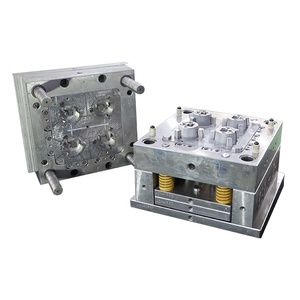
High-Precision Optical Molds & Hygiene Accessories

Engineered to SPI A-1 optical standards, utilizing premium Swedish S136ESR stainless steel and micro-fluidic cavity alignment for maximum repeatability and yield.

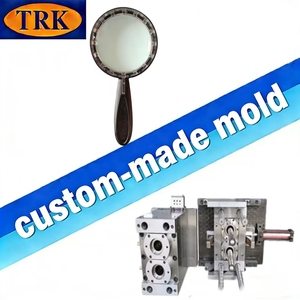
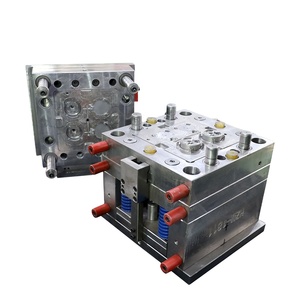
Two-color Plastic Molds High-precision Tooling

Two-color Plastic Molds High-precision On-demand Tooling for Magnifiers Small Optical Tools

Dual-injection (2K) mold technology featuring sub-micron core concentricity for high-clarity magnification tools and multi-material optical components.

Get Catalog
Custom Plastic Injection Mold for Contact Lens Washer Cleaner

Custom Plastic Injection Mold Customization Manufacture for Contact Lens Washer Cleaner Lens

High-speed automated injection molds for ultrasonic and manual contact lens cleaning devices, optimized for ultrasonic welding assembly.

Get Catalog
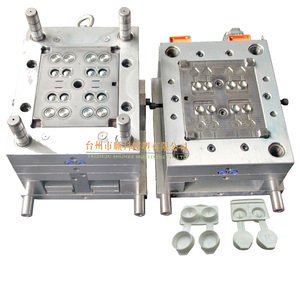
Customizable Contact Lens Case Mold Injection

High Quality Customizable Contact Lens case Mold Injection Plastic Mould Contact Lenses case

Leak-proof multi-cavity injection molds engineered for medical-grade PP and ABS lens storage cases, offering custom logo relief and airtight sealing.

Get Catalog
Flexible ABS Lens Accessories with Private Mold

Flexible ABS Lens Accessories with Private Mold-aputure Brand

Precision ABS and TPU auxiliary tools including insertion tweezers, soft silicone suction sticks, and protective travel enclosures.

Get Catalog
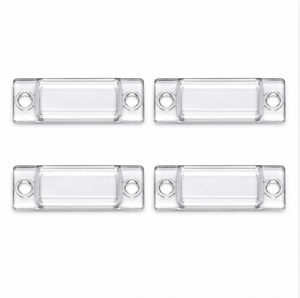
Custom PMMA Injection Mould for Optical Lens Cover

Custom PMMA Injection Mould for Optical Lens Cover OEM ODM

Ultra-clear acrylic (PMMA) optical inserts featuring diamond-tooled surface finishes (Ra < 0.005 µm) for premium light transmission and zero distortion.

Get Catalog
Custom Design Optical Lens Plastic Injection Mold Tooling

Custom Design Optical Lens Manufacturer Factory Wholesale Plastic Injection Mold Injection Molding Tool

Turnkey optical tooling solutions for corrective, cosmetic, and specialty contact lens cast-molding cups with precise curvature tolerances (±0.001mm).

Get Catalog
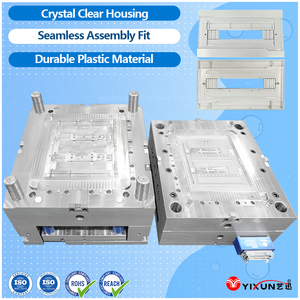
Transparent Cover Injection Mold Making Service

Transparent Cover Injection Mold Making Service, Custom Clear Lens Molds for Digital Device Panels

High-cavitation molds for crystal-clear polycarbonate (PC) protective screens, optical instrument display windows, and ophthalmic diagnostics.

Get Catalog
Outdoor Custom Precision Molding Optical Mold Processing

Outdoor Custom Precision Molding Vervaardiger Vir Led Geval Plastiek Spuit Vorm Optical Mold Processing

Heavy-duty precision optical molds engineered for severe thermal and UV stability, utilizing corrosion-resistant steel alloys and DLC protective coatings.

Get Catalog
±0.001mm
Concentricity Tolerance
< 0.005µm
SPI A-1 Polish Roughness (Ra)
ISO 13485
Certified Cleanroom Molding
2.5M+
Shots Tooling Guarantee
Enterprise Manufacturing Excellence

Why Leading Global Vision Care Brands Trust Kyralens

Combining European engineering oversight from Ede, Netherlands with high-capacity optical mold manufacturing infrastructure.

ISO 13485 & Class 7 Cleanroom Compliance

Every contact lens private mold and optical insert is designed and validated within strict medical device quality systems, guaranteeing bio-compatibility and absolute zero foreign particle contamination during production.

Ultra-Precision SPDT Diamond Machining

We utilize Single-Point Diamond Turning (SPDT) and slow slide servo technologies to achieve sub-nanometer surface smoothness (Ra < 0.005 µm) on complex spherical, aspheric, and toric contact lens mold inserts.

Advanced 2K & Multi-Cavity Hot Runner Injection

Proprietary valve-gated hot runner systems ensure perfectly balanced cavity filling across 32-cavity and 64-cavity mold bases, maximizing output while minimizing resin shear stress and material waste.

Full Regulatory Dossier & IQ/OQ/PQ Support

Kyralens supplies complete technical files, steel certification reports, optical coordinate measurement reports (CMM), dynamic moldflow analysis, and validation protocols required for FDA 510(k) and EU MDR compliance.

In-Line Automated Optical Inspection (AOI)

Integrated machine vision inspection systems monitor 100% of mold output for micro-bubbles, radius variations, flash, or edge degradation, protecting your brand from costly field recalls.

End-to-End Private Label Program Management

From initial CAD/CAM optical geometry modeling to blister packaging design, fluid chemistry compatibility testing, and localized batch fulfillment across Europe, the Middle East, and Asia.

Industry Technical Whitepaper

Technical Innovations in Contact Lens Private Mold Manufacturing & Optical Injection Tooling

The global ophthalmic industry is undergoing a paradigm shift driven by high-Dk silicone hydrogel polymers, complex multifocal geometries, and automated high-throughput production lines. In contract manufacturing (OEM/ODM), the performance of a contact lens is fundamentally constrained by the mechanical precision and surface fidelity of its casting molds (the female curve mold and male curve mold). Achieving optimal optical clarity, edge comfort, and tear-film exchange requires optical toolmakers to operate within sub-micron tolerances.

Key Engineering Benchmark: Modern contact lens casting molds require surface roughness parameters below $R_a = 0.005\,\mu\text{m}$ ($5\text{ nm}$) to eliminate light scattering and friction against the corneal epithelium. Kyralens utilizes Single-Point Diamond Turning (SPDT) combined with magnetorheological finishing (MRF) to eliminate traditional polishing marks and optical aberration artifacts.

1. Micro-Fluidic Mold Geometry & Edge Contour Engineering

A critical challenge in manufacturing disposable soft contact lenses (such as HEMA, Methafilcon, or high-water silicone hydrogels) is the formation of a flawless lens peripheral edge. Sub-standard mold tooling creates edge flash or micro-nicks, causing ocular discomfort and foreign-body sensation. Kyralens’ private mold architecture incorporates micro-groove capillary damming and optimized thermal contraction relief. This ensures clean separation of the polymerized monomer during UV or thermal curing cycles without compromising edge thickness profile ($0.05\text{ mm} \pm 0.005\text{ mm}$).

2. Steel Metallurgy & Corrosion Resistance in Monomer Environments

Contact lens monomers—especially specialized UV-blocking, blue-light filtering, and photochromic formulations—often release volatile reactive compounds during polymer casting. Standard tooling steels suffer from micro-pitting and oxidation under repeated heat cycles. We specify vacuum-degassed Swedish Stavax ESR and ASSAB S136ESR stainless steel hardened to 52-54 HRC. Furthermore, mold cores are protected with Physical Vapor Deposition (PVD) coatings such as Titanium Aluminum Nitride (TiAlN) and Diamond-Like Carbon (DLC) to withstand over 2.5 million injection cycles with zero optical degradation.

3. Cavity-to-Cavity Thermal Balance in 64-Cavity Production Systems

For high-volume retail exporters, unit economics depend on multi-cavity injection molding efficiency. Achieving absolute uniformity across a 32-cavity or 64-cavity mold requires precision thermal control. Kyralens engineers utilize 3D-printed conformal cooling channels positioned just 1.5mm from the optical cavity surface. This reduces injection cycle times by up to 35% while maintaining volumetric shrinkage consistency below 0.08%, eliminating power variations across batches.

Engineering Parameter Standard Commercial Tooling Kyralens High-Precision Ophthalmic Mold
Core & Cavity Steel Grade NAK80 / Standard 420 SS Premium ASSAB S136ESR / Stavax ESR (52-54 HRC)
Optical Surface Finish (Ra) SPI A-2 (0.02 - 0.05 µm) SPI A-1 Diamond Polish (< 0.005 µm / 5 nm)
Concentricity Tolerance ± 0.010 mm ± 0.001 mm (Micro-guided positioning)
Cooling Architecture Straight-drilled cooling channels Conformal 3D-printed fluid channels
Validated Tooling Life 500,000 to 1,000,000 shots 2,500,000+ shots (Guaranteed)
Cleanroom Compatibility Standard industrial environment ISO 14644-1 Class 7/8 Medical Cleanroom
Strategic Procurement Insights

Future Sourcing & Technology Trends in Ophthalmic Private Tooling

Anticipating market shifts, regulatory evolution, and material innovations to give optical brands a sustainable competitive advantage.

1. Transition to High-Dk Silicone Hydrogel Cast Molds

Market demand is rapidly migrating from traditional hydrogel (HEMA) lenses toward high-oxygen-permeability silicone hydrogels. Silicon-containing monomers exhibit distinct thermal contraction and surface tension behaviors. Procurement teams must source molds designed with calibrated shrinkage models specifically calculated for siloxane-based formulations to prevent optical power drift.

2. Smart Contact Lens & Micro-Sensor Tooling

With the emergence of diagnostic smart contact lenses for intraocular pressure (IOP) monitoring and glucose sensing, optical molds now require micro-embedded cavities for flexible micro-circuits and antenna substrates. Kyralens is pioneering micro-embossing and multi-step insert tooling to support next-generation bio-sensing lenses.

3. Sustainable Bio-Based Optical Resins & Eco-Tooling

Regulatory bodies in Europe (EU Green Deal) and North America are pushing for reduced plastic footprint in single-day disposable lenses. Strategic buyers are adopting recyclable cyclic olefin copolymers (COC) and bio-polyolefins for lens blister packages and casting cups. Our molds are fully engineered to process sustainable low-viscosity bio-polymers without distortion.

4. Modular Interchangeable Optical Insert Tooling

Rather than constructing completely distinct multi-cavity molds for every diopter or base curve, modern B2B buyers require modular mold bases. Kyralens private mold architecture allows rapid changing of optical inserts within 30 minutes, drastically lowering initial capital expenditure and lead times for expanding custom power ranges.

Buyer Knowledge Base

Frequently Asked Questions for Contact Lens Tooling Procurement

Detailed engineering and commercial answers to help category managers, quality engineers, and B2B buyers make informed procurement decisions.

What optical surface roughness standard (Ra) do your contact lens private molds achieve?

Our optical core and cavity inserts consistently achieve a surface roughness parameters of $R_a < 0.005\,\mu\text{m}$ ($5\text{ nanometers}$), corresponding to SPI A-1 diamond mirror finish standards. We verify all finished optical surfaces using Zygo non-contact white-light optical interferometers and atomic force microscopy (AFM) before shipment.

How do you handle volumetric mold shrinkage and power deviation for soft hydrogel lens materials?

Polymer swelling (hydration expansion factor) and thermal shrinkage during UV curing introduce non-linear dimensional changes. Kyralens utilizes proprietary reverse-calculated geometry software. We simulate the exact expansion coefficient of your specific hydrogel or silicone hydrogel formulation, pre-compensating the steel insert radius to achieve exact diopter power (from -12.00D to +8.00D ±0.02D post-hydration).

What are the lead times for custom OEM/ODM contact lens molds from design freeze to T1 samples?

Standard lead time for complex multi-cavity contact lens or lens case injection tooling is typically 4 to 6 weeks. Phase 1 includes 3D CAD moldflow simulation and optical ray tracing (5 business days); Phase 2 consists of high-speed CNC roughing and heat treatment (10 days); Phase 3 involves SPDT diamond machining and optical polishing (10 days); T1 sample sampling and CMM inspection are delivered immediately thereafter.

What regulatory documentation and compliance certificates accompany your export molds?

Each mold shipment comes with a comprehensive Quality & Regulatory Validation Dossier. This includes ASSAB/Stavax Steel Mill Certificates with heat treatment records, CMM 3D optical dimension verification reports, moldflow analysis logs, Installation Qualification (IQ) and Operational Qualification (OQ) protocols, and a certificate of ISO 13485 cleanroom manufacturing compliance.

Can Kyralens manufacture two-color (2K) multi-material injection molds for contact lens hygiene accessories?

Yes. We specialize in custom 2K dual-shot injection molds for contact lens cleaning devices, travel cases, and ergonomic handling tools. By combining rigid medical-grade polypropylene (PP) or ABS with soft-touch thermoplastic elastomers (TPE or liquid silicone rubber), we create leak-proof, highly aesthetic accessories for leading eye care brands.

What mold steel alloys and hard coatings do you use to ensure long tooling life?

We primarily utilize Swedish ASSAB S136ESR (Electro-Slag Remelted) stainless steel, hardened to 52-54 HRC for maximum corrosion resistance against reactive monomers. For ultra-high-volume multi-cavity tools, we apply Physical Vapor Deposition (PVD) DLC (Diamond-Like Carbon) or TiAlN coatings, which extend cavity surface life beyond 2,500,000 injection shots without requiring re-polishing.

How does Kyralens protect client Intellectual Property (IP) and brand exclusivity for custom private molds?

We execute strict legally binding Non-Disclosure Agreements (NDAs) prior to receiving proprietary optical geometry or CAD files. All client private molds are tagged with unique digital identifiers and stored in secure, climate-controlled tooling vaults at our facility or yours. Kyralens never uses client-owned private mold tooling for third-party commercial production.

Ready to Build Your Custom Ophthalmic Mold Portfolio?

Partner with Kyralens Technology Co., Ltd. for industry-leading precision, ISO 13485 medical cleanroom quality, and complete regulatory support from design freeze to mass production.