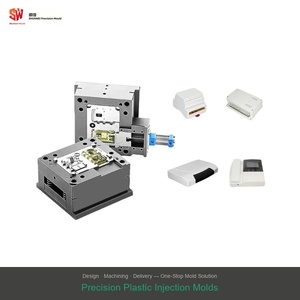
OEM/ODM Contact Lens & Optical Equipment Catalog
Explore our medical-grade HEMA hydrogel contact lenses, precision optical mold tooling, custom packaging solutions, and retail display assets built for worldwide distribution.
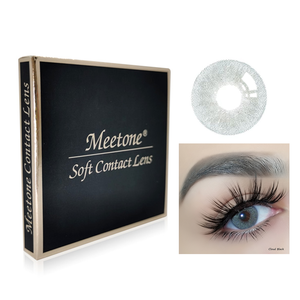
Private Label OEM Customized Paper Packaging Wholesale Cosmetic Meetone Color Contact Lenses with Box
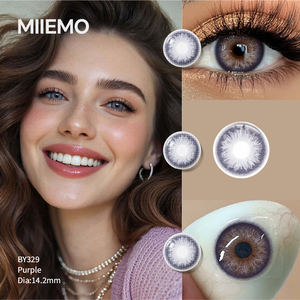
DSC Purple Soft Color Contact Lenses Wholesale Power -1.00~-8.00 ISO 13485 Certified Half Year Use
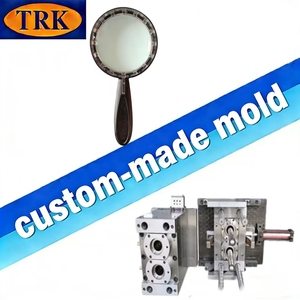
Two-color Plastic Molds High-precision Tooling for Magnifiers Small Optical Tools
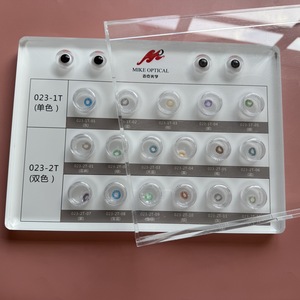
Contact Lens Display Stand Acrylic Store Display with Dust-proof Cover

Private Label Customized Brand Natural Blue Soft Color Contact Lenses
USA TOP FLAGSINC Texas Flag 5x8 580g Heavy Duty Oxford Nylon
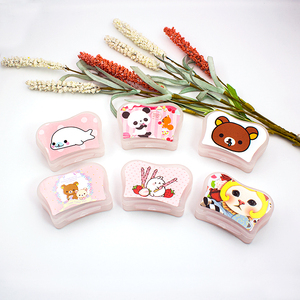
Wholesale Natural Color Contact Lenses with Custom Packaging Case Kit
50M+
Annual Unit Production Capacity
Class 100K
ISO-Certified Cleanroom Standard
38% - 58%
Optimized Hydrogel Water Content
100% AOI
Automated Optical Inspection Yield
Technical Sourcing Insight
The Evolution of Poly-HEMA Chemistry in Soft Contact Lens Manufacturing
Poly(2-hydroxyethyl methacrylate), universally designated as poly-HEMA, represents the foundational polymer technology that transformed the global contact lens industry. Invented by Czech chemist Otto Wichterle, HEMA hydrogel retains its dominance as the preferred material substrate for daily wear, monthly replacement, and decorative cosmetic lenses across international optical retail networks.
For strategic procurement directors, retail pharmacy category managers, and optical brands evaluating OEM/ODM manufacturing partnerships, understanding the physical chemistry, polymer cross-linking mechanics, and precise mold dynamics of HEMA is essential for securing high-yield, bio-compatible product lines.
Key Sourcing Metrics for OEM HEMA Lenses
- Monomer Purity Standard: Ultra-refined HEMA monomer (>99.5% purity) with controlled ethylene glycol dimethacrylate (EGDMA) cross-linker concentration.
- Refractive Index: Hydrated equilibrium state $n_d = 1.43 - 1.44$, delivering sharp optical clarity and minimal spherical aberration.
- Biocompatibility Profile: Non-cytotoxic, ISO 10993 compliant, with anti-protein adsorption surface treatment options.
- Dimensional Stability: Precision base curve radius (BCR) tolerances held within $\pm 0.02\text{ mm}$ via wet-cast technology.
Material Science: HEMA Hydrogel Polymer Mechanics
In-depth analysis of hydrogel hydration dynamics, oxygen transmissibility ($Dk/t$), and copolymer formulations engineered by top-tier OEM factories.
The operational success of hydrogel contact lenses relies on the equilibrium swelling ratio of the cross-linked polymer matrix. Pure HEMA polymer absorbs approximately 38% water by weight at physiological equilibrium. However, advanced OEM/ODM factories modify this backbone monomer by co-polymerizing HEMA with hydrophilic monomers such as Methacrylic Acid (MAA), N-Vinylpyrrolidone (NVP), or Glyceryl Methacrylate (GMA) to achieve elevated water content parameters ranging from 42% up to 58%.
| Polymer Formulation Type | Water Content (%) | Oxygen Permeability ($Dk \times 10^{-11}$) | Ionic Nature | Primary Commercial Application |
|---|---|---|---|---|
| Standard Poly-HEMA (Group 1) | 38% - 40% | 8.5 - 10.5 | Non-Ionic | Annual/Half-Year Wear Lenses, Cost-efficient Spheres |
| HEMA + MAA Copolymer (Group 4) | 55% - 58% | 18.0 - 22.0 | Ionic | Daily Disposable Lenses, High Initial Comfort Series |
| HEMA + NVP Copolymer (Group 2) | 42% - 45% | 12.0 - 15.0 | Non-Ionic | Monthly Disposable Lenses, Low-Deposit Cosmetic Lines |
| HEMA + GMA Hybrids | 48% - 52% | 15.0 - 18.0 | Non-Ionic | Biomimetic Premium Lenses, Dry-Eye Sensitive Patients |
Hydration & Wetability
Polymers synthesized with optimized hydroxyl radicals (-OH) form a stable, uninterrupted pre-corneal tear film, dramatically minimizing dynamic coefficient of friction during palpebral blinking.
Dk/t Optimization
Oxygen diffusion follows Fick’s law through the fluid phase of the hydrogel. Factories calibrate lens center thickness down to $0.06\text{ mm}$ to maximize oxygen delivery to the corneal epithelium.
UV Blocking Integration
Class 1 and Class 2 UV absorbers (e.g., benzotriazole compounds) are chemically copolymerized directly into the HEMA chain matrix, filtering out >95% UVA and >99% UVB radiation.
Automated Cast Molding & Optical Tooling Systems
Inside cleanroom production environments: How high-precision injection molds translate into defect-free soft contact lenses.
Modern OEM/ODM HEMA contact lens factories have transitioned almost entirely from traditional spin-casting and diamond-lathe cutting to Fully Automated Dual-Sided Wet Cast Molding Systems for high-volume orders. This technique delivers ultra-consistent optical geometry, rapid cycle times, and zero human contact during the monomer polymerization process.
The 5-Stage Cast Molding Workflow:
- Optical Insert Machining: Ultra-precision CNC diamond turning creates optical-grade metal inserts with surface roughness sub-5 nanometers ($Ra < 0.005\ \mu\text{m}$).
- Single-Use Mold Injection: Precision injection molding machines produce male and female polypropylene (PP) or PMMA lens molds.
- Micro-Dosing & UV Polymerization: Liquid HEMA monomer mixture is dosed into the female mold cavity, sealed by the male mold, and passed through controlled UV curing tunnels.
- Hydration & Extraction: Dry polymerized lens blanks are demolded and hydrated in deionized saline baths, extracting unreacted monomers and expanding to final dimensions.
- Automated Optical Inspection (AOI): High-resolution CCD cameras inspect 100% of lenses for edge tears, micro-bubbles, peripheral flash, and optical power deviations.
Global Procurement Trends & Sourcing Intelligence (2025–2030)
Market dynamics, supply chain shifts, and technological disruptions reshaping contact lens OEM contract manufacturing.
Eco-Friendly Packaging Formulations
Leading global buyers are phasing out traditional heavy plastic blister shells in favor of ultra-slim foil pouches and 100% recyclable polyolefin materials, reducing raw plastic consumption per unit by up to 80%.
Custom Aesthetic Hyper-Personalization
Advanced digital pad-printing and high-definition inkjet tinting technologies enable OEM buyers to request small-batch custom iris designs, natural ring gradients, and cos-play theatrical patterns with rapid setup times.
Regulatory Convergence & MDR Compliance
With the implementation of EU MDR 2017/745 and tightened US FDA 510(k) clearances, enterprise buyers prioritize OEM suppliers equipped with comprehensive EUDAMED registration, UDI tracking, and ISO 13485:2016 audit trails.
Vendor Audit Protocol: Evaluating HEMA Contact Lens Factories
When conducting on-site or virtual audits of potential OEM/ODM manufacturing facilities, strategic procurement teams should audit the following critical operational areas:
✓ Cleanroom Microbial Bioburden Monitoring (ISO Class 8 / Class 100,000)
✓ Autoclave Moist Heat Sterilization Validation ($SAL = 10^{-6}$)
✓ Residual Monomer Extraction Efficiency (Gas Chromatography Testing)
✓ Blister Seal Integrity & Leak Testing (ASTM F2095)
Enterprise Factory Capabilities & OEM/ODM Solutions
From initial optical prescription modeling to customized blister packaging and retail-ready displays.
Full-Spectrum Turnkey OEM/ODM Lifecycle
Our featured manufacturing partner infrastructure provides private label clients with an integrated, end-to-end pathway from product conception to international logistics fulfillment.
- Optical Parameter Customization: Base curve choices ($8.4\text{ mm} - 8.8\text{ mm}$), Diameter options ($14.0\text{ mm} - 14.5\text{ mm}$), and sphere power expanded ranges ($-0.50\text{ D}$ to $-12.00\text{ D}$; $+0.50\text{ D}$ to $+6.00\text{ D}$).
- Private Label Graphic Design: Custom primary foil lids, multi-lingual outer folding cartons, counter display units (CDUs), and instruction for use (IFU) leaflets.
- Secondary Accessory Bundling: Integration of high-grade antibacterial contact lens storage cases, travel kits, companion lubricating eye drop solutions, and cleaning care kits.
- Flexible Batch Sizes & Scalable MOQs: Tailored order tiers supporting both market trial runs for boutique optical brands and multi-million unit rollouts for national drugstore chains.
Request Custom Sample Kit & Factory Specifications
Evaluate our poly-HEMA lens clarity, hydration comfort, and sandwich-color printing quality firsthand with an enterprise sample box.
Frequently Asked Questions for B2B Contact Lens Sourcing
Direct answers to critical procurement, regulatory, technical, and operational questions asked by global importers and distributors.
What makes poly-HEMA the preferred material for high-volume contract manufacturing?
Poly-HEMA offers an optimal balance of structural resilience, excellent biocompatibility, precise optical shape retention, and low raw material toxicity. Its predictable polymerization kinetics allow for rapid, fully automated wet-cast molding with yields exceeding 99.5%, making it the most cost-effective and reliable polymer for daily and monthly soft contact lenses globally.
How do your factories ensure pigment safety in cosmetic color contact lenses?
Our manufacturing partners utilize strictly validated "Sandwich Printing Technology" (Micro-encapsulation). Pigments are locked between dual non-reactive HEMA hydrogel polymer layers. This guarantees that colorants never touch the corneal surface or palpebral conjunctiva, preventing pigment leaching, mechanical roughness, or allergic reactions.
What international regulatory certifications do your manufacturing partners hold?
All featured partner facilities operate under ISO 13485:2016 Quality Management Systems for Medical Devices. Products hold CE certification under the Medical Device Regulation (MDR EU 2017/745), US FDA 510(k) clearances, and regional registrations (such as NMPA Class III medical device approvals), accompanied by complete technical files and lot traceability documentation.
What are the standard Minimum Order Quantities (MOQs) for private label OEM orders?
MOQs vary based on packaging customization and optical power ranges. Standard clear spherical lenses typically start at 5,000 units per power SKU, while custom graphic color lenses start at 10,000 units per shade design. Flexible pilot-launch programs can be negotiated for retail chains expanding into private label eye care.
How is product sterility guaranteed over a multi-year shelf life?
Lenses are individually sealed in medical-grade polypropylene blister packs with multi-layer aluminum foil lids. They undergo high-pressure terminal moist-heat steam sterilization (Autoclaving) at $121^\circ\text{C}$ for a validated cycle time. This achieves a Sterility Assurance Level ($SAL$) of $10^{-6}$, providing a validated shelf life of 5 years from the date of manufacture.
What is the typical production lead time from design approval to delivery?
For existing stock powers and standard packaging, orders ship within 14–21 business days. Custom OEM orders requiring original box artwork printing, custom foil tooling, or unique color pattern development typically take 35–45 calendar days for initial production, with expedited replenishment cycles for repeat re-orders.
Partner with Leading OEM/ODM Contact Lens Manufacturing Facilities
Elevate your optical product range with medical-grade poly-HEMA hydrogel lenses, custom private label packaging, and factory-direct pricing. Contact our optical enterprise procurement engineering team today.