OEM/ODM Contact Lens Product Portfolio
Explore our medical-grade hydrogel and silicone hydrogel lens offerings, fully customizable for private label distribution with compliant international packaging.
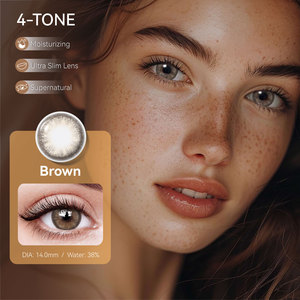
MIIEMO Fashion Contact Lenses Manufacturer High Quality Factory Price
Get Catalog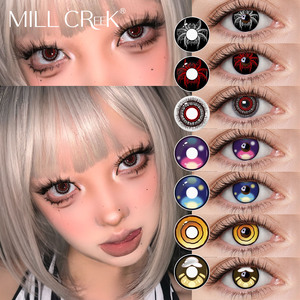
Haipurecon Halloween Cosplay High Quality Soft Crazy Contact Lenses 14.5mm Three Tone
Get Catalog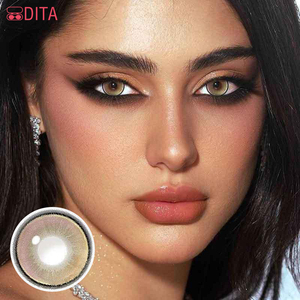
Factory Wholesale Free Sample Brown Eye Lens Contact 14.2 Cosmetic Prescription Lenses
Get Catalog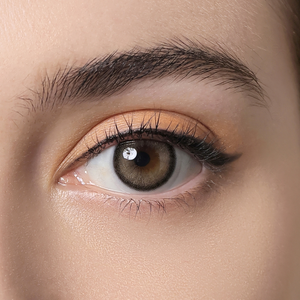
Ocre Natural Eye Colored Contact Lenses 1-Year Use Softness 42% Water Content Factory
Get Catalog
OEM/ODM Export Heavy-Duty Custom Packaging & International Fulfillment Line
Get Catalog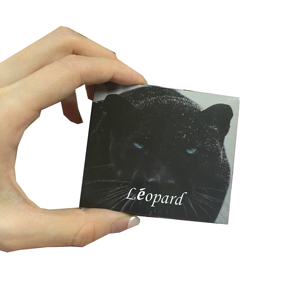
Free Design Paper Box Custom Logo Contact Lens Retail Paper Packaging Solutions
Get Catalog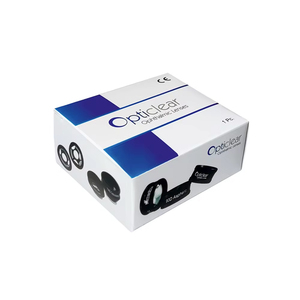
Ophthalmic Fundus Contact Lens Aspheric 20D Diagnostic Lens Wholesale Supply
Get Catalog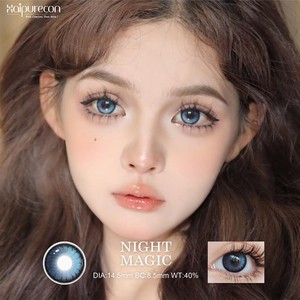
Haipurecon High Quality Soft Contact Lenses Natural Colored Cosmetic Lenses
Get CatalogTechnical Comparison: HEMA vs. Silicone Hydrogel Biomaterials
For procurement directors, optical brand managers, and medical distributors, selecting between Polyhydroxyethylmethacrylate (HEMA) and Silicone Hydrogel (SiHy) represents a core commercial and clinical decision.
1. Molecular Polymer Chemistry & Oxygen Permeability (Dk/t)
Traditional hydrogel contact lenses are constructed primarily from 2-HEMA (2-hydroxyethyl methacrylate) monomer chains cross-linked with ethylene glycol dimethacrylate (EGDMA). In HEMA-based contact lenses, oxygen flux to the avascular cornea relies entirely on the water trapped within the polymer matrix. As a physical rule, pure water has an oxygen permeability (Dk) of approximately 80 Barrer. Therefore, conventional HEMA contact lenses exhibit a proportional relation: higher water content yields higher oxygen transmissibility. However, typical HEMA formulations are constrained to an oxygen transmissibility ($Dk/t$) ranging between 15 and 30 Barrer/mm.
In contrast, Silicone Hydrogel (SiHy) polymers integrate organosilicon monomers (fluoro-siloxane macromers) alongside hydrophilic monomers (such as N-vinylpyrrolidone, NVP, or dimethylacrylamide, DMA). Silicone possesses an intrinsically high gas permeability that is completely independent of water. Oxygen passes directly through the microscopic siloxane phase channels. Consequently, Silicone Hydrogel lenses achieve $Dk/t$ values spanning from 80 to over 175 Barrer/mm, effectively eliminating hypoxia-induced corneal complications during extended wear.
| Polymer Technical Parameter | HEMA Hydrogel (Traditional) | Silicone Hydrogel (SiHy) | OEM Sourcing Implication |
|---|---|---|---|
| Oxygen Permeability ($Dk/t$) | 15 – 30 $Dk/t$ | 80 – 175+ $Dk/t$ | SiHy is required for overnight wear & long daily wear compliance. |
| Water Content Range | 38% – 58% | 33% – 48% | High water HEMA dehydrates faster in air-conditioned environments. |
| Young’s Elastic Modulus (Stiffness) | 0.25 – 0.45 MPa (Ultra-Soft) | 0.60 – 1.40 MPa (Firm shape) | HEMA offers initial insertion comfort; SiHy provides easier handling. |
| Surface Wettability (Contact Angle) | Hydrophilic naturally ($<40^\circ$) | Requires plasma/wetting agents ($45^\circ-65^\circ$) | SiHy requires advanced surface modification technologies. |
| Lipid & Protein Deposition | High Lysozyme Protein Binding | High Lipid & Non-polar Binding | SiHy requires lipid-clearing cleaning solutions; HEMA needs enzyme care. |
| FOB Unit Cost Comparison | Economy Benchmark (1.0x) | Premium Category (1.8x – 2.5x) | HEMA dominates value cosmetic markets; SiHy dominates premium daily vision care. |
| Ideal Wear Modality | Daily disposable, Cosmetic 1-Month, 1-Year | Daily disposable, Extended 30-Day wear | OEM strategy should align with target market purchasing power. |
Dehydration Mechanics
High water-content HEMA lenses evaporate moisture under dry ambient air, pulling water from the user's tear film. Low-water SiHy matrices maintain structural water balance, preventing end-of-day dry eye syndrome.
Surface Wettability & Plasma
Untreated silicone is hydrophobic. Our factory utilizes secondary plasma oxidation and internal PVP wetting agents to turn the SiHy matrix hydrophilic, guaranteeing stable tear-film breakup times (TBUT > 10s).
Biocompatibility & Corneal Health
SiHy provides 100% equivalent open-eye corneal respiration ($Dk/t > 125$), practically eliminating limbal hyperemia (red eye), corneal neovascularization, and epithelial edema during intensive screen usage.
OEM/ODM Precision Production & Quality Engineering
From monomer synthesis and micro-injection molding to automated optical inspection (AOI) and sterile blister packaging, our facility operates at the pinnacle of optical engineering.
Automated Cast Moulding vs. Lathe Cutting
High-volume contract manufacturing requires total consistency. We utilize state-of-the-art Double-Sided Cast Moulding (DSCM) technology for both HEMA and Silicone Hydrogel production lines. Polypropylene moulds are single-use precision molded to guarantee exact base curve (BC 8.5mm - 8.7mm) and diameter (DIA 14.0mm - 14.5mm) consistency across millions of units.
For specialized cosmetic lenses, complex toric corrections, or custom color matrix designs, our secondary Lathe-Cutting (CNC Opto-form) lines handle low-MOQ pilot runs with sub-micron surface smoothness.
Quality Assurance & Regulatory Pathway
- ISO 13485:2016 Medical Devices Quality System
- EU MDR (2017/745) Class IIa Medical Device Certification
- US FDA 510(k) Cleared Formulations & Packaging
- 100% AOI Defect Inspection (Zero Edge Roughness)
- Complete Lot Traceability & Accelerated Shelf-Life Testing
Global Contact Lens Procurement & Development Trends
Anticipating material migrations, retail regulatory requirements, and consumer demand shifts across North America, Europe, the Middle East, and Asia-Pacific.
1. The Rapid Shift to Daily Disposable SiHy
Consumer health awareness is rapidly phasing out annual and monthly HEMA corrective lenses in favor of 1-Day Disposable Silicone Hydrogel lenses. Category buyers should plan inventory transitions toward daily SiHy SKUs to capture higher retail margins and recurring subscription revenue.
2. High-Oxygen Cosmetic & Color Lenses
Cosmetic contact lenses were historically restricted to standard HEMA materials due to pigment bonding challenges on siloxane polymers. Our R&D team has unlocked silicone-compatible bio-pigment matrices, allowing brand owners to offer vibrant 3-tone color lenses with $Dk/t > 80$.
3. Sustainable & Eco-Conscious Packaging
Retail chains across the EU (Rossmann, Kruidvat, Albert Heijn) are mandating reduced plastic footprints. Future OEM contracts prioritize recyclable polypropylene blister shells, ultra-thin aluminum foil seals, and FSC-certified paper outer cartons printed with soy inks.
Enterprise Competence & Supply Chain Infrastructure
As a premier global exporter and OEM/ODM manufacturer, kyralens Technology Co.,Ltd bridges European optical engineering standards with scalable, high-yield manufacturing.
Retail-First OEM Customization
We do not just supply lenses; we deliver shelf-ready private label programs. From barcode integration, localized multi-lingual packaging (EN, DE, FR, AR, ES), to custom blister foils, we align with your retail channel guidelines.
End-to-End Regulatory Support
Avoid import delays. Every shipment comes complete with Declarations of Conformity (DoC), Certificate of Analysis (CoA), lot traceability records, and sterile validation protocols mandatory for customs clearing worldwide.
Agile Pilot-to-Volume Scaling
Launch market test ranges with flexible minimum order quantities (MOQs), then scale seamlessly to container-load volumes as retail sell-through accelerates—supported by automated replenishment inventory systems.
Frequently Asked B2B Sourcing Questions
Answers to essential technical, regulatory, and commercial queries raised by contact lens importers, wholesalers, and retail buyers.
What is the key commercial difference when choosing HEMA vs Silicone Hydrogel for our private label?
HEMA offers an attractive entry-level cost structure with instant soft insertion comfort, making it ideal for cosmetic colored lenses, costume fashion SKUs, and budget-conscious mass retail markets. Silicone Hydrogel (SiHy) commands a higher wholesale price point (typically 1.8x to 2.5x higher) but provides clinical-grade oxygen permeability ($Dk/t > 80$), targeting premium optical stores, pharmacy chains, and daily disposable subscription channels.
What are the minimum order quantities (MOQ) for custom OEM packaging?
Our standard OEM minimum order quantity for private label printed cartons is 1,000 boxes per SKU for standard power ranges (-0.50 to -10.00 D). For custom cosmetic color patterns or special base curves, MOQs start at 3,000 units per color design. We also provide unbranded blister stocks for fast pilot testing with over-labeled retail boxes.
Do you supply full regulatory dossiers for registration in our target country?
Yes. We furnish comprehensive technical files including ISO 13485 certificates, CE Certificate under MDR (2017/745), US FDA 510(k) summary records, biocompatibility test reports (ISO 10993), stability data, and free sale certificates (FSC) to expedite local health authority approvals.
How does your factory ensure pigment safety on custom color contact lenses?
We exclusively utilize 3-Layer Embedded Sandwich Technology. The color pigments are micro-encapsulated between two clear layers of hydrogel material. This prevents direct pigment exposure to the surface of the eye, ensuring zero leaching, zero optical degradation, and maximum mechanical wear safety.
What is the standard production lead time for wholesale OEM orders?
Standard OEM production turnaround is 25 to 35 calendar days following artwork approval and packaging sign-off. For re-orders using established packaging dies, production lead times are reduced to 15 to 20 business days, with air and sea freight options available directly to your central distribution hubs.
Launch Your OEM/ODM Contact Lens Line Today
Partner with an established medical device exporter. Request our technical whitepaper, product catalog, sample blisters, and wholesale pricing structures tailored to your target distribution markets.
Get Catalog