Navigating Ocular Safety in Wholesale & OEM Cosmetic Contact Lenses
When procurement managers, optical chain distributors, and brand owners evaluate the core intent behind "Are colored contact lenses safe?", the technical reality centers entirely on manufacturing physics, material purity, and regulatory compliance. Cosmetic colored lenses are medical devices—specifically Class II or Class IIa medical optical products depending on jurisdiction (US FDA 510(k), EU Medical Device Regulation MDR 2017/745). Evaluating safe manufacturers and factories requires inspecting pigment encapsulation techniques, oxygen transmissibility ($Dk/t$ ratios), monomer bio-compatibility, and cleanroom automation.
This industry White Paper serves as an authoritative guide for B2B optical buyers. Below, we showcase top-tier factory-direct product configurations, followed by an in-depth technical audit of the top 10 safety parameters, future procurement market shifts, and enterprise supply capabilities.
Featured OEM/ODM Colored Contact Lenses & Accessories
Direct factory supply manufactured under ISO 13485:2016 and CE medical standard controls.
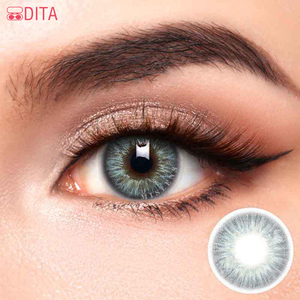
Wholesale Beauty Color Contact Lenses for Dark Eyes Soft Color Contact Lens Natural Colored Contacts
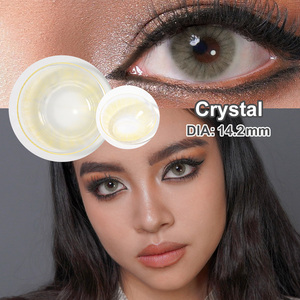
Hot Selling Freshgo Colored Contact Lenses Wholesale Custom Logo Packaging Eye Contacts Lens Lentilles De Contact De Couleur
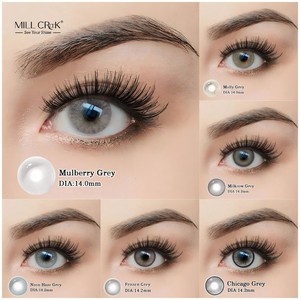
Gray Series Colored Contact Lenses OEM Private Label Factory Direct Supply CE & ISO 13485 Certified Quality Assurance
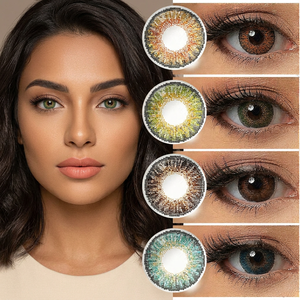
2026 Fashion Natural Colored 3 Tone Contact Lenses Soft Lenses Breathable HEMA+NVP Material CE Certified Factory Direct Supply
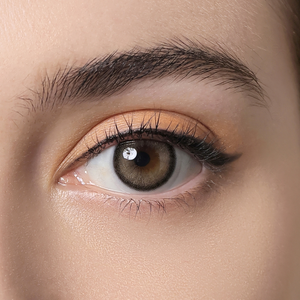
Ocre natural Eye Colored Contact Lenses 1-Year Use Softness 42% Water Content factory
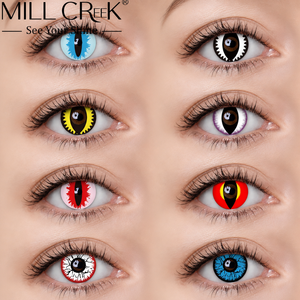
MILLCREEK Red Yearly 14.5mm Cosplay Party Special-Effect Crazy HEMA OEM Wholesale Colored Contact Lenses Lentes De Contacto
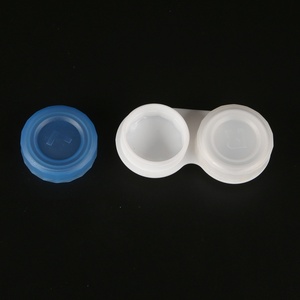
Wholesale Custom New PP-02 Plastic Contact Lens Companion Double Box Simple Korean Style Blue White Color Contact Lenses
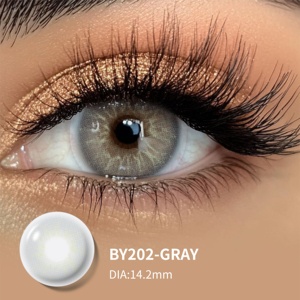
Private Magister Power Colored Contact Lenses Soft HEMA Material Monthly Natural Eye Pupilentes Lentes De Contacto De Colores
The Top 10 Safety Metrics for Evaluating Colored Contact Lens Manufacturers
Determining whether a colored contact lens is safe requires going beyond surface aesthetics. Substandard cosmetic lenses pose severe clinical risks, including corneal abrasions, pigment leaching, hypoxia, and microbial keratitis. Professional procurement teams must vet manufacturers against 10 foundational engineering benchmarks:
Sandwich Printing Technology
The single most critical safety requirement. Premium factories utilize Double-Cladding Sandwich Technology, embedding bio-compatible FDA-approved pigment particles entirely between two clear hydrogel polymer layers. Pigment never directly touches corneal epithelium, eliminating chemical migration.
High Dk/t Transmissibility Ratio
Adding color pigments can reduce oxygen diffusion. Top-tier manufacturers engineer high-porosity matrix structures using Silicone Hydrogel (SiHy) or enhanced HEMA+NVP formulas to ensure oxygen transmissibility meets physiological requirements ($Dk/t > 25$), preventing corneal edema.
Lathe-Cutting & Cast Molding Precision
Surface roughness causes mechanical friction against the palpebral conjunctiva. Advanced factories employ double-sided cast molding and robotic edge polishing to create smooth 3D micro-curvatures that maximize tear exchange under the lens.
Medical-Grade Hydrogel Formulation
Unreacted monomers left in hydrogel matrices cause chemical ocular toxicity. ISO certified plants implement rigorous vacuum thermal polymerization to strip residual monomers, reaching bio-compatibility compliance under ISO 10993 cytotoxicity testing.
Hydration Stability (38% - 42%)
High water content does not equal better comfort for cosmetic lenses. Factories engineering long-wear daily or monthly lenses balance water content at ~38%-42% to maintain structural elasticity and prevent moisture stealing from the natural tear film.
Tapered Multi-Curvature Edges
Inferior factories produce blunt lens edges that scratch the cornea during blinking. High-end OEMs utilize precision laser interferometers to craft ultra-thin, rounded peripheral edges for frictionless eyelid glide.
Clear Pupil Zone Diameter Precision
Cosmetic printing must leave a precise 4.0mm - 5.5mm clear optical center. Misaligned printing occludes visual fields in low-light pupil dilation. Precision factories enforce optical alignment tolerances within $\pm 0.05\text{ mm}$.
Moist Heat Autoclaving at 121°C
Blister packaging must undergo validated steam sterilization cycles ($121^\circ\text{C}$ for 20+ minutes) inside industrial autoclaves, achieving a Sterility Assurance Level (SAL) of $10^{-6}$ without degrading lens geometry or color stability.
AOI (Automated Optical Inspection)
Manual human checking misses micro-flaws. Leading factories employ 100% High-Resolution AI Vision Inspection Systems to scan 3D wet-state lenses for bubble defects, pigment leaks, edge nicks, and foreign particles.
Complete Medical Batch Lot Control & International Certification
A safe factory provides complete lot-by-lot chemical trace records, Device Master Files (DMF), and maintains ISO 13485:2016 quality systems alongside CE 2797 and US FDA registrations. Full batch traceability ensures every box on a drugstore shelf can be mapped directly back to its raw material synthesis batch.
Future Sourcing & Procurement Trends in Contact Lens Manufacturing (2026-2030)
The global color contact lens market is expanding from cosmetic fashion accessories into specialized optometric health devices. Commercial procurement directors must align their supply chains with four transformative industry shifts:
1. Rapid Transition to Third-Generation Silicone Hydrogel (SiHy)
Traditional 2-HEMA materials are rapidly losing market share to breathable Silicone Hydrogel matrices in cosmetic categories. Sourcing trends prioritize SiHy formulations with fluoro-silicone macromers that achieve $Dk/t > 80$ while preserving low modulus flexibility, allowing extended safe wear without eye redness.
2. Private Label Customization & Low-MOQ On-Demand Packaging
Optical chains and retail drugstores (such as Rossmann, Kruidvat, and Watsons) increasingly demand localized private label packaging, multilingual compliance labeling, and flexible MOQs to rapidly test seasonal 3-Tone natural grey, hazel, and cosplay color trends.
3. Eco-Friendly Bio-Based Monomers & Recyclable PP Blisters
ESG compliance is reshaping optical packaging. Future-focused factories are replacing standard PVC blisters with medical-grade polypropylene (PP) single-material blisters and bio-based hydration solutions (e.g., sodium hyaluronate preserved without parabens).
4. Integrated Eye Care Category Purchasing (Solution + Case + Lenses)
Buyers are moving away from single-product vendors toward single-source turnkey partners capable of supplying the full shelf—combining color contact lenses with sterile multi-purpose disinfectant care solutions, lubricating eye drops, and antimicrobial PP-02 lens companion storage boxes.
Industry & Technological Horizons in Cosmetic Optics
Technological innovations in contact lens factories are establishing new benchmarks for visual clarity, ocular health, and color vibrancy:
Nano-Pigment Micro-Dispersion
Next-gen factories utilize sub-micron pigment grinding technologies. Finer pigment particles allow higher translucency, seamless blend with natural dark iris patterns, and zero disruption of hydrogel polymer cross-linking.
Biomimetic Wettability Matrix
Incorporate internal wetting agents such as Polyvinylpyrrolidone (NVP) and Hyaluronic Acid directly into the polymer network, eliminating surface dry spots and maintaining lubricating tear films during prolonged digital screen use.
Aspheric Wavefront Optics
Transitioning from basic spherical optical profiles to front-surface aspheric optics, correcting spherical aberrations and providing sharp, high-definition peripheral vision even in low-light conditions.
Why Global Retail Leaders Partner With Our Manufacturing Engine
kyralens Technology Co., Ltd is an established global OEM/ODM manufacturer and developer of private label eye care solutions. Our integrated production matrix supports top retail optical chains, drugstores, and online cosmetic brands worldwide.
Full Category Shelf Supply
One unified supply contract covering soft daily/monthly color lenses, cosmetic 3-tone series, sterile rewetting eye drops, multi-purpose care solutions, and custom lens cases.
European & Global Logistics Ede Ede Hub
Strategically situated warehousing and compliance management based in Ede, Netherlands, ensuring streamlined EU distribution, customs readiness, and lot traceability.
Retail Giant Validated
Proven private label partner trusted by major international drugstore, grocery, and pharmacy groups including Watsons, Rossmann, Kruidvat, Albert Heijn, Etos, and Migros.
Frequently Asked Questions: Safe Sourcing of Colored Contact Lenses
Are colored contact lenses inherently safe for dark eyes and daily wear?
What is the "Sandwich Tech" process and why is it mandatory for OEM compliance?
How do wholesale procurement buyers verify a factory’s regulatory compliance?
What is the difference between HEMA soft lenses and Silicone Hydrogel color lenses?
What are typical minimum order quantities (MOQ) and lead times for OEM customized color lenses?
How do lens care storage cases and cleaning solutions contribute to contact lens safety?
Build Your Private Label Contact Lens Range Today
Connect with our manufacturing specialists to request sample kits, factory audit documentations, and competitive B2B wholesale quotations.