Curated Wholesale & OEM Catalog
Explore high-volume cosmetic and prescription lens products ready for private label packaging and pharmacy chain distribution.
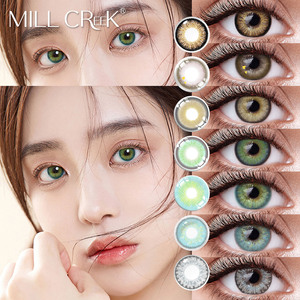
Haipurecon Factory Direct Wholesale Soft Color Contact Lenses $1 Per Pair MOQ 100 Pairs Limited Stock
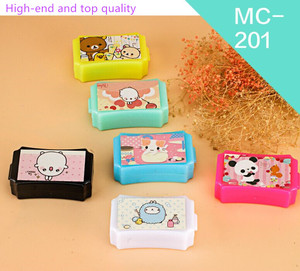
Wholesale Custom High Quality Cute Contact Lens Kits with Mirrors and Accessories with Stickers Replaceable
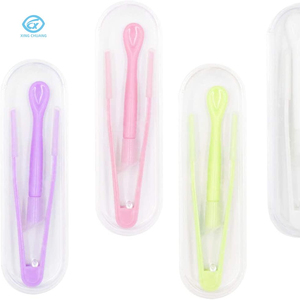
Manufacturer Direct Selling Cute Candy Colour Contact Lens Suit Tools Environmental Friendly Contact Lens Stick
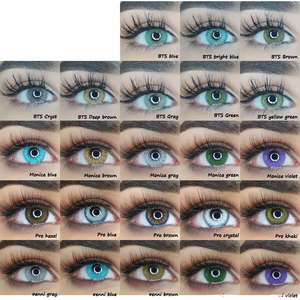
For DSC Pro Penni Soft Natural Colored Contact Lenses Private Label Cosmetic Wholesale Color Contact Lens
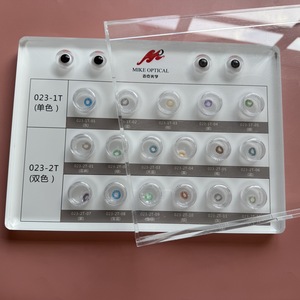
Contact Lens Display Stand Acrylic Physical Store Contact Lens Display with Dust-proof Cover Colored Glasses Wearing Props
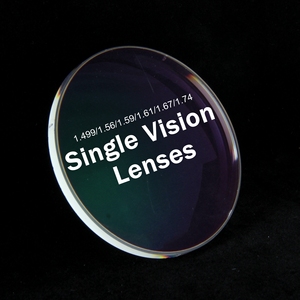
China Factory Direct Supplier Single Vision Prescription Lenses 1.499 Lenses
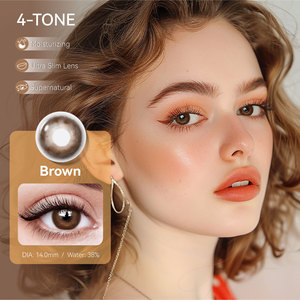
Wholesale Colors Custom LOGO Low MOQ Brown Color Lenses Super Natural Contact Lens Cosmetic Contact Lenses
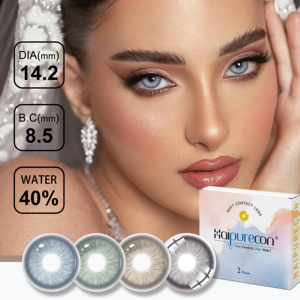
Haipurecon Korean Colored Soft Contact Lenses New Arrival Beautiful Big Eyes Makeup Wholesale
1. Executive Market Analysis: The Toric Colored Contact Lens Opportunity
The global contact lens market is experiencing a profound paradigm shift driven by the convergence of visual correction requirements and cosmetic aesthetics. Historically, contact lens wearers suffering from astigmatism—a common refractive error caused by an irregularly shaped cornea or lens—were restricted to clear spherical or standard toric lenses. Today, advanced manufacturing technologies allow global suppliers to produce colored contact lenses for astigmatism (toric color lenses) with uncompromised optical stability and high-fidelity cosmetic designs.
Data from global eye health epidemiological surveys indicates that approximately 47% of vision-corrected individuals exhibit astigmatism ≥ 0.75 Diopters (D) in at least one eye. For optical distributors, drugstore chains, and ecommerce brand owners, offering standard cosmetic color lenses without toric options leaves nearly half of the addressable consumer market underserved. Astigmatic consumers demanding dual functionality—vibrant iris pattern modification alongside precise cylinder and axis refractive correction—represent the highest margin segment within personal vision care.
2. Technical Engineering: Axis Stabilization & Pigment Encapsulation Technologies
Manufacturing cosmetic colored contact lenses for spherical eyes requires uniform curvature and optical power centered around the apex. However, astigmatic lenses demand distinct focal lengths along perpendicular meridians. To maintain crisp visual acuity, the lens must remain precisely aligned on the cornea, resisting rotational movement during blink cycles and rapid eye movements.
Top global manufacturers utilize three primary stabilization mechanics in astigmatism colored lens production:
| Stabilization Tech | Mechanical Principle | Rotational Stability | Comfort Index | Optimal Wear Application |
|---|---|---|---|---|
| Prism Ballast | Gravity-assisted bottom-weighting using increased lens thickness at 6 o'clock. | Moderate (± 8° shift) | Standard | Monthly & Annual Hydrogel Toric Lenses |
| Peri-Ballast Design | Thin zones at the top and bottom with ballast distributed outside the optic zone. | High (± 5° shift) | High | Cosmetic Color Toric Lenses with Wide Optic Diameters |
| Dynamic Stabilization (Dual Thin-Zone) | Eyelid pressure interacts with symmetrical upper and lower thin zones to auto-align. | Ultra-High (± 3° shift) | Superior | Daily & Monthly Disposable Silicone Hydrogel Color Toric Lenses |
Micro-Encapsulation & Bio-Compatible Color Sandwich Tech
Ocular safety is non-negotiable when combining color pigments with complex toric surface geometries. Leading exporters utilize Micro-Encapsulation Sandwich Printing Technology. Under this process, iron oxide and titanium dioxide cosmetic pigments are embedded strictly within the mid-layer of the hydrogel or silicone hydrogel matrix. This prevents direct contact between the pigment layer and the sensitive corneal epithelium, while keeping oxygen transmissibility (Dk/t) uninhibited.
3. Evaluative Framework: How to Select Top 10 Manufacturers & Exporters
When vetting global astigmatism colored contact lens suppliers, B2B procurement managers must look beyond unit price. The manufacturing complexity of toric color lenses requires rigid quality assurance and automated production standards. Use the following framework to assess prospective factory partners:
Automated Cast-Molding
Fully automated mold tooling ensures edge profile consistency, reducing rotational friction and preventing axis distortion across mass production lots.
Regulatory Approvals
Verified ISO 13485 certification, CE 2797 (MDR 2017/745), US FDA 510(k) clearances, and regional SFDA/PMDA registration support for frictionless customs export.
Cylinder & Axis Matrix Range
Comprehensive stock parameter availability: Sphere (0.00 to -10.00D), Cylinder (-0.75 to -2.75D in 0.50D steps), and Axis (10° to 180° in 10° increments).
4. Future Procurement Trends: Silicone Hydrogel & AI-Assisted Fit Customization
The global optic sourcing ecosystem is advancing rapidly. Buyers looking to capture market share over the next 3 to 5 years must align with manufacturers investing in next-generation material science and smart manufacturing:
Silicone Hydrogel Penetration
Traditional HEMA hydrogel materials (Dk/t around 15-25) are being replaced by high-Dk/t Silicone Hydrogel polymers (Dk/t > 80). Higher oxygen permeability ensures corneal metabolic health, allowing safe daily wear for complex toric designs.
Custom Low-MOQ Digital Lathe-Cutting
Advancements in computer-numerical control (CNC) nano-lathe technologies enable suppliers to offer fast-turnaround custom toric parameters with minimal order quantities, enabling boutique brands to offer tailored cylinder/axis combinations.
Natural Iris Pattern Rendering
Next-generation 3D multi-tone printing technology simulates real human iris radial fibers and limbal rings, eliminating pixelated dot matrices and creating hyper-realistic eye color shifts even on dark Asian and Latin ocular backgrounds.
5. Enterprise Advantage: Strategic Partnering with kyralens Technology & Haipurecon Direct Factory
kyralens Technology Co., Ltd (in strategic partnership with Haipurecon Direct Factory) stands as a premier global wholesaler, developer, and exporter of private label contact lenses, eye care solutions, and optical accessories. Serving retail store giants, pharmacy chains, and direct-to-consumer (DTC) optical brands across Europe, the Middle East, and Asia (including partners like Watsons, Rossmann, Kruidvat, and Albert Heijn), kyralens delivers turn-key optical procurement solutions tailored to regional compliance and brand aesthetic standards.
Cleanroom Precision Manufacturing
Produced in ISO Class 7 ultra-clean environments utilizing sterile pharmaceutical-grade saline fill lines and automatic vision-inspection sorting.
Full Regulatory Dossier Support
Instant access to Technical Files, Declarations of Conformity, Bio-compatibility Test Reports (ISO 10993), and Stability Data for rapid local market registration.
Supply Chain Integrity
Reliable replenishment, buffer stock management, and strict batch-to-batch color matching guarantees protecting your brand reputation.
Frequently Asked Procurement Questions (FAQ)
Expert answers addressing regulatory, technical, and logistics queries from B2B sourcing managers.
What is the minimum order quantity (MOQ) for custom private label astigmatism colored lenses?
For standard stock colors and standard cylinder parameters (-0.75D to -2.25D), our MOQs start as low as 100 pairs per SKU for initial pilot testing. Custom iris designs or non-standard cylinder/axis production runs typically range between 500 to 1,000 pairs per SKU depending on packaging format.
How do you guarantee rotational stability in mass-produced toric color lenses?
Every batch undergoes automated optical bench testing and dynamic rotational simulation using laser interferometers. Axis alignment accuracy is verified within a strict tolerance of ± 3 degrees to ensure end-users experience stable, clear vision upon blink recovery.
Are your color pigments safe for sensitive eyes and extended daily wear?
Yes. All products utilize 100% full micro-encapsulation sandwich technology. Color pigments are fully sealed inside the inner polymer structure, preventing any physical contact with corneal tissues or tear film, ensuring high oxygen transmissibility and comfort.
What international compliance certificates accompany exported shipments?
Shipments are dispatched with comprehensive regulatory documentation, including ISO 13485 Quality Management System certificates, CE Certificates under EU MDR regulations, Certificates of Free Sale (CFS), Sterility Validation Reports, and lot-specific Certificates of Analysis (CoA).
Can we request pre-production samples for physical and optical testing?
Absolutely. We encourage optical buyers and pharmacy chain category managers to evaluate sample kits for color opacity, edge profile comfort, and optical clarity before committing to high-volume commercial purchase orders.
What is the shelf life and packaging options for factory-sealed blisters?
Our sterile contact lens blisters feature high-barrier medical aluminum foil seals providing up to 5 years of shelf life. We support customized outer unit cartons, multipack boxes, point-of-sale display trays, and multilingual instruction leaflets (IFUs).