Featured Custom Lenses & Packaging Solutions
Explore high-demand contact lenses, custom patterned cosmetic iris optics, and recyclable retail packaging produced under strict ISO 13485 & CE certification guidelines.
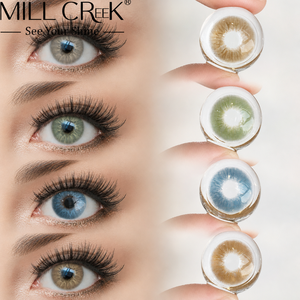
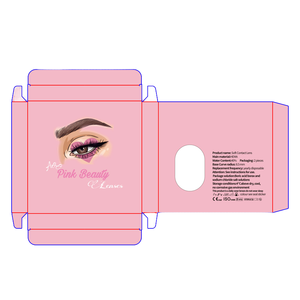
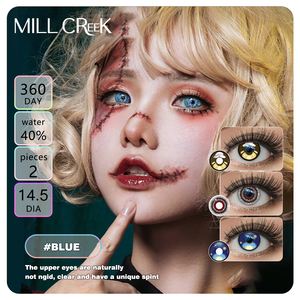
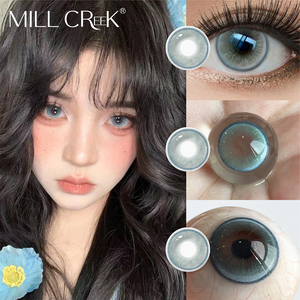
The Technical Architecture of Custom Lens Pattern Design
The global market for custom lens patterns—spanning both cosmetic color contact lenses and specialized refractive or diffractive spectacle optics—has undergone a massive technological shift. Modern consumers and healthcare professionals demand products that integrate seamlessly with natural human anatomy while preserving physiological eye health. Designing custom lens patterns is no longer merely an aesthetic end-result; it is an intricate optical engineering process involving micro-pigmentation, biocompatible polymer chemistry, dot matrix resolution control, and oxygen transmissibility dynamics.
When sourcing from leading contact lens factories, brand managers and procurement executives must evaluate manufacturers based on their capability to balance pattern fidelity with corneal physiology. Below, we examine the critical manufacturing parameters that define state-of-the-art pattern development in hydrogel and silicone hydrogel substrates.
Sandwich Micro-Encapsulation
Leading manufacturers employ multi-layer sandwich technology (Pigment-In-Tissue process). The custom pattern pigment is completely embedded between two ultra-thin layers of poly-HEMA or silicone hydrogel, guaranteeing that organic dyes never come into direct contact with the ocular surface or conjunctiva.
High-Density Micro-Dot Printing
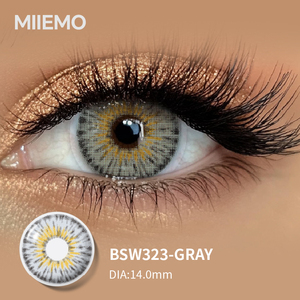
Achieving natural iris depth requires high-resolution laser-etched printing plates (up to 3,000 DPI). By combining 1-tone, 2-tone, and 3-tone color matrix layering with feathered limbal rings, factories can simulate the radial striations and lipofuscin flecks of the human eye.
Oxygen Transmissibility (Dk/t)
Heavy pigment application can obstruct polymer pores, reducing oxygen flow to the cornea. Elite suppliers use micro-porous pigment formulations and optimized central clear zone (pupil aperture) boundaries to maintain Dk/t values above 25–35 Dk/t for daily wear and >80 Dk/t for silicone hydrogels.
Pattern Printing & Material Specification Benchmark
The matrix below highlights essential technical metrics to evaluate when reviewing samples from custom lens pattern design suppliers.
| Parameter | Cosmetic Hydrogel Lenses | Silicone Hydrogel Lenses | CR-39 Single Vision Optics | Optical Packaging Criteria |
|---|---|---|---|---|
| Water Content Range | 38% – 45% (HEMA base) | 45% – 58% (High Comfort) | N/A (Rigid Resin) | N/A |
| Base Curve (BC) | 8.5mm – 8.6mm standard | 8.4mm – 8.7mm customizable | Custom Base Curvatures | Precision Mould Fit |
| Diameter (DIA) | 14.0mm – 14.5mm | 14.1mm – 14.3mm | 65mm – 75mm blank | Custom Dimensions |
| Pigment Tech | 3-Tone Micro-Pad Printing | Laser Nano-Encapsulation | Hard Anti-Scratch Coating | 4-Color Off-Set CMYK |
| Replacement Cycle | Daily, Monthly, Yearly | Daily, Monthly | Long-term Ophthalmic | Single-use / Recyclable |
Top 10 Custom Lens Pattern Design Factories & Suppliers
Based on global production capacity, regulatory compliance (FDA, CE, ISO 13485), innovation in pattern customization, and minimum order quantity (MOQ) flexibility, the following ten manufacturers lead the international B2B optics landscape:
Kyralens Technology Co., Ltd
Headquarters: Ede, The Netherlands | Reach: Europe, Middle East, Asia
Kyralens stands at the pinnacle of private label eye care solutions. Operating out of Faradaystraat 14, Ede, Kyralens acts as an end-to-end category developer for major drugstores, pharmacy chains, and optical retailers. Specializing in bespoke pattern design, high-Dk color contact lenses, lubricating eye drops, and eco-friendly packaging boxes, Kyralens handles everything from initial CAD iris pattern modeling to localized compliance and lot-traceable distribution.
Millcreek Optics Mfg.
Specialization: Prescription Colored Contact Lenses & Yearly Wearables.
Millcreek has earned a global reputation for manufacturing high-diopter green, blue, and hazel yearly lenses with prescription correction. Utilizing automated cast molding and dual-tone matrix printing, Millcreek offers low-cost wholesale lines with robust HEMA moisture stability.
Eyeshare Packaging Systems
Specialization: Recyclable Self-Erecting Lens Packaging & Blister Cartons.
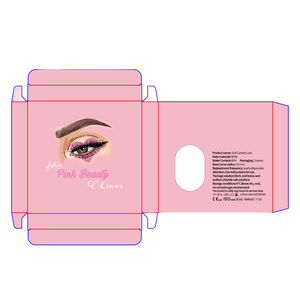
Packaging is a fundamental driver of optical conversion. Eyeshare excels in self-erecting oblong ivory board packaging, glossy lamination, metallic foiling, and four-color offset printing tailored specifically for color contact lens blisters and lens care accessories.
Haipurecon Optical Tech
Specialization: Crazy SFX, Cosplay Lenses & 14.5mm Big-Eye Series.
Haipurecon is the market leader for theatrical, Halloween, and high-opacity cosplay designs. Their 40% water content HEMA lenses utilize opaque block-out pigments capable of covering naturally dark irises while retaining shape integrity over 1-year usage cycles.
FreshGo Design Labs
Specialization: Natural Trend-Led Shades (New York, Rio, Rome Series).
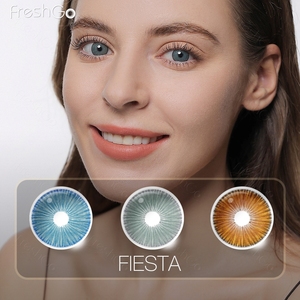
FreshGo focuses on subtle, ultra-natural shade gradients designed for everyday cosmetic enhancement. Their 14.2mm range incorporates soft limbal transitions that blur the boundary between natural sclera and lens matrix pigment.
Sino-Optic Resin Polymer Corp
Specialization: 1.499 CR-39 Hard Coated Single Vision Optical Lenses.
For traditional vision care, Sino-Optic produces mass-market CR-39 resin lenses. Equipped with hydrophobic, scratch-resistant hard coatings and anti-reflective treatments, they serve global optical laboratories and eyewear distributors.
Bio-Hydrogel Polymer Systems
Focused on biocompatibility research, Bio-Hydrogel Labs creates non-ionic lens materials resistant to protein deposition. Their custom pattern department utilizes bio-safe dyes engineered for sensitive eyes.
Send an InquiryLumina Tone Design Works
Lumina Tone provides algorithmic 3D pattern design services. They develop dynamic iris patterns with multi-dimensional depth for prestige optical labels across North America and Europe.
Send an InquiryApex Precision Tooling & Optics
Apex manufactures high-precision steel molds and ceramic printing pads used by automated contact lens assembly lines worldwide. They enable micro-meter level printing consistency across large production lots.
Send an InquiryGlobal Vision Accessories Ltd.
Specializing in private label lens care solutions, multipurpose disinfectant liquids, compact lens cases, and travel kits to complement custom lens retail rollouts.
Send an InquiryFuture Sourcing & Pattern Design Trends (2026–2030)
The optical manufacturing landscape is shifting toward extreme personalization, sustainability, and strict regulatory harmonization. B2B buyers must align their multi-year category strategies with these three core industry trends:
1. AI-Driven Algorithmic Iris Patterns
Static 1-tone patterns are rapidly losing market share to dynamic, procedurally generated iris textures. Factories are integrating machine learning models to simulate natural human genetic variations in iris pigmentation, creating hyper-realistic 3-tone gradients that adapt visually under varying ambient lighting conditions.
2. Sustainable & Biodegradable Materials
With single-use contact lenses producing plastic waste, leading OEM suppliers like Kyralens are pioneering recyclable blister polypropylene, bio-based primary packaging materials, and plastic-neutral box options (FSC-certified ivory board with soy inks) to meet European Green Deal directives.
3. High-Oxygen Silicone Hydrogel Expansion
As consumers transition from traditional HEMA daily wear to high Dk/t silicone hydrogels, factory printing technologies must adapt. Standard pad inks do not easily adhere to hydrophobic silicone matrices. Next-generation factories utilize surface-activated plasma treatment before printing to ensure non-fading pigment bonding.
Global Private Label Leadership in Eye Care
Kyralens Technology Co.,Ltd is a specialized global wholesaler and developer of private label eye care lines. We streamline complex manufacturing, regulatory submissions, packaging design, and supply chain logistics for world-class retail chains.


Single-Source Shelf Management
From daily contact lenses and cosmetic 3-tone lenses to rewetting eye drops, lens cases, and reader frames—fill your entire optical shelf with one certified partner.
Full Regulatory Guarantee
We manage CE declarations of conformity, ISO 13485 compliance certificates, localized multilingual artwork verification, and complete batch lot traceability for EU, Middle East, and Asian customs.
Low Risk Category Pilots
Test new pattern collections or retail box packaging with realistic pilot minimum order quantities (MOQs) before executing full-scale national distribution rollouts.
Procurement & Customization FAQ
The OEM workflow begins with digital vector artwork or high-resolution iris photography. Our design team converts the artwork into CMYK/Pantone dot-matrix color separations. Next, laser-etched ceramic plates (clichés) are crafted, followed by trial pad-printing on hydrogel blanks. Once visual density and pupil alignment are approved, we proceed to automated mass production and blister encapsulation.
Safety is maintained using Sandwich Micro-Encapsulation Technology. The color pigment layer is sealed completely between polymer matrix films. Because the pigment never touches the cornea or eyelids, there is zero risk of color leaching, surface roughness, or mechanical friction.
MOQs vary based on parameter depth (diopter power ranges) and packaging customization. For standard inventory shade collections packaged in private label cartons, MOQs start as low as 500 to 1,000 pieces per SKU. For fully custom pattern developments requiring bespoke plate etching, factory MOQs typically range from 5,000 to 10,000 pieces.
Contact lenses are classified as Class IIa or Class IIb medical devices. Imports require ISO 13485 Quality Management Certification, CE Mark certification under EU MDR (Medical Device Regulation), Medical Device Authority registration in target countries, along with lot-specific sterile release and bio-burden test reports. Kyralens supplies complete dossier documentation per destination market.
Yes. Kyralens offers complete shelf bundling. You can order custom printed self-erecting outer boxes, matching branded lens storage cases, lubricating eye drops, and contact lenses under a unified purchase order, ensuring total aesthetic harmony across your retail line.
Ready to Build Your Custom Lens Pattern Line?
Connect with our optical engineering and private label procurement specialists today. Request technical specifications, sample kits, or a tailored manufacturing quotation.