Top-Rated Private Label Contact Lenses & Care Products
Explore our retail-ready OEM/ODM ocular portfolio designed for optical chains, pharmacy networks, and beauty brands worldwide.

Executive Whitepaper: Strategic Sourcing for Private Label Contact Lenses in 2026
The global contact lens and ocular care market is undergoing a seismic structural pivot. Driven by evolving consumer preferences toward daily disposables, hyper-comfortable silicone hydrogels, and high-fashion cosmetic color lenses, optical retail chains, drugstore brands, and direct-to-consumer (DTC) wellness platforms are shifting away from selling third-party national brands toward high-margin private label ocular solutions. Establishing an exclusive private label allows optics procurement executives to expand gross margins by 45% to 65%, lock in brand equity, and control product distribution.
However, contact lenses are strictly regulated Class IIa / Class IIb medical devices. Navigating the global supply network requires an exhaustive assessment of factory cleanroom certifications, polymer chemistry, oxygen transmissibility ($Dk/t$ values), bio-compatibility, and international regulatory compliance (such as EU MDR 2017/745, US FDA 510(k), and ISO 13485 quality standards). This whitepaper provides a rigorous framework for identifying, auditing, and partnering with top-tier private label contact lens manufacturers.
Top 10 Step-by-Step Guide to Evaluating Private Label Contact Lens Manufacturers
When conducting technical audits of potential OEM/ODM factories, procurement teams must measure candidate suppliers across these ten key industrial benchmarks.
1. Polymer Chemistry & Material Integrity
Assess whether the supplier offers proprietary Hydrogel (HEMA, NVP) or 3rd Generation Silicone Hydrogel (SiHy) materials. SiHy matrices offer significantly higher oxygen permeability ($Dk/t > 100$), reducing corneal hypoxia during extended wear.
2. Sandwich Micro-Encapsulation Technology
For cosmetic colored contact lenses, ensure the factory uses "Sandwich" color printing. Pigment layers must be completely locked between transparent bio-compatible polymer coatings, preventing dye migration to corneal tissue.
3. Automated High-Precision Cast Molding
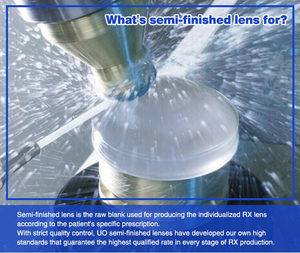
Verify that the factory utilizes automated closed-loop optical molding machinery. Laser-guided surface profiling guarantees uniform base curve (BC) stability, crisp spherical power precision, and smooth edge geometry.
4. Class 100,000 Cleanroom Sterilization
Full compliance with ISO 14644 Class 7/8 (Class 100,000) cleanroom standards during molding, primary blister saline filling, and high-pressure steam autoclave terminal sterilization is mandatory for zero-defect production.
5. Global Regulatory Dossier Support
Leading OEM manufacturers provide full technical documentation—including CE Declarations of Conformity, FDA 510(k) premarket notifications, and UDI barcode structures for rapid retail market clearance.
6. Flexible MOQs & SKU Customization
Evaluate whether the supplier can accommodate tiered Minimum Order Quantities (MOQs). High-efficiency factories allow low-MOQ pilot market tests before ramping up to multi-thousand carton automated production runs.
7. Turnkey Secondary Packaging & Branding
Examine structural packaging capabilities. Premium private label suppliers offer retail-ready blister packs, foil lids with custom anti-counterfeit elements, multi-language cartons, and accompanying lens care kit accessories.
8. Comprehensive Category Expansion Support
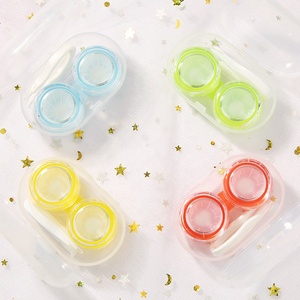
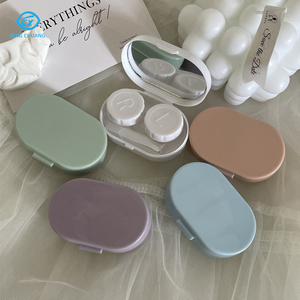
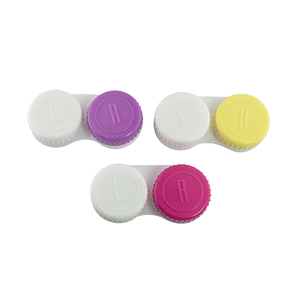
A top-tier supplier should act as a one-stop ocular source, producing contact lenses alongside essential cross-selling products such as lubricating HA eye drops, multi-purpose solution bottles, and travel lens cases.
9. Moisture Retention & Wettability Coating
Analyze surface treatment chemistry. Advanced polymers infused with Hyaluronic Acid (HA) or Phosphorylcholine (PC) lock in tear film hydration, mitigating end-of-day dryness for screen-focused modern consumers.
10. Automated Lot Traceability & Supply Assurance
Rigorous ERP lot management tracks raw monomer synthesis, curing cycles, and shipping distribution nodes. This ensures instantaneous recall protection and zero disruption to your store shelf replenishment schedules.
Ocular Polymer Material & OEM Specifications Matrix
Compare the technical properties of core contact lens hydrogels to select the precise matrix for your private label target segment.
| Material Classification | Water Content (%) | Oxygen Transmissibility ($Dk/t$) | Dehydration Rate | Ideal Replacement Cycle | Target Retail Audience |
|---|---|---|---|---|---|
| Standard Hydrogel (HEMA) | 38% - 42% | 15 - 25 $Dk/t$ | Moderate | Daily / Yearly Cosmetic | Value & Cosmetic |
| Non-Ionic Hydrogel (NVP) | 55% - 58% | 28 - 35 $Dk/t$ | Low (Protein Resistant) | Daily / Monthly Clear | Sensitive Eyes |
| 3rd Gen Silicone Hydrogel (SiHy) | 45% - 48% | 100 - 130 $Dk/t$ | Ultra-Low | Daily / Monthly Premium | High-End Optical Chains |
| PC-Biomimetic Hydrogel | 58% - 62% | 35 - 45 $Dk/t$ | Near Zero | Daily Disposable | Dry Eye & Digital Lifestyle |
Future Procurement Trends in Private Label Ocular Care
Industry developments shaping the next generation of custom contact lens manufacturing and bulk distribution.
1. Eco-Conscious Bio-Based Blisters
Brand owners are demanding sustainable blister packaging. Emerging OEMs use 100% recyclable polypropylene plastic and bio-degradable saline solution formulations, reducing plastic footprints without compromising product shelf-life stability.
2. Smart Ocular Hydration & Anti-Blue-Light Infusion
With screen time at historical highs, next-generation private label lenses combine blue-light filtering polymers with time-release HA moisture agents embedded directly within the lens core.
3. Ultra-Natural 3D Color Depth Printing
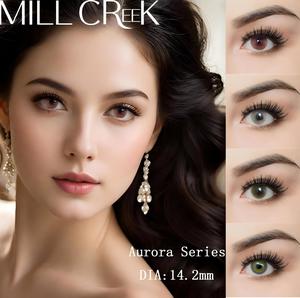
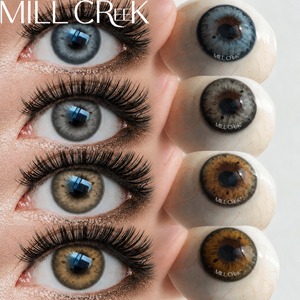
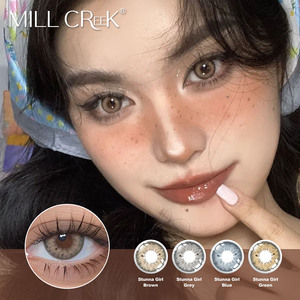
Cosmetic lens trends have shifted from artificial dramatic tones to hyper-realistic iris mimicry. Advanced 3-layer dot matrix printing reproduces natural iris striations for subtle, seamless iris enhancement.
The 6-Step OEM/ODM Manufacturing Roadmap
From preliminary product specification to national store delivery, here is how a structured private label project unfolds.
Step 1: Category Brief
Analyze regional target audience, desired replacement frequency (Daily, Monthly), power ranges, and pricing benchmarks.
Step 2: Material Selection
Select precise polymer formulations (SiHy vs HEMA), base curve options (8.5mm - 8.7mm), and color iris designs.
Step 3: Artwork & Packaging Proof
Finalize custom primary blister foils, secondary retail cartons, multi-lingual patient information leaflets, and barcoding.
Step 4: Regulatory Sign-Off
Audit labeling compliance against destination country standards (CE, FDA, NMPA) and establish batch certificates.
Step 5: Cleanroom Automated Molding
Initiate automated monomer dosing, UV curing, hydration, automated visual inspection, and high-pressure steam autoclaving.
Step 6: Batch Release & Logistics
Perform final microbial barrier tests, issue Quality Assurance release certificates, and ship shelf-ready inventory.
Why Leading Global Retail Chains Partner with Kyralens
Kyralens Technology Co., Ltd (Headquartered in Ede, The Netherlands) is a dedicated global manufacturer, developer, and B2B distributor of private label ocular products. Specializing exclusively in retail ocular solutions, Kyralens bridge high-tech manufacturing precision with comprehensive European regulatory and category management expertise.
Whether you are a drugstore chain, pharmacy network, supermarket group, or high-fashion cosmetic distributor in Europe, the Middle East, or Asia, Kyralens delivers full-shelf private label programs across six key categories: Contact Lenses (Daily, 2-Weekly, Monthly), Cosmetic Color Lenses, Lubricating Eye Drops, Care Cleaning Solutions, Lens Travel Cases, and Ready-to-Wear Reading Glasses.
Full Category Consolidation
Source your entire eye care product shelf from a single, streamlined supply chain partner—eliminating multi-vendor fragmentation.
Turnkey EU & Global Compliance
Every SKU arrives with market-ready localized packaging, technical master files, CE conformity, and full lot-level ERP traceability.
Retail-Tested Benchmarks
Kyralens powers private label ocular programs for leading tier-1 retail groups across international markets, ensuring proven sales velocity.
Frequently Asked Questions (FAQ) for Optical Procurement Managers
Get authoritative answers to critical technical, regulatory, and purchasing inquiries before initiating a private label contract.
Build Your Market-Leading Private Label Contact Lens Line
Connect with our B2B ocular experts to request product samples, review technical specifications, and receive a customized turnkey manufacturing quotation.
Official Enterprise Email: [email protected] | Headquarters: Faradaystraat 14, 6718 XT Ede, The Netherlands