Featured OEM/ODM Product Portfolio
Precision-Engineered Soft Lenses, Cosmetic Tints, and Certified Care Accessories for Global Retail Networks
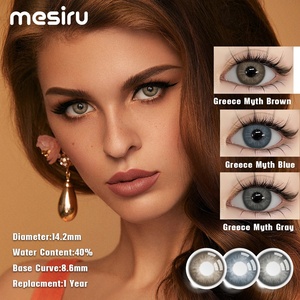
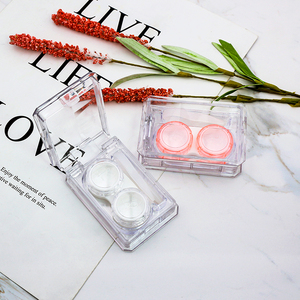
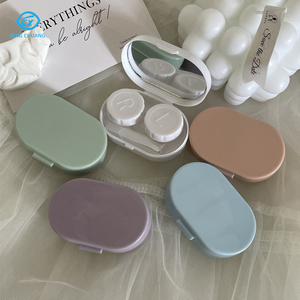
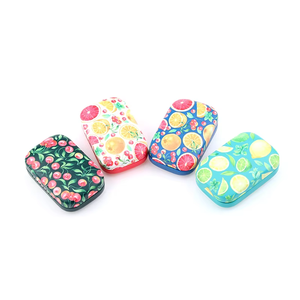
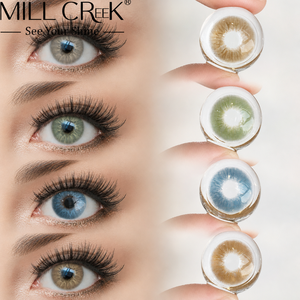
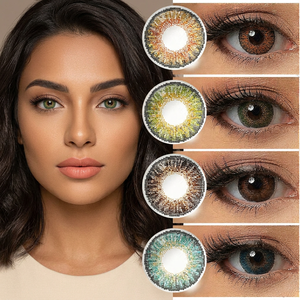
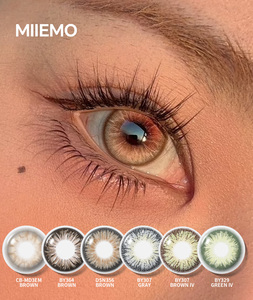
1. Global OEM Contact Lens Sourcing & Market Dynamics (2026–2030)
The global contact lens market is undergoing a fundamental structural transition. Projected to reach USD 15.8 Billion by 2028 at a Compound Annual Growth Rate (CAGR) of 6.7%, the industry’s expansion is driven by two powerful consumer shifts: the surge in visual correction demand among millennial and Gen-Z populations, and the explosion of cosmetic colored lenses integrated into daily beauty regimens. For optical retailers, pharmacy groups, and DTC brand managers, establishing a direct OEM (Original Equipment Manufacturer) partnership is no longer merely a margin optimization strategy—it is a core business necessity.
Modern medical-device procurement demands stringent technical vetting. Overseas sourcing directors face rigorous quality hurdles, fluctuating regulatory frameworks (such as the transition from MDD to EU MDR 2017/745 in Europe), and complex material choices ranging from traditional HEMA-based hydrogels to advanced fluorosilicone hydrogel polymers. Navigating this ecosystem requires deep familiarity with the technological capabilities and manufacturing standards of leading OEM suppliers in Taiwan, South Korea, Mainland China, and Europe.
Strategic Procurement Insight: Leading OEM/ODM suppliers now offer automated micro-injection molding and full-robotic blister sealing, lowering unit production costs while maintaining zero-defect lot consistency across millions of units per month.
When selecting a contract manufacturer, procurement executives must balance polymer permeability ($Dk/t$), edge geometry profiling, pigment encapsulating technologies (sandwich tech), and blister sterilization validation against lead times and minimum order quantities (MOQs).
2. Technical Benchmark: Material Science & Optical Technology Analysis
The primary determinant of patient comfort, ocular health, and wear compliance is the underlying polymer chemistry of the contact lens. Contract manufacturers generally specialize in three material categories, each engineered for distinct wear modalities and price points:
| Material Class | Polymer Nomenclature | Water Content (%) | Oxygen Transmissibility ($Dk/t$) | Modulus (MPa) | Ideal Application |
|---|---|---|---|---|---|
| Standard Hydrogel | Polymacon / 2-HEMA | 38% - 42% | 12 - 18 | 0.30 - 0.40 | Budget Daily/Monthly & Cosmetic Color Lenses |
| High-Moisture Hydrogel | Etafilcon A / Methofilcon | 55% - 58% | 25 - 30 | 0.25 - 0.35 | Sensitive Eyes, Single-Day Disposables |
| Silicone Hydrogel (Gen 3) | Filcon V / Comfilcon A | 45% - 48% | 100 - 150 | 0.50 - 0.75 | Premium Extended Wear, High-Breathability OEM Brands |
| Bio-Inspired Hydrogel | HEMA + NVP + Hyaluronic Acid | 55% - 60% | 30 - 38 | 0.30 - 0.38 | All-Day Anti-Dryness Cosmetic & Prescription Lenses |
For cosmetic colored contact lenses, the safety standard centers on Sandwich Printing Technology (Micro-Encapsulation). In lower-tier manufacturing, pigments are printed directly onto the lens surface, running the risk of color leaching and corneal abrasion. Leading OEM manufacturers employ a 3-layer structure where bio-compatible color pigments are locked securely between two clear outer layers of hydrogel material, ensuring zero contact between raw dye and the ocular surface.
3. Global OEM Manufacturing Landscape: Regional Excellence Centers
When shortlisting contract manufacturers from the global top 10 pool, sourcing teams must analyze regional manufacturing advantages, automation capability, and international regulatory readiness:
Taiwan Precision Optical Hubs
Renowned for automated cast-molding efficiency, advanced silicone hydrogel formulations, and high-yield daily disposable production catering to Western pharmacy chains.
South Korean Cosmetic Innovators
Specialists in fashion-forward 1-tone to 5-tone cosmetic lenses, graphic diameter customization, and trend-setting color patterns tailored for cosmetic and beauty retail brands.
Mainland China Mega-Factories
Offering unmatched scale, aggressive cost structures for high-volume orders, rapid tooling for customized travel kits, cases, and full turnkey private label programs.
Key selection criteria for procurement officers include evaluating cleanroom standards (ISO Class 7 and Class 8 environment), automated AOI (Automated Optical Inspection) systems for 100% surface defect screening, and complete lot traceability from monomer mixing to final foil sealing.
4. Regulatory Compliance & Global Medical Device Certification
Contact lenses are legally classified as Class IIa or Class IIb Medical Devices in Europe (under EU MDR 2017/745) and Class II Medical Devices in the United States (FDA 510(k) pathway). Sourcing from non-compliant OEM suppliers carries immense risks of customs seizures, product recalls, and severe brand damage.
Regulatory Checklist for B2B Buyers: Always verify that your OEM partner maintains an active ISO 13485:2016 Quality Management System, valid CE certificates issued by a recognized EU Notified Body (e.g., TÜV SÜD, BSI, DNV), and complete ISO 10993 biocompatibility testing reports (Cytotoxicity, Sensitization, Ocular Irritation).
Furthermore, exporters supplying multi-national drugstore networks (e.g., Watsons, Rossmann, Kruidvat, Etos, Ahold Delhaize) must provide complete multilingual packaging artwork validation, EAN/UPC barcode compliance, and lot-by-lot sterilization certificates (Moist Heat / Autoclave Sterilization at 121°C).
5. Future Procurement Trends in Private Label Eye Care
Looking ahead toward 2030, procurement directors must align with key technological and sustainability trends transforming contact lens manufacturing:
1. Sustainable & Eco-Friendly Packaging: Environmental regulations are accelerating the demand for recyclable blister foil, bio-degradable solution bottles, and reduced-plastic travel kit packaging. Leading OEMs are implementing zero-waste manufacturing processes and solar-powered production lines.
2. Smart Contact Lenses & Dual-Function Formulations: Beyond optical correction, OEM R&D labs are integrating UV-blocking monomers (Class 1 and Class 2 UV protection), HEV Blue Light filtration technology, and sustained-release lubricating matrices (such as HA and Trehalose embedded directly into the lens polymer matrix).
3. Hyper-Customized Private Label Programs: Retailers are moving away from generic off-the-shelf SKUs toward proprietary base curve options, localized parameter ranges, and exclusive color palettes tailored to regional consumer demographics.
6. Turnkey OEM/ODM Sourcing Workflow: From Concept to Shelf
Launching a successful private label contact lens line requires a structured project management framework. Kyralens simplifies this complex journey into five synchronized phases:
Product Specification Briefing
Definition of target modalities (Daily/Monthly), prescription power distributions, base curves, materials (Hydrogel/Silicone), and packaging layout.
Prototyping & Sampling
Production of physical trial lenses, color tint proofing, parameter verification, and trial wear testing for optical clarity and physical comfort.
Regulatory Approval & Packaging
Finalizing multilingual carton designs, foil printing, technical dossiers, and destination country compliance registration check.
Automated Cleanroom Mass Production
Cast molding, monomer polymerization, automated inspection, hydration, blister packaging, and terminal steam sterilization.
QC Sign-Off & Global Logistics
Batch quality assurance release, certificate of analysis (CoA) issuance, temperature-controlled warehousing, and worldwide delivery.
Category Management Support
Continuous inventory planning, reorder forecasting, line extensions, and marketing material support for global retail partners.
7. Why Global Optical Chains Trust kyralens Technology
As a global wholesaler, distributor, and private-label optical specialist, kyralens Technology Co., Ltd. bridges the gap between high-tech manufacturing capacity and retail category success. Headquartered in Ede, The Netherlands, with strategic global supply networks across Europe, the Middle East, and Asia, Kyralens empowers drugstore chains, optical buying groups, and digital brands to scale profitable eye-care categories.
Our deep expertise across six core categories—clear contact lenses, cosmetic color lenses, lubricating eye drops, multipurpose cleaning solutions, storage cases, and ready-to-wear reading glasses—enables procurement teams to consolidate their entire eye care shelf with a single, highly accountable supply partner.
Proven Retail Track Record: Kyralens private-label programs are trusted by world-class retail networks including Watsons, Rossmann, Kruidvat, Trekpleister, Ahold Delhaize, Albert Heijn, Etos, Nahdi, GMG, Eureka, Migros, and REWE.
By offering flexible Minimum Order Quantities (MOQs), total regulatory support, and custom packaging design, Kyralens ensures low launch risk and rapid time-to-market for both pilot projects and full national rollouts.
8. Frequently Asked Questions (FAQ) for Procurement Directors
What is the standard Minimum Order Quantity (MOQ) for custom private label contact lenses? +
What regulatory documentation is included with OEM shipments? +
How are color contact lenses tested for pigment safety and biocompatibility? +
What is the shelf life of OEM soft contact lenses and solution products? +
Can we request custom base curves (BC) and optical zone diameters? +
What is the typical production lead time from artwork sign-off to delivery? +
Ready to Launch Your Private Label Eye Care Brand?
Partner with an industry-leading global supplier. Request detailed product specifications, compliance dossiers, wholesale price sheets, or custom packaging samples today.