Featured Wholesale Contact Lenses & OEM Packaging Solutions
Explore high-volume OEM/ODM products engineered for global medical standards, optic retailers, and pharmacy chains.
Executive Summary: Global Contact Lens B2B Manufacturing Landscape
The global contact lens market is undergoing a structural shift driven by advancing material science, stringent regulatory compliance mandates, and accelerating consumer demand for cosmetic and daily disposable optics. Projected to reach USD 14.8 Billion by 2030 at a CAGR of 6.8%, the market places unprecedented operational requirements on B2B procurement managers, pharmacy chains, and private label optical brands.
Navigating the global vendor ecosystem requires evaluating factories beyond basic unit pricing. Procurement directors must assess technical parameters including Oxygen Transmissibility ($Dk/t$), Modulus of Elasticity (MPa), Surface Wettability Angles, and adherence to MDR EU 2017/745 Class IIa/IIb medical device protocols. High-performing OEM manufacturers must maintain Class 100 / ISO Class 5 sterile filling suites, automated high-speed cast molding, and proprietary bio-compatible printing methods such as Sandwich Printing Tech to ensure zero pigment leakage.
Information Gain Insight for B2B Sourcing Directors: Unlike standard consumer goods, contact lenses operate under Class II medical device frameworks across major trade regions. Partnering with a manufacturer capable of providing full lot traceability, European Free Sale Certificates (FSC), and localized multi-lingual regulatory packaging is essential to eliminating custom delays and brand liability.
Top 10 Wholesale Contact Lenses Supplier Factories & Suppliers (2025)
An empirical technical evaluation of world-leading contact lens OEM/ODM factories categorized by manufacturing precision, compliance portfolio, and supply chain scalability.
Kyralens Technology Co., Ltd.
HQ & Logistics Center: Ede, The Netherlands | Primary Markets: Europe, Middle East, Asia
Core Capabilities: Kyralens Technology Co., Ltd. stands out as an end-to-end private label innovator providing complete turn-key eye care solutions. Rather than focusing solely on raw optics manufacturing, Kyralens orchestrates an integrated supply ecosystem comprising daily and monthly clear soft lenses (hydrogel and silicone hydrogel), cosmetic color lenses, lubricating eye drops, multi-purpose cleaning solutions, lens cases, and reading glasses.
Kyralens operates with a retail-first strategy, allowing global drugstore chains, retail conglomerates, and pharmacy groups (including retail partnerships with leaders like Watsons, Rossmann, Kruidvat, Albert Heijn, Etos, and Nahdi) to launch private label assortments quickly with custom blister designs, localized multi-lingual packaging boxes, and compliant medical documentation.
Pegavision Corporation
HQ: Taiwan | Specialties: High-Volume Daily Disposables & Beauty Optics
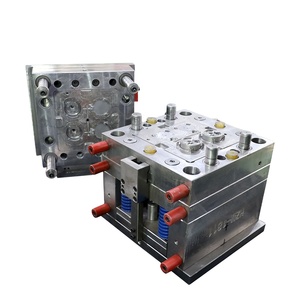
Pegavision is renowned for its state-of-the-art fully automated manufacturing lines. Spun out from high-tech electronics supply chains, Pegavision applies semiconductor-level precision to plastic injection molding and optical mold fabrication. Their product portfolio excels in high-water content daily disposable soft contact lenses and intricate cosmetic patterns engineered with automated vision-inspection systems that scan 100% of lenses before primary foil sealing.
Menicon Co., Ltd.
HQ: Nagoya, Japan | Specialties: Rigid Gas Permeable (RGP) & Ultra-Thin Flat Pack Lenses
As Japan’s premier lens manufacturer, Menicon leads global innovation in high-oxygen transmission materials ($Dk/t$ exceeding 160). Menicon’s OEM production lines specialize in hyper-permeable silicone hydrogel materials and unique micro-pack packaging formats (Miru series) that reduce secondary packaging waste by up to 80% while ensuring hygienic lens placement without touching the inner surface.
St. Shine Optical Co., Ltd.
HQ: Taipei, Taiwan | Specialties: Private Label Spherical, Toric & Multi-Focal Lenses
St. Shine Optical is one of Asia’s longest-standing contract manufacturers for private label soft contact lenses. Operating large-scale automated cast molding plants, St. Shine provides extensive parameter coverage—including complex astigmatic toric corrections and presbyopic multifocal lenses—allowing international brands to source full prescription matrices from a single production facility.
Seed Co., Ltd.
HQ: Tokyo, Japan | Specialties: Hyaluronic Acid Infused Hydrogels & UV-Absorbing Lenses
Seed Co., Ltd. combines Japanese pharmaceutical-grade cleanroom standards with innovative polymer additives. Famous for embedding natural alginic acid and sodium hyaluronate into the lens matrix, Seed’s manufacturing facilities produce soft contact lenses that resist tear-film breakdown throughout extended wear. They are a preferred partner for premium optical chains seeking high-end bio-compatible SKUs.
CooperVision OEM Division
HQ: California, USA / Global Plants | Specialties: Enterprise White-Label Distribution
While dominating retail optical counters under its own brand, CooperVision’s dedicated OEM division collaborates with multinational optical distributors to supply proprietary hydrogel polymers (such as Comfilcon A and Stenfilcon A). Their facilities offer unmatched global supply chain resiliency and extensive clinical trial documentation.
Clearlab International
HQ: Singapore | Specialties: Biocompatible Monthly & Daily Lenses
Clearlab is a pioneer in developing biocompatible contact lenses designed to mimic the human cornea. Utilizing patented Aquagrip material chemistry, Clearlab lenses retain exceptionally high water content even in dry, air-conditioned environments, making their products a favorite for private label healthcare programs focusing on digital eye strain relief.
Interojo Inc.
HQ: Pyungtaek, South Korea | Specialties: Multi-Tone Color Lenses & Aspheric Design
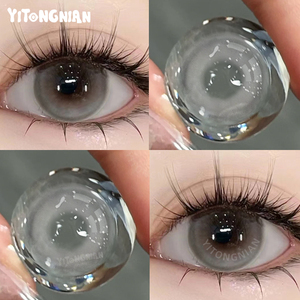
Interojo has established itself as South Korea’s leading exporter of cosmetic colored contact lenses. Utilizing proprietary High-Definition (HD) optics design, Interojo lenses compensate for spherical aberrations across varying light conditions. Their color lens manufacturing line employs advanced multi-dot matrix printing to produce hyper-realistic iris patterns for global fashion and cosmetic retail brands.
Maxvue Vision
HQ: Malaysia | Specialties: Color Contact Lenses & Specialty FX Optics
Maxvue Vision specializes in vibrant cosmetic and theatrical color lenses, exporting to over 60 countries. Their production capabilities focus on hydrogel polymers engineered specifically for vivid pigment retention without compromising oxygen flow, supported by pre-cleared regulatory filings in diverse international jurisdictions.
Belmore Contact Co., Ltd.
HQ: South Korea | Specialties: Custom Cosmetic Torics & Small-Batch OEM
Belmore Contact caters to niche optical distributors requiring specialized parameter ranges. Their production lines excel in combining complex cylinder axis corrections with cosmetic color printing, allowing private labels to serve prescription patients who desire aesthetic eye color enhancements without sacrificing visual acuity.
Technical Benchmark Matrix: Top 10 Suppliers Comparison
A side-by-side technical performance evaluation of global contact lens manufacturers across critical manufacturing parameters.
| Manufacturer Name | Primary Polymer Type | Max $Dk/t$ Value | Color Pigment Tech | Cleanroom Standard | EU MDR Status | Supply Ecosystem |
|---|---|---|---|---|---|---|
| Kyralens Tech | Silicone Hydrogel & HEMA | 120+ $Dk/t$ | Sandwich Micro-Print | ISO Class 5 / GMP A | Certified Class IIa/IIb | Full (Lenses, Drops, Solutions, Cases) |
| Pegavision | Hydrogel / Etafilcon A | 33 $Dk/t$ | Automated Cast Print | ISO Class 7 | Compliant | Contact Lenses Only |
| Menicon | Hyper-SiHy / RGP | 160+ $Dk/t$ | Internal Matrix Integration | ISO Class 5 | Certified | Lenses & Solutions |
| St. Shine Optical | Methofilcon & Polymacon | 30 - 85 $Dk/t$ | Pad Printing | ISO Class 7 | Compliant | Contact Lenses Only |
| Seed Co., Ltd. | Bio-Hydrogel + HA | 42 $Dk/t$ | Natural Alginate Embedding | ISO Class 5 | Certified | Contact Lenses Only |
| CooperVision OEM | Comfilcon / Stenfilcon A | 160 $Dk/t$ | Integrated Polymer Color | ISO Class 5 | Certified | Contact Lenses Only |
| Clearlab | Aquagrip Biocompatible | 35 $Dk/t$ | Precision Micro-Printing | ISO Class 7 | Compliant | Lenses & Basic Solutions |
| Interojo | Hilafilcon & Polymacon | 32 - 100 $Dk/t$ | 3-Tone HD Matrix | ISO Class 7 | Compliant | Contact Lenses & Cases |
| Maxvue Vision | Hydrogel | 28 $Dk/t$ | Vivid FX Printing | ISO Class 7 | Compliant | Color Lenses & Cases |
| Belmore Contact | Polymacon Toric | 25 $Dk/t$ | Custom Layer Printing | ISO Class 8 | Compliant | Specialty Lenses Only |
Next-Generation Contact Lens Manufacturing Trends (2025–2030)
Strategic technology developments reshaping B2B optical sourcing, packaging design, and ocular safety protocols.
1. Micro-Encapsulated Sandwich Color Printing
Legacy color contact lenses placed dye layers in close proximity to the corneal epithelium, risking micro-abrasions and dye migration. Advanced factories now enforce Sandwich Printing Technology, embedding bio-compatible pigments entirely between two transparent hydrogel protective layers. This guarantees zero direct pigment-to-eye contact and enhances oxygen flow to the iris.
2. Recyclable & Zero-Plastic Packaging Formats
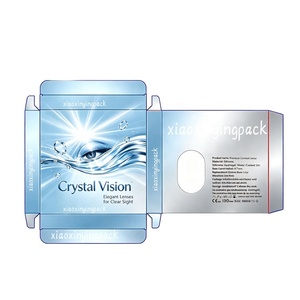
Driven by strict European environmental directives (such as the EU Packaging and Packaging Waste Regulation), contact lens procurement is shifting toward 100% recyclable polypropylene blister cups, aluminum tear-foils with solvent-free coatings, and FSC-certified glossy paper boxes. Modern OEM plants are eliminating secondary plastic trays in favor of self-erecting compact cartons.
3. Preservative-Free Multi-Dose Eye Care Integration
Distributors increasingly demand unified private label ranges combining daily disposable lenses with companion eye care products. Innovations include Ophthalmic Squeeze Dispenser (OSD) multi-dose bottles that allow preservative-free lubricating hyaluronic acid drops to remain sterile for 6 months after opening, boosting consumer brand loyalty.
Why Retail Giants & Pharmacy Chains Partner with Kyralens
Kyralens Technology Co., Ltd. resolves the operational complexities associated with managing multiple optical vendors by providing a single, consolidated private label infrastructure.
Full-Category Supply Chain Consolidation
Instead of sourcing contact lenses from Taiwan, eye drops from Germany, and storage cases from mainland China, Kyralens centralizes procurement. Buyers access contact lenses, cosmetic optics, sterile rewetting drops, multipurpose disinfectant solutions, lens care travel kits, and ready-to-wear reading glasses under a unified quality assurance management system.
Turnkey European & International Regulatory Passport
Headquartered in Ede, The Netherlands, Kyralens handles European regulatory registration, localized multi-language artwork formatting, EAN barcoding, batch lot numbering, and technical file dossier generation. This turnkey compliance structure eliminates regulatory barriers for drugstore chains expanding across Europe, the Middle East, and Asia.
Frequently Asked Questions (FAQ) for B2B Sourcing Directors
Essential technical and logistical answers for purchasing managers evaluating wholesale contact lens contracts.
Contact lenses are classified as Class IIa or Class IIb medical devices under European MDR 2017/745 and Middle Eastern health authority frameworks (such as Saudi FDA and UAE MOH). Importers must provide a full Declaration of Conformity (DoC), ISO 13485:2016 Quality Management System certificates, CE mark certification issued by an accredited Notified Body, primary packaging labeling compliance, and lot traceability records. Kyralens supplies complete regulatory passports pre-tailored to target destination markets.
Traditional Hydrogel (HEMA-based) relies on water content to transport oxygen to the cornea, offering high initial insertion comfort but lower overall oxygen transmissibility ($Dk/t$ ~ 20-30). Silicone Hydrogel incorporates silicone polymers that pass oxygen directly through the material matrix, achieving substantially higher transmissibility ($Dk/t$ 80-160+). Silicone Hydrogel is the preferred standard for daily extended wear, while Hydrogel offers cost-effective positioning for budget daily disposable lines.
Sandwich Printing encases the organic micro-pigments inside dual transparent layers of lens material. This physical isolation prevents the color dye from leaching into the tear film or physically rubbing against the delicate corneal epithelium, completely eliminating pigment-induced ocular irritation while maintaining vibrant pattern clarity.
MOQs vary based on parameter customization and packaging design. Standard private label box printing for existing power matrices starts at approximately 5,000 to 10,000 blisters per color SKU. Custom lens molding or proprietary polymer formulations typically require higher volume commitments. Turnaround time ranges from 4 to 6 weeks for standard stock replenishment and 8 to 12 weeks for initial custom box packaging setup and regulatory labeling validation.
Offering a complete eye care ecosystem boosts customer basket size and increases gross retail margins. When consumers purchase private label contact lenses, cross-selling companion items—such as multi-purpose disinfectant solution, rewetting drops, and antimicrobial storage cases under the same trusted store brand—builds category equity and simplifies inventory management across the entire optical aisle.
Ready to Build Your Private Label Eye Care Line?
Connect with Kyralens Technology Co., Ltd. to request sample packs, OEM technical specifications, and detailed wholesale price matrices tailored for global retail expansion.