OEM / ODM
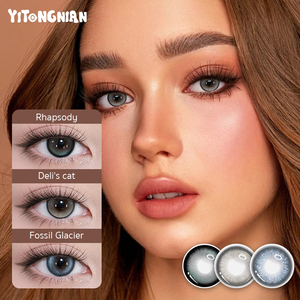
Explore China's premier export-grade contact lens series, featuring micro-encapsulation sandwich technology, high oxygen permeability, and medical-grade biocompatibility.
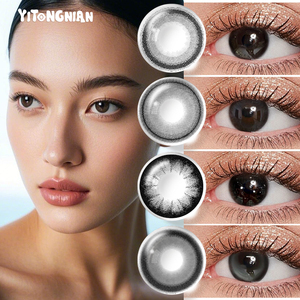
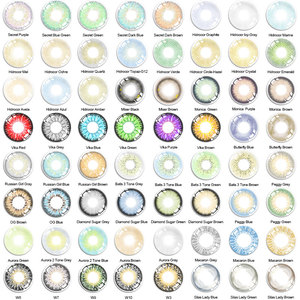
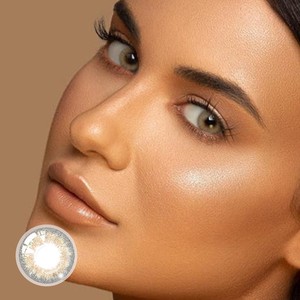
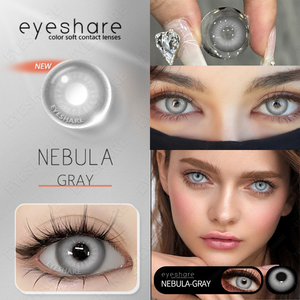
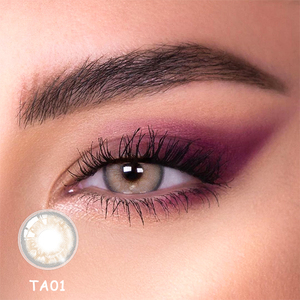
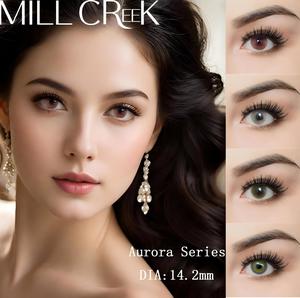
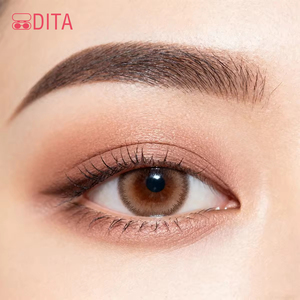
The global market for cosmetic and corrective contact lenses is undergoing a seismic shift. Driven by expanding consumer demand across Europe, the Middle East, Latin America, and Southeast Asia, color contact lenses have transitioned from niche beauty accessories to staple personal-care optical consumables. As the world's leading manufacturing hub, China has consolidated its position as a powerhouse for CE-certified contact lenses, combining advanced polymer chemistry, automated cast-molding infrastructure, and strict regulatory compliance.
For international optical buyers, pharmacy chains, and private-label brand owners, navigating China’s manufacturing ecosystem requires a granular understanding of technical specifications, safety standards, and supply chain logistics. Modern Chinese manufacturers no longer compete solely on price point; instead, competitive leadership is dictated by Information Gain—specifically, material safety innovations like micro-encapsulated "sandwich" dye locking, high oxygen transmissibility (Dk/t), precision lathe cutting, and turnkey OEM/ODM compliance support.
This whitepaper serves as an authoritative B2B procurement guide for corporate buyers looking to source CE-marked colored contact lenses from China. It outlines technical benchmarks, material comparisons, regulatory validation protocols, emerging market trends, and detailed answers to critical supply-chain inquiries.
Ocular safety is the paramount concern when distributing cosmetic lenses. Historically, lower-tier color lenses carried risks of pigment leaching, leading to corneal abrasion or allergic conjunctivitis. Premier Chinese exporters utilize state-of-the-art **Sandwich Color Encapsulation Technology** (also known as multi-layer micro-embedding).
The bio-compatible color pigments are embedded securely between two ultra-thin layers of hydrogel matrix (HEMA/NVP). The pigment never comes into direct contact with the cornea or palpebral conjunctiva.
Advanced dual-surface lathe cutting and wet injection cast molding produce an ultra-smooth edge profile (360-degree radial edge design), reducing friction during blinks and enhancing all-day wear comfort.
Integrated UV-A and UV-B absorption monomers are co-polymerized within the lens structure, offering protection against harmful ultraviolet radiation while preserving color clarity and visual sharpness.
Through strict automated inspection system (AOI) deployment, leading manufacturing facilities inspect 100% of manufactured lenses for color concentricity, edge burrs, and optic zone integrity, ensuring defective rates fall below 0.001%.
Choosing the right polymer material is crucial for matching your regional market preferences and target retail price points. Below is a comprehensive engineering comparison between standard Hydrogel (HEMA-based) and advanced Silicone Hydrogel (SiHy) formulations used in Chinese export factories.
| Technical Parameter | Poly-HEMA (Standard Hydrogel) | Silicone Hydrogel (SiHy Generation III) |
|---|---|---|
| Water Content Range | 38% - 42% (Low-Mid Water Content) | 45% - 55% (High Equilibrium Moisture) |
| Oxygen Transmissibility (Dk/t) | 15 - 25 Dk/t (@ center thickness 0.08mm) | 80 - 120 Dk/t (High Oxygen Permeability) |
| Modulus (Flexibility) | 0.30 - 0.45 MPa (Ultra-Soft, Easy Adaptation) | 0.60 - 0.85 MPa (Form-Retaining, Easy Handling) |
| Base Curve (BC) Options | 8.5mm / 8.6mm (Universal Standard Fit) | 8.6mm / 8.7mm |
| Diameter (DIA) Range | 14.0mm - 14.5mm (Cosmetic Graphic DIA 13.2-13.8mm) | 14.0mm - 14.2mm |
| Replacement Cycles | Daily Disposable, Monthly, Yearly (1-Year) | Daily Disposable, Monthly (30-Day) |
| Primary B2B Target Market | Mass Retail, Drugstores, E-Commerce, Cosmetic Brands | Premium Optical Chains, Medical Optometry Clinics |
Key Sourcing Insight: While HEMA hydrogel lenses remain the standard for high-margin cosmetic color collections due to their superior soft touch and vibrant dye absorption, Silicone Hydrogel (SiHy) is rapidly gaining traction in European and North American markets where buyers prioritize long-wear oxygen permeability.
Contact lenses are classified as **Class IIa or Class IIb Medical Devices** under the European Union Medical Device Regulation (EU MDR 2017/745) and similar health authorities worldwide. Sourcing non-compliant products creates severe legal risk, customs seizure, and brand reputational damage. Top Chinese exporters maintain robust quality systems certified by European Notified Bodies (such as TÜV SÜD, SGS, or BSI).
Comprehensive Quality Management Systems (QMS) specifically tailored for medical devices, guaranteeing lot-to-lot traceability from raw monomer synthesis to sterile blister packaging.
Full technical documentation, clinical evaluation reports (CER), biological evaluation testing (ISO 10993), and valid EU Declarations of Conformity enabling seamless entry into all 27 EU member states.
Production takes place inside certified Class 100,000 (ISO Class 8) cleanrooms equipped with terminal steam sterilization and automated blister filling lines to guarantee a Sterility Assurance Level (SAL) of 10-6.
As the eye care and cosmetic sectors converge, enterprise procurement teams must align their multi-year product development strategies with key structural trends currently reshaping the color contact lens industry:
Driven by hygiene awareness and consumer preference for convenience, daily disposable colored lenses are seeing the highest CAGR in mature retail markets. Daily disposables remove the need for lens care solutions and storage cases, driving higher recurring customer lifetime value (LTV). Chinese manufacturers have responded by investing heavily in high-speed, fully automated daily-pack blister molding lines to dramatically lower unit costs for bulk importers.
Consumer tastes have evolved away from harsh, opaque single-tone block colors toward sophisticated multi-tone gradient designs. Modern 3-tone and 4-tone patterns utilize microscopic pixel printing to replicate the natural human iris structure—incorporating limbal rings, radial pupil highlights, and subtle tone blending. Sourcing teams should seek suppliers with dedicated in-house graphic design teams capable of outputting custom shade libraries tailored to regional demographics (e.g., natural hazel and chestnut tones for Western markets vs. enlarging pupil designs for East Asia).
The distinction between cosmetic lenses and vision correction lenses has blurred completely. Over 70% of global color lens orders now demand prescription optical power ranges (-0.50 to -10.00 D). Furthermore, leading R&D facilities in China are embedding blue-light filtering technology directly into color hydrogel matrix materials to protect wearers from digital screen fatigue—creating a powerful new marketing angle for private-label distributors.
Environmental regulations across the EU and North America are forcing brands to reduce single-use plastic waste. Progressive Chinese manufacturers are introducing eco-friendly blister foils, biodegradable packaging cartons, and lightweight polypropylene blister cups designed to decrease carbon footprints during international air freight logistics.
Building a successful private-label contact lens brand requires a streamlined, turn-key manufacturing partner. Top Chinese manufacturers offer end-to-end ODM services that bridge the gap between initial concept and retail-ready inventory.
Submit sample iris concepts or digital pantones. In-house print technicians create physical lens prototypes within 14 business days for color matching and wearer trials.
From luxury slide-out boxes and eco-friendly blister cards to customized solution kits and multi-lingual user instruction leaflets compliant with local medical labeling laws.
Flexible manufacturing schedules allow new brands to launch targeted test collections with reduced Minimum Order Quantities (MOQs), preserving working capital before scaling up to mass production.
Clear, factual answers to technical, regulatory, and logistics queries commonly raised by international procurement managers.
Each OEM batch comes with a full compliance portfolio including the EU Declaration of Conformity (DoC), valid ISO 13485:2016 certificate, Certificate of Free Sale (CFS), Batch Sterility Testing Reports, and Material Safety Data Sheets (MSDS). For custom private label registrations, manufacturers provide technical files (STED) to assist with local health authority registrations.
Sandwich technology isolates bio-compatible color pigments between an inner and outer layer of pure hydrogel material. Because the color pigments are fully encapsulated inside the polymer matrix, they never touch the cornea or eyelid tissue, eliminating pigment friction, dye shedding, and corneal allergic reactions completely.
For standard catalog colors in factory stock packaging, initial MOQs can start as low as 50 to 100 pairs per SKU. For fully customized private label packaging (custom brand box, blister foil printing, custom power ranges), typical factory MOQs range between 500 to 1,000 pairs per shade/color variation.
Yes. Chinese factories produce both plano (0.00 diopter cosmetic) and corrective prescription colored contact lenses. Prescription powers generally span from -0.50 D to -6.00 D (in 0.25 D increments) and -6.50 D to -10.00 D (in 0.50 D increments). Astigmatic (toric) color lenses are also available upon specialized ODM request.
When sealed in sterile buffered saline solution inside high-barrier aluminum blister packs, contact lenses have an official shelf life of 5 years from the date of terminal steam sterilization. Blisters should be stored in a dry, ventilated environment away from direct sunlight, at temperatures between 1°C and 30°C.
Lower water content (38%) absorbs less natural tear film from the wearer's eye, making it ideal for dry eye conditions, long air-conditioned office hours, and annual replacement lenses. Slightly higher water content (42%) provides enhanced initial softness and initial wear comfort, making it very popular for daily disposable and monthly replacement series.
Physical sample dispatch for catalog items takes 3–5 business days. Custom iris printing design prototypes take approximately 10–14 business days. Mass production lead times for standard OEM orders are typically 25 to 35 calendar days following artwork confirmation and deposit clearance.
Partner with China's leading certified contact lens manufacturer. Get direct access to factory pricing, custom packaging design, and full regulatory documentation.