
1. Enterprise Advantages: Why Partner with China's Leading Contact Lens ODM Exporter
In the rapidly evolving landscape of global eye care, selecting a qualified Original Design Manufacturer (ODM) and Original Equipment Manufacturer (OEM) in China is a critical decision for pharmacy chains, optical retailers, cosmetic brands, and medical distributors. As a premier China contact lens ODM service exporter, our manufacturing infrastructure combines cutting-edge optical polymer science, high-precision cast-molding automated lines, and rigorous international compliance frameworks.
Our operational strategy is grounded in deep technical expertise, robust quality management systems (QMS), and absolute transparency. We bridge the gap between complex optometric engineering and market-ready consumer packaging.
High-Precision Mold Manufacturing
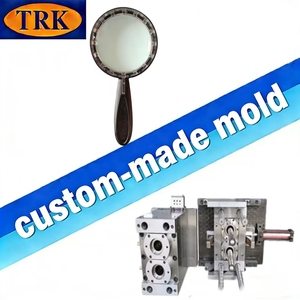
We utilize custom two-color plastic molds and nanometer-grade optical tooling to produce mold inserts with surface roughness under Ra 10nm. This guarantees impeccable edge geometry and consistent base curve radius (BCR) across tens of millions of soft contact lenses.
3-Layer Sandwich Micro-Pigmentation
For cosmetic and color contact lenses, safety is paramount. Our proprietary lock-in sandwich printing technology encapsulates bio-compatible color pigments between dual translucent HEMA layers, ensuring zero pigment contact with corneal tissues.
Regulatory Compliance & Traceability
Equipped with ISO 13485 QMS certification, medical device GMP compliance, and automated lot-by-lot laser engraving barcode verification, our client brands benefit from seamless product registration in Europe, North America, LATAM, and Asia-Pacific.
2. Future Sourcing & Procurement Trends in Contact Lens ODM (2025–2030)
As the international vision care and aesthetic contact lens markets mature, business buyers must align with forward-looking ODM exporters. Procurement dynamics are shifting rapidly from simple cost-per-unit metrics to total value engineering, supply chain resilience, and material innovation.
A. Transition from Standard HEMA to High-Oxygen Silicone Hydrogel (SiHy)
While poly-HEMA remains popular for short-wear and budget-conscious daily disposables, global consumer demand is overwhelmingly migrating toward high-oxygen transmissibility ($Dk/t$) materials. Fluorosilicone hydrogel polymers enable continuous oxygen transport to the cornea, reducing hypoxic stress, vascularization, and redness. Forward-thinking B2B importers are increasingly requesting custom ODM formulations that combine high water content (38% to 58%) with $Dk/t$ values exceeding 100.
B. Automated Micro-Lot Customization & Rapid Private Labeling
Traditional manufacturing required huge minimum order quantities (MOQs) per sphere power, creating significant inventory holding risks for brand owners. Next-generation ODM suppliers in China have re-engineered cast-molding automation to accommodate flexible batch sizes. Multi-power automated sorting, inline optical power checking, and digital packaging integration now allow brand owners to launch private label contact lens lines with lower capital exposure and shorter lead times.
C. Eco-Conscious PP Blister Materials & Sustainable Secondary Packaging
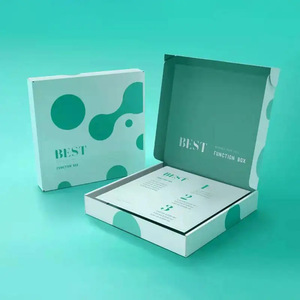
Environmental regulations and consumer advocacy are forcing optical retailers to evaluate packaging lifecycles. High-volume ODM exporters are pioneering recyclable polypropylene (PP) blister packs with minimized foil thickness, biodegradable lens care solution bottles, and FSC-certified paper packaging. Sustainable sourcing is no longer an optional marketing gimmick—it is a core procurement compliance metric for tier-1 retail buyers.
3. Technological Development Trends in Contact Lens Manufacturing
To gain a structural edge in the optical market, contract manufacturers must continually innovate in material science and optical design engineering. The roadmap for contact lens ODM services encompasses four distinct engineering thrusts:
- Optical Geometry Optimization: Aspheric lens surface designs that compensate for spherical aberrations, enhancing contrast sensitivity in low-light environments. Modern ODM facilities employ wavefront aberration analysis during mold design to yield crisp, high-definition vision for spherical and toric lenses.
- Moisture Matrix Lock Technology: Embedding hydrophilic lubricating agents—such as Hyaluronic Acid (HA) or Polyvinylpyrrolidone (PVP)—directly into the lens monomer formulation. This creates a sustained moisture cushion that prevents tear-film evaporation during prolonged digital screen exposure.
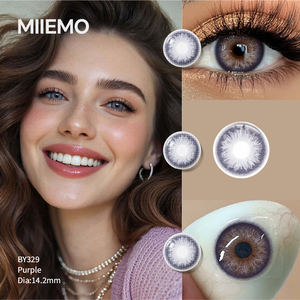
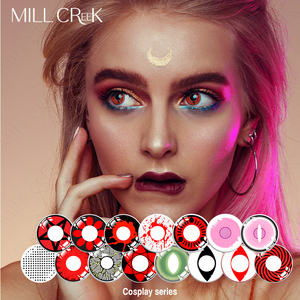
- Micro-Injection Color Layering & Natural Iris Simulation: Cosmetic contact lenses are evolving from flat, 1-tone patterns to complex 3-tone and 4-tone iris simulations. By integrating micro-fluidic ink-jet printing with automated optical alignment, ODM exporters can replicate natural iris textures with hyper-realistic depth.
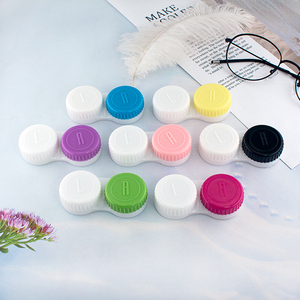
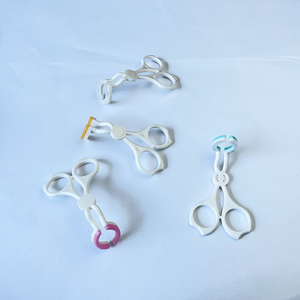
- Integrated Eye Care Ecosystems: Modern procurement extends beyond the lens itself. Leading exporters provide full-category solutions including sterile multi-purpose cleaning solutions, lubricating drops, ergonomic lens insertion tools, and compact custom-designed storage cases made from food-grade PP materials.
4. Comprehensive ODM Sourcing & Technical FAQ
Below are authoritative answers to the primary technical, operational, and regulatory questions raised by international procurement managers when sourcing contact lens ODM services from China.
OEM (Original Equipment Manufacturer) implies manufacturing lenses strictly based on pre-existing customer specifications, formulas, and molds. ODM (Original Design Manufacturer) provides end-to-end service: we handle raw material formulation, mold design, optical geometry engineering, color pattern creation, regulatory documentation preparation, and customized packaging design based on your target brand positioning.
Our production facilities operate under strict ISO 13485 Quality Management Systems specifically tailored for medical devices. We adhere to Medical Device Good Manufacturing Practices (GMP), maintain CE certification under EU MDR standards, and support customers with technical dossiers required for US FDA 510(k), NMPA, and localized health authority registrations.
We utilize a proven 3-layer Sandwich Pigmentation Technology. The FDA-approved color pigments are printed inside an inner matrix, completely sandwiched between two clear hydrogel polymer layers. This prevents direct pigment contact with ocular tissue, eliminates pigment leaching, and maintains high surface smoothness for maximum comfort.
Our standard spherical lens powers range from 0.00D (plano) to -10.00D (in 0.25D or 0.50D increments). Base curves (BC) typically range from 8.4mm to 8.7mm, with overall diameters (DIA) from 14.0mm to 14.5mm. Custom parameters, including astigmatic toric power ranges and specific center thicknesses, can be engineered via dedicated mold tooling.
For initial ODM projects requiring custom packaging artwork, box printing, and foil sealing design, the standard cycle is approximately 30 to 45 days including pre-production sample approval. Repeat replenishment orders are typically executed within 20 to 30 business days, backed by our automated inventory buffers for high-volume optical powers.
All finished blister packages undergo rigorous steam autoclave sterilization at 121°C. Accelerated real-time shelf-life testing is conducted in accordance with international medical standards, ensuring a validated 3-year to 5-year sterile shelf life. Every lot is accompanied by a Certificate of Analysis (COA) covering sterility, bioburden, dimensional tolerances, and optical power precision.