Featured OEM/ODM Product & Packaging Portfolio
Explore our ISO 13485 certified monthly contact lenses, precision mold tooling, cosmetic color series, and retail packaging solutions crafted for international brands and pharmacy chains.
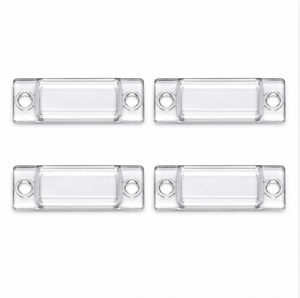
Transparent Cover Injection Mold Making Service, Custom Clear Lens Molds for Digital Device Panels and Instrument Displays
Send an Inquiry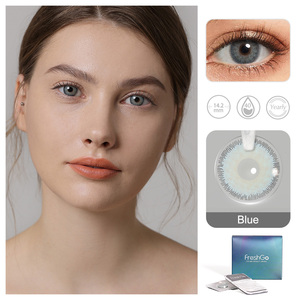
Freshgo Wholesale Prescription Lenses Yearly Coloured Contact Lenses Natural Power Color Contact Lens
Send an Inquiry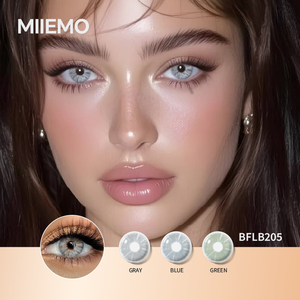
DSC Chinese Factory Wholesale Soft Blue Small Pupil Colored Contact Lenses ISO Certified 5 Year Expiration
Send an Inquiry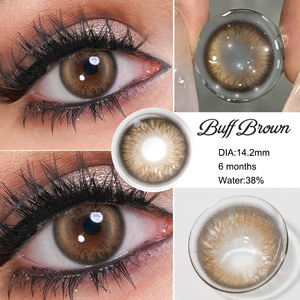
Free Sample MAGISTER Contact Lenses Prescription Colored Contacts Myopia Contact Lenses Lentilles De Lunettes With Power
Send an Inquiry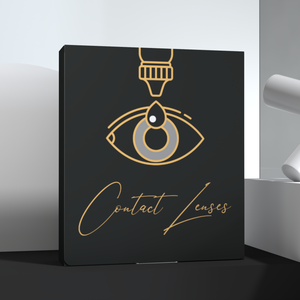
Digital Printing Popular Paperboard Contact Lens Box Wholesale Black Contact Lenses Solutions Box Factory Direct Contact Len Box
Send an Inquiry
YITONGNIAN Cosplay Contact Lenses Special Effects Whiteout Blackout Wholesale Bulk OEM Custom Factory
Send an Inquiry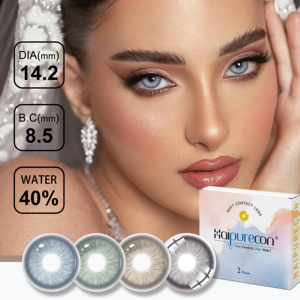
Haipurecon Korean Colored Soft Contact Lenses New Arrival Beautiful Big Eyes Makeup Wholesale
Send an Inquiry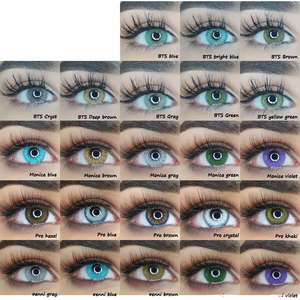
For DSC Pro Penni Soft Natural Colored Contact Lenses Private Label Cosmetic Wholesale Color Contact Lens
Send an InquiryExecutive Summary: The Strategic Evolution of Monthly Contact Lens Manufacturing in China
The global vision care and optical retail sector is undergoing a profound structural transition. As consumers demand a balance between cost efficiency, ocular health, and aesthetic versatility, monthly replacement contact lenses have solidified their position as the commercial backbone for optical store chains, pharmacy groups, and online private-label brands worldwide. Offering a superior cost-per-wear ratio compared to daily disposables while retaining cleaner micro-surface hygiene than traditional annual lenses, monthly contact lenses represent the highest-margin category in retail eye care.
Over the past decade, China has evolved from a secondary contract manufacturing location into the global powerhouse for contact lens development and polymer engineering. Advanced manufacturing hubs located in Jiangsu (Danyang optical cluster), Guangdong, and Zhejiang now leverage fully automated double-sided cast-molding lines, high-precision injection mold tooling, and proprietary silicone hydrogel formulations. As a leading specialized manufacturer, kyralens Technology Co., Ltd. integrates state-of-the-art polymer research with end-to-end private label production, empowering global brand owners to access medical-grade optical products under full regulatory compliance.
Material Science & Polymer Innovation: Poly-HEMA vs. 3rd Generation Silicone Hydrogel
The core determinant of wearer satisfaction and physiological safety in monthly contact lenses is the polymer matrix's ability to maintain high oxygen supply to the corneal epithelium while resisting dehydration and lipid deposition. Historically, soft contact lenses relied on conventional hydrogels such as Poly-2-hydroxyethyl methacrylate (Poly-HEMA). While hydrogels offer exceptional initial insertion comfort due to high water content ($45\%-58\%$), their oxygen transmissibility ($Dk/t$) is strictly constrained by the physical limit of water ($Dk \approx 80$).
Technical Information Gain: Fluorosiloxane Macromer Polymerization
Third-generation silicone hydrogel materials utilize fluorosiloxane macromers combined with hydrophilic monomers (such as N-Vinylpyrrolidone, NVP). This creates an interpenetrating polymer network (IPN) that delivers $Dk/t > 120-135$ with a low elastic modulus ($0.4 - 0.6 \text{ MPa}$), entirely eliminating the need for rigid surface plasma treatments while maintaining tear-film stability over 30 days of continuous wearing cycles.
When selecting a manufacturing partner in China for monthly contact lenses, procurement directors must evaluate the factory's synthesis capabilities across four primary polymer categories:
- Conventional Hydrogel (38% Water Content): Low-dehydration formulation ideal for dry ambient environments, office computer users, and budget-conscious cosmetic lens lines.
- High-Water Hydrogel (55% Water Content with Hyaluronic Acid): Infused with bio-compatible wetting agents that lock moisture inside the matrix for immediate end-of-day relief.
- 2nd Generation Surface-Treated Silicone Hydrogel: Utilizes plasma oxidation or plasma coating to create a hydrophilic surface layer over hydrophobic silicone chains.
- 3rd Generation Non-Surface Treated Nano-SiHy: Advanced macromer design achieving innate wettability, low lipid adsorption, high oxygen flux, and superior long-term optical transparency.
Comparative Engineering Matrix for Monthly Contact Lens Formulations
To assist brand buyers and category managers in selecting optimal product parameters, the following matrix compares the physical and optical performance characteristics of modern OEM contact lens materials:
| Material Class | Oxygen Permeability ($Dk/t$) | Water Content (%) | Modulus (MPa) | Surface Wetting Tech | Target Retail Positioning |
|---|---|---|---|---|---|
| Standard Poly-HEMA | 25 – 30 | 38% – 42% | 0.35 – 0.45 | Internal PVP Matrix | Mass Market / Promotional Cosmetic |
| Bionic Hydrogel (HA) | 35 – 42 | 55% – 58% | 0.30 – 0.40 | Hyaluronic Acid Lock-In | Pharmacy Comfort Lenses |
| 2nd Gen SiHy (Plasma) | 85 – 110 | 45% – 48% | 0.70 – 0.90 | Plasma Grafting Layer | Mid-to-High Tier Prescription Lenses |
| 3rd Gen Nano-SiHy | 120 – 138 | 45% – 47% | 0.45 – 0.55 | Intrinsic Siloxane IPN | Premium Optical & Medical Grade Lenses |
| Micro-Encapsulated Color | 28 – 35 | 40% – 43% | 0.40 – 0.50 | Sandwich Lock Printing | Beauty & Fashion Private Labels |
Precision Manufacturing Technologies: Double-Sided Cast Molding & Micro-Encapsulated Printing
The production of monthly contact lenses requires uncompromising precision. Unlike rigid gas permeable (RGP) lenses crafted via lathe-cutting, volume manufacturing of soft disposable lenses relies on Automated Double-Sided Cast Molding. This process dictates the lens geometry, optical power accuracy, and edge profile smoothness.
1. Sub-Micron Mold Tooling & Clear Injection Molds
Every cast-molded contact lens begins with the creation of high-precision male and female mold inserts. Leading Chinese factories utilize digital optical polishing and clear injection molding services (as featured in our transparent cover injection mold tooling capabilities). These optical molds maintain base curve tolerances within $\pm 0.01 \text{ mm}$, ensuring consistent centration, minimal movement on cornea, and zero distortion across spherical, toric, and multifocal powers.
2. Bio-Safe Micro-Encapsulation "Sandwich" Color Technology
For cosmetic color contact lenses—such as natural 3-tone irises, small pupil designs, or costume SFX lenses—color safety is paramount. Premier OEM factories employ a 3-layer micro-encapsulation technique:
- Base Clear Layer: Pure optical hydrogel forming the posterior surface in direct contact with the cornea.
- Entrapped Pigment Layer: Organic, FDA-approved non-toxic pigments printed via high-resolution pad printing or digital printing onto the polymer base.
- Protective Top Coat: Anterior layer fully sealing the pigments inside the polymer matrix. This guarantees zero dye leaching and zero mechanical friction against ocular tissues over 30 days of use.
3. Smooth Edge Geometry & Automatic Optical Inspection (AOI)
A frequent cause of discomfort in monthly lenses is lid margin interaction caused by thick or blunt edge profiles. Top Chinese manufacturing facilities utilize smooth round-edge mold geometry that gently tapers toward the periphery. Combined with 100% inline Automatic Optical Inspection (AOI) powered by high-resolution machine vision cameras, every blister pack is verified for edge tears, air bubbles, surface inclusions, and focal length accuracy prior to steam autoclaving.
Global Regulatory Compliance & E-E-A-T Quality Assurance Standards
Because contact lenses are categorized as Class IIb (CE MDR) or Class II/III (US FDA / NMPA) medical devices, regulatory compliance is the most vital criteria when auditing China contact lens factories. A legitimate, trustworthy manufacturing partner must maintain robust international certifications and transparent quality control systems.
ISO 13485:2016 Certified
Comprehensive Quality Management System designed specifically for medical device manufacturing, covering raw monomer receiving, polymerization, mold injection, packaging, and lot traceability.
EU MDR (2017/745) CE Mark
Full technical documentation compliance under the European Union Medical Device Regulation, including Clinical Evaluation Reports (CER) and Post-Market Surveillance (PMS) systems.
US FDA 510(k) Clearances
Prequalified monomer formulations and device filings supporting seamless commercial entry into North American retail and clinical channels.
ISO Class 7 Cleanrooms
Automated filling and blister packaging conducted inside Class 100,000 cleanroom environments with continuous air filtration, microbiological testing, and humidity control.
Full Lot Traceability
Every box and blister pack features unique GS1-compliant 2D barcodes, linking finished products to specific raw material synthesis batches and autoclave sterilization charts.
Biocompatibility Testing
Rigorously tested according to ISO 10993 standards for cytotoxicity, ocular irritation, systemic toxicity, and bacterial endotoxins.
Future Global Sourcing Trends in Monthly Contact Lenses (2025–2030)
As retail competition intensifies across e-commerce platforms, pharmacy chains, and optical boutiques, procurement teams must align with forward-looking factories capable of supporting next-generation vision care innovations:
1. Peripheral Defocus & Myopia Management Lenses
With pediatric myopia rates escalating globally, monthly replacement optical defocus lenses have emerged as a fast-growing category. Leading Chinese manufacturers are developing proprietary concentric defocus and asymmetric multi-zone optics that slow axial length elongation in young wearers while providing clear distance correction.
2. Sustainable Packaging & Eco-Conscious Materials
Environmental responsibility is reshaping contact lens packaging. Future procurement contracts prioritize bio-based monomer synthesis, reduced foil blister dimensions, non-toxic soy-based paperboard inks, and recyclable master packaging boxes (such as our custom paperboard packaging solutions).
3. Hyper-Personalized ODM & Agile Private-Label Launch Cycles
Traditional OEM launch cycles requiring 6-12 months are being replaced by agile turn-key frameworks. By maintaining pre-registered core lens formulations and modular packaging templates, top suppliers enable brand owners to finalize artwork, execute pilot production runs, and achieve shelf delivery within 21 to 30 days.
4. Multi-Category Eye Care Ecosystem Synergy
Retail buyers increasingly favor consolidated sourcing. Partnering with a supplier like kyralens Technology Co., Ltd. allows businesses to build an entire private-label vision shelf—combining monthly contact lenses, lubricating rewetting drops, multipurpose disinfectant solutions, custom travel cases, and ready-to-wear reading glasses under a unified brand identity.
Enterprise Strategic Advantage: Partnering with kyralens
At kyralens Technology Co., Ltd., we bridge the gap between world-class Chinese manufacturing scale and strict international retail expectations. Our dedicated B2B model is tailored to serve drugstores, optical chains, hypermarkets, and digital DTC brands across Europe, the Middle East, and Asia.
- Complete Category Integration: Source contact lenses, lubricating eye drops, multipurpose solution packs, storage cases, and reading glasses from a single synchronized supply chain.
- Low MOQ Pilot Launch Options: Flexible order minimums per SKU enable brand managers to validate new color series or sphere parameters without excessive capital exposure.
- Turnkey Private Label Design & Regulatory Filing: In-house graphic design for multilingual blister foils and boxes, backed by turnkey regulatory dossier preparation for rapid market clearance.
- Uncompromising Batch Consistency: State-of-the-art automated optical power verification guarantees that every single lens meets exact diopter, cylinder, and base curve specifications.
Step-by-Step OEM/ODM Sourcing Workflow for Global Procurement Teams
- Category Brief & Requirement Definition: Establish target diopter ranges ($-0.50\text{D}$ to $-12.00\text{D}$), base curve ($8.5 - 8.7 \text{ mm}$), diameter ($14.0 - 14.5 \text{ mm}$), replacement cycle, and cosmetic color preferences.
- Sample Evaluation & Clinical Wear Testing: Receive trial blister samples for parameter verification, slit-lamp fit analysis, movement evaluation, and surface wetting assessment.
- Packaging Artwork & Regulatory Review: Create customized paperboard packaging boxes and foil lids. Complete regulatory labeling checks tailored to target market guidelines.
- Automated Mass Production & Autoclave Sterilization: Cast-molding polymerization, automated optical inspection, saline hydration, blister sealing, and 121°C terminal steam sterilization.
- Global Logistics & Shelf-Ready Delivery: Temperature-controlled warehouse storage, complete lot documentation, customs export clearance, and freight delivery to your central distribution center.
Frequently Asked Questions (FAQ) for B2B Contact Lens Sourcing
Q1: Why source monthly contact lenses from China certified factories?
China offers an unparalleled optical manufacturing ecosystem that combines high-precision mold tooling, ultra-fast automated double-sided cast molding, and advanced silicone hydrogel macromer synthesis. Sourcing from top-tier Chinese factories gives brand owners access to medical-grade optics at highly competitive unit costs, enabling superior retail gross margins.
Q2: How do Chinese manufacturers guarantee pigment safety in monthly color contact lenses?
Reputable factories utilize a 3-layer micro-encapsulated "sandwich" technology. The organic, FDA-approved color pigments are printed between two clear layers of hydrogel or silicone hydrogel polymer. This structural encapsulation ensures the pigment never comes into contact with the corneal surface or palpebral conjunctiva, guaranteeing total safety over 30 days of daily wear.
Q3: What regulatory documentation is required to import contact lenses from China into the EU or US?
For the European Union, products require CE Certification under EU MDR (2017/745), an ISO 13485 Quality System Certificate, a Declaration of Conformity, and compliant multilingual packaging. For the United States, 510(k) clearance filings and FDA facility registration are required. Factories like kyralens prepare full technical dossiers for destination market approval.
Q4: What is the standard minimum order quantity (MOQ) for custom private-label monthly lenses?
MOQs vary based on parameter customization and packaging complexity. Standard OEM private label orders typically start at 1,000 to 3,000 blisters per power SKU. Flexible pilot programmes can be customized for brand owners launching new cosmetic color lines or expanding optical retail ranges.
Q5: What is the difference between Hydrogel and Silicone Hydrogel monthly lenses?
Hydrogel lenses rely on water content to transport oxygen to the cornea ($Dk/t \approx 20-30$), making them soft and comfortable for short wear times. Silicone Hydrogel lenses integrate siloxane channels that allow direct oxygen diffusion ($Dk/t > 100-135$), making them significantly healthier for 30-day monthly wearing schedules and long working hours.
Q6: Can kyralens provide custom packaging boxes and complete solution accessories?
Yes. kyralens specializes in turnkey private-label solutions. We supply custom digital-printed paperboard retail boxes, blister foils, multipurpose disinfectant solutions, lubricating rewetting eye drops, contact lens storage cases, and travel kits to present a complete branded eye care shelf to consumers.