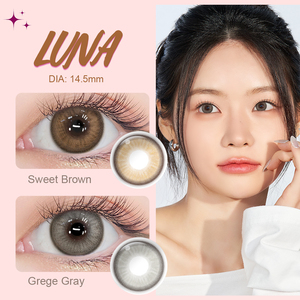
Free Shipping Magister LUNA Contact Lenses Natural Eye Lens 14.5 Colored Contact Lenses Lenses Eye Contact Lentes De Contact
Dia: 14.5mm | BC: 8.6mm
Material: Hydrogel / Poly-HEMA
Water Content: 38% - 42%
Explore our export-ready soft cosmetic and prescription contact lens formulations available for low MOQ private label customized runs.
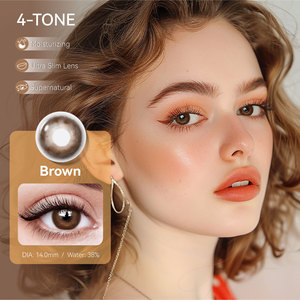
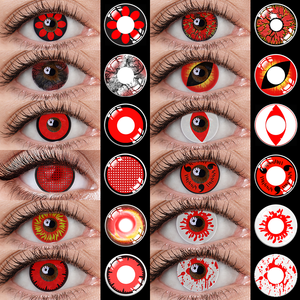
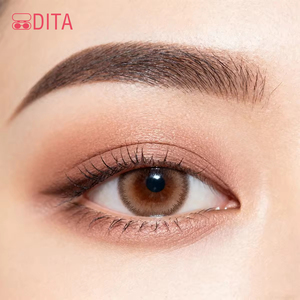
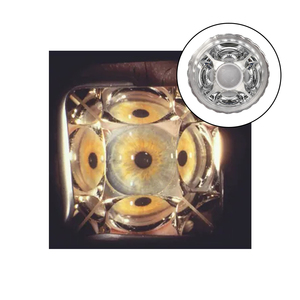
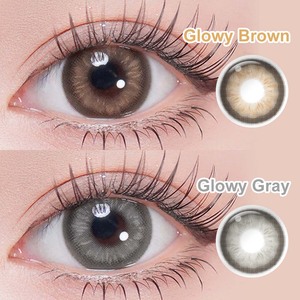
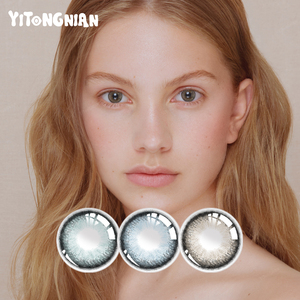
The global ophthalmic industry is undergoing a structural transition. For decades, international contact lens procurement required mass commitments of 100,000 units per SKU—creating substantial inventory risks for optical startups, niche cosmetic brands, and regional drugstore chains. Today, China's advanced contact lens manufacturing hubs in Jiangsu, Zhejiang, and Guangdong have pioneered automated, highly adaptable small-batch manufacturing workflows that allow procurement teams to place production runs as low as 500 to 1,000 units per SKU without compromising compliance or unit economics.
Understanding polymer chemistry is central to establishing a high-performing private label eye care collection. As a specialized supplier, kyralens Technology Co., Ltd. leverages two primary polymer groups tailored to modern market demographics:
Safety is the foundational cornerstone of E-E-A-T in optical manufacturing. In cosmetic color contact lenses (such as 14.2mm natural brown and 14.5mm magnifying luna lenses), direct pigment contact with the corneal epithelium can cause severe toxic keratitis. Premier Chinese small-batch factories employ an advanced 3-layer sandwich encapsulation process.
In this process, bio-compatible ophthalmic pigments are printed onto an inner mold layer, followed by a secondary coating of clear polymer monomer. The lens is then cast-molded, permanently embedding the pigment matrix between two solid layers of pure hydrogel material. This ensures zero pigment leaching, ultra-smooth surface optics, and complete physiological safety for the wearer.
Combining optical manufacturing agility with comprehensive European, Middle Eastern, and Asian retail compliance frameworks.
Consolidate your optical shelf with a single partner. We manufacture contact lenses, lubricating eye drops, cleaning solutions, lens cases, and reading glasses under one centralized quality control protocol.
Every small-batch run is delivered with turnkey compliance documentation including CE certificates, ISO 13485 quality system validation, lot traceability records, and destination-country labelling reviews.
Mitigate market entry risk. Test new cosmetic color drops or hydrogel daily formulations with minimum order thresholds designed for rapid iteration before expanding to national shelf rollouts.
Supplying drugstores, supermarkets, and optical chains across Europe, the Middle East, and Asia.



Procurement directors and B2B buyers must align their supply chain strategies with shifting consumer demands and technological developments. Based on market intelligence gathered across European and Asian retail channels, several dominant trends are shaping the future of OEM/ODM small-batch manufacturing:
Consumer preferences are rapidly migrating away from annual and monthly lenses toward daily disposable soft contact lenses due to heightened hygiene awareness and digital eye strain considerations. Small-batch Chinese factories are investing heavily in automated micro-blister sealing lines capable of producing 1-day SiHy lenses with high Dk/t oxygen transmissibility, allowing brands to launch daily disposable private labels with manageable upfront capital.
Cosmetic contact lenses are increasingly treated as beauty accessories rather than medical necessities. E-commerce brand aggregators and drugstore beauty counters require agile production partners who can manufacture limited-edition color series (e.g., hazel, luminous grey, natural mocha) in small batch runs of 500 to 2,000 units. This allows brands to capitalize on social media trends (TikTok/Instagram) without building up dead stock.
Retail buyers no longer view contact lenses in isolation. Modern category management dictates offering a complete ocular ecosystem. Buyers are sourcing custom-branded, preservative-free lubricating eye drops (hyaluronic acid matrix), multi-purpose disinfecting cleaning solutions, and ergonomic eco-friendly lens storage cases alongside their contact lens lines to maximize average order value (AOV) and customer retention.
With environmental regulations tightening across Europe and Asia, conventional contact lens packaging is evolving. Manufacturers are introducing recyclable polypropylene (PP) blister shells, reduced-foil lid films, and FSC-certified retail cartons. Small-batch customization now extends to sustainable packaging formats that resonate with eco-conscious consumers.
Engineered optics have evolved far beyond spherical power correction. China's top small-batch manufacturing factories incorporate sophisticated optical features into standard production lines:
Essential guidance for brand founders, purchasing managers, and optical distributors evaluating Chinese OEM/ODM factories.
Partner with China's leading small-batch contact lens manufacturer. Request sample kits, custom packaging quotes, and regulatory dossiers tailored to your market.
Inquire Now