Yearly Cosmetic
An executive analysis of the shift toward localized optical brand ownership, high-throughput manufacturing economics, and regulatory compliance.
The global contact lens market, historically dominated by legacy conglomerates, is experiencing a fundamental paradigm shift. High-street pharmacies, optical chains, direct-to-consumer (D2C) cosmetic brands, and beauty retailers are rapidly disintermediating traditional supply chains by launching customized private label collections. Sourcing directly from certified Chinese OEM/ODM hubs empowers brand owners to secure unit cost advantages of up to 60-70% while retaining complete architectural control over color palettes, water content parameters, packaging design, and retail pricing flexibility.
China's contact lens manufacturing hubs have evolved from basic contract assembly into state-of-the-art technological centers. Utilizing high-speed full-automated cast molding lines, nano-scale pigment printing, and real-time machine vision inspection, top-tier Chinese manufacturers achieve unparalleled batch-to-batch consistency. Furthermore, integrated supply chains spanning raw material synthesis (HEMA & Silicone Hydrogel monomers), medical-grade primary foil packaging, and custom secondary paperboard boxes ensure swift production lead times from initial concept approval to port delivery.
Selecting the correct polymer matrix and pigment technology is crucial for user comfort, ocular health compliance, and brand positioning.
| Material Category | Polymer Composition | Oxygen Transmissibility (Dk/t) | Water Content Range | Primary Market Target | Key Advantage |
|---|---|---|---|---|---|
| Non-Ionic Poly-HEMA | Polymacon / 2-HEMA Monomer | 18 - 25 Dk/t | 38% - 42% | Yearly & Monthly Cosmetic Lenses | High structural durability, cost-effective, low protein deposit formation |
| High-Water Hydrogel | HEMA + NVP Co-polymers | 28 - 35 Dk/t | 55% - 58% | Daily Disposable Clear & Color | Immediate initial wearing comfort, high flexibility, ideal for dry climates |
| Silicone Hydrogel (SiHy) | Fluoro-Silicone Macromers | 80 - 130+ Dk/t | 45% - 48% | Premium Health-First & Extended Wear | Hyper-oxygen transmissibility, prevents corneal hypoxia, all-day breathability |
To strictly adhere to global health standards, premium cosmetic colored contacts utilize 3-layer sandwich printing. Pigment particles are encapsulated within a sandwich between two transparent biocompatible Poly-HEMA polymer matrix layers, ensuring that color colorants never come into direct contact with the cornea or conjunctiva.
Unlike traditional lathe-cutting which introduces micro-abrasions, high-precision cast molding uses liquid monomer injection into optical-grade quartz male/female molds. Polymerization occurs under controlled UV thermal radiation, resulting in perfectly smooth edge profiles (edge-lift geometry) for reduced friction.
Following polymerization, lenses undergo automated multi-stage extraction and hydration in purified saline baths. Lenses are inspected 100% in a fully hydrated wet state using ultra-high-resolution sensors to detect micro-bubbles, tears, inclusion flaws, or optical power variances before blister sealing.
A structured 5-step engineering and production timeline designed to mitigate supply chain risks for procurement managers.
Defining target market parameters (BC, DIA, Power range), replacement schedule (Daily/Monthly/Yearly), material selection, and aesthetic tone collections.
Producing physical trial prototypes, color sample swatches on artificial iris models, and verifying optical power curve fidelity in certified testing labs.
Designing blister foil barrier seals, multilingual compliance cartons, barcode generation, and customized luxury rigid boxes or eco paperboard sleeves.
Cleanroom cast molding, 3-tone pattern printing, saline hydration, high-speed blister heat-sealing, and terminal steam sterilization autoclaving.
Batch release testing (sterility, bio-burden, Dk/t verification), providing Certificate of Analysis (CoA), and temperature-monitored international logistics.
Anticipating consumer preference shifts and technological advancements to keep your brand ahead of market competition.
Historically, cosmetic colored contact lenses were restricted to traditional HEMA materials due to pigment bonding challenges on silicone macromers. Next-generation Chinese manufacturing technologies have overcome this barrier through surface-grafted plasma treatments and specialized hydrophilic colorant formulations. Expect global buyer demand to shift heavily toward Silicone Hydrogel cosmetic contacts that offer high oxygen transmissibility for healthy, white-eye aesthetic wear throughout extended days.
Environmental regulations across North America and the European Union are pushing brands to reduce virgin plastic usage in medical packaging. Leading suppliers are pioneering ultra-compact blister trays that use up to 70% less plastic by volume, alongside 100% recyclable aluminum foil lid-stocks and FSC-certified paperboard outer cartons. Sourcing eco-conscious packaging formats will become a mandatory requirement for supermarket chains and drugstore buyers by 2027.
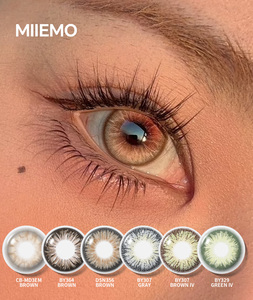
Monolithic block colors and harsh outer limbal rings are rapidly declining in popularity. Modern consumers favor nuanced, multi-layered micro-dots that replicate the intricate anatomical structures of human irises (radial limbal fading, subtle golden pupil rings, and soft hazel/grey blend matrixes). Optical suppliers utilizing high-definition digital plate technology enable brands to launch hyper-realistic eye-enhancing collections tailored to specific regional skin tones.
Direct-to-consumer digital brands require fast market testing cycles without binding significant capital in legacy volume commitments. Top Chinese exporters are adapting by introducing flexible modular production lines. This allows private label clients to launch curated seasonal color drops (e.g., Halloween specialty FX, Summer natural sun-burst collections) with lower Minimum Order Quantities (MOQs) and rapid 15-day replenishment schedules.
Excellence in optical manufacturing relies on strict regulatory oversight, cleanroom control, and comprehensive batch documentation.
Operating under an independently audited Medical Device Quality Management System. Every manufacturing step—from monomer raw material receiving to terminal sterilization—is fully documented with lot traceability logs for full audit readiness.
Cast molding, hydration, micro-printing, and primary packaging are conducted inside positive-pressure ISO Class 7/8 cleanroom environments. Automated micro-filtration eliminates airborne particulates, bacterial vectors, and pyrogens.
Complete technical files ready for submission to regulatory authorities worldwide, including EU CE MDR (2017/745), US FDA 510(k) pathway documentation, Saudi SFDA, Brazilian ANVISA, and Southeast Asian MOH approvals.
Essential operational and technical insights for professional purchasing agents and brand owners.
MOQs depend on whether you are sourcing standard stock parameters or developing custom artwork/colors. For stock clear or established cosmetic colors packaged in private label branded blisters and cartons, MOQs typically start at 500 to 1,000 pairs per SKU/color. For fully customized iris color print development and proprietary outer box shapes, MOQs generally start around 5,000 to 10,000 pairs per collection.
All cosmetic color lenses undergo strict Sandwich Micro-Encapsulation Printing. Biocompatible color pigments (FDA-approved iron oxides, titanium dioxide, phthalocyanines) are printed inside an inner polymer layer and encapsulated by twin protective outer transparent HEMA coats. Furthermore, every batch undergoes cell toxicity (ISO 10993-5), eye irritation (ISO 10993-10), and pigment rub-off leaching tests before batch clearance.
Every shipment is supplied with a comprehensive quality export documentation package. This includes a lot-specific Certificate of Analysis (CoA), Sterility Assurance Reports, Bio-burden Clearance Certificates, Base Curve/Diameter Optical Power Verification Reports, and packing lists with complete lot-number barcode traceability for regional health authority tracking.
For repeat OEM orders with pre-approved packaging artwork, standard manufacturing lead times range between 20 to 30 calendar days. Initial brand launches requiring custom artwork approval, structural packaging mold engineering, and color swatch sample proofing usually require 35 to 45 days. Expedited air freight or standard sea freight logistics options are arranged based on your launch timeline.
Yes. Our dedicated regulatory affairs team provides complete Technical File (TF) dossiers, Declarations of Conformity (DoC), ISO 13485 certificates, and clinical evaluation summaries required by local health authorities (such as the US FDA, EU Notified Bodies, Saudi SFDA, or Asian MoH). We support your local legal representative throughout the product registration phase.
Our blister-packaged contact lenses carry an official certified shelf life of 5 years from the date of terminal steam autoclave sterilization. Sealed in medical-grade aluminum foil blisters containing buffered isotonic saline solution, they should be stored in a cool, dry place away from direct sunlight between 1°C and 30°C.
Partner with China's leading medical-grade contact lens supplier and exporter. Contact our optical OEM/ODM engineering team today for technical consultations, sample requests, and factory-direct volume pricing.