Product Showcase
Certified Wholesale & OEM/ODM Product Assortment
Explore our medical-grade, CE/ISO compliant colored contact lenses and care accessories engineered for pharmacy chains, optical distributors, and private label beauty brands worldwide.
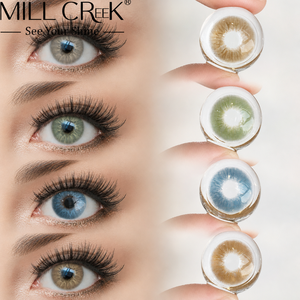
OEM ODM Private Label Soft Colored Contact Lenses Wholesale Custom Contact Lens Manufacturer
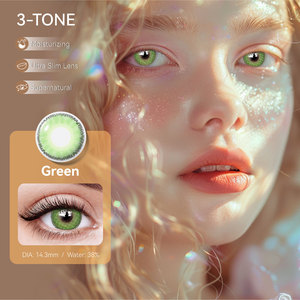
Best Quality Korean Color Contact Lenses Yearly Colored Contacts with Coated Paper Packaging for Cosmetic Use or Gifts
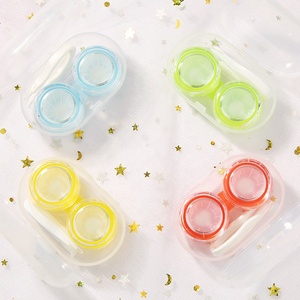
Wholesale Colored Contact Lenses Plastic case Box Customized Transparent Contact Lens case Travel Kit
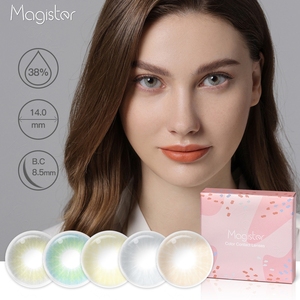
Magister Queen Most Natural Color Contact Lenses Cosmetic Colored Contacts Eye Colored Contact Lens Pupilentes
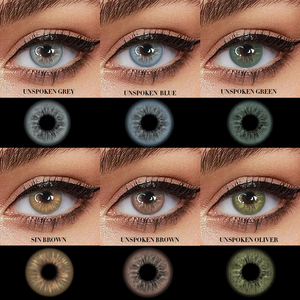
Unspoken Series Contact Lens Soft Natural Colored Contacts Lenses for Wholesale Yearly Use Eyes Cosmetic Color Contact Lens
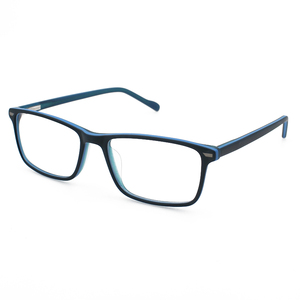
China Manufacturers Raw Acetate Materials Optical Frames Eyeglasses for Men
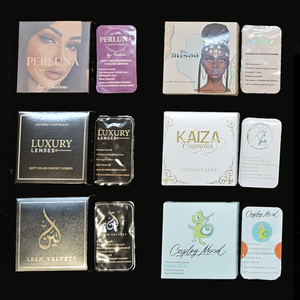
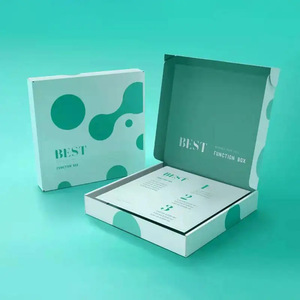
OEM ODM Factory Custom Color Contact Lens Private Label Contact Lenses Gift Case Packaging Box Private Label Logo Wholesale
99.8%
Batch Quality Pass Rate
50+
Countries Export Footprint
15M+
Annual Unit Capacity
100%
MDR & ISO 13485 Compliant
Corporate Infrastructure
Enterprise Manufacturing Authority & Global Operations Architecture
As global retail market dynamics shift toward personalized cosmetic optics and high-margin private label eye care, professional procurement directors require partners with verifiable clinical compliance, manufacturing scale, and international supply chain stability. kyralens Technology Co.,Ltd (headquartered at Faradaystraat 14, 6718 XT Ede, The Netherlands) operates as a primary B2B optical innovator, distributor, and OEM/ODM private label developer for premier drugstore chains, supermarkets, pharmacy networks, and specialized optical groups across Europe, the Middle East, and Asia.
Partnering with world-class retail networks including Watsons, Rossmann, Kruidvat, Trekpleister, Ahold Delhaize, Albert Heijn, Etos, Nahdi, GMG, Eureka, Migros, and REWE, kyralens delivers total category leadership. We bridge the gap between high-precision optical polymer manufacturing in automated Class 100,000 cleanrooms and turn-key, shelf-ready localized retail products.
Information Gain Insight: Unlike standard B2B brokers, true tier-1 color contact lens manufacturers maintain full batch traceability from monomer synthesis through micro-encapsulated pigment layering, automated steam sterilization, and localized packaging compliance under European Medical Device Regulation (EU MDR 2017/745).
Class 100,000 Cleanrooms
Fully automated cast-molding lines utilizing high-purity HEMA and Silicone Hydrogel monomers under HEPA-filtered cleanroom environments.
Full Regulatory File Suite
Complete documentation packages provided for every SKU including Declarations of Conformity, CE Mark certs, ISO 13485 audits, and FDA 510(k) filings.
EU Logistical Hub
Centralized distribution infrastructure in Ede, Netherlands ensuring rapid customs clearance, low lead times, and seamless buffer stocking for global buyers.
R&D Innovation
Advanced Polymer Chemistry & Pigment Sandwich Engineering
The cosmetic contact lens sector has evolved rapidly beyond basic visual modification into advanced ocular health preservation. Modern consumers and optical prescribers demand high oxygen permeability ($Dk/t$), superior surface wetability, and zero pigment leaching. Manufacturers leading the market in 2025 have adopted revolutionary material and structural developments:
1. Micro-Sandwich Color Encapsulation Technology
Traditional surface-printed lenses posed risks of pigment friction against the corneal epithelium or palpebral conjunctiva. Leading OEM exporters now implement Double-Layer Sandwich Printing. In this process, non-toxic bio-compatible color pigments are embedded entirely inside the hydrogel polymer matrix. The pigment layer is isolated between two microscopic, crystal-clear hydrogel layers, guaranteeing that visual pigments never touch ocular tissues while protecting colors from chemical degradation by multipurpose cleaning solutions.
2. Silicone Hydrogel (SiHy) vs. Enhanced HEMA Hydrogel
While HEMA-MMA (Hydroxyethyl methacrylate) remains a cost-effective, comfortable standard for daily disposable and fashion lenses ($38\% - 58\%$ water content), high-end cosmetic lines are aggressively shifting toward Silicone Hydrogel. SiHy matrices deliver up to 5x higher oxygen transmissibility ($Dk/t > 80-120$), drastically reducing corneal hypoxia, limbal redness, and end-of-day dryness during extended wear schedules.
| Technical Parameter | Standard HEMA Hydrogel | Next-Gen Silicone Hydrogel (SiHy) | Bio-Inspired Hyaluronic Hydrogel |
|---|---|---|---|
| Oxygen Permeability ($Dk/t$) | 20 – 30 $Dk/t$ | 80 – 125 $Dk/t$ | 35 – 50 $Dk/t$ |
| Water Content Range | 38% – 58% | 38% – 45% | 55% – 60% |
| Modulus (Flexibility) | 0.3 – 0.5 MPa (Ultra-Soft) | 0.6 – 0.9 MPa (Structured) | 0.35 – 0.45 MPa (Natural Comfort) |
| Pigment Encapsulation Method | Sandwich Printing / Pad Transfer | Laser Embedded Sandwich Tech | Micro-Encapsulated HA Matrix |
| Primary Target Retail Segment | Fashion / Daily Disposable / Cost-driven | Premium Pharmacy / Extended Wear | Sensitive Eyes / Dry Eye Syndromes |
3. Wetting Agent Integration & UV Blocking Filters
To maximize end-user retention, modern formulations incorporate moisture-locking agents such as Hyaluronic Acid (HA) or Poloxamer monomer additives directly into the unpolymerized monomer solution. Furthermore, Tier-1 manufacturers integrate Class 2 UV-blocking capabilities, screening out over 70% of UV-A and 95% of UV-B radiation to protect intraocular structures.
Strategic Procurement
2025–2030 Global Sourcing Trends & Supply Chain Dynamics
Category managers in optical and drugstore retail face evolving market forces. Analysis of purchasing patterns highlights several vital trends shaping bulk colored contact lens procurement over the coming decade:
Hyper-Customization & Fast-Fashion ODM
Retail buyers no longer settle for static 3-tone color catalogs. Success depends on rapid colorway prototyping (reducing sample iteration cycles from 12 weeks to 14 days) to align with social media beauty trends.
Tiered Micro-MOQ Flexibility
To mitigate inventory holding risk, distributors demand hybrid MOQ structures: low pilot run thresholds (e.g., 500 units/SKU) for market testing, scaling seamlessly into high-volume 100,000+ unit automated production runs.
Eco-Conscious Blister & Packaging Compliance
Global regulations are clamping down on single-use plastics. Innovation is focused on recyclable polypropylene blister bowls, reduced aluminum foil thickness, and FSC-certified paper secondary cartons.
Quality Assurance
Global Regulatory Verification & Audit Protocols
Because soft contact lenses are classified as Class IIa (EU MDR) and Class II (US FDA) medical devices, improper manufacturing standards can cause severe business disruption, product recalls, or legal liability. Exporters must fulfill stringent global verification criteria:
- ISO 13485:2016 Certification: Comprehensive quality management system tailored specifically for medical device design, manufacturing, and traceability.
- Moist Heat Steam Autoclaving: Every sealed blister pack undergoes validated terminal steam sterilization ($121^\circ\text{C}$ for 20+ minutes) to ensure a Sterility Assurance Level (SAL) of $10^{-6}$.
- Automated Optical Inspection (AOI): High-speed machine vision cameras inspect 100% of lenses for edge tears, surface inclusions, power deviations, and color print misalignments before blister sealing.
- Accelerated & Real-Time Shelf-Life Aging: Validated stability testing ensuring product sterile integrity and optical parameter retention over 3-year to 5-year expiration windows.
Buyer FAQ
Frequently Asked Questions for B2B Buyers & Procurement Managers
Explore technical answers regarding OEM custom production, regulatory filings, minimum orders, and supply chain management.
What is the standard Minimum Order Quantity (MOQ) for OEM/ODM private label contact lenses? ▼
Standard OEM minimum order quantities vary based on parameter customization and packaging requirements. For stock color collections with custom outer retail box branding, MOQs start as low as 500 to 1,000 pairs per color SKU. For custom lens parameters, bespoke color design creation, or unique power ranges, production run MOQs typically start at 3,000 to 5,000 pairs per SKU. We provide flexible tiered quotes to accommodate initial market test phases before scaling to volume retail rollouts.
How do you guarantee color safety and ensure pigments do not touch the eye? ▼
All our cosmetic colored contact lenses utilize advanced Micro-Sandwich Printing Technology. Biocompatible, FDA-approved color pigments are fully encapsulated between two micro-thin layers of clear hydrogel material. This ensures that pigments are 100% physically isolated from direct contact with the cornea and eyelid tissue, completely preventing pigment migration, fading, or mechanical irritation during wear.
What regulatory documentation is provided for international market entry? ▼
Every production order is accompanied by a full technical documentation dossier required by your destination market's health authority. This includes ISO 13485 certificates, CE Declarations of Conformity, Free Sale Certificates (FSC), Certificate of Analysis (CoA) per lot, sterilization validation reports, and localized packaging label compliance reviews (covering multilingual warnings, UDI barcodes, and symbol standardization).
Can we supply our own artwork for customized retail packaging and blister foils? ▼
Yes. Our in-house packaging design team provides precise dieline templates for blister packaging foils, paper cartons, instruction leaflets, and multi-pack gift sets. You can provide finalized artwork files (AI/PDF format), or work directly with our design consultants to create localized, shelf-ready brand packaging aligned with regional pharmacy and retail specifications.
What lead times can we expect from purchase order to final delivery? ▼
For standard stock products requiring custom outer packaging labeling, typical lead times are 2 to 3 weeks. For complete OEM/ODM custom lens molding, color printing, and customized blister sealing, production lead times average 4 to 6 weeks depending on order volume. Express air freight and centralized European warehouse dispatch from Ede, Netherlands are available for expedited delivery.
Are prescription (myopia/hyperopia) powers available in colored lenses? ▼
Yes. We offer both plano (0.00 power for cosmetic use) and full prescription corrective ranges (plano to -10.00D in 0.25D or 0.50D increments). Astigmatism (toric) and multifocal custom manufacturing options are also available upon request for high-end optical chain partners.
How do you handle sample validation prior to bulk order production? ▼
We encourage thorough pre-production evaluation. Prospective wholesale buyers can request physical sample kits containing selected color series, packaging mockups, and lens trial pairs to verify comfort, water retention, base curve fit, and color coverage on dark and light eyes prior to committing to commercial contract manufacturing.
Partner with a Trusted Global Optical Exporter
Transform your retail category margins with medical-grade, certified OEM/ODM colored contact lenses and comprehensive private label solutions tailored for global markets.