Featured Private Label Lenses & Care Accessories
Explore our high-demand OEM/ODM product portfolio certified for global drugstores, optical chains, and B2B distributors.
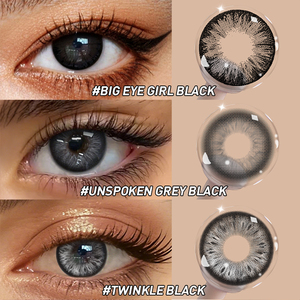
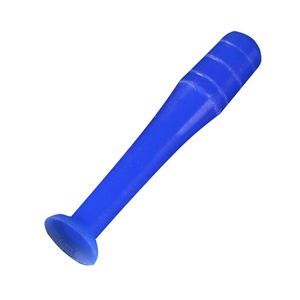
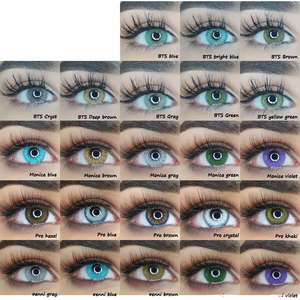
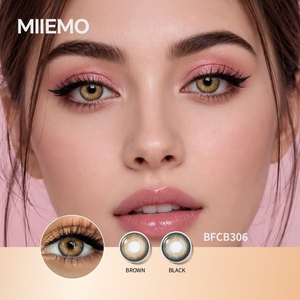
Global Contact Lens Manufacturing Landscape: Engineering & Sourcing Benchmark
A comprehensive technical analysis for commercial procurement teams, optical category managers, and private label pharmaceutical buyers.
Material Science Innovations
Modern contact lens manufacturing in China has transitioned from traditional HEMA-based hydrogels to advanced Silicone Hydrogel (SiHy) matrices. Featuring oxygen permeability ($Dk/t$) exceeding 125, these polymers ensure long-wear corneal oxygenation while reducing lipid deposition through nano-surface plasma coatings.
Sandwich Color Printing (Full Encapsulation)
Cosmetic color lenses require uncompromising ocular safety. Top-tier Chinese manufacturers employ micro-encapsulation "sandwich" technology, locking non-toxic bio-pigments between two transparent hydrogel layers to guarantee zero pigment contact with human corneal tissue.
Fully Automated Cleanroom Molding
Precision cast molding technology combined with High-Speed Automated Optical Inspection (AOI) guarantees sub-micron dimensional tolerances across base curve ($BC$), diameter ($DIA$), and center thickness ($CT$), securing product consistency below 0.02mm variance.
Procurement Insight: Navigating Class III Medical Device Compliance
Contact lenses are globally regulated as Class III medical devices (under US FDA, EU MDR 2017/745, and China NMPA). Partnering with certified OEM factories in China ensures that every batch comes with full Lot Traceability, Certificate of Analysis (CoA), ISO 13485 compliance, and valid biocompatibility testing (ISO 10993 cytotoxicity, sensitization, and ocular irritation reports).
Why Leading Global Retailers Select Kyralens & Strategic Chinese Manufacturing Partners
kyralens Technology Co., Ltd. serves as a leading global wholesaler and developer of private label eye care products. We bridge high-capacity, high-precision Chinese OEM manufacturing with international compliance, retail packaging engineering, and shelf-ready category optimization. Our institutional supply chains serve pharmacy chains, optical groups, drugstores, and retail conglomerates across Europe, the Middle East, and Asia.
1. End-to-End Private Label Turnkey Solutions
From custom hydraulic lens geometry formulation to custom outer box graphic printing, we manage the entire lifecycle. B2B buyers can choose from daily disposables, bi-weekly, monthly, and yearly replacement schedules, as well as toric (astigmatism) and multifocal prescriptions.
2. Regulatory Security & Destination Packaging
Navigating multi-market regulatory rules requires robust documentation. We provide localized artwork review, multilingual blister packaging, EAN/UPC barcode validation, standard lot tracking codes, and sterile medical packaging compliant with EN ISO 11607.
3. Complete Category Coverage on One Order
Consolidate your supply chain by sourcing soft contact lenses, lubricating eye drops (preservative-free single-dose and multi-dose), multi-purpose lens cleaning solutions, peroxide disinfectants, cases, and ready-to-wear reading glasses under one master agreement.
4. Flexible Order Scaling & Rapid Prototyping
Whether testing a pilot collection in 50 retail locations or launching a national roll-out across 2,000 stores, our manufacturing partners scale production seamlessly while maintaining competitive tier-one unit economics.
Future Industry & Procurement Trends in Optical Manufacturing
Strategic foresights on material evolution, environmental sustainability, and smart contact lens integration.
1. Eco-Conscious Packaging & Bio-Plastics
Environmental standards in Europe and North America are driving the adoption of recyclable polypropylene blister cups, reduced-plastic foil lids, and biodegradable secondary paper cartons. Leading factories are engineering slim packaging designs that reduce plastic usage per blister by up to 40% while preserving seal integrity and shelf stability.
2. Hyper-Natural 3-Tone Iris Architecture
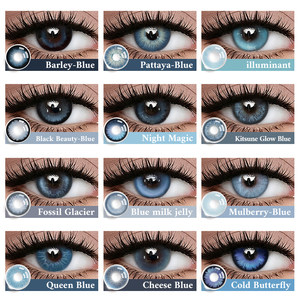
Consumer preferences in cosmetic contact lenses are shifting away from stark high-contrast graphics toward natural iris replication. Micro-dot printing technology allows high-definition blending of 3-tone and 4-tone color gradients that enhance dark eyes seamlessly while preserving high luminous transmittance.
3. High-Dk/t Hyaluronic Acid Infused Hydrogels
To combat digital eye strain caused by prolonged screen usage, modern contact lens formulations incorporate moisture-locking agents like Sodium Hyaluronate (HA) and Polyvinylpyrrolidone (PVP) directly into the polymer matrix, guaranteeing 16-hour hydration and reduced tear film evaporation.
Standard OEM/ODM Private Label Sourcing Process
A structured, risk-mitigated procurement roadmap from concept validation to shelf replenishment.
Category Briefing
Evaluation of target retail demographics, corrective power matrix, packaging guidelines, and regulatory requirements in the destination country.
Formulation & Design
Selection of lens polymer (Hydrogel vs. Silicone Hydrogel), edge geometry configuration, water content, base curve, and artwork design.
Audit & Registration
Factory ISO 13485 audit, sample validation, bio-compatibility verification, medical packaging testing, and local regulatory filing support.
Production & Logistics
Automated cast molding, 100% AOI inspection, gamma or steam autoclave sterilization, and global freight delivery with full batch traceability.
Frequently Asked Procurement Questions (B2B Sourcing FAQ)
Direct technical answers addressing minimum orders, regulatory compliance, quality control, and private label timelines.
What makes China contact lens manufacturers competitive for private label procurement?
What are the typical Minimum Order Quantities (MOQ) for custom private label contact lenses?
Which regulatory certificates are required to import contact lenses from China into Europe and North America?
How does the "Sandwich" color printing process guarantee ocular safety?
Can kyralens supply complementary eye care products like eye drops and lens cases under the same brand?
What is the standard lead time for OEM/ODM contact lens production and sample delivery?
Ready to Build Your Private Label Eye Care Brand?
Connect with our senior OEM procurement specialists to request factory audits, technical specification sheets, wholesale price quotes, or custom sample kits.