Featured OEM/ODM Eye Care & Optical Products
Explore our certified contact lenses, custom packaging solutions, and ophthalmic accessories tailored for European retail chains, pharmacy networks, and brand owners.
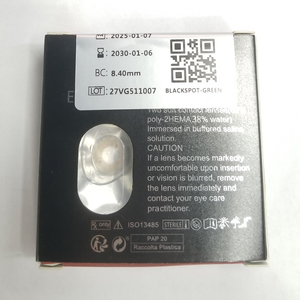
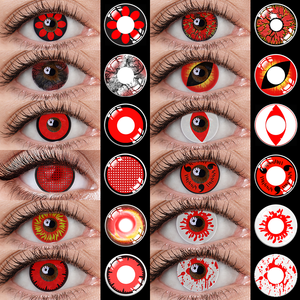
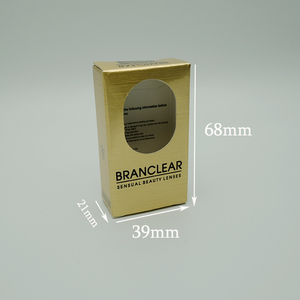

European Contact Lens Distribution Architecture & Regulatory Dynamics
The European contact lens distribution ecosystem is currently undergoing a structural transformation driven by stringent regulatory frameworks, evolving consumer preferences for high-oxygen biomaterials, and direct-to-consumer (DTC) supply chain compression. As B2B buyers, optical chain purchasing directors, and pharmacy procurement managers navigate this landscape, selecting a qualified contact lens manufacturer and European distribution partner requires a granular understanding of quality assurance matrices, regulatory traceability, and automated production scalability.
Navigating the EU Medical Device Regulation (EU MDR 2017/745)
The transition from the legacy Medical Device Directive (MDD 93/42/EEC) to the European Union Medical Device Regulation (EU MDR 2017/745) has reclassified cosmetic colored contact lenses and corrective soft contact lenses under heightened scrutiny (Class IIa and Class IIb device classifications). Top-tier contact lens manufacturers supplying the European market must maintain rigorous Technical Documentation Files (TDF), conduct ongoing Post-Market Surveillance (PMS), and establish robust Clinical Evaluation Reports (CER).
For European distributors and private label brand owners, sourcing from ISO 13485:2016-certified manufacturing facilities guarantees that every production batch undergoes automated visual quality control, spectral transmittance testing, and micro-dimensional verification. Furthermore, compliance with the EUDAMED database architecture and Unique Device Identification (UDI-DI / UDI-PI) tracking is mandatory for seamless entry into major European retail hubs, including Germany, France, the Netherlands, and Scandinavia.
Material Science Innovations: Hydrogel vs. Third-Generation Silicone Hydrogel
Product performance in the contact lens industry is fundamentally governed by polymer chemistry. Modern European consumers prioritize ocular comfort, tear-film stability, and prolonged wearing times without hypoxic corneal stress. Manufacturers supplying leading European optical brands utilize two main material families: conventional hydrogels and advanced silicone hydrogels (SiHy).
| Polymer Technical Parameter | Conventional Hydrogel (HEMA / NVP) | 2nd Gen Silicone Hydrogel | 3rd Gen Hydrophilic SiHy Matrix |
|---|---|---|---|
| Oxygen Transmissibility (Dk/t @ -3.00D) | 20 – 35 Dk/t | 80 – 100 Dk/t | 125 – 175 Dk/t |
| Water Content (%) | 55% – 69% | 33% – 45% | 48% – 56% |
| Modulus of Elasticity (MPa) | 0.30 – 0.45 MPa (Ultra-soft) | 1.00 – 1.40 MPa (Stiff) | 0.50 – 0.70 MPa (Optimal Balance) |
| Surface Wetting Technology | Extrinsic Wetting Agents | Plasma Coating Treatment | Intrinsic Hydrophilic Monomers |
| Target Retail Segment | Budget Daily / Cosmetic Lenses | Extended Wear / Monthly Lenses | Premium Daily Disposable / Toric / Multifocal |
Advanced Wetting Technologies & Latent Polymer Matrices
Third-generation silicone hydrogel technology eliminates the historical trade-off between oxygen permeability and lens softness. By embedding hydrophilic monomers directly into the polymer network, the lens retains moisture naturally without relying on surface coatings that can degrade over time. Combined with matrix-embedded Hyaluronic Acid (HA) or Polyvinylpyrrolidone (PVP), these lenses provide a sustained hydration barrier that mitigates digital eye strain—a primary purchasing criterion for modern European office workers and younger demographics.
Cosmetic Contact Lens Engineering & Micro-Encapsulation Technology
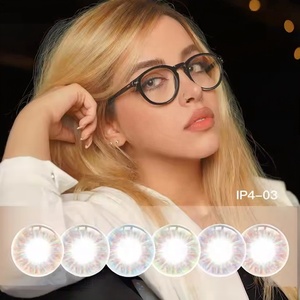
The cosmetic and colored contact lens market across Europe is expanding rapidly, fueled by social media trends, theatrical/cosplay demands, and everyday aesthetic enhancement. However, manufacturing high-safety colored contact lenses requires sophisticated multi-layer printing processes to eliminate pigment-to-cornea contact.
Sandwich Micro-Encapsulation
Pigment layers are isolated between two micro-thin transparent hydrogel layers. This ensures zero color pigment leakage, preserving corneal endothelial health and complying with EU FDA/CE safety protocols.
3-Tone Natural Iris Geometry
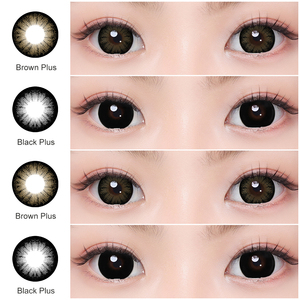
Utilizes high-precision digital dot-matrix printing to simulate realistic iris structures. Combines a dark limbal ring, warm inner ring, and translucent mid-tone for seamless blending with natural eye colors.
High-Precision Cast Moulding
Dual-sided computerized cast moulding creates ultra-smooth peripheral edge contours. Reduces lid interaction during blinking, enhancing all-day wearing stability for sensitive eyes.
European B2B Procurement Trends & Supply Chain Forecast (2025–2030)
Strategic procurement managers evaluating contact lens manufacturers and distributors in Europe must plan for long-term industry macro trends. Sourcing decisions made today impact brand equity, gross profit margins, and supply resilience over the next decade.
1. Transition to Eco-Friendly Blister Packaging & Reduced Plastics
European sustainability mandates (such as the EU Packaging and Packaging Waste Regulation - PPWR) are compelling optical brands to optimize secondary and primary packaging. Leading manufacturers are introducing recyclable Polyethylene Terephthalate Glycol (PETG) blister packs, aluminum foil seals with solvent-free coatings, and FSC-certified paper cartons to shrink carbon footprints without compromising sterile barrier integrity.
2. Hyper-Customization via Private Label OEM/ODM Programs
National drugstore networks, optical franchises, and fast-fashion cosmetic brands are shifting away from selling third-party manufacturer brands toward building high-margin private labels. By collaborating directly with direct OEM/ODM manufacturers, retailers can launch exclusive color collections, bespoke diopter spectrums (-0.50D to -12.00D, including astigmatic/toric options), and branded lens care solutions.
3. Buffer Stock Management & Regional Hub Fulfillment
Global supply disruptions have highlighted the necessity of localized European warehousing. Distributors maintaining inventory hubs in central European logistics corridors (such as Ede in the Netherlands or Frankfurt in Germany) offer 48-to-72-hour replenishment options across the EU, reducing lead times compared to direct factory shipments from East Asia.
Why Kyralens Technology is Europe’s Premier OEM/ODM Strategic Partner
kyralens Technology Co., Ltd. stands at the forefront of private label eye care solutions. Serving pharmaceutical chains, optical retail conglomerates, and cosmetic distributors across Europe, the Middle East, and Asia, our manufacturing infrastructure bridges advanced optical engineering with streamlined commercial distribution.
ISO Class 8 Cleanroom Production
Fully automated robotic assembly lines operating under Class 100,000 (ISO 8) cleanroom environments prevent particulate contamination, ensuring absolute sterility prior to high-pressure thermal autoclaving.
Turnkey Private Label Branding
From industrial packaging design and box structural prototyping to multilingual regulatory leaflet translation, our design team delivers shelf-ready retail packages aligned with local market preferences.
Comprehensive Product Ecosystem
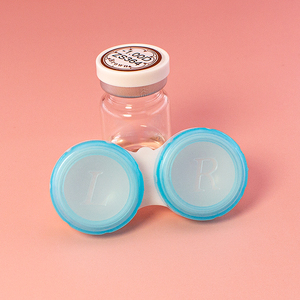
Consolidate your supply chain by sourcing daily soft contacts, cosmetic color lenses, multipurpose cleaning solutions, preservative-free lubricating drops, ABS storage cases, and reading glasses from a single partner.
Frequently Asked B2B Procurement Questions (FAQ)
Key technical, regulatory, and commercial answers for European contact lens buyers and category managers.
Q1: What regulatory documentation is provided for European market entry?
We provide comprehensive EU MDR (2017/745) technical files, CE certificates issued by Accredited Notified Bodies, ISO 13485:2016 quality system audit reports, Declarations of Conformity (DoC), labeling review files, and full batch sterilization validation logs.
Q2: What are the Minimum Order Quantities (MOQs) for private label custom OEM projects?
MOQs vary by SKU complexity. Standard clear corrective contact lenses typically start at 5,000 units per diopter power, while custom cosmetic color lenses start at 1,000 to 3,000 pairs per shade collection. Contact lens storage cases and packaging boxes can be customized at 5,000 unit increments.
Q3: How is pigment safety validated in custom cosmetic color contact lenses?
All color lines utilize bio-compatible inorganic and organic pigments approved by US FDA and European Pharmacopoeia standards. Pigments are embedded via micro-encapsulation sandwich technology, guaranteeing zero direct surface exposure to human ocular tissue.
Q4: What are the standard lead times from artwork approval to European warehouse delivery?
Initial OEM orders requiring artwork approval and custom plate setup take approximately 30 to 45 calendar days. Repeat production orders are fulfilled within 20 to 25 days, with expedited air cargo or regional European buffer stock fulfillment options available.
Q5: Can you manufacture custom base curve (BC) and diameter (DIA) parameters?
Yes. While our standard ergonomic base curve of 8.5mm to 8.6mm and diameter of 14.0mm to 14.5mm fit over 95% of European patients, custom cast molds can be engineered for specific institutional or specialized optical requirements.
Q6: Are sample kits available for laboratory testing and optical evaluation?
We supply trial blister samples, diopter verification sets, and physical packaging prototypes to qualified B2B procurement teams, medical buyers, and distributor representatives upon request.
Partner with Europe’s Premier Contact Lens Manufacturer & OEM Distributor
Accelerate your brand growth with certified optical products, compliant packaging, and direct factory pricing. Contact our senior OEM/ODM specialists today to discuss technical specifications, regulatory files, and bulk procurement solutions.