Executive Product Showcase: Certified China Optical Lines
Direct factory supply of medical-grade contact lenses, high-index single vision/bifocal optical blanks, custom cosmetic contact lenses, and ergonomic lens care accessories produced under cleanroom automation.
Global Contact Lens & Ophthalmic Lens Sourcing Landscape: China's Industrial Dominance
The global eye care and corrective optics ecosystem is undergoing a structural transformation. Procurement executives across pharmaceutical chains, optical superstores, drugstore conglomerates (such as Watsons, Rossmann, Kruidvat, and Albert Heijn), and independent eye care brands are increasingly consolidating their supply chains with specialized Chinese manufacturing hubs. The evolution of Top Trusted Contact Lens Factory China Factories & Exporters is anchored in automated precision molding, advanced polymer chemistry, robust regulatory documentation, and unparalleled cost-efficiency.
Historically, contact lens production was dominated by western multinational conglomerates with high pricing structures and rigid private-label terms. Today, tier-1 Chinese manufacturers—operating out of specialized optical clusters in Jiangsu (Danyang, Changzhou), Zhejiang (Wenzhou), and Guangdong—have revolutionized the B2B supply model. By deploying fully automated Cast-Molding Technology, high-precision nano-surface polishing, and ISO Class 5/7 cleanroom environments, Chinese contact lens factories deliver medical-grade hydrogel and silicone hydrogel lenses that match or exceed Western performance metrics at a fraction of the unit cost.
Manufacturing Hub Breakdown: Why Sourcing from China Yields Competitive Advantage
When evaluating contact lens exporters and ophthalmic lens foundries in China, commercial buyers gain distinct operational advantages across four key vectors:
Technical Specification & Manufacturing Process Matrix
Understanding the material properties and production methodologies is vital for B2B category managers when selecting contact lenses and optical lens blanks for regional market distribution.
| Material Category | Water Content / Refractive Index | Oxygen Transmissibility (Dk/t) | Manufacturing Technology | Target Retail Application |
|---|---|---|---|---|
| Hydrogel (Polymacon / HEMA) | 38% - 58% Water Content | 20 - 35 Dk/t | Automated Cast-Molding | Daily & Monthly Disposables, Budget Color Contacts |
| Silicone Hydrogel (SiHy) | 45% - 55% Water Content | 100 - 150 Dk/t | Plasma Surface Treated Cast-Molding | Premium Comfort Lenses, Extended Wear, Health Lines |
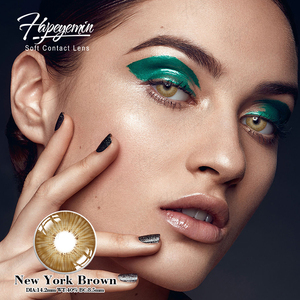
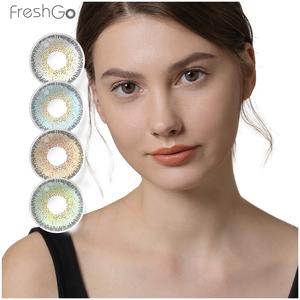
| Cosmetic Color Lenses | 38% - 42% Water Content | 22 - 30 Dk/t | 3-Layer Sandwich Pigment Embedding | Beauty Retail, Pharmacy Private Label, Fashion Series |
| Ophthalmic CR-39 / High Index | Index 1.499, 1.56, 1.60, 1.67, 1.74 | ABBE Value 32 - 58 | Precision Glass Mold Monomer Polymerization | Finished & Semi-Finished Prescription Eyeglass Lenses |
B2B Purchasing Trends Shaping Contact Lens Procurement (2026–2030)
As consumer hygiene awareness rises and optical fashion continues to converge with medical eye care, procurement teams must align their sourcing strategies with four macro market trends:
Manufacturing Technology & Development Trends in Chinese Factories
The technological sophistication of Chinese contact lens and optical lens foundries has surged. Leading manufacturing facilities utilize fully integrated, computer-controlled production lines that guarantee batch-to-batch optical consistency.
1. High-Speed Direct Cast Molding (DCM)
Traditional lathe-cutting methods are now restricted to complex custom toric or prosthetic lenses. For high-volume contact lens manufacturing, Direct Cast Molding utilizes precision-machined quartz or special polymer matrix molds. Monomers are injected, UV-cured, hydrated, and inspected within an uninterrupted automated cell, ensuring base curve tolerances within ±0.02 mm.
2. Surface Modification & Moisture Lock Polymers
To overcome end-of-day dryness in contact lens wearers, advanced Chinese research institutes have integrated internal wetting agents—such as Polyvinylpyrrolidone (PVP) and Hyaluronic Acid (HA)—directly into the polymer matrix. Additionally, plasma surface treatment creates a hydrophilic surface layer that resists lipid and protein deposition.
3. Advanced Ophthalmic Resin Synthesis (1.499 to 1.74 High Index)
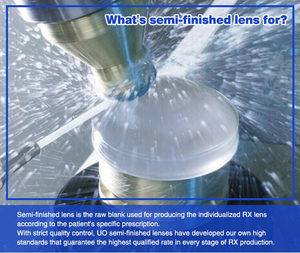
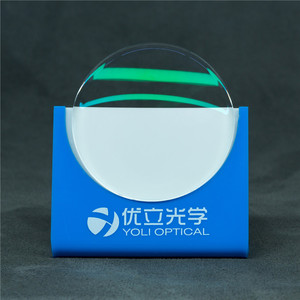
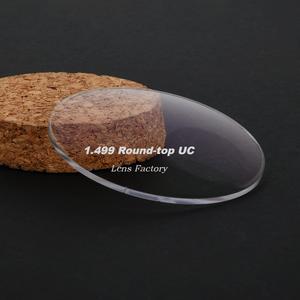
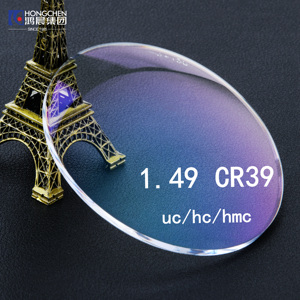
In prescription eyeglass lens production, Chinese manufacturers lead global exports in CR-39 1.499 single vision, polarized semi-finished blanks, round-top bifocals, and ultra-high-index 1.67/1.74 ophthalmic lenses. Modern hard-coating (HC), anti-reflective (HMC), and superhydrophobic top-coats provide scratch resistance and superior light transmission (>99%).
Enterprise Core Advantages: Partnering with Kyralens & Premier Chinese Exporters
As a specialized global distributor and direct manufacturing partner, kyralens Technology Co., Ltd. bridge state-of-the-art Chinese optical engineering with stringent international market requirements. Our end-to-end private label solutions empower retail chains, pharmacy groups, and optical wholesalers to establish high-margin eye care lines seamlessly.
Frequently Asked Questions (FAQ) for B2B Contact Lens Procurement
Clear answers to regulatory, technical, and logistical queries standard in international optical supply contracts.
What are the regulatory requirements for importing contact lenses from China into Europe or the USA? ▼
Contact lenses are classified as Class IIa or IIb medical devices under the European Union Medical Device Regulation (EU MDR 2017/745) and Class II medical devices under the US FDA. To import legally, the manufacturing facility must maintain ISO 13485:2016 certification and hold a valid CE Certificate issued by an accredited Notified Body (e.g., TÜV SÜD, SGS, BSI) or US FDA 510(k) clearance. Our factory production lines provide full technical files, EU Representative (EC REP) support, and complete batch sterilization validation records.
What is the minimum order quantity (MOQ) for custom OEM private label contact lenses? ▼
For standard clear daily or monthly contact lenses in stock parameters, MOQs start as low as 1,000 to 3,000 blisters per SKU. For custom cosmetic color lenses with custom logo printing on blister foils and retail packaging, typical MOQs range between 10,000 and 30,000 units per color design, depending on the complexity of the shade and power distribution.
How is color safety ensured in Chinese cosmetic color contact lenses? ▼
Premier Chinese manufacturers utilize a specialized "Sandwich Technology" (micro-encapsulation). The color pigments are printed inside an inner layer of the hydrogel matrix, ensuring the color dyes never come into direct contact with the cornea or palpebral conjunctiva. This prevents pigment erosion, maintains oxygen permeability, and guarantees wearer safety.
What is the difference between Hydrogel and Silicone Hydrogel lenses for retail buyers? ▼
Standard Hydrogel lenses rely on water content to transport oxygen to the cornea (Dk value typically 20-30). Silicone Hydrogel lenses incorporate silicone polymers, providing drastically higher oxygen permeability (Dk/t 100-150+) independent of water content. Silicone hydrogels reduce corneal hypoxia risk, making them the preferred premium choice for long daily wear, while traditional hydrogels remain ideal for daily disposable budget lines.
Can we request custom base curves (BC), diameters (DIA), and optical powers? ▼
Yes. Standard mass-production parameters are Base Curve 8.5mm / 8.6mm and Diameter 14.0mm / 14.2mm / 14.5mm, covering -0.50D to -10.00D. For contract manufacturing partners, custom mold inserts can be created for specialized BC, DIA, toric cylinder corrections, or hyperopic (+) power ranges upon technical agreement.
What is the average production lead time and shelf-life of sterile contact lens blisters? ▼
Standard production lead time for OEM private label orders is 30 to 45 days from artwork approval and deposit confirmation. Sealed sterile contact lens blisters filled with buffered saline solution carry an accelerated aging validated shelf-life of 5 years from the date of steam/gamma sterilization.
Partner with China's Premier Contact Lens Factory Today
Whether launching a custom private label cosmetic color line, procuring high-Dk silicone hydrogels, or sourcing high-index ophthalmic blanks, our optical engineering team is standing by to provide instant quotes, technical documentation, and sample kits.