Featured China Manufactured Wholesale Contact Lenses
Explore our medical-grade soft cosmetic, prescription, and special-effects contact lenses produced via high-precision cast-moulding and micro-encapsulation technology.
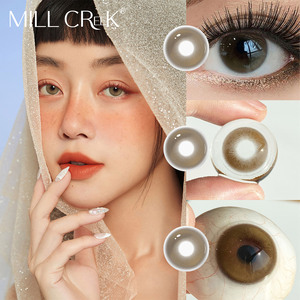
Bulk Order Soft Natural Brown Colored Contact Lenses for Factory Price Customizable Packaging Fast Shipping
Inquire Now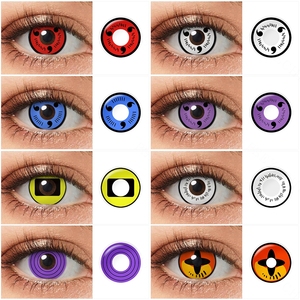
Hot Sale Sharingan Cosplay Contact Lenses Eye Color Lens Korean Colored Contacts Wholesale Halloween Lentilles De Yeux for Eyes
Inquire Now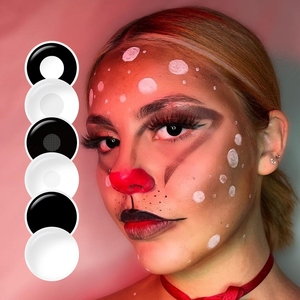
Hot Sale Pseyeche Black Out Halloween Contact Lens Pseyeche Cosplay Soft Lens White Web Lentilles De Contact En Gros
Inquire Now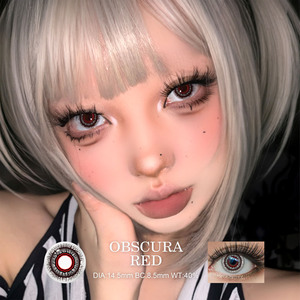
MILL CREEK Wholesale OEM HEMA Red Yearly 14.5mm Vibrant Colored Contact Lenses Cosplay Halloween Special-Effect
Inquire Now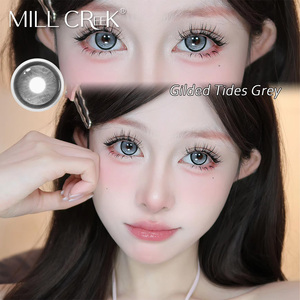
Haipurecon Factory Direct Wholesale Grey Sky Blue Color Contact Lenses Natural Multi Colors New Style Bulk Order Low MOQ
Inquire Now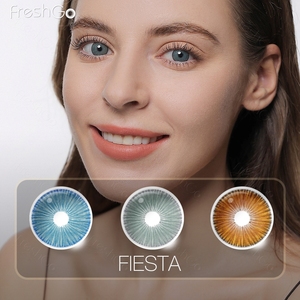
Free Shipping Freshgo New York Colored Contact Lenses High Quality 14.2 Wholesale Cosmetic Color Contact Lens Lentes De Contacto
Inquire Now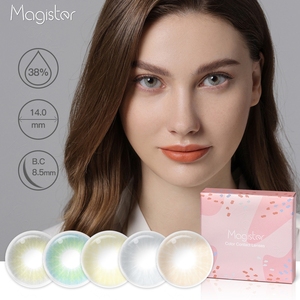
Magister Queen Most Natural Color Contact Lenses Cosmetic Colored Contacts Eye Colored Contact Lens Pupilentes
Inquire Now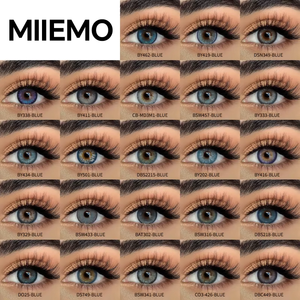
OEM Private Label Three Tone Colored Contact Lenses 38% Water Content Custom Logo Blister Pack Soft Comfortable Beauty
Inquire NowNavigating China’s Contact Lens Manufacturing Landscape
Understanding the technology, regulatory framework, and supply chain infrastructure behind top-tier optical OEM/ODM factories.
The global contact lens market has undergone a paradigm shift, with China emerging as a premier hub for high-precision optical manufacturing, advanced polymer synthesis, and custom cosmetic lens development. Driven by massive investments in Class 100,000 cleanroom infrastructure, automated robotic handling, and stringent ISO 13485 quality control protocols, top Chinese manufacturers now supply leading pharmacy chains, optical retailers, and direct-to-consumer (D2C) global brands across Europe, the Middle East, and the Americas.
For B2B procurement managers, brand directors, and optical distributors, selecting a trusted contact lens manufacturer in China requires looking beyond base unit pricing. It demands an in-depth evaluation of technological capabilities—such as automated cast-moulding precision, color layer encapsulation (Sandwich Technology), oxygen permeability parameters (Dk/t), and comprehensive international regulatory registration support (including CE 0123, US FDA 510(k), and NMPA approvals).
Key Purchasing Takeaway: A top-tier Chinese contact lens manufacturer does not merely offer contract assembly; they serve as a strategic R&D partner providing end-to-end private label solutions—from polymer formulation and optical surface design to localized packaging compliance and rapid supply chain fulfillment.
Core Pillars of OEM/ODM Optical Production
Why leading global eye care brands partner with established Chinese manufacturing hubs.
High-Precision Cast Moulding
Traditional lathe-cutting is replaced by state-of-the-art fully automated nano-precision cast moulding. This ensures consistent base curve (B.C.) fidelity, uniform edge profiles, and identical optical power across millions of units.
- Sub-micron mold surface tolerance (±0.001mm)
- Smooth round edge profile for all-day wearing comfort
- Zero mechanical strain on polymer hydrogel matrices
Patented Sandwich Color Layering
To ensure maximum bio-safety in cosmetic colored contact lenses, leading factories employ double-layer micro-encapsulation. Color pigments are locked between two clear hydrogel polymer layers.
- Zero direct pigment contact with the cornea or conjunctiva
- Smooth, un-printed outer surface prevents tear film disruption
- UV-resistant organic bio-colorants with vibrant color payoff
Advanced Polymer Engineering
Continuous innovation in HEMA-NVP hydrogel and third-generation Silicone Hydrogel materials allows manufacturers to offer optimal water content equilibrium paired with superior oxygen transmissibility (Dk/t).
- High Dk/t silicone hydrogel option for extended wear safety
- Moisture-locking Hyaluronic Acid (HA) matrix integration
- Class II UV blocking filtering >70% UVA & >95% UVB rays
Technical Quality Control & Testing Benchmark
A rigorous compliance framework required for international medical device market entry.
| Quality Test Parameter | Testing Protocol / Standard | Industry Acceptance Criteria | Manufacturing Impact |
|---|---|---|---|
| Cytotoxicity & Biocompatibility | ISO 10993-5 / ISO 10993-10 | Zero cell lysis; Non-irritating to ocular tissue | Guarantees zero toxic leachables from pigments or monomer residues. |
| Oxygen Transmissibility (Dk/t) | ISO 18369-4 (Polarographic) | Dk/t > 25 (Hydrogel) / Dk/t > 100 (Silicone) | Prevents corneal hypoxia and maintains long-term eye health during wear. |
| Dimension & Power Tolerance | ISO 18369-3 (Focimeter / Optical) | Power: ±0.25D; Dia: ±0.20mm; B.C.: ±0.20mm | Ensures exact visual correction and precise anatomical fit per prescription. |
| Sterility Assurance Level (SAL) | ISO 17665 (Moist Heat Sterilization) | SAL of 10-6 (1 in 1,000,000 chance non-sterile) | Ensures complete microbial elimination inside sealed blister packaging. |
| Color Encapsulation Integrity | Rub Test & Extraction Solvent Assay | Zero pigment migration or surface roughness | Protects corneal epithelium from mechanical friction and chemical contact. |
Technology Development Trends in Contact Lens Manufacturing
Key innovations shaping the next generation of vision care and cosmetic ocular products.
1. Shift Toward Silicone Hydrogel Dominance
While traditional PolyHEMA hydrogel remains popular for cost-effective daily disposables and cosmetic lenses, the global market is rapidly transitioning to Silicone Hydrogel (SiHy). Advanced Chinese factories have mastered fluorinated silicone monomer synthesis, overcoming historical stiffness (modulus) challenges to produce soft, high-oxygen permeable lenses with low water evaporation rates.
2. 3D Digital Iris Scanning & Micro-Printing
Cosmetic contact lens aesthetic design has evolved from basic 1-tone patterns to multi-layered, 3D iris replication. Leveraging high-resolution digital iris mapping and automated ink-jet micro-dispensing, top factories can recreate subtle ring gradients, hazel depth, and hyper-realistic iris textures that blend seamlessly with natural pupil tones.
3. Surface Moisture Locking & Bio-Mimetic Coatings
To combat dry-eye complaints associated with prolonged digital screen exposure, manufacturers are embedding natural wetting agents such as Hyaluronic Acid (HA) and Polyvinylpyrrolidone (PVP) directly into the monomer blend, or applying hydrophobic plasma coatings that resist lipid and protein deposition over multi-day wear.
Future Sourcing Trends for Global Contact Lens Buyers
How international optical brands and retail procurement teams are optimizing their supply chain strategies.
Agile Private Label Customization & Low MOQs
Emerging D2C beauty brands and optical startups require lower Minimum Order Quantities (MOQs) to test niche color collections and seasonal cosmetic lines. Modern Chinese factories are adapting by implementing modular automated blister lines capable of rapid packaging line changeovers, offering trial runs starting as low as 500 to 1,000 boxes per SKU.
Sustainable & Eco-Friendly Packaging Solutions
Environmental, Social, and Governance (ESG) compliance has moved to the forefront of buyer priorities. Top manufacturers are pioneering recyclable polypropylene (PP) blister cups, reduced-foil lid stock, biodegradable outer paper cartons, and zero-plastic secondary packaging to minimize environmental impact across the consumer life cycle.
End-to-End Regulatory Compliance Turnkey Bundles
Navigating global medical device regulations is complex. Buyers increasingly favor manufacturers that provide turnkey regulatory support—delivering complete Technical Files, CE MDR declarations, FDA 510(k) master file references, free sale certificates, and multi-lingual packaging artwork review tailored to destination country laws.
Frequently Asked Questions for Contact Lens Procurement
Detailed technical and commercial answers for purchasing managers and brand owners.