USA & Global Manufacturing Excellence: kyralens Standards
Bridging USA medical-device regulatory protocols with high-speed automated manufacturing to support top-tier optical chains, drugstores, and healthcare brands worldwide.
150M+
Annual Lens Units
Class 100K
Cleanroom Facilities
99.8%
Batch QC Compliance
45+
Countries Exported
US FDA 510(k) & EU MDR Compliance
Every contact lens series produced across our affiliated facilities strictly aligns with FDA 510(k) clearances, ISO 13485 quality management, and EU MDR (2017/745) directives. Full technical dossiers, lot traceability records, and regulatory certificates are supplied for effortless market entry.
End-to-End Private Label Ecosystem
We manage the full product lifecycle for retailers—from material selection (HEMA, Hyaluronic Acid embedded hydrogels, and 3rd Generation Silicone Hydrogels) to bespoke blister foil design, secondary carton printing, multi-language patient insert creation, and localized distribution handling.
Global Distribution & Supply Chain Resilience
With established operational pipelines spanning North America, Europe, the Middle East, and Asia, our logistics network provides predictable order fulfillment, emergency replenishment safety stock, and flexible minimum order quantities for pilot test launches.
Trusted Supply Partner for Leading Retail Chains & Pharmacies Globally
Technical Innovation
Material Innovations & Manufacturing Development Trends
The global contact lens landscape is undergoing a paradigm shift driven by polymer chemistry, digital surface molding, and biometric ocular integration.
1. Next-Generation Polymer Chemistry: The Transition to 3rd Gen Silicone Hydrogels
Historically, soft contact lens manufacturing faced an inherent trade-off between oxygen permeability ($Dk/t$) and material softness (Young's Modulus). First-generation silicone hydrogels achieved high oxygen transmissibility through high silicone content, but suffered from elevated elastic modulus, leading to mechanical corneal irritation and papillary conjunctivitis.
Key Technical Breakthrough: Modern US and global factories utilize long-chain siloxane macromers co-polymerized with hydrophilic monomers (such as N-Vinylpyrrolidone, NVP). This produces a self-wetting polymer matrix that delivers a high oxygen transmissibility ($Dk/t > 120$) alongside a gentle modulus ($< 0.5 \text{ MPa}$), matching natural corneal tissue dynamics.
In response to prolonged digital screen exposure among modern consumers, leading suppliers are embedding bio-inspired wetting agents—such as Phosphorylcholine (MPC) and Hyaluronic Acid (HA)—directly into the lens matrix during polymerization. Unlike surface-coated surfactants that degrade under cleaning solutions, matrix-embedded HA maintains a stable tear-film breakup time (TBUT > 10s) throughout 16 hours of continuous wear.
Material Generation
Polymer Composition
Oxygen Transmissibility (Dk/t)
Young's Modulus (MPa)
Surface Wetability & Comfort
1st Gen Hydrogel
HEMA / EGDMA
15 - 25
0.30 - 0.40
Requires Surface Coating
1st Gen Silicone Hydrogel
TRIS / Fluoro-silicone
80 - 110
1.00 - 1.40 (Stiff)
Plasma Treated
3rd Gen SiHy (Current Trend)
Macromeric Siloxane + NVP
120 - 160+
0.45 - 0.65 (Ultra-Soft)
Inherent Self-Wetting
Biometric Smart Matrix
MPC / HA Hydrophilic Graft
135 - 175
0.35 - 0.50
Mimics Tear Film Lipids
2. Micro-Fluidic Cast Molding & Aspheric Aberration Control
Traditional lathe-cut manufacturing processes are no longer cost-viable or sufficiently precise for mass-market B2B supply chains. State-of-the-art USA and specialized global supplier factories rely exclusively on **Fully Automated Dual-Mold Cast Technology**.
Nanometer Tooling Precision
Female and male mold inserts are cut using single-point diamond turning (SPDT) machinery working at sub-nanometer tolerances. This guarantees that edge profiles feature a uniform micro-rounded edge, reducing eyelid friction during blinks and eliminating peripheral limbal staining.
Wavefront Aberration Correction
Advanced OEM lines incorporate aspheric front surface designs that specifically counteract natural ocular spherical aberrations. This delivers crisp, high-definition vision—especially under low-light conditions—improving nighttime contrast sensitivity for wearers.
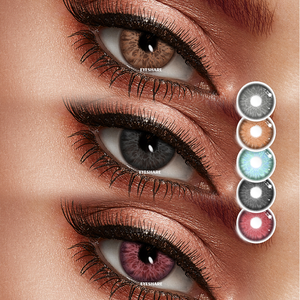
3. Micro-Encapsulation "Sandwich" Tech for Cosmetic Color Lenses
With cosmetic color contacts representing one of the fastest-growing revenue segments for beauty retailers, safety engineering has taken center stage. Older printing methods involved direct surface tinting, which risked pigment leeching onto the corneal epithelium, leading to allergic keratitis.
Top trusted suppliers utilize Triple-Layer Micro-Encapsulation Technology (Sandwich Printing). Bio-compatible color pigments (Iron Oxides, Titanium Dioxide, Phthalocyanine Blue) are locked securely between two transparent layers of hydrogel material. The color pigment never directly touches the eye's tissue, ensuring 100% color safety without compromising oxygen flux through the lens matrix.
Procurement Strategy
Future Procurement Trends for B2B Optical Buyers
Navigating supply chain evolution, private label disruption, and environmental sustainability over the next decade.
Shift From National Brands to Private Label Margins
Major drugstore chains (such as Rossmann, Kruidvat, and Watsons) are shifting procurement allocations toward direct contract manufacturing. Private label eye care products yield gross margins ranging from 55% to 75%, compared to 20%-30% for major global legacy brands. Procurement officers are demanding turnkey ODM services where manufacturers provide pre-approved regulatory registration dossiers.
Strict Audit Requirements for Cleanroom Automation
Procurement audits now mandate Class 100,000 (ISO Class 8) cleanrooms equipped with Automated Optical Inspection (AOI) systems. AOI uses high-resolution digital cameras and machine vision algorithms to inspect 100% of manufactured lenses in real-time, detecting edge tears, surface bubbles, and foreign particulates down to 10 microns before blister sealing.
ESG & Sustainable Blister Packaging Initiatives
Environmental footprint considerations are transforming packaging engineering. Leading factories are phasing out traditional heavy plastic blister shells in favor of recycled polypropylene (PP) and ultra-thin, easy-peel aluminum foil membranes. Additionally, eco-conscious buyers require zero-liquid-discharge (ZLD) monomer recycling processes in manufacturing facilities to satisfy institutional corporate sustainability standards.
Flexible MOQ & Agility in Supply Replenishment
B2B buyers are moving away from massive single-order commitments toward agile replenishment models. Manufacturers that offer localized warehousing, vendor-managed inventory (VMI), and tiered MOQs (starting as low as 500 units per power SKU for custom packaging) are gaining dominant market share over rigid suppliers.
Knowledge Base
Frequently Asked Questions (FAQ) for Contact Lens Procurement
Essential insights for procurement managers, category heads, and healthcare product distributors.
What is the standard lead time for private label contact lens manufacturing?
For existing approved formulations with custom blister and secondary box printing, standard production lead times range from 30 to 45 business days upon artwork sign-off. Initial regulatory file transfers or customized color pattern developments typically add 2 to 4 weeks during the onboarding phase.
How do USA FDA compliance standards differ from EU MDR requirements?
Under US FDA regulations, contact lenses are categorized as Class II Medical Devices requiring 510(k) premarket notification clearances, factory registration, and strict adherence to Quality System Regulation (QSR 21 CFR Part 820). In the EU, under MDR 2017/745, contact lenses fall under Class IIa or IIb (depending on wear duration), necessitating full Notified Body audits, comprehensive Clinical Evaluation Reports (CER), and CE marking. Kyralens provides fully compliant technical documentation packages for both jurisdictions.
What Minimum Order Quantities (MOQs) apply to OEM private label orders?
Our standard production runs begin at 1,000 boxes per SKU for standard hydrogel contact lenses. For specialized custom cosmetic color patterns or custom silicone hydrogel parameters, MOQs start at 3,000 to 5,000 units per color design. Pilot programs can be arranged upon commercial evaluation.
How is quality assurance maintained across high-volume automated runs?
Quality assurance follows a 5-stage verification protocol: (1) Raw material monomer purity assay via HPLC; (2) In-line Automated Optical Inspection (AOI) during mold release; (3) Steam autoclave sterilization validation at 121°C for 30 minutes; (4) Post-sterilization power, base curve, and diameter verification using interferometer systems; and (5) Limulus Amebocyte Lysate (LAL) bacterial endotoxin testing on every finished lot.
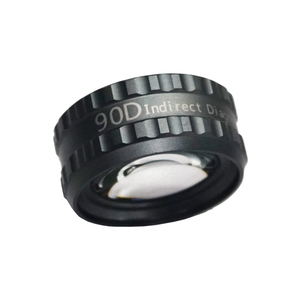
Can you manufacture specialized ophthalmic lenses such as 90D diagnostic optics?
Yes. Beyond consumer hydrogel contact lenses, our specialized optical manufacturing facilities produce high-magnification ophthalmic diagnostic equipment, including 90D, 78D, and 20D double aspheric fundus lenses engineered from medical-grade glass with anti-reflective optical coatings for diagnostic slit-lamp examination.
What packaging customization options are available for private labels?
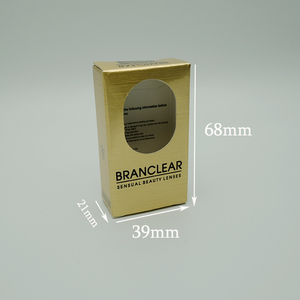
We offer full end-to-end packaging customization: polypropylene blister shells with custom-printed foil lids, cardboard unit boxes featuring foil-stamping, UV spot varnish, matte or glossy lamination, tamper-evident safety seals, and localized multi-language instruction leaflets compliant with target market health authority rules.
Partner with a Leading Contact Lens Manufacturer
Elevate your retail or optical brand with certified high-performance contact lenses, complete regulatory support, and seamless global distribution.