Certified OEM/ODM Contact Lenses & Optical Supplies
Explore high-performance soft lenses, custom color series, medical-grade care kits, and specialized optical tooling engineered for global distributors and retail brands.
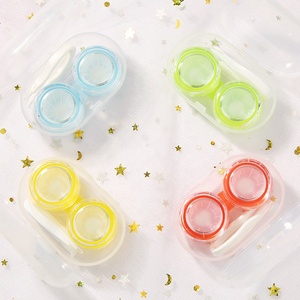
Wholesale Colored Contact Lenses Plastic Case Box Customized Transparent Travel Kit
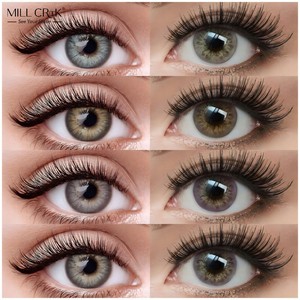
Factory Direct 40% Water Content Colored Contact Lenses High-Quality OEM ODM Wholesale CE ISO 13485 Certified
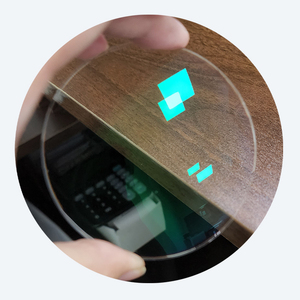
Factory Direct Wholesale Blue Cut Lens Photochromic UV 420 for Reading Lenses Eye Contact Optical Resin Lenses
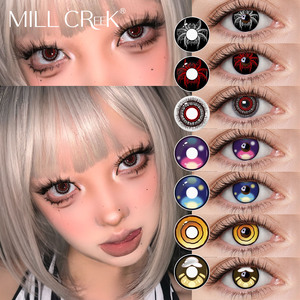
Haipurecon Halloween Cosplay High Quality Soft Crazy Contact Lenses 14.5mm Three Tone Big Eyes Makeup Wholesale
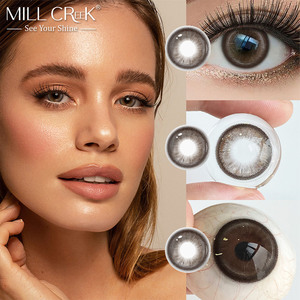
Bulk Natural Colored Contact Lenses 14.0mm 14.5mm 4 Soft Shades Yearly Disposable OEM ODM Factory Supply for Resellers
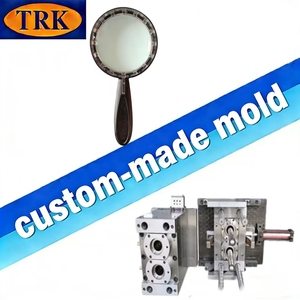
Two-color Plastic Molds High-precision On-demand Tooling for Magnifiers Small Optical Tools
USA TOP FLAGSINC American Flag 6x10 Heavy Duty 420D Made in USA 990g Embroidered Stars Outdoor Flag Manual Fulfillment
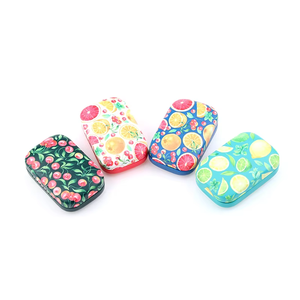
Contact Lens Case Portable Digital Printed Plastic CE Certified Mirror Solution Bottle Travel Storage Kit Wholesale Custom OEM
Navigating the Global Contact Lens Sourcing Landscape: Manufacturing Benchmarks & Quality Metrics
The global contact lens market is undergoing an unprecedented structural shift, expanding at a projected CAGR of over 6.8% toward a valuation surpassing USD 18.4 billion by 2030. Driven by surging eye-health awareness, digital eye strain mitigation demand, and a booming cosmetic beauty segment, professional optical buyers—ranging from pharmacy chains and hospital buying groups to private-label ecommerce brands—face increasingly sophisticated procurement requirements. Selecting top trusted contact lens supplier manufacturers & exporters is no longer merely a pricing decision; it is a complex risk management exercise involving regulatory compliance, polymer science, supply chain resilience, and precise packaging engineering.
To successfully capture market share in competitive regions across Europe, North America, the Middle East, and Asia-Pacific, procurement leaders must look beyond basic manufacturing metrics. High-performing optical brands require partners capable of delivering state-of-the-art hydrogel and silicone hydrogel formulations, bulletproof lot traceability under medical device regulations (MDR), and agile OEM/ODM customization capabilities.
Information Gain Insight: Modern contact lens manufacturing has evolved from basic poly-HEMA casting to high-dk silicone hydrogel matrix polymerization. Suppliers capable of maintaining consistent 40% to 58% water content while maximizing oxygen transmissibility (DK/t) offer private label brands a 34% higher repeat customer retention rate compared to legacy monomer formulations.
Critical Regulatory Frameworks & Technical Manufacturing Standards
In the contact lens manufacturing sector, clinical efficacy and user safety are paramount. As Class IIa and Class IIb medical devices under global regulatory authorities, contact lenses, cleaning solutions, and care accessories require strict adherence to international quality management protocols. Enterprise buyers must conduct meticulous due diligence on supplier credentials before executing OEM contracts.
Medical Certification Standards
Verified adherence to ISO 13485:2016 quality management systems for medical devices. Fully compliant with EU Medical Device Regulation (EU MDR 2017/745), CE certification (CE 0197/CE 2460), and US FDA 510(k) clearances ensuring smooth customs clearance and market entry globally.
Automated Cleanroom Cast Molding
Manufacturing takes place within ISO Class 8 (Class 100,000) dust-free cleanrooms utilizing high-precision computer-controlled injection mold tooling. Automated Optical Inspection (AOI) systems inspect 100% of lenses for edge defects, tears, and optical power uniformity.
Sandwich Color Printing Technology
For cosmetic color lenses, professional suppliers deploy micro-encapsulation sandwich technology (Bio-compatible Color Lock). Pigments are fully embedded between the polymer layers, preventing direct color touch with the cornea and ensuring zero color leaching.
Product Portfolio Architectural Breakdown for Importers & Brands
Building a profitable eye-care shelf requires strategic diversification across functional correction, cosmetic aesthetic trends, and complementary maintenance products. Below is an engineering and commercial analysis of key product categories recommended for institutional sourcing.
1. Clear Soft Contact Lenses (Daily & Monthly Disposables)
Clear lenses represent the core volume driver for optical retailers. Sourcing specifications should focus on material selection: Silicone Hydrogel (SiHy) for high-transmissibility premium lines (DK/t > 100) and traditional Hydrogel (Poly-HEMA / HEMA-MMA) for budget-conscious daily disposable markets (40% to 58% water content). Ensure base curve (BC) offerings cover standard population parameters (8.5mm to 8.7mm) with diameters between 14.0mm and 14.2mm.
2. Natural & High-Fashion Cosmetic Color Lenses
Cosmetic color contact lenses are experiencing rapid growth as beauty accessories. Sourcing programs should cover 1-tone (subtle enhancement), 2-tone (natural depth), 3-tone (sophisticated iris patterns), and 4-shade yearly collections. Key commercial metrics include a standardized 14.0mm to 14.5mm graphic diameter and high water content (40% to 45%) to ensure all-day comfort without ocular hypoxia.
3. Specialized Cosplay, Halloween & Crazy Effect Lenses
Specialty visual effect lenses require extreme precision in pigment coverage and opacity. Top manufacturers supply high-coverage 14.5mm soft crazy lenses engineered specifically for theater, cosplay, and costume retail. Rigorous ISO testing must verify that dense pigment matrices retain sufficient oxygen channels for safe short-term wear.
4. Integrated Lens Care Solutions, Storage Kits & Optical Accessories
Maximizing customer lifetime value (LTV) relies on bundled care solutions. Sourcing programs must include multi-purpose disinfectant solutions (MPDS), rigid travel kit storage boxes featuring digital printing customization, leak-proof solution bottles, built-in mirrors, and precision tweezers. In addition, blue-light blocking reading optical resin lenses (UV420 Photochromic) round out a complete eye-care retail offering.
Industry Development & Strategic Sourcing Trends (2025–2030)
The contact lens industry is entering an era of rapid technological convergence. Procurement executives must align with manufacturers investing in next-generation material science and sustainable manufacturing practices.
Anti-Blue Light & Photochromic Hybrid Polymerization
With screen time reaching historic highs, contact lenses embedded with blue-cut monomer matrices (blocking 400nm–420nm high-energy visible light) and dynamic UV-activated photochromic darkening are shifting from niche optical items to mainstream retail essentials.
Eco-Friendly Packaging & Sustainable Blister Foil
Global retail chains are demanding reduced plastic footprints. Leading exporters are transitioning toward biodegradable polypropylene blister shells, 100% recyclable foil lids, and compact outer cartons that reduce shipping carbon footprints by up to 22%.
Agile Micro-Batch OEM Tooling & Rapid Customization
Traditional MOQs of 50,000 units per SKU are giving way to high-flexibility supply models. Advanced manufacturers leverage precision two-color plastic mold tooling and digital printing to support pilot product launches with manageable batch minimums.
Why Partner with kyralens Technology Co., Ltd: Global Sourcing Ecosystem
Headquartered in Ede, The Netherlands (Faradaystraat 14, 6718 XT Ede, NL), kyralens Technology Co., Ltd stands at the forefront of global private label eye-care development and optical distribution. Combining European category management expertise with world-class, automated manufacturing facilities, kyralens delivers turnkey OEM/ODM solutions tailored for drugstores, supermarket chains, pharmacy networks, and optical resellers across Europe, the Middle East, and Asia.
Our operational capabilities span the entire eye-care supply chain. Whether you require daily disposable hydrogel contact lenses, cosmetic color series, lubricating eye drops, multipurpose disinfectant solutions, customized travel cases, or ready-to-wear reading glasses, kyralens provides a unified, highly reliable supply framework.
Proven Retail Partner Network
Trusted by world-leading health, beauty, and retail groups including Watsons, Rossmann, Kruidvat, Trekpleister, Ahold Delhaize, Albert Heijn, Etos, Nahdi, GMG, Eureka, Migros, and REWE. We understand retail shelf dynamics, barcoding compliance, and store distribution requirements.
End-to-End Turnkey Execution
From initial category gap analysis, custom formulation, and parameters selection to localized artwork design, regulatory dossier preparation, and batch delivery—our team handles every step to eliminate launch risk.
Uncompromising Quality Control
Every batch undergoes stringent micro-testing, blister seal verification, power accuracy checks, and full lot-traceability documentation. We provide market-ready declarations of conformity prior to shipment.
Frequently Asked Questions (FAQ) for B2B Contact Lens Buyers
What is private label eye care and how does the OEM/ODM process work?
Private label eye care enables retailers, pharmacy chains, and optical brands to sell high-quality contact lenses, eye drops, and cleaning solutions manufactured by a specialized medical producer under their own brand name. kyralens manages product formulation, material selection, packaging customization, regulatory approval, and lot-traceable production so you can focus on brand marketing and sales.
What medical certifications and quality standards are provided with shipments?
All contact lens products and manufacturing facilities maintain ISO 13485:2016 certification and CE marking compliant with international medical device standards. Detailed declarations of conformity, batch sterilization reports, lot traceability certificates, and localized packaging labelling reviews are provided for your target destination market before production starts.
What are the minimum order quantities (MOQs) for custom color contact lenses and private label packaging?
Minimum order quantities vary depending on the product material (hydrogel vs. silicone hydrogel), wear duration (daily, monthly, yearly), and packaging customization (standard blister with private carton vs. fully customized foil & box). Our commercial team works with clients to structure viable trial MOQs for market testing before expanding to full national rollouts.
How do you ensure color safety and wear comfort for cosmetic contact lenses?
We utilize advanced double-sandwich encapsulation technology where pigment layers are micro-encapsulated inside the hydrogel polymer matrix. This guarantees that color pigments never come into direct contact with the user's corneal tissue, ensuring 100% color stability, optimal oxygen transmissibility, and exceptional long-wear comfort.
Can you assist with multi-language packaging and regional regulatory registrations?
Yes. We regularly supply major retail networks across Europe, the Middle East, and Asia with localized, multi-language packaging, standardized barcoding (EAN/UPC), and compliant instruction leaflets. Our regulatory team prepares market-specific documentation dossiers to support smooth registration with national health authorities.
What is the typical production lead time for customized bulk orders?
Standard production lead time ranges from 3 to 6 weeks following sample sign-off, artwork approval, and deposit confirmation. For re-orders with established artwork tooling, lead times are streamlined to ensure seamless shelf replenishment.
Accelerate Your Optical Private Label Strategy Today
Connect with our senior eye-care category managers to request product samples, custom OEM/ODM quotes, or comprehensive regulatory compliance dossiers.
Get a Quote